Biography
N’Faly Kouyaté: the kora between Mandingo tradition and global fusion
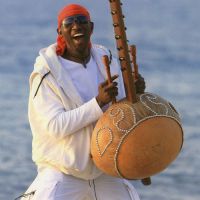
In a Brussels living room, an unassuming man sits before his kora, this 21-string instrument whose gut strings vibrate like rivers. N’Faly Kouyaté claims no allegiance to jazz or electro, even though he has graced the stages of Glastonbury and WOMAD. He plays, and what emerges is half a century of a griot heritage reinvented for the world.
In brief
| Full name | N’Faly Kouyaté |
| Birth | Siguiri, Guinea |
| Field | Mandingo music (kora, balafon, singing) |
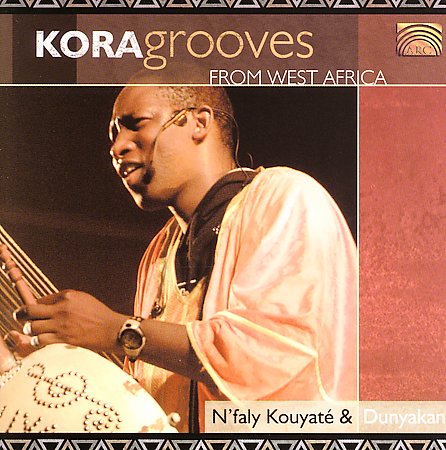
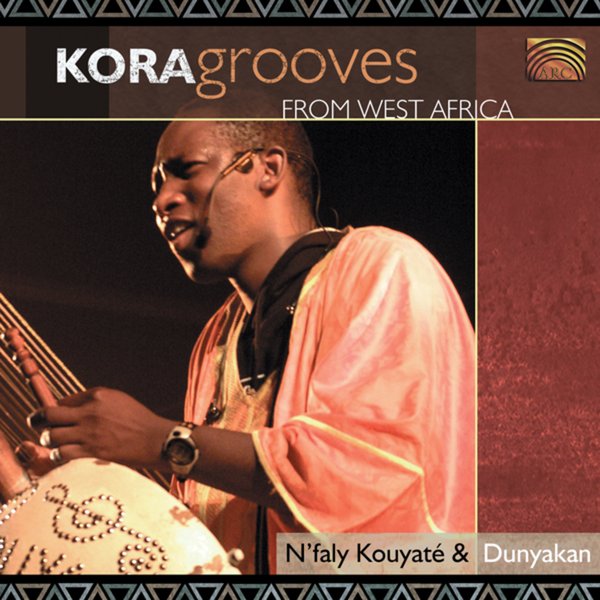
| Notable works | Kora Grooves from West Africa, Tunya, Release (Afro Celt Sound System) |
| Awards | Grammy nominations (1999, 2001), BBC Radio 3 World Music Awards (2002) |
Key dates
| Year | Event |
|---|---|
| ~1968 | Birth in Siguiri, Guinea; childhood in Conakry |
| ~1983 | Start of performances with the University Troupe of Conakry |
| 1994 | Move to Brussels; initiation of young Belgians into Mandingo culture |
| 1996 | Creation of the ensemble Dunyakan (“The voice of the world”) |
| 1997 | Invitation to join Afro Celt Sound System by Real World of Peter Gabriel |
| 1999 | Participation in Release, gold record in Ireland, Grammy nomination |
| 2001 | Further in Time; Grammy nomination |
| 2004 | Release of first solo album Kora Grooves from West Africa |
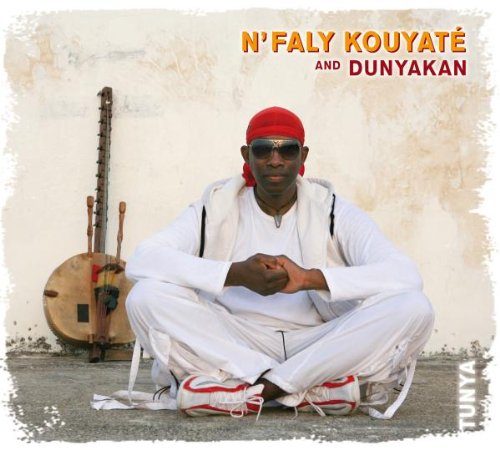
| 2008 | Second album Tunya with Dunyakan on Galileo Music Communication |
| 2015 | Change on NAMUN Records |
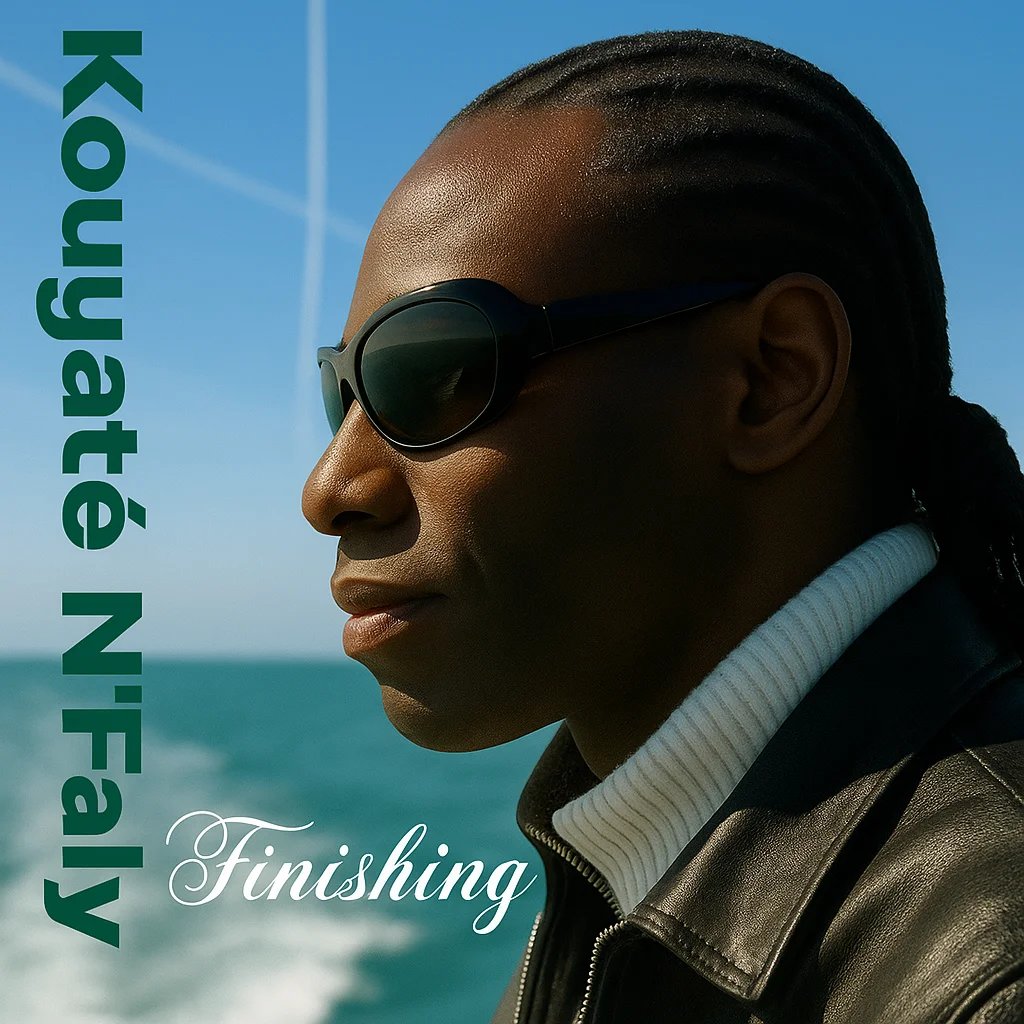
| 2025 | Finishing, last album released |
Son of Konkoba: a griot heritage
N’Faly Kouyaté belongs to one of the most illustrious families of djélis in the Mandingo empire. His father, Konkoba Kabinet Kouyate from Siguiri in Guinea, held the rare rank of Konkoba—one of the highest distinctions among griots, awarded after completing initiation trials and acquiring mastery over the secrets of the Mandingo world. N’Faly, whose real name means musician in Mandingo, grew up between brilliant mathematical education and musical vocation. Very young, he opened himself to blues, jazz, funk, and soul, while receiving rigorous traditional training on the balafon and kora—the first wooden instrument with resonance and the 21-string harp-lute, emblems of Mandingo music.
Brussels, Dunyakan and the Afro Celt encounter
In 1994, N’Faly settled in Brussels. In 1996 he founded Dunyakan, a multicultural ensemble that marries African and Western instruments, Mandingo polyphonies and pop sounds. In 1997, Peter Gabriel, who had noticed him during a Salif Keita concert, proposed that he join Afro Celt Sound System, the flagship project of Real World Records. Replacing the Senegalese kora player Kauwding Cissokho, N’Faly participated in Release (1999), a gold record in Ireland and Grammy-nominated album, then Further in Time (2001), also nominated. With this formation, he toured the world’s greatest festivals: WOMAD, Glastonbury, Montreaux, Central Park. In parallel, he founded the non-profit organization Namunkanda (The defense of culture) and taught polyphony at the Cadence Mandingue academy in Brussels.
A solitary and connected composer
N’Faly’s solo career, carried by his two albums with Dunyakan, Kora Grooves (2004) and Tunya (2008), makes him a musical mediator between griot tradition and Western music. He also collaborated with Urban Trad (EP Diama Dén, 2006) and participated in the opening ceremony of the Athens Olympics in 2004. His latest album, Finishing (2025), confirms his position as an afrotronix pioneer—a forward-thinking griot who constantly pushes the boundaries of the kora.
Major works
| Work | Year | Why it’s essential |
|---|---|---|
| Release (Afro Celt Sound System) | 1999 | Gold record in Ireland; Grammy nomination; afro-celtic fusion at its peak |
| Kora Grooves from West Africa | 2004 | First solo album; kora and balafon in an acoustic staging |
| Tunya | 2008 | Second Dunyakan album; choirs, string arrangements, electronic innovations |
| Change | 2015 | Last studio album; refined afro-fusion, mature composition |
Legacy
N’Faly Kouyaté embodies the capacity of the contemporary griot to be both holder of a millennial tradition and musical inventor. His name, like those of Toumani Diabaté or Bassekou Kouyaté, is today synonymous with respect in the African music world. Through his teaching at Cadence Mandingue and his creations, he transmits to young generations not only the sound of the kora but the very spirit of the djeli—this artisan of memory who makes cultures dialogue without diluting them.
Sources and references
- “N’Faly Kouyate”, African Musicians Profiles, http://www.africanmusiciansprofiles.com/NFalyKouyate.htm, accessed October 22, 2025.
- “Artist Profiles: N’Faly Kouyate”, World Music Central, https://worldmusiccentral.org/artist-profiles-nfaly-kouyate, accessed October 22, 2025.
- Nago Seck, “N’Faly Kouyaté”, Afrisson, https://www.afrisson.com/n-faly-kouyate/, updated May 24, 2020, accessed October 22, 2025.
- Frank Bessem, “N’Faly Kouyaté”, Musiques d’Afrique, https://musiques-afrique.net/guinee/art-kouyate-nfaly.html, accessed October 22, 2025.
- “Tunya — N’Faly Kouyaté”, Official site, https://nfaly.com/release/tunya, accessed October 22, 2025.
- “N’Faly Kouyate”, Wikipedia, https://en.wikipedia.org/wiki/N%27Faly_Kouyate, accessed October 22, 2025.
- “N’Faly Kouyaté — Discography”, AllMusic, https://www.allmusic.com/artist/nfaly-kouyate-mn0000618328, accessed October 22, 2025.
- “N’Faly Kouyaté & Dunyakan”, WOMEX, https://www.womex.com/virtual/namun_music/n_faly_kouyate, accessed October 22, 2025.