Conakry, Guinea: The Musical Epic of a Nation
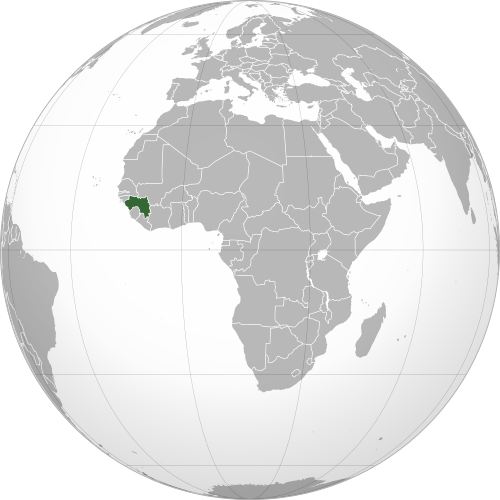
Guinea was the first sub-Saharan African country to vote for independence from France, in 1958. This radical break gave birth to an unprecedented cultural policy that made Conakry, in the 1960s and 1970s, the musical capital of Manding Africa. Orchestras such as Bembeya Jazz National or Syliphone Records produced music that influenced Mali, Burkina Faso, Côte d’Ivoire and many other nations[[1]][[2]]. Today, a new generation of Guinean artists is conquering international stages, perpetuating this tradition of fusion between heritage and modernity[[3]].
From Griot Tradition to Independence (1958-1963)
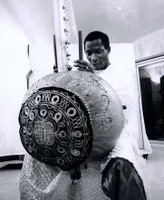
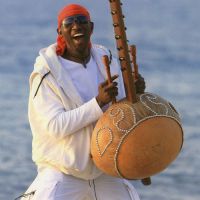
Guinean music draws its roots from the Manding tradition — this vast cultural area stretching from Côte d’Ivoire to Senegal, centered on the Malinké, Susu and Fula peoples. At the heart of this tradition lies the djeli (or griot), a hereditary musician and historian who transmits the people’s memory through the kora (21-string harp) and the balafon (xylophone with gourd strings)[[4]].
When Guinea obtained its independence on October 2, 1958, after refusing the French Community during Charles de Gaulle’s referendum, President Ahmed Sékou Touré quickly understood that music would be a pillar of national reconstruction[[5]]. France abruptly withdrew its economic aid, burned its archives and abandoned a country still under construction[[6]]. In this context, Sékou Touré made culture an instrument of sovereignty.
The first move was concrete: private orchestras, still predominantly European and playing French colonial music, were dissolved. In their place, the government created regional orchestras funded by the State, one per prefecture. The province of Beyla — located in the southeast of the country — thus founded in 1961 the Orchestre de Beyla, which became within a few years one of Africa’s largest orchestras[[7]].
The Golden Age of « Authenticity » (1964-1984)
In 1964, the government launched the policy of « authenticity », which banned any foreign music on Guinean airwaves and required orchestras to create a style fusing local traditions with modern forms[[2]]. The result was stunning: traditional songs, previously played on kora and balafon, were transposed to electric guitar orchestras, saxophones and brass instruments, in a style inspired by Congolese rumba but deeply Guinean[[8]].
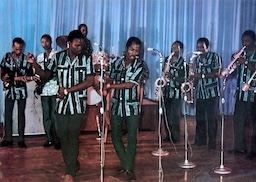
In the front line, Bembeya Jazz National. Founded in 1961 in Beyla, the orchestra won national artistic festivals in 1964 and 1965, and was officially declared « National Orchestra » in 1966[[7]]. Its masterful formula combined Manding traditions, Congolese and Cuban influences, and a formation of 15 to 25 musicians[[9]]. Its star, Aboubacar Demba Camara, a charismatic singer nicknamed « the Dragon of African song », died in 1973 in a car accident in Senegal — more than 10,000 people dressed in white escorted his body, and brass bands played the Manding war hymn Boloba[[10]]. After his death, Bembeya interrupted its recordings and tours for three years before reconstituting itself.
Another major name, Sékou « Diamond Fingers » Diabaté, a virtuoso guitarist of Bembeya whose playing was directly inspired by kora and balafon techniques to create a unique electric style[[11]]. He was proclaimed « Best African Guitarist » at the FESTAC festival in Lagos in 1977[[12]].
The State label Syliphone, created in 1967, disseminated this music on 728 tracks between 1967 and 1984, with remarkable production quality — glossy sleeves, detailed musicological annotations, exceptional sound for the time[[13]]. The RTG radio, one of the most powerful in West Africa, broadcast this sound throughout the continent[[14]].
This Guinean cultural policy directly influenced neighboring countries: Modibo Keïta’s Mali, Burkina Faso, Zaïre and Tanzania adopted similar programs of subsidized national orchestras[[2]]. Conakry became, for a few years, the cultural capital of Africa — Miriam Makeba, in exile, found refuge there[[10]].
After Touré: Transition and Renewal (1984-2000)
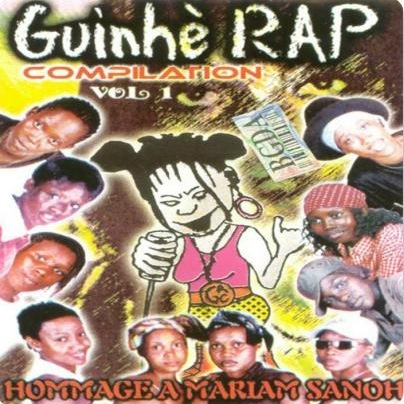
The death of Sékou Touré in 1984 sounded the end of this model. The Syliphone label closed, national orchestras lost their funding and musicians turned to Europe and the private market[[15]]. The 1990s saw an explosion of self-production: rappers founded their own labels, artists recorded in Côte d’Ivoire or Senegal[[3]].
It was during this period that Bembeya Jazz resurfaced. In 1999, French producer Christian Mousset invited Sékou « Diamond Fingers » Diabaté to reform for the Musiques Métisses festival in Angoulême[[16]]. Forty years after its peak, the orchestra released a new album in 2002 and embarked on tours in Europe and North America[[17]]. « Bembeya does not need a keyboard; it plays traditional African music », explains Diabaté[[18]].
Another bridge between generations, Sekouba « Bambino » Diabaté, joined Bembeya in 1982 at the age of 19, indirectly succeeding Demba Camara under the direct impetus of Sékou Touré himself[[19]]. His 1990s albums (notably Kassouman Ma in 1997, which surpassed one million cassettes in West Africa) and his collaboration with the Afro-salsa project Africando made him one of the great ambassadors of modern Guinean music[[20]].
Current Stars: the fourth revolution (2000–present)
While the great orchestras of the golden age are today in semi-lethargy, due to lack of funding, Guinea has never ceased producing artists of international caliber. Three figures illustrate this continuous vitality.
Mory Kanté (1950–2020), from a lineage of djelis, is without doubt the most famous Guinean musician in history. After a stint with the Rail Band of Bamako and a solo career in the 1980s, his hit Yéké Yéké became in 1987 the first African single to sell over a million copies in Europe[[21]]. Named « the electric griot » by critics, he bridged the Manding tradition and sounds from all over the world, collaborating with Bruce Springsteen and Stevie Wonder, and defending humanitarian causes until his last days[[22]].
In the 2010s, Soul Bang’s (son of the late Mory Kanté by marriage) established himself as Guinea’s new international star, blending afro-pop and R&B in four languages (French, Malinké, Susu, Peul). Awarded by RFI in 2016, he filled Paris Arena before 40,000 fans and continues to shine with his sixth album in 2025[[23]].
Even younger, Djelykaba Bintou (Afrima Award 2021 for Female Revelation of the Year) and Saifond Baldé (whose album Holo Horema surpassed 5 million streams in 2025) embody the « fourth revolution » of Guinean music, that of digital media, driven by social networks and streaming platforms[[24]][[25]]. In 2025, Guinea also resumed ties with SACEM after 15 years of absence, a major gesture for the remuneration of local artists[[26]].
A future to rebuild
The musical history of Guinea is that of a constant tension between Tradition and Modernity, between a State sometimes tyrannical but visionary and artists who managed to transform this constraint into creation[[10]]. From Beyla to Paris studios, from Manding djelis to Soul Bang’s, Guinean music has never ceased inventing its own modernity — by looking at its past, as Sékou Touré wished, but never getting stuck in it.
The current challenge is economic: with limited access to digital media and fragile infrastructure, Guinean artists must innovate to survive in a streaming world[[27]]. But the legacy remains intact, carried by the Kouyaté, Diabaté and Kanté families — these lineages of djelis whose music spans the centuries.
Did you know? The name « Syliphone » comes from the word syli, which means « elephant » in Malinké — the animal symbolizing President Sékou Touré, who compared national unity to a herd of elephants marching in concert[[10]].