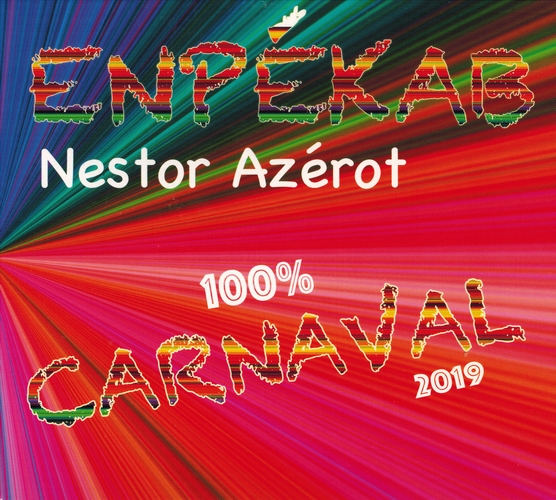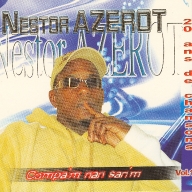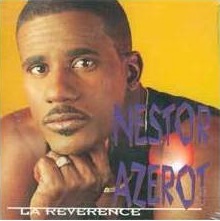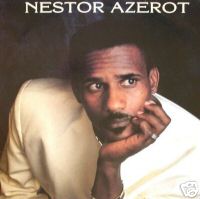
Biography
Nestor Azerot
In 1982, in Paris, a young Martinican took the stage during a Magnum Band concert while the singer was absent. He grabbed the microphone, performed two tracks, and caused such an explosion that the group’s founders invited him to join the band. Nestor Azérot — “Nesty” for his friends — had just begun an adventure that would lead him to sing with one of the greatest Caribbean kompa orchestras for over forty years. Born in Sainte-Marie, Martinique, the cradle of bèlè — this African slave music where the singer dialogues with the tanbouyè (drummer) — this songwriter-composer spent his life navigating between the Caribbean, Europe, and the United States.
In brief
| Full name | Nestor Azérot |
| Nickname | “Prince du Kompa” |
| Birth | 1960s, Sainte-Marie (Martinique) |
| Genre | Kompa, zouk, traditional Caribbean music (bèlè) |
| Instruments / roles | vocals, keyboards, percussion |
| Notable groups | Magnum Band (since 1982), GroovNdiz |
Key dates
| Year | Event |
|---|---|
| 1960s | Birth in Sainte-Marie, Martinique |
| ~17 years old | Move to the Parisian suburbs (military service) |
| 1982 | Joining of the Magnum Band, a stroke of destiny (Miziknou) |
| 1982-1984 | Two years in Haiti with the group |
| 1986 | Release of single “Zouk’s Celebration” (Yama Records) |
| 1987-1999 | Relocation to Miami; collaborations with Anderson Cameau and Georges Loubert Chancy |
| 1989 | Release of album Zoukeman (RFE) |
| 2000 | Participation in album Ayiti Bonjou with the Zic Band (Fanfant brothers, Tony Chasseur…) |
| 2007 | Creation of GroovNdiz with his brother Gabriel, dedicated to Caribbean traditions |
| 2008 | Award from Sacem, allowing him to record an album |
Origins and first dramatic turn
Nestor Azérot grew up in Sainte-Marie, a commune in northeastern Martinique recognized as one of the beating hearts of the bèlè tradition. At seventeen, he left his island for Paris to fulfill his military service. He arrived during a period when kompa dominated the Caribbean scene: Tabou Combo, Skah-Shah, and Magnum Band toured the Antilles and French clubs. “I had bought a Magnum album and was listening to it with a cousin. They were vinyls back then. And I said: damn, I would have loved to play with that group” [France Info La 1ère]. Two weeks later, destiny decided otherwise.
The Magnum Band held a concert and their singer was absent. Nestor, a spectator in the hall, went on stage: “A chair in front of me, I go up, take the microphone and start singing. It was an explosion in the hall,” he recalls [France Info La 1ère]. Dadou Pasquet, the group’s guitarist and singer, let him perform several tracks. At the end of the show, the Pasquet brothers proposed he join the official adventure. He would spend two years in Haiti before moving to the United States.
A career between the Caribbean and the world
The years in Haiti proved formative. “In Haiti it was a great school for me,” Nestor admits. He learned there “to live with people who didn’t have the means but remained dignified. It was a very enriching experience as a man and it still serves me today” [France Info La 1ère]. Back in France, then the United States — first New York, then Miami from 1987 onwards — he recorded several albums with Magnum Band and toured the world. His credits on the group’s records span from 1983 to 2002, covering about twenty albums where he provided vocals, backing vocals, and sometimes keyboards or percussion [Haitian Music Archives].
His talent led him to collaborate with Georges Loubert Chancy (Skah-Shah saxophonist), Anderson Cameau, and the Zenglen group. In 2000, he joined the Zic Band alongside the Fanfant brothers and Tony Chasseur, recording the album Ayiti Bonjou while continuing tours [Miziknou]. Magnum Band performed with him four times at the Zénith in Paris before 5,000 people [L’Indépendant de l’Yonne].
In 2007, he created with his brother Gabriel GroovNdiz — the groove of the West Indies — dedicated to traditional Caribbean music, particularly Martinican bèlè [Miziknou]. In 2008, the Sacem awarded him a prize to record an album [L’Indépendant de l’Yonne]. In total, Nestor has nine solo albums — including Zoukeman (1989), Piou Pioup – Ba Nou Swing (1991) and the recent Mizik Péyi, thirteen tracks entirely dedicated to bèlè [France Antilles]. He observes: “When you are a promoter, you don’t take the artist’s place” [France Info La 1ère].
Major works
| Work | Year | Why it’s essential |
|---|---|---|
| Zoukeman (Nestor Azerot) | 1989 | Landmark solo album; kompa-zouk fusion and assertive musical direction |
| Piou Pioup – Ba Nou Swing | 1991 | Exploration of Caribbean swing; Nestor sings, plays keyboards and bass |
| Ayiti Bonjou (Zic Band) | 2000 | Major collaboration with the Fanfant brothers and Tony Chasseur; tribute to Haitian culture |
| Mizik Péyi | 2018-2020s | Return to bèlè roots; thirteen tracks celebrating Martinican tradition |
Legacy and influence
Nestor Azerot embodies a unique case in Caribbean music: a Martinican who became the most Haitian singer of Martinique according to Miziknou, nicknamed “Prince du Kompa”. His career is a bridge between the islands — Haiti, Martinique, Guadeloupe — and between continents. Over forty years with Magnum Band have not diminished his passion or lucidity. Modest, discreet — he now lives in Paron in the Yonne [L’Indépendant de l’Yonne] — he continues to be a live musician, faithful to that 1982 impulse where a chair in a Parisian pub was enough to change his life.
Sources and references
- « Nestor Azerot, Martinican singer whose destiny was clearly set towards Kompa », France Info La 1ère, https://la1ere.franceinfo.fr/nestor-azerot-chanteur-martiniquais-au-destin-tout-trace-vers-le-kompa-1155172.html, accessed 17 November 2021.
- « Azerot Nestor », Miziknou, http://www.miziknou.com/artiste.html?id=513, text by Philippe Pilotin.
- « Nestor Azérot — Musicians », Archives de la musique haïtienne, https://legalmenbagay.com/archives/musiciens/nestor-azerot, accessed 17 November 2026.
- « Nestor Azérot’s return to his roots », Guadeloupe France Antilles, https://www.guadeloupe.franceantilles.fr/divers/le-retour-aux-sources-de-nestor-azerot-496662.php, accessed 17 November 2026.
- « For 37 years he has been the singer of one of the greatest Haitian music groups », L’Indépendant de l’Yonne, https://independantdelyonne.com/decouverte-depuis-37-ans-il-est-le-chanteur-dun-des-plus-grands-groupes-de-musique-haitienne-nestor-azerot-une-vie-dartiste-de-paris-a-new-york-et-de-miami-a-paron/, accessed 26 March 2020.
- « Nestor Azerot », Discogs, https://discogs.com/artist/1392534-Nestor-Azerot, accessed 17 November 2026.
- « Nestor Azerot », AllMusic, https://allmusic.com/artist/nestor-azerot-mn0002164218, accessed 17 November 2026.