Biography
Nkodo Sitony
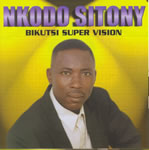
In 1988, an album released two years earlier exploded across the entire Grand Sud region. The title: Métil Wa — a phrase repeated like a mantra on the airwaves and in bars in Douala. Singer Nkodo Sitony transformed bikutsi, the traditional dance of the Beti from the Centre and South, into a hybrid sound blending afrobeat, makossa, and guitar riffs learned on the job. He had not studied music at school. Mongo Faya, Eboa Lotin, three years in Lagos: his style was born from this mix.
In brief
| Full name | Nkodo Si Tobi François |
| Stage names | Si Tony, Sitony, formerly Tony Frac |
| Birth | 25 August 1959, New Bell (Douala), French Cameroon |
| Death | 21 December 2021 (62 years), Yaoundé Central Hospital |
| Genre | Bikutsi — fusion with afrobeat, makossa and jazz |
Key dates
| Year | Event |
|---|---|
| 1959 | Birth in New Bell, a neighbourhood of Douala, of Ekang origin (Bulu Beti-Fang) |
| 1978-1981 | Nigerian period in Lagos — meeting with Prince Nico Mbarga and Sony Okochu |
| 1986 | Release of the first album — two years before the commercial explosion |
| 1988 | Métil Wa song of the year; Nkodo Sitony artist of the year |
| 1990s | Around twenty albums recorded, tours in Cameroon and Europe |
| 2017 | Mininga Meyong Mese selected on the Analog Africa compilation |
| 2019 | Local press celebrates 35 years of career |
| 2021 | Death at Yaoundé Central Hospital; funeral in April 2022 in Kaa |
A village, Lagos and Douala — the formation of a hybrid
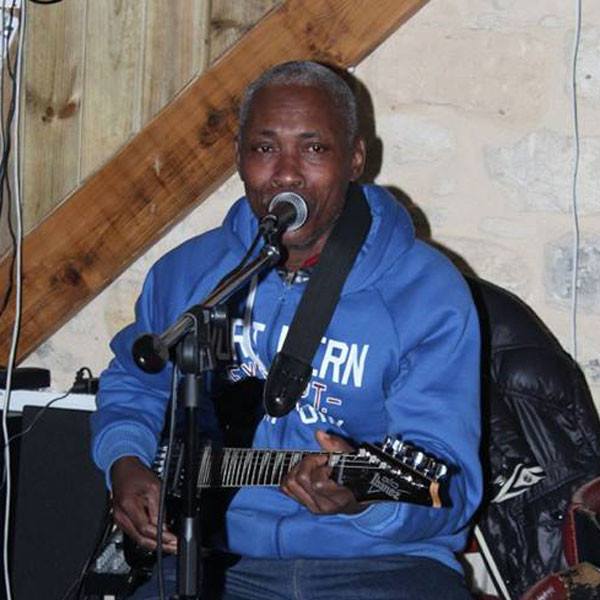
Nkodo Si Tobi François grew up in New Bell, a popular neighbourhood of Douala. He started on percussion. Mongo Faya — a major figure in 1970s bikutsi — gave him the push one day by telling him he had to switch to guitar. Without school, without a teacher, he learned by assisting Douala artists. Bassist Jean Paul Omgba also reached out a hand. He invented his own playing technique, simple and rooted in the groove.
Nkodo is also a dancer — no professional choreography, just that traditional energy that makes the ground tremble. Bikutsi means striking the earth in Beti language, a dance rhythm where you crush the ground with your foot. He embodies this movement: singer and drummer at once.
The Nigerian period (1978-1981) transformed his vision. In Lagos, he spent three years singing in Igbo, rubbing shoulders with Prince Nico Mbarga — who is also his brother-in-law — and Sony Okochu, Nigerian afrobeat interpreter. He absorbed helios riffs, funky arrangements, and the Igbo rhythm. “After all this mix,” he would say later, “I wanted to return home.” Back in Douala, he hung out with Manuel Nguisso and Eboa Lotin, mythical figures of makossa. Then he met Albert Breuk’s, a producer who opened his studio to him: “He is my spiritual father,” Nkodo recalls. Breuk’s took care of the arrangements and left Nkodo to lay down his guitar and vocals.
The “King of Bikutsi” — when a 1986 album explodes in 1988
Back in Cameroon, Nkodo wanted to renew traditional bikutsi with everything he brought back from Lagos — afrobeat, jazz and helios rhythms. In 1986, their first album was released in Breuk’s studio. Two years passed without much noise. “People wondered, what kind of rhythm is this,” he would confess. Then in 1988, the album exploded. Métil Wa — the phrase “it is me myself, it is even, it is me myself, in the village” — became song of the year. Nkodo was named artist of the year, without having thought about it: “I didn’t know people would like it.”
The phenomenon spread rapidly. His style — this electric bikutsi that the press would nickname techno-bikutsi — conquered not only the Beti, but also the Bamileke of the West and even the peoples of the North. “Today, everyone dances Bikutsi, whether you are from Douala, Bamileke, or even people from the North,” he notes with pride. The rhythm is no longer reserved for Beti’i. It is Cameroonian.
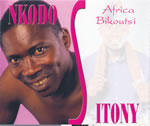
He sings in Beti, Fang and Ewondo. He recorded around twenty albums during his career: Mba Mvoe, Métil Wa, Ngoan Ezoum, Wa Yi Ma Wo Ya, and later Super Bantou as well as Le cœur de l’homme et la femme. He lives between Paris and Cameroon, continues to tour. His voice — metallic and deep — is recognized immediately. “First it is a natural gift, then there is the fruit of long work,” he explains.
A legacy of hybridity and rigor
Nkodo Sitony did not only modernize bikutsi — he gave it a new identity. By crossing the rhythms of the Grand Sud with Nigerian afrobeat, Douala makossa and touches of jazz, he transformed a local folklore into a national genre. Journalists nicknamed him King of Bikutsi, and the new generation — Katino, Lady Ponce, Tanus Foe — pays homage to this pioneer.
In 2017, the selection of Mininga Meyong Mese by Analog Africa on the album Pop Makossa — The Invasive Dance Beat of Cameroon 1976-1984 confirms that his work is part of the Cameroonian musical heritage recognized worldwide. After several years of health problems, he passed away on 21 December 2021 at Yaoundé Central Hospital, aged 62. His funeral took place in April 2022 in his native village, Kaa. Le Jour dedicated a portrait to him titled Nkodo Si Tony, a totem in bikutsi. His final message to young artists summarizes his philosophy: “I give only one message. Let these young people take the time to do well what they have to do, compose melodies properly. Bikutsi music is something dignified.”
Major Works
| Work | Year | Why It’s Essential |
|---|---|---|
| Métil Wa | 1986 (released in 1988) | The song that propelled Nkodo to the status of Artist of the Year; a village mantra turned into an anthem |
| Mba Mvoe | ~1987 | First album where the fusion afrobikutsi style asserts itself |
| Mininga Meyong Mese (Analog Africa) | 2017 | Selected for the international compilation Pop Makossa |
| Super Bantou | ~2016 | Last known album, testifying to unshakeable perseverance |
Legacy and Influence
Nkodo Sitony proved that traditional Cameroonian music does not remain frozen in a museum: it moves, absorbs, and transforms. His voice still resonates in the bars of Yaoundé and Douala, and his message—artistic rigor, respect for roots, pride in the terroir—continues to inspire artists of the new wave. By crossing original bikutsi with afrobeat, makossa, and jazz, he paved the way for an entire current that makes generations of Cameroonians dance today.
Sources and References
- « Nkodo Si-Tony », Wikipédia (French version), https://fr.wikipedia.org/wiki/Nkodo_Sitony, accessed November 18, 2026.
- « Nkodo Sitony », Wikipedia EN, https://en.wikipedia.org/wiki/Nkodo_Sitony, accessed November 18, 2026.
- « Nkodo Sitony : La Musique Bikutsi C’est Quelque Chose De Digne », Journal du Cameroun, https://fr.journalducameroun.com/nkodo-sitony-la-musique-bikutsi-cest-quelque-chose-de-digne/, long interview, accessed November 18, 2026.
- « Nkodo Si-Tony Dit Tony-Frac – Papa Comavic », Analog Dakar Club (Instagram), https://instagram.com/p/DCADp9_tRd_, post from November 5, 2024, accessed November 18, 2026.
- « Nkodo SITONY — Figure du Bikutsi », KmerMusic, https://kmermusic.com/nkodo-sitony/, accessed November 18, 2026.
- « Nkodo Sitony Death: Legendary Bikutsi singer to be laid to rest in his native Kaa village », Cameroon Concord News, https://cameroonconcordnews.com/nkodo-sitony-death-legendary-bikutsi-singer-to-be-laid-to-rest-in-his-native-kaa-village, accessed November 18, 2026.
- « Nkodo Si-Tony », Discogs, https://www.discogs.com/artist/5821464-Nkodo-Si-Tony, accessed November 18, 2026.
- Jean Maurice Noah, Le Bikutsi du Cameroun: ethnomusicologie des “Seigneurs de la forêt”, Carrefour/Erika, Yaoundé (bibliography cited in French Wikipedia).