
Biography
Pablo Master
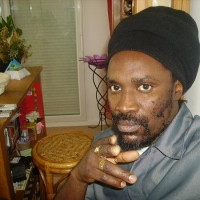
In 1987, in Parisian sound-systems, a young Cameroonian toasts in French over Jamaican rhythms with raw energy that leaves no one indifferent. His name is Pablo Master, whose real name is Paul Achille Bisseck, and he comes straight from Yaoundé to become one of the most striking faces of French reggae.
In brief
| Full name | Paul Achille Bisseck (Pablo Master) |
| Birth | 1965, Yaoundé, Cameroon |
| Genre | Afro-reggae, ragga (raggamuffin) |
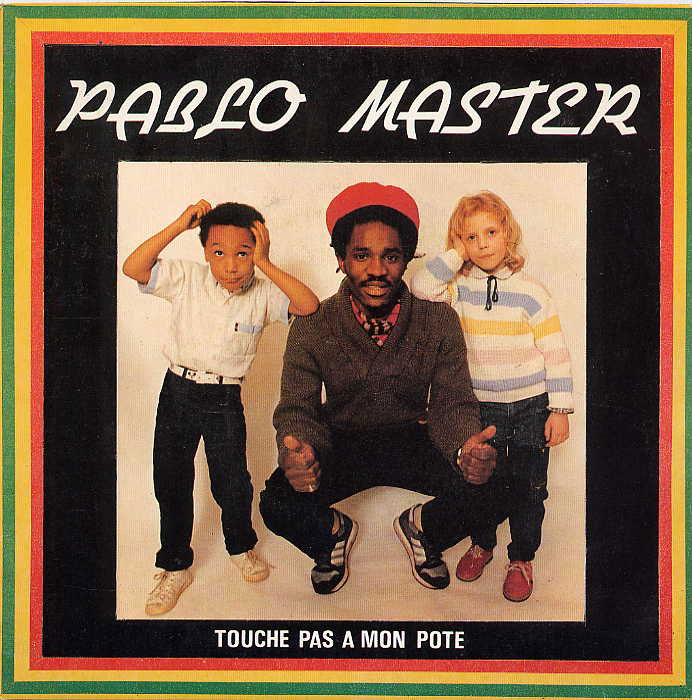
| Signature works | Y a-t-il un problème ? (1987), « Boire ou conduire », « Touche pas à mon pote » |
| Distinctions | First artist of his genre to integrate the French reggae scene as early as the 1980s |
Key dates
| Year | Event |
|---|---|
| 1965 | Birth in Yaoundé, Cameroon |
| Late 1970s | Move to Dugny (Seine-Saint-Denis) with his family |
| 1984-1985 | First sound-systems and creation of Youthman Unity |
| 1986 | Release of first single « Boire ou conduire » |
| 1987 | First album Y a-t-il un problème ?; hits « Touche pas à mon pote », « En A en I en O » |
| 1991 | Second album Scandale |
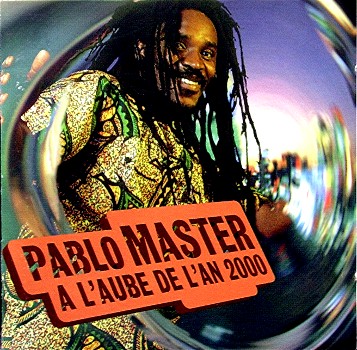
| 1996 | Third album A l’aube de l’an 2000, featuring Manu Dibango and Djéli Moussa Diawara |
| 2017 | Release of Sang et Crimes, first album in over twenty years |
From Cameroon to Parisian sound-systems
Paul Achille Bisseck grew up in Yaoundé in a rich African musical atmosphere before joining his family in France at the end of the 1970s. They settled in Dugny, in the department of Seine-Saint-Denis, where he pursued his studies and devoted himself to sports. But the virus of music soon caught up with him.
At the beginning of the 1980s, underground Paris vibrated: Jamaican sound-systems invested in squats in the Gare district, on the construction site of the future Bibliothèque nationale. Pablo found himself there and met figures like Daddy Yod, Tonton David, or Mikey Mossman. In 1985, he founded with Général Murfi and Super John the Youthman Unity, a ragga Posse among the first to write committed lyrics in French.
The Youthman Unity text dives straight into daily life: awakening of consciences, corrupt politicians, despair of the youth, access to culture for all. The Posse grew rapidly — King Charly, Mickey Mosman, Princess Erika were part of it — and Pablo, nicknamed « Le Maître » by an entire generation, toasts just as well as he sings. His style, nourished by inna di dance practice, stands out with natural ease in live performances and touches that almost brush against soul, as heard already on the chorus of « En A en I en O ».
A founding first album
In 1987, the Youthman Unity recorded Y a-t-il un problème ? at the WW studio on quai de la Gare. Production was handled by J. Samuels, a Jamaican naturalized British better known under the pseudonym Dub Judah: his work gives a heavy but precise sound, adorned with synth fantasies that offer diversity and coherence to a short but dense album.
The album is a shock. « Boire ou conduire » denounces the ravages of alcohol and the exploitation of immigrant workers by inhumane employers. « Touche pas à mon pote » infiltrates the SOS Racisme movement at its height. « En A en I en O » describes, without detours, the relations between bosses and immigrant workers. « Garçon », for its part, urges not to lower one’s arms. Each text is factual, without flourishes, with that inexorable flow and monorhymes that make the strength of the raggamuffin of the time.
Pablo Master’s mixed style — sampling music from the African continent over ragga, dub, and reggae beats — was noticed well beyond Parisian suburbs. The artist went on tour in France, England, Italy, Holland, Belgium, and Romania, and was invited to open for Jamaican stars: Sugar Minott, Yellowman, U-Roy, Augustus Pablo, Barrington Levy.
Evolutions and return
The second album, Scandale (1991), on the Musidisc label, records an evolution toward a darker sound. The maxi Jeunesse Appel / Scandal 1er confirms the same committed vein. Pablo then appears on compilations France connection vol. 1 et 2 (1988/1992) and DJ d’élite (1995).
Third album in 1996, A l’aube de l’an 2000, with Déclic Communication: it features Akiba, Manu Dibango and Djéli Moussa Diawara (kora), weaving a bridge between Parisian ragga and traditional African music. After this period, Pablo continued under various pseudonyms (Mister Biss in 2001, MC Pablo in 2002) and returned in 2010 with dub versions of his classics on a self-titled tribute album.
Twenty years after Scandale, Pablo Master returned to the studios in 2017 to release Sang et Crimes, a committed album that tackles, among other things, Boko Haram terrorism in the Sahel. He testifies in a 2018 France 24 interview alongside Daddy Yod, confirming that his music has never stopped listening to the world.
Major works
| Work | Year | Why it’s essential |
|---|---|---|
| Y a-t-il un problème ? | 1987 | Pioneering first album of French reggae; production by Dub Judah, committed texts on immigration and racism |
| « Boire ou conduire » | 1986-1987 | Founding hit; denounces exploitation of immigrant workers and ravages of alcohol |
| « Touche pas à mon pote » | 1987 | Infiltrates the SOS Racisme movement; anti-discrimination anthem of the suburbs |
| A l’aube de l’an 2000 | 1996 | Weaving a bridge between Parisian ragga and African music, with Manu Dibango and Djéli Moussa Diawara |
Heritage and Influence
Pablo Master paved the way. Along with Daddy Yod and Tonton David, he is one of the three founding names of French reggae — a genre still taken lightly for decades, regarded as a curiosity rather than a full-fledged musical movement. His music proved that one could toast in French over Caribbean rhythms while remaining authentic, without imitating Jamaican models.
His legacy is found in all the artists of the French reggae and ragga scene who followed. His raw, factual lyrics showed that French reggae could speak of the concrete realities of immigration, racism, and suburbs with the same force as Jamaican toasts about Kingston. More than thirty years after Y a-t-il un problème ?, sound-systems continue to play his tracks.
Sources and References
- « Pablo Master », Afrisson, https://www.afrisson.com/pablo-master-733/, article created on 07/05/2007 by Nago Seck, updated on 25/07/2021.
- « It’s not too late to love the first album of Pablo Master, pioneer of French reggae », Musique Journal, https://musique-journal.fr/2021/03/18/il-nest-pas-trop-tard-pour-adorer-le-premier-album-de-pablo-master-pionnier-du-reggae-francais/, published on 18/03/2021 by Etienne Menu.
- « Pablo Master », Discogs, https://www.discogs.com/artist/1067307-Pablo-Master, accessed on 19/11/2026.
- « Pablo Master », Music of Our Desire, https://events.musicofourdesire.com/artist/pablo-master, accessed on 19/11/2026.