Biography
Pops Mohamed
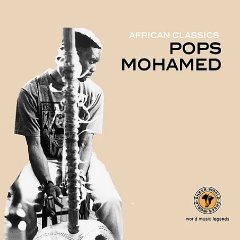
He spanned five decades of music while refusing to be pigeonholed: kwela, soul, jazz, and indigenous tradition. Fans nicknamed him the “Minister of Music”; Ismail Mohamed-Jan died on December 4, 2025, in Boksburg. His voice—from berimbau to kora—taught South Africans to see their own heritage as a global treasure.
In Brief
| Full name | Ismail Mohamed-Jan (Pops Mohamed) |
| Born | December 10, 1949, Benoni (Gauteng), South Africa |
| Died | December 4, 2025, Boksburg (Gauteng), South Africa |
| Field | Multi-instrumentalist musician, producer, composer |
| Instruments | Kora, mbira (thumb piano), berimbau, didgeridoo, mouth bow, guitar, keyboard |
| Genres | Jazz, kwela (South African township pop), soul, world music, Afro jazz |
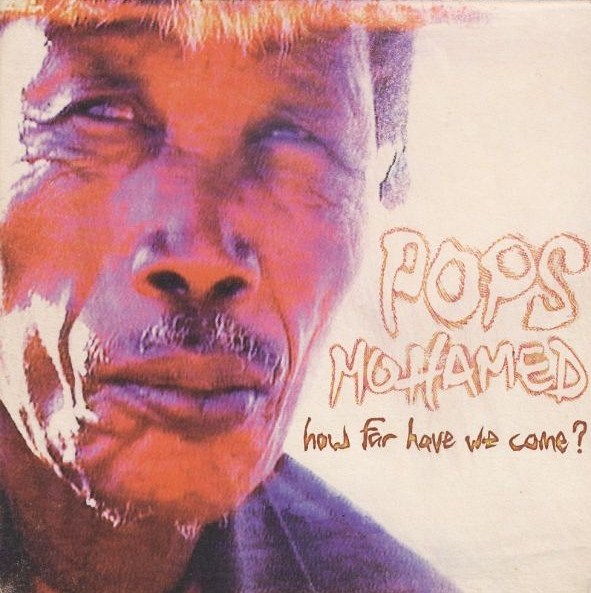
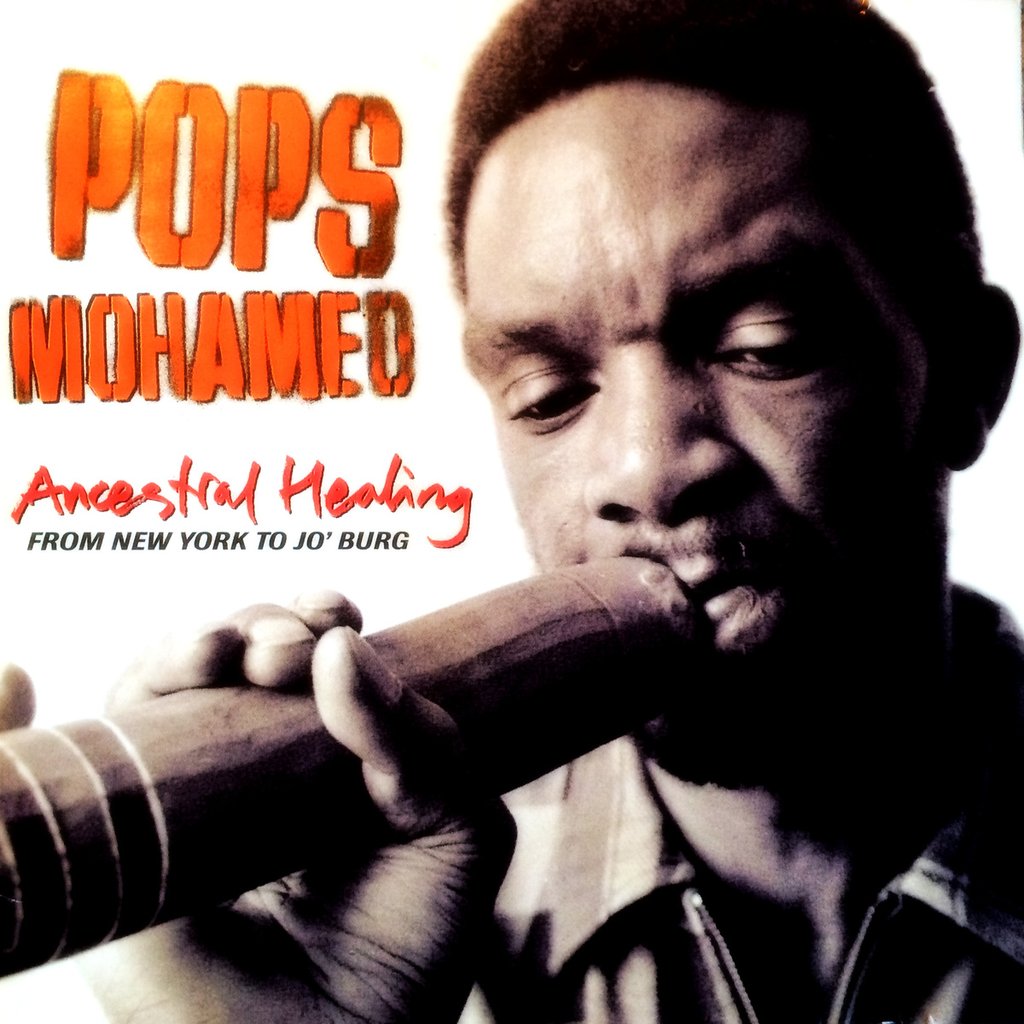
| Iconic works | Ancestral Healing (1995), How Far Have We Come (1996) |
| Awards | Arts & Culture Trust (2010), SAMA Lifetime Achievement (2023) |
Key Dates
| Year | Event |
|---|---|
| 1949 | Born in Benoni; the Population Registration Act forced the family to Reiger Park |
| 1963–64 | At age 14, founded Les Valiants (soul/Latin/kwela) |
| Early 1970s | The Dynamics; “I’m a Married Man” (1975) |
| 1970s–80s | Black Disco, then producer; mastered the mbira and indigenous instruments |
| 1991–92 | Local releases Kalamazoo and Sophiatown Society, nominated for Best Jazz Album at OKTV |
| 1994–95 | Outernational Meltdown sessions; went international with Ancestral Healing (1995) |
| 1990s | Recorded with the Kalahari San; released How Far Have We Come (1996) |
| 2010 / 2023 | Arts & Culture Trust, then SAMA Lifetime Achievement |
| Dec. 2025 | Died on December 4; remastered Kalamazoo, Vol. 5 reissued a few days earlier |
From Benoni to Dorkay House and Black Disco
Ismail Mohamed-Jan was born in December 1949 in the industrial town of Benoni. His father had Indian and Portuguese ancestry; his mother was of Xhosa and Khoisan descent. In mid-adolescence, the Population Registration Act forced the family to Reiger Park (then Stertonville), a area reserved for Coloureds. Accompanied by his father, he heard Rand workers playing mbiras and mouth bows outside shebeens while jazzmen played Count Basie on an old piano.
In his teens, he made round trips to central Johannesburg for Dorkay House and the Bantu Men’s Social Centre, hubs of Black artists. There he found his first guitar teacher—Gilbert Strauss—and heard Kippie Moeketsi rehearsing. At 14, he founded Les Valiants; in the early 1970s, The Dynamics. These bands also played in white clubs to pay school fees, sometimes behind a curtain. He himself taught the Yamaha keyboard and fell in love with Timmy Thomas and Marvin Gaye—“But then I was also influenced by Kippie Moeketsi and those melodies.”
Introduced by Rashid Vally (founder of the As-Shams label) to reedman Basil Manenberg Coetzee and, together with his childhood friend from Dorkay House, bassist Sipho Gumede, this blend took shape on record: “Dark Clouds”. Mohamed still did not dare call himself a jazzman, but Sipho and Basil would tell him: “just play what your heart is telling you. They were my mentors.” Success led to a second album with drummer Peter Morake, Black Discovery/Night Express—until white censors struck out the first two words. For him, Black Disco rejected the separation between Coloureds and Blacks imposed by the regime. With Children’s Society, an unsatisfactory cover band, he nevertheless scored a township hit in 1975 with “I’m a Married Man”, an original composition. In the shadow of the 1976 Soweto Uprising, with drummer Monty Weber, he created Movement in the City.
Tradition, Kalahari and Internationalization
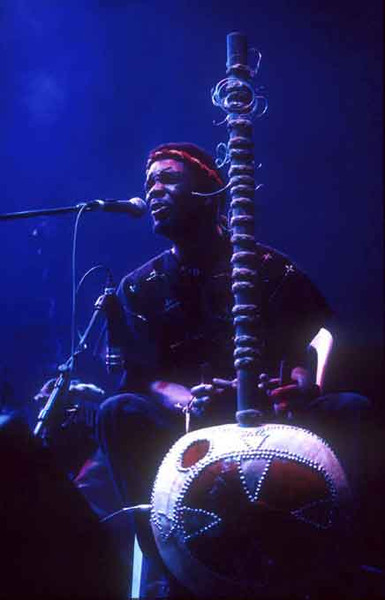
Mohamed also explored traditional instruments—mouth bows and flutes, berimbau (the South African capoeira stick), didgeridoo, various percussion instruments, and the Senegambian kora (long-necked harp). On the kora, his style combined West African motifs with South African idioms: “telling me more about what’s happening in myself … about who I am”. In the 1980s, he worked as a producer and engineer, perfecting the mbira. In the 1990s, he recorded with Kalahari San communities; his bands formed the basis of How Far Have We Come (1996), featuring young English jazzmen such as Chris Bowden and Roland Sutherland. His first international album, Ancestral Healing (1995)—recorded in New York with vibraphonist Valerie Naranjo and others—won the FNB-SAMA Award for Best Traditional Performance. He also recorded with Bruce Cassidy (former trumpeter with Earth Wind and Fire) on the duo set Timeless, toured Europe with the London Sound Collective and vocal artist Zena Edwards, produced Finding One’s Self by late pianist Moses Taiwa Molelekwa, and established a partnership with steelpan player Dave Reynolds. Sampling—he said—was “a nice way of educating young people about traditional sounds”. His mission remained constant: “taking the old and mixing it with the new. We’re not destroying the music: we’re giving it a way to live on.” In 2021 he was hospitalized; in December 2025, the remastered Kalamazoo, Vol. 5 (A Dedication to Sipho Gumede) was reissued a few days before his death. He had three children and seven grandchildren; over the years, he spent his time leading workshops in South Africa, Europe, and Asia.
Major Works
| Work | Year | Why It’s Essential |
|---|---|---|
| Ancestral Healing | 1995 | First international album; winner of the FNB-SAMA Best Traditional Performance award |
| How Far Have We Come | 1996 | Recording with Kalahari San people; transports indigenous songs into a funk groove |
| Kalamazoo I–V | 1991, 2002–2025 | Five reissues revisiting Khoisan and jazz melodies; Vol. 5 is reissued in remastered form just before his death |
| Sophiatown Society | 1992 | Nominated for Best Jazz Album at OKTV; a bridge between local jazz and the township scene |
| Timeless (with Bruce Cassidy) | — | An international tradition/jazz convergence in a duo set |
| Finding One’s Self (prod.) | — | Award-winning album by pianist Moses Taiwa Molelekwa, proof of his production capabilities |
Legacy and Influence
Bolepu Mathabatha, who repaired his kora a few days before his death—the Gambian instrument, over a hundred years old and named Fatima after his mother—described Mohamed as “the first person to introduce the instrument to us” and attributed a foundational role to him. Sello Galane, Tlale Makhene, Dizu Plaatjies, and Latozi “Madosini” Mpahleni carried this vision forward; young people such as Thandeka Mfinyongo, Azah, and the late Thabang Tabane continue to draw inspiration from it. As he used to say: “If people don’t understand where they come from, there is a hole in their soul.” His five decades and more than twenty albums remain a living legacy.
Sources and References
- “Pops Mohamed mixed old and new to reinvent South African music”, The Conversation, theconversation.com/pops-mohamed-mixed-old-and-new-to-reinvent-south-african-music-175710, accessed 27 November 2026.
- “Pops Mohamed”, Wikipedia (EN), en.wikipedia.org/wiki/Pops_Mohamed, accessed 27 November 2026.
- “Remembering Pops Mohamed”, Mail & Guardian (Rolland Simpi Motaung), mg.co.za/friday/2025-12-11-remembering-pops-mohamed, accessed 27 November 2026.
- “Statement on the passing of Pops Mohamed”, Department of Sport, Arts and Culture (DSAC), dsac.gov.za/Statement%20on%20the%20passing%20of%20Pops%20Mohamed, accessed 27 November 2026.
- “Pops Mohamed”, Music In Africa, musicinafrica.net/directory/pops-mohamed, accessed 27 November 2026.
- “Pops Mohamed — Biography, Discography”, AllMusic, allmusic.com/artist/pops-mohamed-mn0000354395, accessed 27 November 2026.