Biography
Princess Leoni Kangala
At only seventeen, the Central African public discovers her on a public show dedicated to new talents. Princess Leoni Kangala, alias “PLK,” takes the stage with the unrestrained energy of an African Tina Turner. Fifteen years later, after years singing in Parisian studios and diaspora orchestras, she releases her first album: Séngué Séngué (1990). Twenty-three years after her arrival in France, she returns triumphantly to Bangui for the millennium celebrations, acclaimed by thousands of compatriots. An extraordinary destiny for the ambassador of Central African song.
In Brief
| Full Name | Léonie Kangala |
| Stage Name | Princess Leoni Kangala (PLK) |
| Birth | June 26, 1953, Bossangoa, Central African Republic |
| Death | Unverified information |
| Occupation | Singer, former TV presenter, former tax controller |
| Genres | Congolese rumba, funk, soul, salsa, Central African folk |
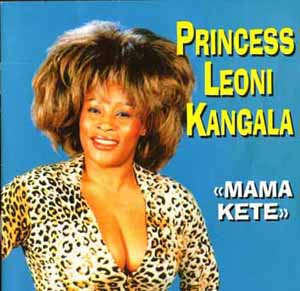
| Notable Works | Séngué Séngué (1990), Mama Kètè (1996) |
| Awards | RFI Discovery Prize (1981), Discovery Trophy (1990) |
Key Dates
| Year | Event |
|---|---|
| 1953 | Birth in Bossangoa, Central African Republic |
| 1959 | Death of her father Prosper Kangala in the plane crash on March 29, which also claimed President Boganda |
| 1974 | Completes her studies; becomes a TV presenter at Télévision Centrafricaine |
| 1977 | Founding of the group Manganga (“fetish” in sangho) with her five musician brothers |
| 1980 | Moves to Paris and joins African diaspora orchestras |
| 1981 | Winner of the RFI Discovery Prize |
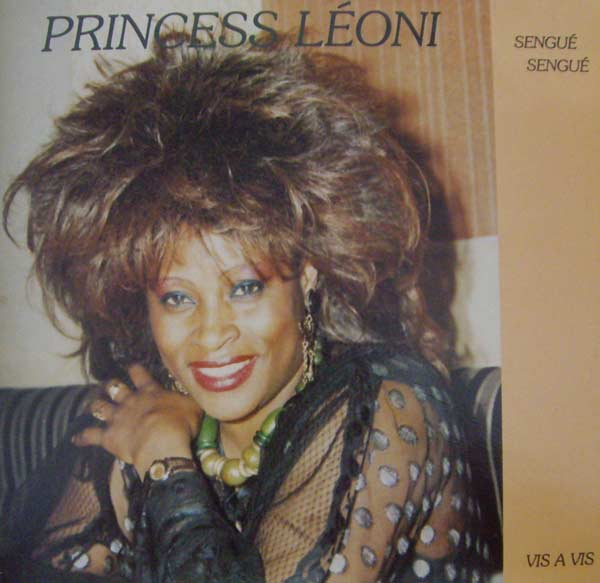
| 1990 | Release of her first album Séngué Séngué |
| 1996 | Release of her second album Mama Kètè |
| 2000 | Historic show in Bangui for the celebrations marking the entry into the third millennium |
Family Origins and Early Steps
Léonie Kangala’s destiny is set within the tragedy that struck Central Africa in 1959. At only five years old, she loses her father Prosper Kangala and President Barthélémy Boganda, both killed in the plane crash of March 29 that marked the end of an era. Coming from a family of musicians—her father was a guitarist and her two uncles, Bekpa and Prosper Mayélé, are among the pioneers of Central African music—young Léonie is immersed very early in the world of singing and guitar.
After completing her studies in 1974, she works as a TV presenter at Télévision Centrafricaine, then becomes a tax controller. But in 1977, a turning point: she launches with her five musician brothers the group Manganga, whose name in sangho, the national language of Central Africa, means “fetish.” Already at seventeen, the Central African public discovers her on a public show dedicated to new talents, and her performance makes an impression. Quickly solicited by the country’s greatest orchestras, she displays a formidable stage presence.
From Bangui to Paris: The Consecration
In 1980, the decision is made: Princess Leoni Kangala leaves Bangui for Paris. The French capital was then a musical crossroads for all of Francophone Africa. She takes the stage and does backing vocals, her Tina Turner look—sparkling outfit, enchanting dance steps—making a sensation. Central African studio managers invite her as a backup vocalist, and it is in this Parisian buzz that she refines her unique style, a blend of Congolese rumba, funk, soul, salsa, and Central African folklore.
Winner of the RFI Discovery Prize as early as 1981, and then the Discovery Trophy in 1990, two contests organized by Radio France Internationale to reveal new musical talents from the African continent, she sees her talent recognized beyond the borders of her community. She also joins the Maïgaro orchestra, founded by Central African guitarist Sultan Zembellat, where she shares the stage with musicians of diverse origins, including Congolese Umberto Luambo.
Albums, Commitments, and Final Act
In 1990, she releases Séngué Séngué, an album that makes history for Central African music recorded outside her country. The record, released on the French label Rass-Kass, explores a universe where funk crosses paths with rumba and local folklore. Mama Kètè (1996, Sephola Production) deepens this path: patriotic songs, love stories, and moralizing themes on child education, all sung in sangho, yakoma, French, English, and Spanish.
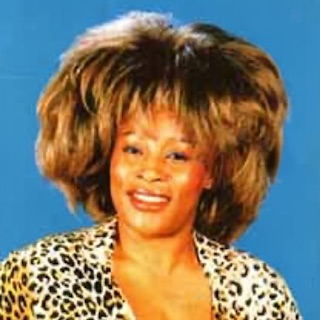
“Bête de scène, beauté de tigresse” (Maziki.fr), she does not hesitate to get her audience dancing, and her surprising resemblance to Tina Turner earns her requests for autographs. After years of a discreet but constant Parisian career, she returns triumphantly to Bangui in 2000 for the millennium celebrations, received with great acclaim by Central African authorities.
Major Works
| Work | Year | Why It Is Essential |
|---|---|---|
| Séngué Séngué | 1990 | First solo album, rumba-funk-soul-folk fusion; marks Central African music beyond its borders |
| Mama Kètè | 1996 | Second album; societal commitment on education and cultural identity |
Legacy
Princess Leoni Kangala is the emblematic figure of Central African diaspora music. Her journey—from Bossangoa to Télévision Centrafricaine, from Parisian orchestras to Bangui stages—illustrates the ability of an artist born in a country in development to conquer a continental musical space. While her discographic career ended in the 1990s, her name remains firmly inscribed in the anthology of Central African music, and her two albums continue to be cited as mandatory references by collectors and fans of African music.
Sources and References
- « Princess Leoni Kangala », Afrisson (Anthology of Central African music), https://www.afrisson.com/princess-leonie-kangala-7502/, accessed 24 October 2025.
- « Princess Leoni Kangala », Maziki.fr (Anthology of Central African music), https://maziki.fr/artistes-centrafricains/princess-leoni-kangala, accessed 24 October 2025.
- « Maïgaro », SPLA (Pan-African Scene of Paris), https://www.spla.pro/fr/fiche.groupe.maigaro.538.html, accessed 24 October 2025.
- Princess Leoni Kangala — Séngué Séngué (LP, PL 001), Rass-Kass, 1990; and Mama Kete (CD, P.L.K. 0002), Sephola Production, 1996, Discogs, https://www.discogs.com/, accessed 24 October 2025.
- « L’Histoire du Prix Découvertes RFI », RFI, https://www.rfi.fr/fr/podcasts/couleurs-tropicales/20211126-l-histoire-du-prix-d%C3%A9couverte-rfi-qui-c%C3%A9l%C3%A8bre-cette-ann%C3%A9e-ses-40-ans, accessed 24 October 2025.
- « Prix découvertes RFI », Wikipedia, https://fr.wikipedia.org/wiki/Prix_d%C3%A9couvertes_RFI, accessed 24 October 2025.
- Sultan Zembellat, Afrisson (Anthology of Central African music), https://www.afrisson.com/sultan-zembellat-4663/, accessed 24 October 2025.
- « Princesse Leoni Kangala », RecentMusic, https://recentmusic.com/artist/3qCOtSCjJJalTsRpzvetup, accessed 24 October 2025.