Musical History of the Central African Republic
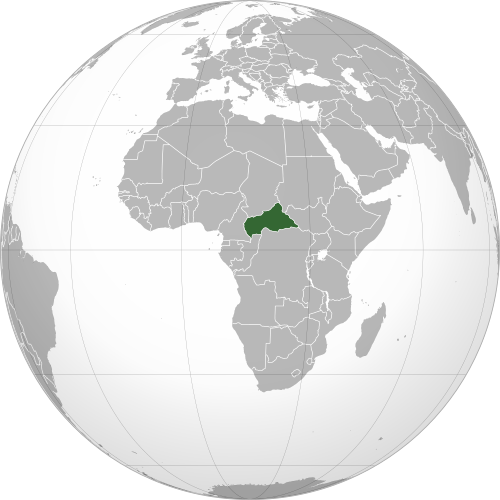
Jimmy Zakari’s saxophone, a Congolese guitarist based in Kinshasa during the 1940s, shaped modern Congolese rumba — long before Franco became a continental icon. From the polyphonies of the Aka Pygmies to the engaged rap of the 2000s, the music of the Central African Republic (CAR) is a story of mixing, exile, and resilience1.
From Forest Polyphonies to Bandas Brass
The CAR counts between 80 and 100 ethnic groups, each with its own traditions2. In the southern forests, the Aka, Mbati, and BaBenzélé Pygmies cultivate a complex vocal polyphonic music whose first recordings were produced in 1967 by the Swedish ethnomusicologist Simha Arom3. Their style, based on cyclic ostinatos and superimposed variations, resembles an African passacaille — a baroque form where each singer divides the same rhythmic period according to a different pattern4. These forest polyphonies influenced the entire musical space of Central Africa, including Congolese rumba5.
In the north and center, the Banda people developed a distinct tradition of polyphonic brass instruments. The ongo, wooden trumpets or antelope horn trumpets, are grouped in ensembles of eighteen and accompany initiation ceremonies6. UNESCO classified this music as a “great ethnomusicological discovery of the century”7.
The most widespread instrument remains the sanza, a thumb piano present in almost all ethnic groups. The Ngbaka use the mbela — an arched branch stretched with a struck string whose mouth serves as a resonator, considered the ancestor of string instruments8.
Academic recordings are preserved in the collections of OCORA, Smithsonian Folkways, and Harmonia Mundi. The album Bantu already compiled Mandja initiation music and the pop of Aime Jazz Band9.
The Precursors: Between Bangui and Kinshasa (1940-1960)
Jimmy Zakari (1926-1990), born in Brazzaville to a Central African mother, is the founding figure. At 16, he played with Paulo Kamba in the Central African community of Congo-Brazzaville. Arriving in Kinshasa (Léopoldville) in 1945, he rubbed shoulders with Wéndo Kolosoy, Bowané, and Manuel d’Oliveira — the first generation of Congolese rumba10.
In 1948, Zakari formed a standard orchestra — two guitars, double bass, timbales, congas, and saxophone — and taught young Joseph Kabasselé (Grand Kallé) classical guitar11. Returning to Bangui in 1957, he developed intense pedagogical activity there12.
In 1958, Radio Bangui broadcast “Mo gbi”, the first Central African song, sung by Prosper Mayélé and Rodolphe Békpa within the Centrafrican Band13. Independence was proclaimed on August 13, 1960 — the country came from Ubangi-Shari. Marcel Joachim Vomitiendé (1927-1994), a music professor and chief of staff to President Boganda, composed the Renaissance, national anthem, with piano accompaniment by Boganda14. Promoted to the Paris Conservatory, he returned in 1963 to found the Fanfare Nationale15. In 1967, he co-founded with Prosper Mayélé the École Nationale des Arts de Bangui16.
The Golden Age of Bangui Orchestras (1960-1979)
The 1960s saw the emergence of orchestras directly inspired by great Congolese ensembles. Tropical Jazz, founded in 1954 by Prosper Mayélé, was the first modern orchestra17. Mayélé then founded Centrafrican Jazz in 1963; Rodolphe Békpa created Vibro Success and Vibro Mayos18. In 1964, Békpa introduced the drum kit into Congolese rumba — a first for a Central African musician19.
Other notable formations: Rocka Fiesta (Charlie Perrière, 1961, later Tropical Fiesta), Succès Flash (Diable Kombas and his Damago), Les Anges Noirs (Déhous Timossa), and Los Négritos — which became Makembé when Bokassa demanded the removal of Spanish names20.
Under Jean-Bédel Bokassa (1966-1979), orchestras benefited from intense state patronage. Vibro Success became a state orchestra, Tropical Fiesta an imperial formation. Bokassa projected a musical production unit in Béréngo — 24-track studio, pressing plant, and pan-African radio “Africa No. 1”21. The structures were built but the project failed when Dacko overthrew Bokassa in 197922.
This period left an important discographic legacy: labels like Disques France-Afrique published recordings of Centrafrican Jazz and other Bangui groups, now sought after23.
Exile and Diaspora (1980-2000)
Bokassa’s fall left a musical void that neither Dacko’s return nor General Kolingba’s coup d’état filled. The 1980s and 1990s marked the mass exile of Central African artists.
Sultan Zembellat (1959-2010), whose real name is Ghislain Jean-Baptiste Zembellat, is the most prominent figure24. From a musical family, his uncle Joachim Marcel Vomitiendé (leader of the Fanfare Nationale) taught him music. A graduate of Dakar’s École des Beaux-Arts, he sang in Sango, ngbaka, lingala, Wolof, Spanish, and French25. Founding member of African Lokombe (1976), he settled in Paris where he created Kongo-Wara, Kokombo Stars, and Maïgaro, and founded the APMA, dedicated to promoting Central African artists26. His albums — Mea Culpa (1985), Vini Danse (1987), Séré Boulon (1996), Baténgué (2007) — fused Bangui rumba, Pygmy polyphonies, and salsa27.
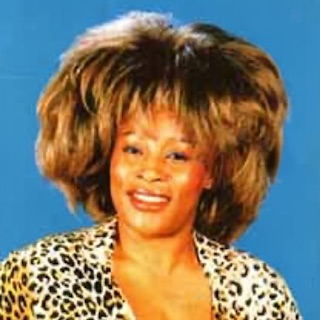
Others made careers abroad: Charlie Perrière (Tropical Fiesta), Laskin Ngomateke (Canon Star), Princess Leoni Kangala28. The latter released Mama Kété in 1996, a noted album29.
Successive armed conflicts (1996, 2004-2008, 2012-2014) destroyed musical infrastructure: Radio Bangui archives burned, instruments shared, studios closed30.
Renaissance: hip-hop, zouk-love and new talents
Hip-hop arrived in Bangui at the beginning of the 1990s, following a concert by French rapper MC Solaar. Bassé Freddy (Galère Suprême), from the Castor neighborhood, is a pioneer who discovered rap in 198231.
The first rap festival (Festi Rap) was organized in 1997 by Guy Thierry Alima. The group Sewa Soul released the first Central African rap album, with “Baissez vos armes,” an anti-conflict anthem widely broadcast32. The compilation Bango’s Rap 1 presents the cream of Bangui rap: Sector O+, Le Staff, Sons of Sun, Kotangbanga, Black Bino33. In 2007, the Alliance française launched the Sümä festival; its second edition in 2008 was under the patronage of Didier Awadi (Senegalese rapper), in front of more than 12,000 spectators34.
Central African rappers use their art as a political weapon. Balthazar Guevara (Sons of Sun) criticizes the regime of François Bozizé face camera35.
Princia Plisson, known as Cool Fawa, began in 2010 in a male rap group, MC Fonctionnaire, before abandoning rap deemed “dangerous and poorly paid”36. She reinvented herself in zouk-love and afrobeat: “On va se marier” (2018) accumulated more than 50,000 YouTube views37. At 27 years old, Cool Fawa is one of the most-followed Central African artists on social networks38.
In the diaspora, Idylle Mamba (soul and blues, collaboration with Youssou N’Dour) and Laetitia Zonzambé (album Sanza, Montreal 2014) continue to carry Central African music39.
Did you know? The national anthem La Renaissance was composed in 1958 by Barthélémy Boganda, the first president, with music by Frenchman Herbert Pepper — who also composed the Senegalese national anthem40.
Founding figures
| Nom | Période | Apport |
|---|---|---|
| Jimmy Zakari (1926-1990) | 1940s-1970s | Trainer of the first generation of Congolese rumba, returns to Bangui to train young people |
| Prosper Mayélé (1920s-1997) | 1950s-1980s | Founder of Tropical Jazz, Centrafrican Jazz, best African guitarist in N’Djamena (1972) |
| Marcel Vomitiendé (1927-1994) | 1950s-1980s | National band, École des Arts, national anthem |
| Rodolphe Békpa | 1950s-1970s | Vibro Success, introduced drums into Congolese rumba |
| Charlie Perrière | 1960s-1980s | Rocka Fiesta / Tropical Fiesta |
| Sultan Zembellat (1959-2010) | 1970s-2000s | Parisian diaspora, pygmy-rumba-salsa fusion |
| Princess Leoni Kangala | 1990s-present | Mama Kété (1996), voice of the diaspora |
| Cool Fawa (Princia Plisson) | 2010-present | Zouk-love, afrobeat, YouTube icon |
A future to rebuild
Central African music is that of a country at the heart of Africa which played a central role in the birth of Congolese rumba — the dominant genre on the continent for more than fifty years41. From Jimmy Zakari to Cool Fawa, passing through pygmy polyphonies and Sector O+ rap, it is a story of mixing, exiles, and resilience.
Today, after decades of conflicts that scattered musicians and destroyed archives, the local scene attempts to rebuild itself. Diaspora artists continue to promote musical heritage from Paris, Montreal and elsewhere. Bangui hip-hop, carrying messages of peace, speaks to a youth that has only known war42.
Central African music is not a museum. It lives, it evolves, and it still has things to say.
Sources and references
-
Kisliuk, Michelle. “Central African Republic: Modern and Contemporary Performance Practice.” The SAGE International Encyclopedia of Music and Culture, 2021. ↩︎
-
Wikipedia contributors. “Music of the Central African Republic.” Wikipedia, accessed October 25, 2025. ↩︎
-
Abram, Dave. “Sounds From the African Rainforest.” In Broughton, Simon et al. (Ed.), World Music, Vol. 1. Rough Guides Ltd, Penguin Books, 2000. ↩︎
-
BBC Music. “Pygmy music: the music of the BaAka forest people,” BBC Music, accessed October 25, 2025. ↩︎
-
Bensignor, François. Les Musiques du monde. Larousse, 2002. ↩︎
-
UNESCO. “Banda Music of the Central African Republic,” UNESCO intangible heritage database, accessed October 25, 2025. ↩︎
-
Kisliuk, Michelle, Op. cit. ↩︎
-
Wikipedia contributors, Op. cit. ↩︎
-
Graham, Ronnie. Stern’s Guide to Contemporary African Music, Vol. 1. Zwan Publications, 1988. ↩︎
-
Maziki.fr. “Histoire de la Musique Centrafricaine en quelques dates,” accessed October 25, 2025. https://maziki.fr ↩︎
-
Ibid. ↩︎
-
Maziki.fr, Op. cit. ↩︎
-
Maziki.fr, Op. cit. ↩︎
-
Maziki.fr, Op. cit. ↩︎
-
Maziki.fr, Op. cit. ↩︎
-
Kisliuk, Michelle, Op. cit. ↩︎
-
Kisliuk, Michelle, Op. cit. ↩︎
-
Maziki.fr, Op. cit. ↩︎
-
Maziki.fr, Op. cit. ↩︎
-
Kisliuk, Michelle, Op. cit. ↩︎
-
Maziki.fr, Op. cit. ↩︎
-
Britannica. “Central African Republic — The arts and cultural institutions,” accessed October 25, 2025. ↩︎
-
Maziki.fr, Op. cit. ↩︎
-
Musiques d’Afrique. “Sultan Zembellat,” Frank Bessem, accessed October 25, 2025. https://musiques-afrique.net/restofafrica/art-zembellat.html ↩︎
-
Afrisson. “Sultan Zembellat,” accessed October 25, 2025. https://afrisson.com/sultan-zembellat-4663 ↩︎
-
Musiques d’Afrique, Op. cit. ↩︎
-
Afrisson, Op. cit. ↩︎
-
Kisliuk, Michelle, Op. cit. ↩︎
-
Maziki.fr, Op. cit. ↩︎
-
Kisliuk, Michelle, Op. cit. ↩︎
-
Music In Africa Foundation. “Hip hop in Central African Republic,” July 24, 2017. https://musicinafrica.net/magazine/hip-hop-central-african-republic/ ↩︎
-
Music In Africa, Op. cit. ↩︎
-
Music In Africa, Op. cit. ↩︎
-
Music In Africa, Op. cit. ↩︎
-
Music In Africa, Op. cit. ↩︎
-
VOA Afrique. “Cool Fawa, chanteuse star de Centrafrique,” AFP, August 8, 2022. https://www.voaafrique.com/a/cool-fawa-chanteuse-star-de-centrafrique/6692484.html ↩︎
-
VOA Afrique, Op. cit. ↩︎
-
VOA Afrique, Op. cit. ↩︎
-
Kisliuk, Michelle, Op. cit. ↩︎
-
Wikipedia contributors, Op. cit. ↩︎
-
Bensignor, François, Op. cit. ↩︎
-
Music In Africa, Op. cit. ↩︎