Biography
Sultan Zembellat: the musical ambassador of Central Africa
The sound of rumba blends with Pygmy polyphonies, and Sultan Zembellat’s voice rises in Sango. This man did not seek glory: he wanted the world to hear Central Africa[^1].
In brief
| Full name | Ghislain Jean-Baptiste Zembellat, known as “Sultan” |
| Birth | March 15, 1959, Bangui, Central African Republic |
| Death | February 12, 2010, Paris, Cochin hospital |
| Field | Singer, guitarist, composer; rumba, soukous, afro-salsa |
| Emblematic works | Mea Culpa, Séré Boulon, Le Baténgué, Renaissance |
| Distinctions | — |
Key dates
| Year | Event |
|---|---|
| 1959 | Birth in Bangui into a family of musicians |
| 1974 | Start of career at age 15 |
| 1976 | Founding member of African Lokombe |
| 1983 | Co-founder of Kongo-Wara in Paris (future Kokombo Stars) |
| 1984 | Release of Mea Culpa |
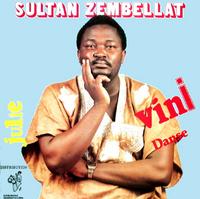
| 1987 | Release of Vini dansé |
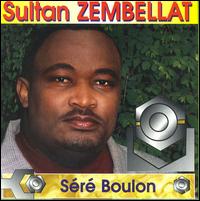
| 1996 | Release of Séré Boulon |
| 2007 | Return with Le Baténgué, Renaissance and Café Noir |
| 2009 | Co-founder of the OCCF |
| 2010 | Death in Paris |
A musician’s journey, builder and ambassador
Ghislain Jean-Baptiste Zembellat was born on March 15, 1959 in Bangui[^2]. His schoolmates called him “Sultan” because he excelled in history and recited a long list of Central African sultans by heart[^3]. He grew up cradled by music: his entire family sang and played, and his uncle Joachim Marcel Vomitiende, leader of the national brass band, taught him the fundamentals. At fifteen, he began his career[^4].
After studies at the École des Beaux-Arts in Dakar, where he obtained a DEUG in fine arts, then a master’s degree in social economics in Paris[^5], he also holds a DEFA, the State Diploma for Animation Functions[^6]. These diplomas testify to an ambition that goes beyond the stage: building structures, training, federating.
Like many Central African musicians of the 1980s, Sultan settled in Paris to escape the precarious conditions of a country in crisis[^7]. But the diaspora became his playground. He co-founded Kongo-Wara in 1983, which became Kokombo Stars, then created and directed the group Maïgaro, a multicultural orchestra[^8]. “Music has no borders and it is diversity that makes unity,” he would say[^9].
It was this conviction that guided his association mission. In 1983, he founded the APMA, the Association for the Promotion of African Music, to help other Central African artists produce albums or organize concerts[^10]. With Maïgaro, he animated cabarets and Parisian venues[^11]. Sultan sang in Sango, Ngbaka, Lingala, Wolof, French, and even Spanish[^12]. His themes: love, nostalgia for Bangui, the land of his ancestors, national awakening[^13]. In 2005, he published a scathing text, “Why Central African Artists Want the Separation of Culture from Sports,” denouncing the neglect of rulers toward creators[^14].
After ten years without a release, Sultan returned with force in 2007 with three albums. Le Baténgué blends Bangui rumba and salsa, Pygmy polyphonies and popular dance rhythms[^15]. Renaissance mixes rumba, soukous and traditional music[^16]. With Papa Noël and Papy Oviedo, he participated in Café Noir (Tumi Music), recorded in Havana, London and Paris[^17].
In February 2010, Sultan passed away at the Cochin hospital in Paris[^18]. Victor Bissengué paid tribute: “I am losing a younger brother with whom I often exchanged on issues of culture, media, association and individual projects”[^19]. The OCCF, of which he was treasurer and co-founder, issued a laudatory statement[^20]. An anthology project of Central African music, on which he was working, remains unfinished[^21].
Major works
| Work | Year | Why it is essential |
|---|---|---|
| Mea Culpa | 1984 | First album: musical identity between Congolese rumba and Central African traditions |
| Vini dansé | 1987 | First vinyl; Yakalagnan and Julie testify to his multi-language mastery |
| Séré Boulon | 1996 | Recorded in Paris; Bangui and So Mo Goué among the key tracks |
| Le Baténgué | 2007 | Bangui rumba and salsa; Africa Tchatchatcha appears on the Putumayo compilation Baila! |
Legacy
Sultan Zembellat was not just an artist: he was a builder[^22]. His work with APMA and Maziki.fr allowed preserving part of Central African musical memory, threatened by the destruction of Radio Bangui archives[^23]. The site he animated, maziki.fr, continues to live as an archive[^24]. His unfinished anthology project remains a flag planted in the ground[^25].
Sources and references
-
“Sultan Zembellat”, Musiques d’Afrique (Frank Bessem), https://musiques-afrique.net/restofafrica/art-zembellat.html, accessed October 24, 2025.
-
Sultan Zembellat, Finnish Wikipedia, https://fi.wikipedia.org/wiki/Sultan_Zembellat, accessed October 24, 2025.
-
“Sultan ZEMBELLAT”, Maziki.fr (artist’s website), https://maziki.fr/artistes-centrafricains/sultan-zembellat, accessed October 24, 2025.
-
“Central African musician Sultan Zembellat is no longer”, Maziki.fr, https://maziki.fr/actualites/le-musicien-centrafricain-sultan-zembellat-nest-plus, accessed October 24, 2025.
-
“The artist Jean-Baptiste Ghislain ZEMBELLAT known as Sultan Zembellat has died”, Sangonet, https://www.sangonet.com/afriqg/PAFF/Dic/actuC/ActuC10/Sultan-Zembellat-deces.html, accessed October 24, 2025.
-
“Séré Boulon”, AllMusic, https://allmusic.com/album/sr-boulon-mw0000904991, accessed October 24, 2025.
-
“Sultan Zembellat – Julie / Vini Danse”, Discogs, https://discogs.com/release/7622744-Sultan-Zembellat-Julie-Vini-Danse, accessed October 24, 2025.
-
“Music of the Central African Republic”, Grokipedia (verified), https://grokipedia.com/page/music_of_the_central_african_republic, accessed 24 October 2025.
-
“Salsa Africaine”, Tumi Music, http://tumimusic.com/Papa-Noel/Sultan-Zembellat/Salsa-Africaine/gbbft0600004/tracks/music, accessed 24 October 2025.
-
“Ernie’s African Odyssey Pt 9 – Central African Republic”, 27leggies Blog, https://27leggies.blogspot.com/2023/07/ernies-african-odyssey-pt-9-central.html, accessed 24 October 2025.