
Biography
Ramiro Naka: the king of gumbé
In 1988, in a Paris studio, Ramiro Naka gazes at the magnetic tapes and realizes he has just recorded his first professional album. Twenty years earlier, this young man, chased from his country by post-independence tensions and racism in Lisbon, wandered from one stage to another. Fifty-five years later, he returns to the studio in Salvador de Bahia and signs a duo that soon accumulates one hundred and forty thousand views on YouTube.
In brief
| Full name | Ramiro Naka Gomes Dias |
| Birth | 1955, Guinea-Bissau |
| Field | Gumbé-blues créol, afro-fusion; guitar, vocals, percussion |
| Signature works | “Tchon Tchoma”, Salvador, “Nduro Tene Po Gros” |
| Awards | Film Po di Sangui in official competition at the Cannes Film Festival 1996 |
Key dates
| Year | Event |
|---|---|
| 1955 | Born in Guinea-Bissau, son of an official traveling the Portuguese colonial country |
| 1972 | At seventeen, joins Cobiana Jazz, the first group to sing in Portuguese créol |
| 1974-1976 | Joins N’kassa Cobra; accused of collaboration, goes to Lisbon then Paris |
| 1982-1985 | Releases Je viens d’ailleurs and Bikelia; first collaborations with João Motta |
| 1988 | Meets Swiss producer Fred Laser, records Salvador two years later |
| 1992 | Release of Salvador (Mango/Island); film debut with Les Yeux bleus de Zombra |
| 1996 | Composer for the film Po di Sangui (Flora Gomes), in official competition at Cannes |
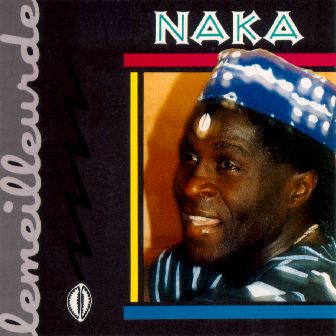
| 2008-2010 | Gumbe blues Kreol and double album Rencontre Nakasadarte Lusofona, a unifying project |
| 2016 | Solo return with Nduro Tene Po Gros (Atensao Sida), an AIDS prevention clip |
| 2025 | Historic duo with Tabanka Djaz on “Tchon Tchoma”, one hundred and forty thousand YouTube views |
Origins, Paris, and international career
Born in 1955 in a country still under Portuguese domination, Ramiro Naka Gomes Dias grew up traveling across Guinea-Bissau following his father’s missions as an official. This early exposure to the country’s musical mosaic — Peul rhythms, Malinke melodies and mandjakes, the musicality of Portuguese créol — forged an insatiable ear. AllMusic notes that as a child, he was sent home from the choir for asking why the saints depicted were all white. At seventeen, he joined Cobiana Jazz and then Nkassa Cobra, a flagship group specializing in gumbé. The 1974 independence earned him accusations of collaboration with the Portuguese; racism expelled him to Lisbon in 1976 and then to Paris. There, he formed the group Sama Myniendo before embarking on a solo career in 1981.
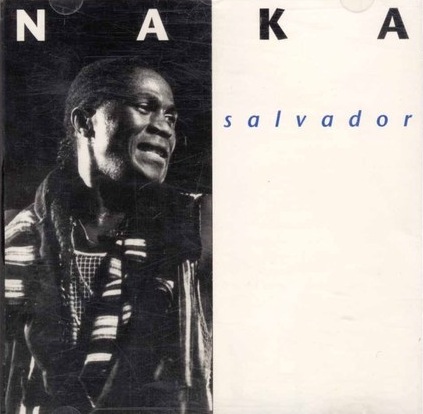
His international recognition arrives with Salvador (1992, Mango/Island), produced by the Swiss Fred Laser. With João Motta (guitar) and Kebson (drums), Naka records a fundamental album marked by gumbé — this traditional rhythm played on the large drums of Bissau-Guinean griots. The tracks “Ou Moundou Balas” and “Fanta Mané” become genre references. His cinema crowns him: Po di Sangui by Flora Gomes, in competition at Cannes 1996. He acts in Les Yeux bleus de Zombra, composes for Bruno Nuytten and Claude Lelouch. In parallel, he embodies a polyglot artist: actor, storyteller, and naïve painter.
Naka becomes a unifying artist for the Lusophone world. The Nakasadarte project (mid-2000s) brings Brazilian, Cape Verdean, Angolan, and Bissau-Guinean artists together on stage and in the studio, culminating in 2010 with the double album Rencontre Nakasadarte Lusofona. He settles in Salvador de Bahia, records with Carlinhos Brown, Giba Gonçalves, and the group Olodum. In 2016, his clip Nduro Tene Po Gros (Atensao Sida) combines gumbé and Senegalese mbalax for AIDS prevention. Based in Montreuil for nearly thirty years, he describes the neighborhood as “a city of encounters in the old-fashioned sense” — and still composes, with this perseverance that led to writing in “Ou Moundou Balas” that the world of singers would be more important than being king.
Major works
| Work | Year | Why it is essential |
|---|---|---|
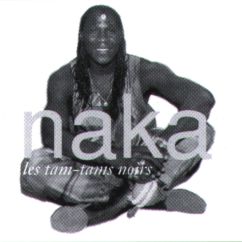
| Naka | 1981 | First solo album: lays the foundations of gumbé-blues créol in voice and bare guitar |
| Salvador (Mango/Island) | 1992 | First international album; Bissau-Guinean gumbé on the world music stage |
| Po di sangui (soundtrack) | 1996 | Cannes score; African tradition and cinematic sensibility in dialogue |
| “Tchon Tchoma” (single) | 1990 | The most known hit, sung in créol; nostalgic for the lost country. Revitalized in 2025 |
| Rencontre Nakasadarte Lusofona (double album) | 2010 | Peak of the unifying project; twelve Lusophone artists united around a shared ideal |
Legacy and influence
Ramiro Naka remains the tutelary figure of gumbé on an international scale. As the first Bissau-Guinean musician to make this genre known outside his country, he paves the way for generations of artists — from group Tabanka Djaz to Nkassa Cobra Junior. His social engagement, from AIDS prevention to children’s storytelling (Kali et la calebasse), makes him far more than a musician: an intellectual who uses art to connect Lusophone diasporas. Fifty-five years after his first steps in the studio, he continues to circulate his music between continents.
Sources and references
- “Ramiro Naka”, Afrisson, https://www.afrisson.com/naka-ramiro-710/, accessed November 16, 2025.
- “Naka — Biography, Discography”, AllMusic, https://www.allmusic.com/artist/naka-mn0000856765, accessed November 16, 2025.
- “Ramiro Naka”, Music In Africa, https://musicinafrica.net/fr/directory/ramiro-naka, accessed November 16, 2025.
- “Ramiro Naka - Fiche Personne”, Africultures, http://africultures.com/personnes/?no=16454, accessed November 16, 2025.
- « Ramiro Naka », Africa Music Library, https://africanmusiclibrary.org/artist/Naka%20Ramiro, accessed 16 November 2025.
- « Ramiro Naka », World Music Production, https://worldmusicproduction.org/en/artist/ramiro-naka, accessed 16 November 2025.
- « Ramiro Naka e Tabanka Djaz célèbrent l’ rencontre », PÚBLICO Brasil, https://www.publico.pt/2025/12/15/publico-brasil/noticia/ramiro-naka-tabanka-djaz-celebram-encontro-nova-versao-cancao-tchon-tchoma-2158080, accessed 16 November 2025.
- « Ramiro Naka Ramiro », Likembe blog (John Burch), https://likembe.blogspot.com/2009/05/ramiro-naka-ramiro.html, accessed 16 November 2025.
- « Ramiro Naka », Africine, https://www.africine.org/index.php/personne/ramiro-naka/16454, accessed 16 November 2025.