Guinea-Bissau Music
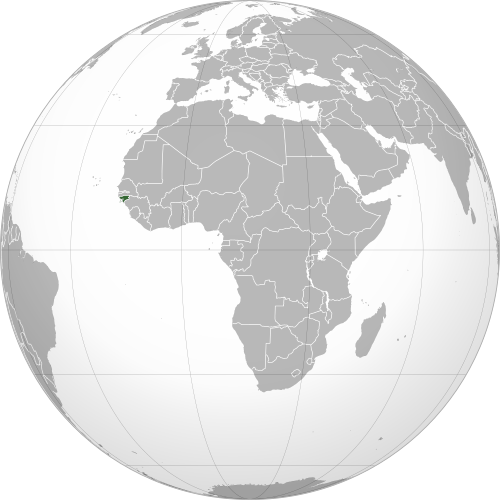
At the heart of West Africa, nestled between Senegal and Guinea, Guinea-Bissau — a country of 1.6 million inhabitants on the Atlantic coast — is an overlooked musical gem1. Here, where Balanta, Mandingues, Fulas and Manjacs coexist, music is not entertainment: it is a living archive, a political weapon and the cement of a nation born in struggle2. The gumbe3 — polyrhythmic rhythm of Caribbean origin that returned to the continent with freed slaves and blended with local traditions — is its compass4. From the water drums of tina to the acoustic guitars of Bissau, the country’s musical history is that of a people who have always sung to exist5.
From Griot Villages to the Contemporary Stage: A Story of Resistance and Resilience
Long before the first records, bissau-guinean music circulated between villages. The jelis, or griots6, descended from generations of musician-historians who transmitted the epic of battles and collective wisdoms7. Each ethnicity possessed its instruments: the balafon of the Mandingues, the kora (21-string harp), the kusundé (balanta gourd-lute) and the tina — an overturned hollow gourd in a water tub8.
These women organized music within a unique social framework in West Africa: the mandjuandadi. Stemming from the social organization of women, these are age associations where women gather to sing, dance and strengthen solidarity9. The tina played a central role there: the rhythm emerged from daily work — rice pounding, washing in ponds — and transformed into an instrument of inter-village communication10. This animist tradition subsequently impregnated the music of liberation in the 20th century, making women the cultural founders of the nation11.
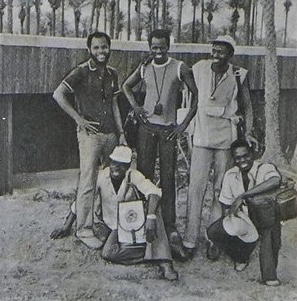
By the late 1960s, Portuguese colonialism banned Portuguese creole as a language of resistance. Yet, it was in the streets of Bissau that music shifted toward liberation12. In 196913, José Carlos Schwarz — born in 1949 into a cosmopolitan family in Bissau, of German, Cape Verdean and Guinean origin — founded Cobiana Djazz with Aliu Barry and the Castro Fernandes brothers14. Nicknamed « the voices of the people »15, the group drew from local traditions — gumbe, kussundé, broksa, nalou — and fused them with jazz, funk and soul to create engaged afro-pop16. In creole, they sang anticolonial resistance, urging young people to join the PAIGC maquis17. Schwarz’s figure remains legendary: imprisoned in 1971 and tortured for two years18, his songs — like « Na Kolonia » and « Mindjeris Di Panu Pretu » — continue to haunt consciences19. On May 27, 1977, at age 27, Schwarz died in a mysterious plane crash near Havana while on diplomatic assignment in Cuba20. A massive cortege accompanied him on June 1st21. Cobiana Djazz became the first group to record a gumbe album in 1973, with M’Ba Bolama by Ernesto Dabo22.
On September 24, 1973, Guinea-Bissau proclaimed its independence. Music entered the era of national construction23. Super Mama Djombo, founded in 1973 by Adriano Atchutchi24, embodied this first musical identity of the new country25. Its name — which refers to the protective god of warriors26 — was no accident. The group fused gumbe, mandingue music, creole sounds and Angolan kizomba27. Its hit « Pamparida »28, an adaptation of a children’s song, became a national anthem29. In 1978, the album Na Cambança, recorded in Lisbon30, propelled the group on tour31. Women burst onto the front stage: Dulce Neves, singer of Super Mama Djombo, was the first woman to reach a wide audience32. Manecas Costa (born in 1967 in Cacheu), trained on guitar by Schwarz himself33, joined Africa Libre at age 10 before becoming the country’s most emblematic guitarist34. In 2003, thanks to musicologist Lucy Duran35, the BBC transported a mobile studio to Guinea-Bissau to record Paraiso di Gumbe36 — the first album recorded on bissau-guinean territory37. Costa, UNICEF goodwill ambassador38, blends in his songs the beauty of the country with issues of corruption and poverty39.
On November 1st, 1998, the civil war erupted40. Clashes between forces loyal to President João Bernardo Vieira and Constantino Meneses’ faction ravaged Bissau41. The 1998-1999 war42 left a devastated country and a dismantled cultural scene. Dissident artists suffered reprisals: Justino Delgado43 was arrested for criticizing the president; Zé Manel44 was banned after his « Tustumunhus di aonti » (Testimonies of Yesterday) from 198345. Bissau-guinean music went into diaspora — Portugal, Cape Verde, Guinea, South Africa — and generations grew up unaware that their own homeland possessed such a rich musical scene46.
Since the 2000s, the scene has been rebuilding. Eneida Marta (born in 1973)47, UNICEF ambassador48, carries the voices of the country on the international stage49. Her fifth album Ibra (2019)50, dedicated to her koraist friend Ibrahim Galissa51, blends world music pop, African rhythms, samba and zouk52. Her songs address love, politics and the female condition53. In 2020, she published Kuma54 — a mix of trap and djambadon55 — and launched a cry of revolt: « The people are not a trash can »56. Karyna Gomes57 (born in 1976 in Bissau)58, daughter of a Guinean father and Cape Verdean mother, fuses court music and global sounds59. Her album Mindjer (« Woman »)60 (2014) was praised by specialized press and ranked among the 10 best albums of the year by BLITZ61. Her second opus N’na (« Mother »)62 (2021), conceived between Portugal and Mozambique63, pushes the boundaries of creole toward afro-pop, soul-jazz and electro-groove64. In 2026, her album Kantigas di Liberdadi pays homage to the liberation repertoire65.
Hip-hop developed since the 1990s66. Patche di Rima67 — « the gumbe-rap bad boy »68 — published Dimi pa nha Djintis, Vol. 2 (2026)69. Lil As70 released 3 Million (2025) and Gabú Na Bissau71. Abeny reunited Manecas Costa, Mikas Cabral, Maio Coopé and Patche di Rima in N’godal (2025)72, proving that composition, rap and studio production finally dialogue under the same roof73.
The documentai
re Nteregu (2024)74, selected at the Toronto Black Film Festival75 and the BAM Africa Film Festival76, offers the country an international showcase. The film — « a visual and sonic poem »77 — shows how ancestral instruments (kora, balafon, tina) and unheard witnesses (Ramiro Naka, Adriano Atchutchi, Eneida Marta, Karyna Gomes, Nino Galissa, Dulce Neves78) tell the story of intergenerational transmission. The country’s music no longer lacks voices79. But it still lacks studios80, distribution circuits, and institutional recognition81. « I believe my music makes people see my land in a more beautiful and positive way »82. Gumbe has crossed oceans, colonies, and wars. It will continue83.
Founding Figures
| Name | Period | Role | Major Work |
|---|---|---|---|
| José Carlos Schwarz | 1949–1977 | Founder of Cobiana Djazz, poet | Lua ki di nos |
| Ernesto Dabo | Active since 1972 | Precursor of modern gumbe | M’Ba Bolama |
| Adriano Atchutchi | Active since 1973 | Founder of Super Mama Djombo | Na Cambança |
| Manecas Costa | Born in 1967 | Guitarist, UNICEF ambassador | Paraiso di Gumbe |
| Eneida Marta | Born in 1973 | International singer | Ibra |
| Karyna Gomes | Born in 1976 | Singer, composer | Mindjer |
| Dulce Neves | Active since 1978 | Female pioneer | Udjus di Mininus |
| Naka Ramiro | Active since 1973 | “King of gumbe” | N’Kassa Cobra |
Sources and references
-
de Klein, Guus. « The Backyard Beat of Gumbe ». 2000. In Broughton, Simon and Ellingham, Mark World Music, Vol. 1: Africa, Europe and the Middle East, p. 499-504. Rough Guides Ltd, Penguin Books. ↩︎
-
World Music Central. « Jeli Culture in Guinea-Bissau ». [online], accessed 25 October 2026. https://worldmusiccentral.org/world-music-resources/musician-biographies/guinea-bissau-music/ ↩︎
-
« Music of Guinea-Bissau », Wikipedia. https://en.wikipedia.org/wiki/Music_of_Guinea-Bissau ↩︎
-
BlueTree Audio. « Gumbe, Kriol and the Engine of Social Song ». https://music.bluetreeaudio.com/countries/guinea_bissau/gumbe-kriol-and-social-song ↩︎
-
« Le gumbe — ce rythme polyrythmique d’origine caribéenne revenu sur le continent avec des esclaves affranchis et métissé aux traditions locales », El País, 17 April 2004. ↩︎
-
« Les jelis, ou griots, descendaient de générations de musiciens-historiens », World Music Central. ↩︎
-
« Chaque ethnie possédait ses instruments : le balafon des Mandingues, la kora, le kusundé et le tina », Wikipedia. ↩︎
-
BlueTree Audio, loc. cit. ↩︎
-
Mansa.fr. « Tina : un héritage musical des femmes de Guinée-Bissau ». [online], accessed 25 October 2026. https://mansa.fr/en/evenement/tina-un-heritage-musical-des-femmes-de-guinee-bissau/ ↩︎
-
« Le rythme émergeait du travail quotidien — battage du riz, lavage dans les mares », Mansa.fr. ↩︎
-
« Cette tradition, d’origine animiste, a ensuite imprégné la musique de libération », Mansa.fr. ↩︎
-
Pan African Music. « José Carlos Schwarz, le décolonial légendaire de Guinée-Bissau ». [online], accessed 25 October 2026. https://pan-african-music.com/en/jose-carlos-schwarz-lua-ki-di-nos/ ↩︎
-
Divergent sources: Cobiana Jazz founded in 1969 (Music In Africa) or 1972 (BlueTree). ↩︎
-
« Youth of a resistance fighter », Pan African Music. ↩︎
-
« Surnommés les voix du peuple », Music In Africa https://www.musicinafrica.net/node/35904 ↩︎
-
« Le groupe puise dans les traditions locales et les fusionne avec du jazz, du funk et de la soul », Music In Africa. ↩︎
-
« Incitant les jeunes à rejoindre le maquis du PAIGC », Pan African Music. ↩︎
-
« Imprisonné en 1971 et torturé pendant deux ans », Pan African Music. ↩︎
-
« Ses chansons continuent de hanter les consciences », Pan African Music. ↩︎
-
« Meurt dans un accident d’avion mystérieux près de La Havane, 27 mai 1977 », Pan African Music. ↩︎
-
« Un immense cortège l’accompagne le 1ᵉʳ juin », Pan African Music. ↩︎
-
« Cobiana Djazz, premier groupe à enregistrer un disque de gumbe en 1973 », Wikipedia. ↩︎
-
« Le 24 septembre 1973, la Guinée-Bissau proclame son indépendance », BlueTree Audio. ↩︎
-
« Fondé en 1973 par Adriano Atchutchi », Music In Africa. ↩︎
-
« Incarne cette première identité musicale du pays nouveau », Music In Africa. ↩︎
-
« Qui fait référence au dieu protecteur des guerriers », Music In Africa. ↩︎
-
« Fusionne gumbe, musique mandingue, sonorités créoles et kizomba angolaise », Music In Africa. ↩︎
-
« Le tube Pamparida devient un hymne national », Music In Africa. ↩︎
-
« Son succès est immédiat », Music In Africa. ↩︎
-
« En 1978, l’album Na Cambança enregistré à Lisbonne », Music In Africa. ↩︎
-
« Le groupe tourne en Europe et en Afrique », Music In Africa. ↩︎
-
« Les femmes font irruption : Dulce Neves, première femme à atteindre le grand public », Music In Africa. ↩︎
-
« Formé à la guitare par Schwarz », Wikipedia gallega https://gl.wikipedia.org/wiki/Manecas_Costa. ↩︎
-
« Par le temps où il avait 10 ans, il jouait professionnellement avec Africa Libre », Independent. ↩︎
-
« Grâce à la musicologue Lucy Duran », Wikipedia gallega. ↩︎
-
« La BBC transporte un studio mobile en Guinée-Bissau », Wikipedia gallega. ↩︎
-
« Le premier album enregistré sur le territoire bissau-guinéen », Wikipedia gallega. ↩︎
-
« Ambassadeur de bonne volonté de l’UNICEF », Independent. ↩︎
-
« Il mêle la beauté du pays aux problèmes de corruption et de pauvreté », El País, 17 April 2004. ↩︎
-
« Le 1ᵉʳ novembre 1998, la guerre civile éclate », BlueTree Audio. ↩︎
-
« Les affrontements entre les forces loyales au président Vieira et la faction de Meneses ravagent Bissau », Band on the Wall. ↩︎
-
« La guerre de 1998-1999 laisse un pays dévasté », BlueTree Audio. ↩︎
-
« Justino Delgado arrêté pour avoir critiqué le président », Wikipedia. ↩︎
-
« Zé Manel banni », Wikipedia. ↩︎
-
« Après ses Tustumunhus di aonti de 1983 », Wikipedia. ↩︎
-
« Les artistes partent en diaspora — Portugal, Cap-Vert, Guinée, Afrique du Sud », BlueTree Audio. ↩︎
-
« Eneida Marta (née en 1973) », World Listening Post. ↩︎
-
« Ambassadrice de l’UNICEF », World Listening Post. ↩︎
-
« Porte les voix du pays sur la scène internationale », World Listening Post. ↩︎
-
« Album Ibra (2019) », World Listening Post. ↩︎
-
« Dédié à son ami koraïste Ibrahim Galissa », World Listening Post. ↩︎
-
« World music pop, rythmes africains, samba et zouk », Radio Proglas. ↩︎
-
« Ses chansons abordent l’amour, la politique et la condition féminine », Africa Économie. ↩︎
-
« Single Kuma », Africa Économie. ↩︎
-
« Mélange de trap et de djambadon », Africa Économie. ↩︎
-
« Le peuple n’est pas une poubelle », Africa Économie. ↩︎
-
« Karyna Gomes (née le 13 février 1976) », Wikipedia. ↩︎
-
« Fille d’un père guinéen et d’une mère cape-verdienne », WOMEX. ↩︎
-
« Elle fusionne la musique de cour et les sonorités mondiales », WOMEX. ↩︎
-
« Mindjer signifie Femme en créole bissau-guinéen », Busa Music. ↩︎
-
« Classé parmi les 10 meilleurs albums de 2014 par BLITZ », Busa Music. ↩︎
-
« N’na signifie Maman en plusieurs langues africaines », WOMEX. ↩︎
-
« Conçu entre le Portugal et le Mozambique », RFI. ↩︎
-
« Repousse les frontières du créole vers l’afro-pop, le soul-jazz et l’électr ↩︎
-
« In 2026, Kantigas di Liberdadi pays tribute to the repertoire of liberation », BlueTree Audio. ↩︎
-
« Hip-hop has been developing since the 1990s », BlueTree Audio. ↩︎
-
« Patche di Rima publishes FUTURO KATA NASCI NA MINTIDA », BlueTree Audio. ↩︎
-
« The bad boy of gumbe-rap », Music In Africa. ↩︎
-
« Album DIMI PA NHA DJINTIS, Vol. 2 », BlueTree Audio. ↩︎
-
« Lil As launches 3 Million », BlueTree Audio. ↩︎
-
« Gabú Na Bissau », BlueTree Audio. ↩︎
-
« Abeny reunites Manecas Costa, Mikas Cabral, Maio Coopé and Patche di Rima in N’godal », BlueTree Audio. ↩︎
-
« Composition, rap and studio production dialogue under the same roof », BlueTree Audio. ↩︎
-
« Nteregu (2024) », African Film Festival. ↩︎
-
« Selected at the Toronto Black Film Festival », Toronto Black Film Festival. ↩︎
-
« Bam Africa Film Festival », BAM. ↩︎
-
« A visual and sound poem », African Film Festival. ↩︎
-
« Unheard witnesses: Ramiro Naka, Adriano Atchutchi, Eneida Marta, Karyna Gomes, Nino Galissa, Dulce Neves », Blindspot.world. ↩︎
-
« The music of the country no longer lacks voices », Blindspot.world. ↩︎
-
« There are no recording studios in the country », Band on the Wall. ↩︎
-
« Music still lacks distribution circuits and institutional recognition », El País. ↩︎
-
« I believe my music makes people see my land in a more beautiful and positive way », Correio da Manhã, December 4, 2003. ↩︎
-
« Gumbe has crossed oceans, colonies and wars. It will continue », Correio da Manhã. ↩︎