Biography
Justino Delgado: the king who brought Guinea-Bissau to world stages
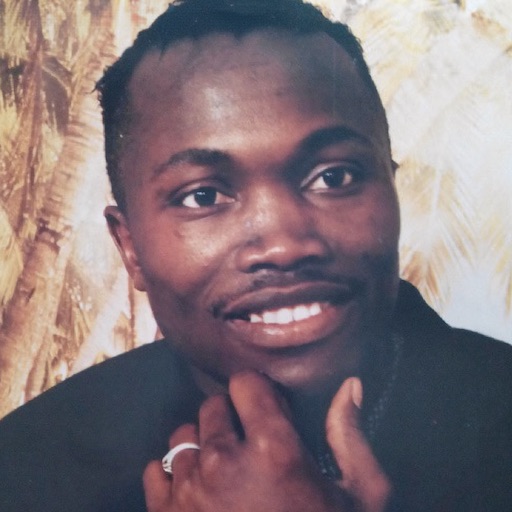
In August 2025, Justino Delgado returns to the LAV stage in Lisbon for his first major concert since the pandemic, before thousands of fans acclaiming the man known as the king of Guinean music1. Forty-five years of career, more than twelve albums, tours around the globe, and an unflagging political conscience. An artist who has never ceased to nourish dialogue between West Africa and Europe, creating a sonic bridge that crosses generations and borders.
Born on November 3, 1963, on Onhocomo island in the Bijagós archipelago, Justino Gomes Delgado grew up cradled by two musical talents. His mother Basiliana, from the Papel tribe, possesses a natural voice that his family calls great talent. His father Tomas, from the Mancanha tribe, is a renowned dancer in the Bijagós region2. The Bijagós archipelago, a true cultural crossroads at the mouth of Cacheu, imprints in him a deep sense of community and collective music.
This archipelago of twenty-two islands preserves traditions where song and dance are inseparable from community rituals. The gumbe, this traditional polyrhythmic rhythm of the Bijagós, permeates the young musician from childhood. In 1973, he leaves the island for Bissau and enrolls in the cultural center of Bubaque3. It is there that he discovers other forms of urban music and begins to experiment with his own artistic language, frequenting cultural circles that keep young independent Guinea-Bissau alive and becoming passionate about the richness of African culture.
In brief
| Full name | Justino Gomes Delgado |
| Nicknames | Juju, Jajú |
| Birth | November 3, 1963, Onhocomo, Bijagós archipelago, Guinea-Bissau |
| Fields | Afro-zouk, gumbe, kussundé, pop |
| Roles | Singer, composer, bandleader |
| Emblematic works | Casamenti D’Haós, Lola, Rubane |
| Distinctions | Gold album in Portugal |
Key dates
| Year | Event |
|---|---|
| 1973 | Move to Bissau, studies at the cultural center of Bubaque |
| 1978 | Founding of student group Flor de África |
| 1979 | Integration into Africa Livre with Manecas Costa |
| 1982-1986 | Solo career, Super Mama Djombo, Nkassa Cobra |
| 1985-1986 | Political imprisonment (October 17th case) |
| 1987 | Exile in Senegal, then France and Portugal |
| 1989 | Release of Casamenti D’Haós, first LP |
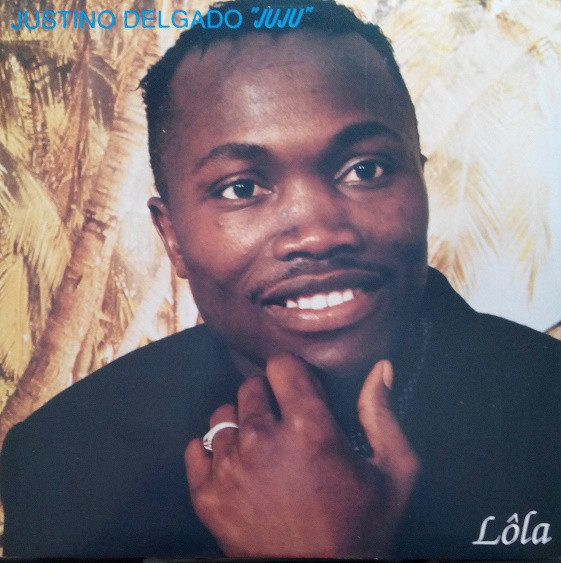
| 1991 | Lola, album certified gold in Portugal |
| 1996 | Concert at National Stadium, 15,000 people |
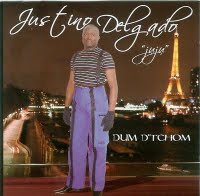
| 2007 | Dum D’tchom, tribute to the disappeared |
| 2017 | Markas de tempo, major public success |
| 2020 | Rubane, twelve tracks for the 40th anniversary |
Career and works
Justino Delgado’s trajectory fits within the emergence of a post-independence Guinean musical scene. He develops a style where afro-zouk, a genre born in Portugal in the 1980s that fuses zouk, kizomba, and African rhythms, meets traditional gumbe. This sonic hybridization makes him a recognized pioneer, capable of translating island rhythms into a language accessible to European and African audiences. His influence crosses national borders and inspires a generation of young musicians seeking to assert the Bissaoguinéenne identity on the international stage. His voice, soft yet powerful, carries within it the memory of the islands and the urgency of the continent, creating a unique alchemy between tradition and modernity, between insularity and continentalism4.
His solo career begins in 1982, after his debut with Africa Livre alongside Manecas Costa and Beto Afanche, tutelary figures of the young Bissaoguinéenne scene5. He plays as a guest with Super Mama Djombo and Nkassa Cobra, the two major groups of the time, developing an increasingly growing reputation. His distinctive voice, between softness and mastered violence, seduces Bissau halls and dissident circles in Lisbon. A unique style that distinguishes him from other artists of his generation and opens the doors to prestigious collaborations, shaping modern Bissaoguinéenne music.
His growing notoriety makes him a political as well as artistic figure. His social texts and critique of the regime earn him exit ban from the territory. Between 1985 and 1986, he is arrested and imprisoned for his commitment — the October 17th case, a major episode of artistic repression. This carceral experience marks his sensitivity durably and strengthens the committed dimension of his music.
Released, he flees Dakar then Lisbon in 1987, where he begins a new artistic life3. It is in Lisbon that his career takes a decisive turn. Bubaque Tchom di Budjugo featuring Paulino Vieira reveals him in Portugal, while Lola (1991) reaches gold status, making him a world star of the Lusophone sphere.
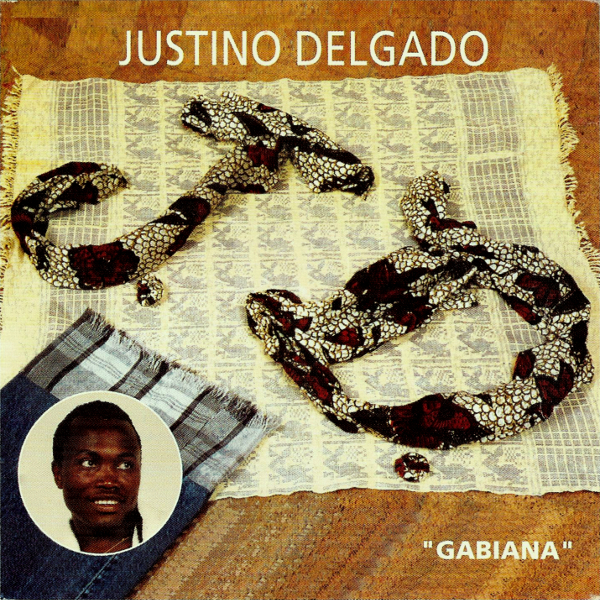
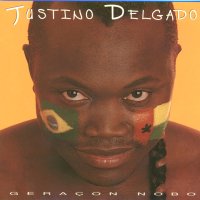
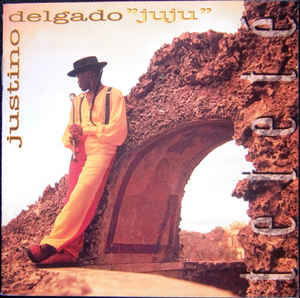
His discography continues with Tetete (1995), which invites young Mariza alongside Costa on guitars6. Gabiane (1992) and Geraçon Nobo (1997) in Brazil, Markas de Tempo (2017) and Rubane (2020) conclude forty years of career. His albums testify to unflawed creativity, between stylistic exploration and anchoring in African traditions. Each work builds a dialogue between the islands and the continent, between folklore and innovation.
He leads the Docolma group, which accompanies him on international stages. His repertoire mixes traditional rhythms of the Bijagós, zouk, kizomba, and urban pop, creating a bridge between two worlds that touches a transgenerational audience7.
Major Works
| Work | Year | Why It’s Essential |
|---|---|---|
| Casamenti D’Haós | 1989 | First LP, European launch, tribute to the Bijagós |
| Lola | 1991 | Gold record in Portugal, trio with Paim and da Gôia |
| Bubaque Tchom di Budjugo | ~1989 | Collaboration with Paulino Vieira (Cape Verde) |
| Gabriel | 1992 | Manecas Costa on guitars |
| Marcas do Tempo | 2004 | Major hit in Guinea-Bissau |
| Rubane | 2020 | Twelve tracks, forty years of career |
Legacy
Justino Delgado embodies what the press calls the ambassador of modern Guinean music1. His ability to remain relevant across several generations rests on his observation of the world and his willingness to transform collective experience into creation. For many, he is the Michael Jackson of Guinean music. With more than twelve albums and forty-five years of career, he remains an indispensable reference in the PALOP. He continues to train young artists and promote cultural diversity on international stages, proudly carrying the colors of Guinea-Bissau.
Sources and References
-
Bantumen, A criação não fica só comigo ganha vida no palco, interview of Justino Delgado, 2025, https://www.bantumen.com/en/artigo/justino-delgado-entrevista/, accessed October 27, 2026 ↩︎ ↩︎
-
AfricOriginal, Justino Delgado, 2021, http://afroriginal.blogspot.com/2021/04/justino-delgado.html, accessed October 27, 2026 ↩︎
-
Kashgain, Top 10 Musicians In Guinea-Bissau, https://kashgain.net/blog/top-10-musicians-in-guinea-bissau-you-need-to-know, accessed October 27, 2026 ↩︎ ↩︎
-
RDP África, Justino Delgado no LAV em Lisboa, July 8, 2025, https://rdpafrica.rtp.pt/apoios-rdp-africa/justino-delgado-no-lav-em-lisboa-9-agosto/, accessed October 27, 2026 ↩︎
-
Music In Africa, Justino Delgado, https://www.musicinafrica.net/fr/directory/justino-delgado, accessed October 27, 2026 ↩︎
-
AllMusic, Justino Delgado, https://www.allmusic.com/artist/justino-delgado-mn0002554602, accessed October 27, 2026 ↩︎
-
Spotify, Justino Delgado, https://open.spotify.com/artist/3qGtxRMpRTTwuZKnqR6SyE, accessed October 27, 2026 ↩︎