Biography
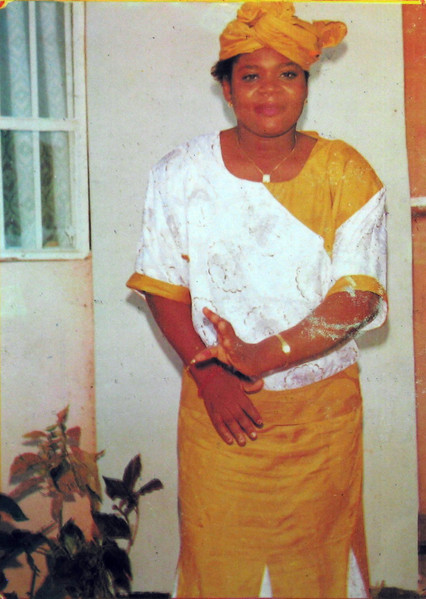
Salawa Abeni: The voice of waka
On February 8, 1976, Nigeria is in mourning. General Murtala Mohammed has just been assassinated in a failed coup d’état. In Lagos, a fifteen-year-old woman records a tribute track on the Leader Records label. The record will sell over a million copies, propelling this teenager from the mangrove village of Igbogun to the forefront of the Nigerian music scene. She had never stepped foot in a studio before. Forty years later, the one nicknamed the Queen of Waka remains the most indispensable female figure of a genre that preceded and inspired juju, fuji, and afrobeat.
In brief
| Full name | Salawa Abeni Alidu |
| Birth | May 5, 1961, Epe (Lekki-Epe), Lagos State, Nigeria |
| Origin | Ijebu Yoruba, Ijebu Waterside (Ogun State) |
| Genre | Waka music — traditional Yoruba style with a dominant vocal and percussionist influence, influenced by Islam |
| Active period | 1975 – present (over forty years) |
| Iconic albums | Late Murtala Muhammed, Indian Waka, Gentle Lady |
| Distinction | Crowned Queen of Waka Music by the Alaafin of Oyo in 1992 |
Key dates
| Year | Event |
|---|---|
| 1961 | Birth in Igbogun, a coastal village on the Epe-Lekki axis |
| ~1974 | Discovered by Lateef Adepoju (owner of Leader Records) in Lagos |
| 1976 | Release of Late Murtala Muhammed — first million-selling Yoruba female album |
| 1977 | Creation of the Waka Modernisers |
| 1980 | Among the most popular artists in Nigeria1 |
| 1985 | Departure from Leader Records; marriage to Fuji star Kollington Ayinla |
| 1986 | Move to Kollington Records label; Indian Waka and Ìfẹ́ Dára Púpọ̀ |
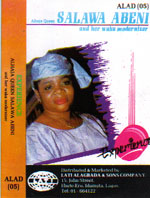
| 1988 | Album Experience on the Alagbada label2 |
| 1992 | Crowned Queen of Waka Music by the Alaafin of Oyo, Oba Lamidi Adeyemi III |
| 1994 | Separation from Kollington; forty-eight albums recorded3 |
| 2000 | Death of her eldest son Olanrewaju in a car accident4 |
| 2016 | TVC interview where she summarizes her life as long and difficult5 |
| 2018 | Interview on the preservation of traditional Yoruba music6 |
| 2025 | Celebration of fifty years of career7 |
From Epe to the Leader Records studios at the height of modern waka
Salawa Abeni Alidu was born on May 5, 1961, into a polygamous family in Igbogun, a coastal village between Lagos and Ogun State. Her mother was ill; the young girl worked as a maid in Epe, while singing at the local mosque prayers and during neighborhood social gatherings8. Her voice was spotted early on for waka, a traditional Yoruba style shaped by Islamic traditions and sung largely by women, which preceded juju and fuji by several decades9. Waka was confined to female gatherings while King Sunny Ade and Sikiru Ayinde Barrister stole the show10.
Around 1974, Lateef Adepoju, a businessman interested in music recording, attended a performance by the young girl. He negotiated with her parents and signed her to Leader Records11. In 1976, at fifteen, Salawa recorded Late Murtala Muhammed, a tribute to the assassinated president. The album would surpass one million copies sold, making her the first Yoruba female artist to reach this milestone12.
Like Shina Peters later for juju, Salawa modernized waka13. She created the Waka Modernisers in 1977, multiplied albums on Leader Records — Shooting Stars, Ijamba Motor (the accident), Ikilo — without benefiting from the corresponding royalties14. The young girl from Epe, who sang at the mosque and in neighborhood social gatherings, became in a few months the most popular singer in Nigeria15.
The troubled marriage and rebirth after adversity
In 1985, Salawa left Leader Records in conflict with Adepoju — whose masters would remain his property until this day15. Her lover and rival Fuji star, Kollington Kolawole Ayinla — who had attacked her with songs in 1981 and 198216 — was waiting for her. She joined his Kollington Records label and released Ìfẹ́ Dára Púpọ̀ (Love is very good) to mark the marriage17.
The couple became one of the most media-saturated in Nigeria during the 1980s. Kollington, nicknamed the Megastar of fuji, lived in a property called Alagbado — a Lagos neighborhood still named after him18. The couple survived a devastating fire in 1990 that destroyed the residence19. But Kollington, polygamous with up to fifteen wives, and the relationship turned sour. In 1994, Salawa divorced20. She would have recorded more than twenty-seven albums under Kollington21.
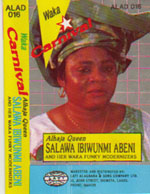
After her divorce, she worked with Alagbada (Experience, Waka Carnival) and then signed a contract with Sony Music22. Her hit Gentle Lady remains a classic of modern waka23. She appeared in several Yoruba films and recorded a live concert in London in 199624. In 2000, her life turned again: her son Olanrewaju died in a car accident, her father Adepoju having passed away a few months earlier25. Salawa withdrew from the public to mourn, then faced eight years of serious health problems26.
She emerged again in the 2010s. In 2016, she recounted that she had been used and abandoned by the men she had loved27. With over forty years of career, no other waka artist has approached her longevity28. She proved that a woman could dominate a male-dominated musical landscape — juju, fuji, highlife29. Her name remains synonymous with vocal power and creative audacity30.
Major Works
| Work | Year | Why It’s Essential |
|---|---|---|
| Late Murtala Muhammed | 1976 | First album by a Yoruba female artist to sell over one million copies; a political tribute that launched an icon |
| Indian Waka | 1986 | Fusion of waka with Indian cinematic aesthetics — a hybrid sound that reinvented the genre |
| Adieu Alhaji Haruna Ishola | 1985 | Tribute to the king of apala who passed away; decade’s best-seller and symbol of vocal mastery |
| Gentle Lady | 1990s | Modern pop-waka hit, later re-recorded as a remix with her son Big Sheff |
Legacy and Influence
Salawa Abeni is not just a musician — she is a cultural phenomenon. With a career spanning over 40 years, no other waka artist has approached her longevity28. She proved that a woman could dominate a male-dominated musical landscape29 and create her own kingdom. Today, Nigerian music has become a global phenomenon30. Her name remains synonymous with vocal power, preserved tradition, and creative boldness.
Sources and References
- “Salawa Abeni”, Wikipedia, https://en.wikipedia.org/wiki/Salawa_Abeni, accessed November 13, 2026.
- “Queen Salawa Abeni — Biography”, AllMusic, https://www.allmusic.com/artist/queen-salawa-abeni-mn0001010176, accessed November 13, 2026.
- Robin Denselow, “Queen Salawa Abeni”, The Guardian, https://www.theguardian.com/culture/2001/jul/20/artsfeatures10, accessed November 13, 2026.
- Jide Taiwo, “Queen Salawa Abeni: The Housemaid Who Modernized Wákà Music”, History Made (Substack), https://historymade.substack.com/p/queen-salawa-abeni-the-housemaid, accessed November 13, 2026.
- “Alhaja Salawa Abeni (Waka Queen)”, Nigerian Tribune Online, https://tribuneonlineng.com/alhaja-salawa-abeni-waka-queen/, accessed November 13, 2026.
- Ronnie Graham, Stern’s Guide to Contemporary African Music, Vol. 1 (Zwan Publications, 1988), Nigeria chapter, accessed November 13, 2026.
- “Abeni, Queen Salawa”, Encyclopedia of Popular Music, 4th ed., Oxford Music Online, accessed February 17, 2016.
- “Salawa Abeni upholds indigenous traditional music”, PM News, https://www.pmnewsnigeria.com/2018/03/28/salawa-abeni-upholds-indigenous-traditional-music/, accessed November 13, 2026.
-
Among the most popular Nigerian artists in 1980, Tribune Online. ↩︎
-
Album Experience on Alagbada label, Jide Taiwo (Substack). ↩︎
-
Forty-eight albums recorded before 1994 divorce, History Made. ↩︎
-
Death of Olanrewaju in 2000, car accident; Adepoju died a few months prior. ↩︎
-
TVC 2016 interview, History Made. ↩︎
-
“Salawa Abeni upholds indigenous traditional music”, PM News, March 28, 2018. ↩︎
-
Celebration of 50-year career in 2025, Nigerian Tribune. ↩︎
-
Childhood and discovery, Jide Taiwo, History Made (Substack). ↩︎
-
Waka preceded juju and fuji, Stern’s Guide Ronnie Graham. ↩︎
-
Waka eclipsed by juju/fuji in the 60s-70s, History Made. ↩︎
-
Discovered by Lateef Adepoju in ~1974, History Made. ↩︎
-
First Yoruba female album to sell +1 million, Wikipedia; Tribune Online. ↩︎
-
Shina Peters parallel for juju, History Made. ↩︎
-
Few royalties from Leader Records, History Made. ↩︎
-
Masters remained Adepoju’s property until present, History Made. ↩︎ ↩︎
-
Reciprocal attack songs 1981-1982, AllMusic; History Made. ↩︎
-
Ìfẹ́ Dára Púpọ̀ meaning “Love is very good”, Kollington Records. ↩︎
-
Kollington “Megastar” of fuji, Alagbado Lagos neighborhood named after him, History Made. ↩︎
-
1990 fire in Alagbado, History Made. ↩︎
-
1994 divorce, Salawa chose career, History Made. ↩︎
-
Over twenty-seven albums total before 1994 divorce, History Made. ↩︎
-
Alagbada label and Sony Music stint, Wikipedia discography. ↩︎
-
Classic Gentle Lady with later remix and son Big Sheff, History Made. ↩︎
-
Live In London 96 (Emperor Promotions, 1996), Wikipedia. ↩︎
-
Death of Olanrewaju in 2000, car accident; Adepoju died a few months prior. ↩︎
-
Health issues for 8 years after loss of son, History Made. ↩︎
-
Interview where she revealed feeling “used and abandoned” by men, History Made. ↩︎
-
Tribune Online — “broke gender barriers in an industry largely dominated by men”. ↩︎ ↩︎
-
The Waka Modernizer — consecrated epithet, History Made. ↩︎ ↩︎