Biography
Sally Nyolo
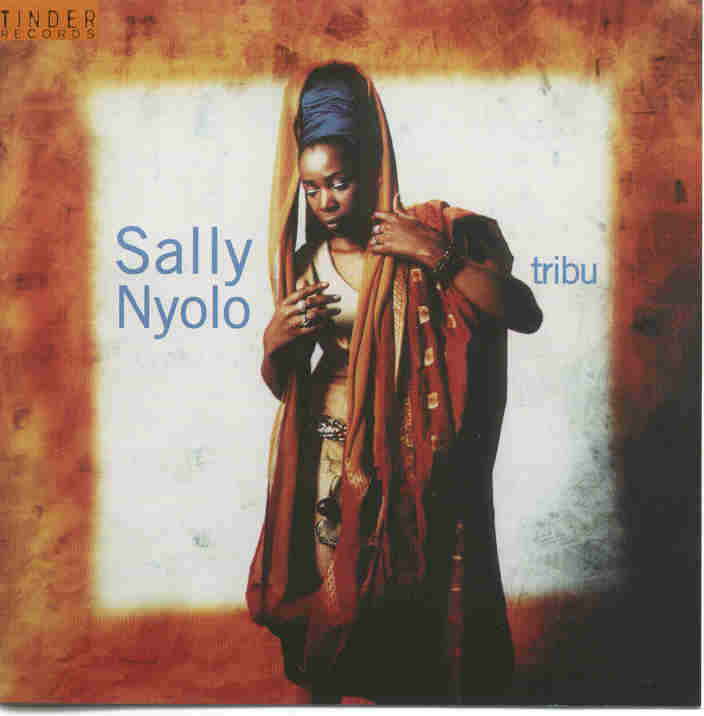
In 1996, as the Belgian group Zap Mama embarked on a world tour and Europe discovered pygmy polyphonies, a 31-year-old woman released her first solo album in the studio: Tribu. Sung entirely in éton, her mother tongue, the album bewildered with its voices oscillating between singing and bikutsi scansion. It sold 300,000 copies and won the RFI Discovery Prize in 1997. For Sally Nyolo, destiny was sealed: the whole world would hear Africa through her voice.
In brief
| Full name | Sally Soleïnie Nyolo |
| Birth | 1965, Eyen-Meyong (Lekié), Cameroon |
| Field | World music, bikutsi, African jazz; pygmy polyphonies |
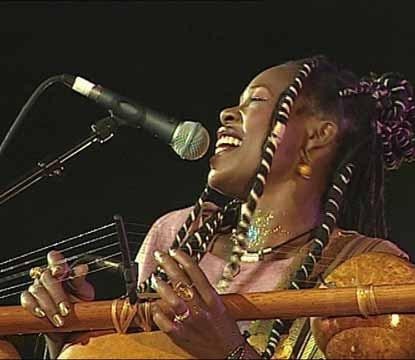
| Instruments | singing, mvet (traditional Cameroonian string instrument), balafon, udu, sanza, percussion |
| Languages sung | Éton, French, English, Arabic, Spanish |
| Signature works | Tribu, “Semengue”, Studio Cameroon, Tiger Run |
| Awards | RFI Discovery Prize (1997), Chevalier de l’Ordre de la Valeur (Cameroon, 2014), USA Songwriting Competition — Prize (2012) |
Key dates
| Year | Event |
|---|---|
| 1965 | Birth in the village of Eyen-Meyong, Lekié region, Cameroon |
| 1978 | Move to Paris at age 13 |
| 1982-1994 | Career as backing vocalist and songwriter for radio/film |
| 1993 | Joining of the group Zap Mama; world tours |
| 1996 | Release of Tribu, first solo album (Lusafrica) |
| 1997 | RFI Discovery Prize for Tribu; sales of 300,000 copies |
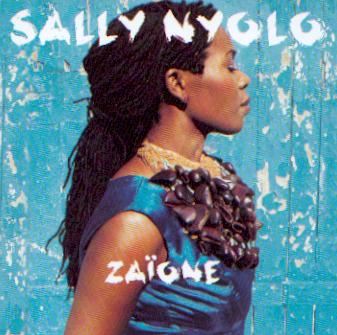
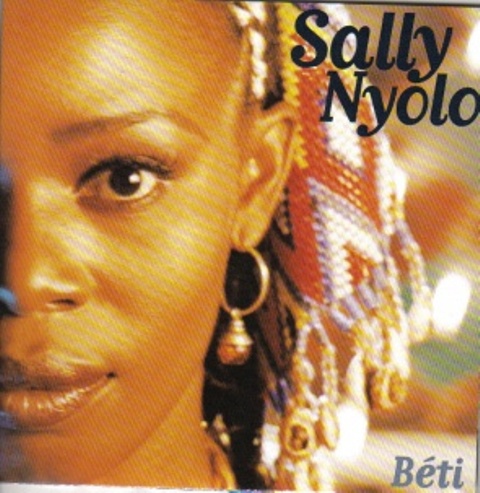
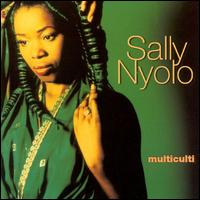
| 1998-2002 | Albums Multiculti, Beti and Zaione; tours in France, Germany, Québec |
| 2001-2005 | Documentaries Petits pas and A la Camerounaise (François Bergeron) |
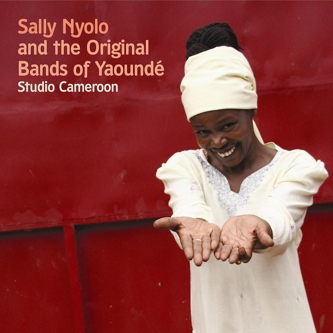
| 2005-2006 | Opening of a studio in Yaoundé; album Studio Cameroon |
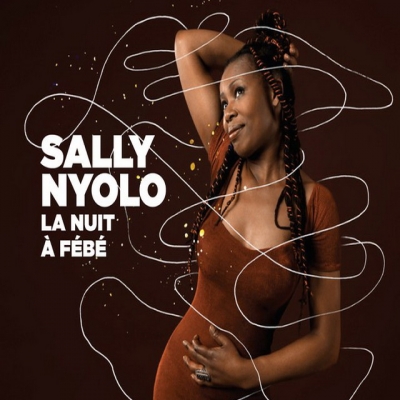
| 2011 | Release of La Nuit à Fébé (Sony/RCA); 1st prize USA Songwriting Competition |
| 2014 | Tiger Run (Riverboat Records); Chevalier de l’Ordre de la Valeur |
| 2015 | Project Mvetkora as a duo with Djeli Moussa Diawara (mvet/kora) |
| 2015-2018 | Jury for the Francophone Cinema Trophies |
Origins, departure and revelation
Born in a small village in the south-central province of Cameroon, Sally Soleïnie Nyolo grew up cradled by éton and bikutsi polyphonies, these forest rhythms of the equatorial forest whose keepers were once only women. The bikutsi, literally a healing rhythm practiced while seated on low stools, does not resemble the frenzied dance that later made it an urban genre decades later. At thirteen, her family emigrated to Paris. Far from the forest and its polyphonies, she discovered another continent—and another form of isolation.
But music offered her a refuge. From the early 1980s, she built a professional experience in solidarity alongside French and African artists: Jacques Higelin, Nicole Croisille, Touré Kunda, Sixun. She also composed music for radio serials such as Le Jeune Joseph on France Culture, and the film Ashakara by Gérard Louvin—in which she recorded “Semengue,” one of her first compositions. In 1993, her reputation reached a peak: she joined the Belgian group Zap Mama for their world tour. Her composition “The Mamas of the Mamas” appears on Sabsylma, the group’s album that was nominated for Grammy Awards. Three American tours, concerts in Japan and Montreux, and a first film by Auster – Blue in the Face (1995), where her song “To My Baby” adorns the soundtrack.
At that time, she produced with her own ensemble throughout Paris. Her performance at the WOMAD Festival in England opened doors to world music. In 1996, amidst a whirlwind of concerts, she recorded Tribu. The album sold 300,000 copies and won the RFI Discovery Prize in June 1997, awarded by a jury chaired by Manu Katché. She was recognized as a promising voice of the new African generation.
Return to the country and commitment: from Yaoundé studio to world stages
In 1998, during a tour in Cameroon to promote Multiculti, Sally was struck by the precarious conditions of her musician colleagues. The Cameroonian scene worked in improvised studios, without professional structure. She declared that she wanted to make Cameroonian culture known abroad by creating an international musical association linking young Cameroonian musicians with artists from around the world. Promise: she would return, open a studio in Yaoundé and produce her compatriots.
Eight years later, she kept her word. The Tribal Production studio settled in the Mont Fébé neighborhood of Yaoundé, dedicated to traditional musicians. Studio Cameroon (2006, World Music Network / Riverboat Records) was the fruit of this: Sally gathered there Gisèle Mvo Anji, Gervais Mango, the Didjoi Sisters, mvet player Eddy Nyembi and the choir La Voix du Cénacle, far from the rhythm boxes of the urban scene.
La Nuit à Fébé (2011, Sony/RCA), a personal album recorded in the same studio, is acoustic and sung in éton. She won 1st Prize at the USA Songwriting Competition for “Ombomo” and received in March 2012 the Canal 2’Or Jury Special Prize for her entire career. Tiger Run (2014) is her most accomplished album: on this 10-track disc in bikutsi, jazz and high-life colors, Sally questions globalization on “Welcome”—a warning against the hollywoodization of the world. The following year, she launched the project Mvetkora, a historic meeting between her Cameroonian mvet and the kora of Malian griot Djeli Moussa Diawara—the forest dweller and the Sahel in dialogue.
Major Works
| Work | Year | Why It’s Essential |
|---|---|---|
| Tribu | 1996 | First solo album, entirely in éton; RFI award and 300,000 worldwide sales |
| “Semengue” (Multiculti) | 1998 | Emblematic track composed for the film Ashakara, featured on the soundtrack of Blue in the Face |
| Beti | 2000 | Explorations of bikutsi — a centennial forest rhythm — in collaboration with Andjeng Etaba (mvet) |
| Studio Cameroon | 2006 | Founding project: production of local Cameroonian artists at the Mont Fébé studio in Yaoundé |
| La Nuit à Fébé | 2011 | Acoustic recording in the artist’s studio; 1st prize USA Songwriting Competition 2012 |
| Tiger Run | 2014 | Adult album; blends jazz, high-life, and a warning against commercial globalization |
Legacy and Influence
Sally Nyolo paves the way for Cameroonian diaspora: existing on international stages without renouncing her mother tongue. Her Mont Fébé studio has not only produced albums — it inspired a generation of young musicians to produce their own music. The artist remains active: in 2019, she composed the score for the TV movie Colombine (TF1). Her éton polyphonies and her appropriation of the mvet, a string instrument close to the harp — a millennial heritage of Cameroonian forest peoples — continue to influence African composers uniting ancestral sound with urban rhythms.
Sources and References
- “Sally Nyolo”, Wikipedia in English, https://en.wikipedia.org/wiki/Sally_Nyolo, accessed November 20, 2026.
- “Sally Nyolo | Jazz Vocals – Biography”, All About Jazz, https://allaboutjazz.com/musicians/sally-nyolo, accessed November 20, 2026.
- Angel Romero, “Artist Profiles: Sally Nyolo”, World Music Central, March 21, 2018, https://worldmusiccentral.org/artist-profiles-sally-nyolo, accessed November 20, 2026.
- “Sally Nyolo”, Gateway of Africa, https://www.gatewayofafrica.com/artists/biography/23.html, accessed November 20, 2026.
- “Tiger Run”, Afropop Worldwide (Steve Hochman), https://www.afropop.org/articles/tiger-run, accessed November 20, 2026.
- Sylvie Clerfeuille, “Sally, L’esprit de la forêt”, Afrisson/Afrique Asie, December 2007, https://www.afrisson.com/sally-nyolo-750/, accessed November 20, 2026.