Biography
Soweto String Quartet
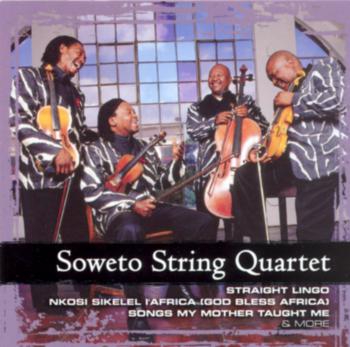
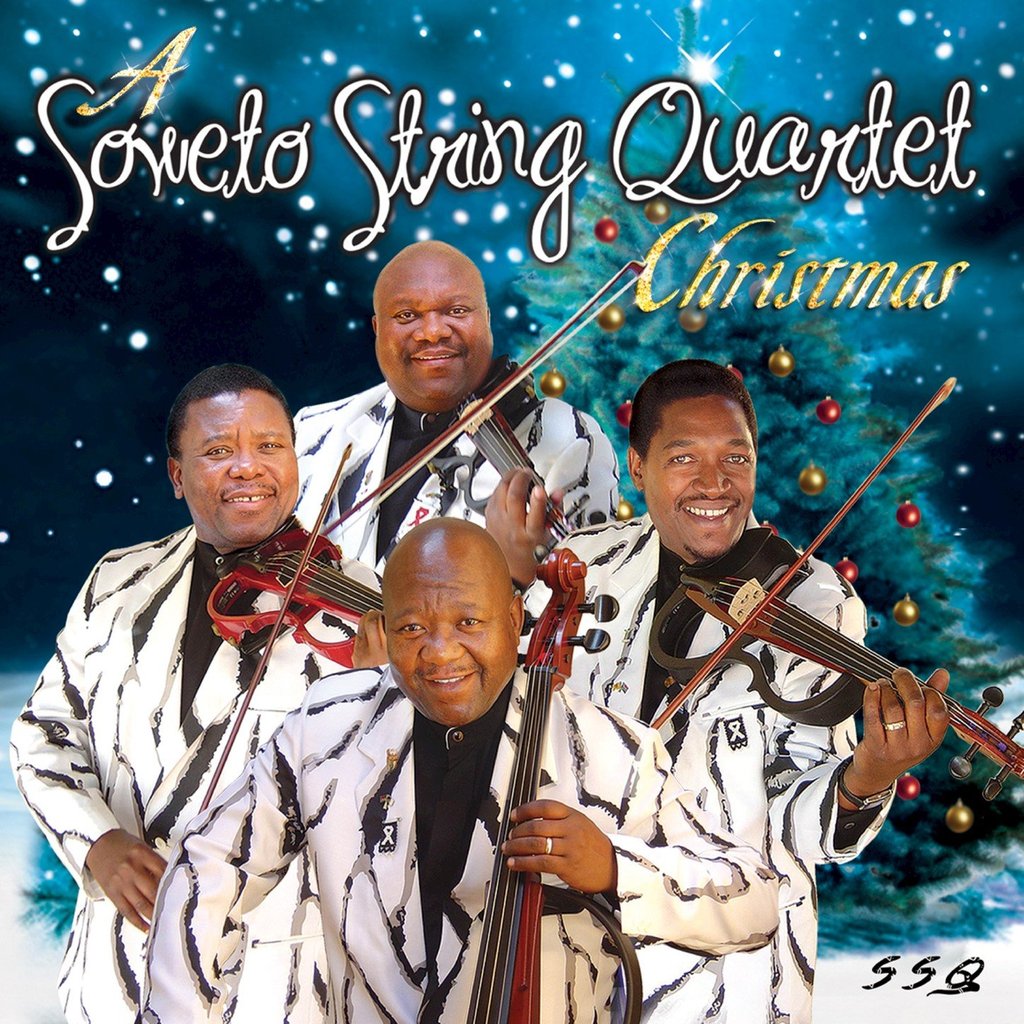
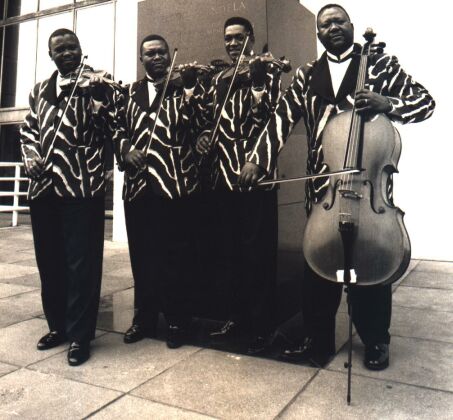
One might readily imagine a string quartet in tuxedos beneath the chandeliers of the Royal Albert Hall. The Soweto String Quartet (SSQ) disrupts this imagination: four young Black musicians from South African townships, trained in violin and cello on the dusty streets of Soweto, who have transformed European tradition into a resolutely African sound. Their music accompanied the birth of democracy and continues to travel around the world.
In Brief
| Name | Soweto String Quartet (SSQ) |
| Origin | Soweto, Johannesburg (South Africa) |
| Genre | Classical crossover — classical fusion, kwela, mbaqanga, township jazz |
| Founding Members | Sandile Khemese (1st violin), Thami Khemese (2nd violin), Reuben Khemese (cello), Makhosini Mnguni (viola) |
| Signature Works | “Zebra Crossing”, “Kwela”, “Mbube” |
| Awards | 3 South African Music Awards (1994); platinum and gold records |
Key Dates
| Year | Event |
|---|---|
| 1960-70 | Birth of the Khemese brothers in Sophiatown, in a deeply musical family |
| 1978 | Reuben and Sandile play together in Aberdeen, Scotland; their talent attracts attention |
| 1980-84 | Sandile studies at Dartington College of Arts, then four years at the Royal Northern College of Music in Manchester |
| 1986-89 | Return to South Africa; formation of the quartet with Makhosini Mnguni on viola |
| 1989-92 | Nine-month residency at Sun City; signing with BMG Africa in 1992 |
| 1994 | Release of Zebra Crossing; performance at Nelson Mandela’s inauguration |
| 1996 | Release of Renaissance; international tour (Europe, Australia, New Zealand) |
| 1998 | Millennia reaches #29 on the Australian charts; concert for Queen Elizabeth II’s centenary |
| 2001-03 | Albums Four and Our World, exploration of jazz, reggae, and traditional music |
| 2005 | Release of Plays Gospel — over 50,000 copies sold |
| 2013 | SSQ Speel Afrikaans Treffers Vol. 2 — platinum record in one week |
| 2016 | Unexpected death of Reuben Khemese; group hiatus |
| 2024 | Return with a new EP, Through & Through, and a renewed lineup |
An Impossible Quartet in 1970s South Africa
The Khemese family’s first home was Sophiatown, the multicultural neighborhood of Johannesburg where the three brothers were born: Reuben (cello), Sandile (first violin), and Thami (second violin). Their father was a choir director, their mother devoted to liturgical singing. In a South African township where boys loitered on the streets, violin and cello were not unanimous choices — but their parents forbade the boys to wander. Their uncle’s music school, Michael Masote (alias Matlhaela Michael Masote), was their refuge. The church choir music forged in Sandile a very sophisticated ear, as he would later say, sparing them any intonation problems.
Sandile and Reuben played from the 1980s in the Soweto Symphony Orchestra. Sandile received a scholarship and went to England: Dartington College of Arts, then four years at the Royal Northern College of Music in Manchester. Upon his return in 1986, he taught at the Madimba School of Music and founded the Soweto String Quartet with Thami, Reuben, and their childhood friend Makhosini Mnguni on viola. Facing a skeptical local audience — a quartet of Black musicians with European instruments was shocking at first, — the group chose to absorb indigenous rhythms and integrate guitar, keyboard, and drums into their instrumentation. Their nine-month residency at the prestigious Sun City complex opened doors to the market: it was there that BMG Records producer Grahame Beggs discovered them.
From Zebra Crossing to Democratic Renaissance
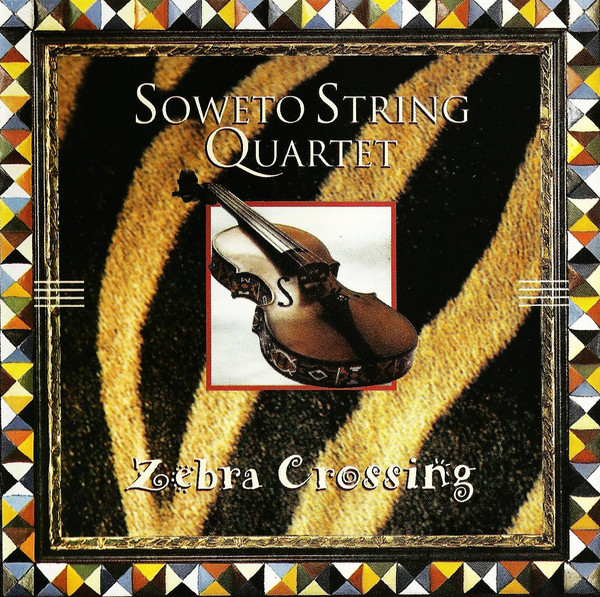
The signing with BMG Africa in 1992 preceded their true turning point by two years. Their first album, Zebra Crossing (1994), was released at the time of the first democratic elections. The group was invited to play at Nelson Mandela’s inauguration — an honor that launched their international career. The album won three South African Music Awards (Best New Artist, Best Instrumental Performance, and Best Pop Album), went platinum in South Africa and New Zealand, gold in Australia and Spain. In Madrid, they were nicknamed “Los Violinistas de Mandela”. Sandile Khemese explains:
« I think what the music of the SSQ bring to the fore is the diversity of different cultures existing in South Africa. The uniqueness of SSQ music lies in the use of intricate rhythms and melodies which a lot of our people relate to with ease. »
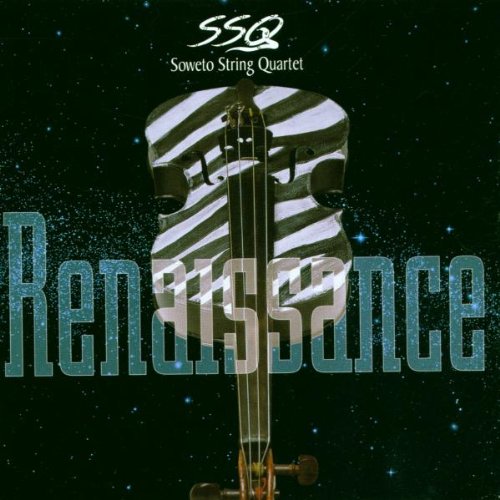
Renaissance (1996) was conceived as a hymn to the country’s renewal — the title echoing the post-apartheid transition. For Makhosini Mnguni, South Africa is now a model of peace and reconciliation, he summarizes.
The record reached #29 on the Australian charts, and the group kept booking international stages: Europe, Australia, New Zealand. In 1998, Millennia peaked at #29 in Australia. The quartet performed at Queen Elizabeth II’s centenary and other high-level ceremonies. For Reuben Khemese, Renaissance embodies the country’s renewal — a new awakening, a renaissance, he explains.
After Four (2001) and Our World (2003), where the group mixed jazz, reggae, traditions, and Afrikaner music, he dove into gospel with Soweto String Quartet Plays Gospel (2005), which surpassed 50,000 sales. Their last studio album before the hiatus, SSQ Speel Afrikaans Treffers Vol. 2 (2013), went platinum in one week.
Major Works
| Work | Year | Why It’s Essential |
|---|---|---|
| Zebra Crossing | 1994 | Debut album, bold classical-African fusion; 3 SAMAs and platinum in the country |
| Renaissance | 1996 | Anthem to post-apartheid renaissance, peaked at #29 in Australia |
| Millennia | 1998 | International breakthrough; iconic title track from quintessence SSQ |
| Four | 2001 | Concept album dedicated to each of the four members, innovative arrangement |
Legacy and Influence
The Soweto String Quartet survived the death of Reuben Khemese in 2016 and returned in 2024 with a renewed lineup — Thamsanqa Khemese on second violin, Themba Mashobane on cello and younger musicians — while preserving its identity. Their legacy extends beyond their discography: four young Black men from Soweto proved that European classical instruments do not exclude African identity. Over fifteen years of recording, the quartet has reached more than 20 million listeners through sales and performed on nearly a hundred stages, including major festivals like the Cape Town International Jazz Festival. They are one of South Africa’s biggest music brands, and their sound — blending class, kwela and township jazz — remains a reference for artists exploring African classical music.
Sources and References
- “Soweto String Quartet”, English Wikipedia, https://en.wikipedia.org/wiki/Soweto_String_Quartet, accessed November 19, 2026.
- Susanne Martin, “Soweto String Quartet: A unique fusion of classical, African & gospel elements”, Crossrhythms, June 19, 2007, https://www.crossrhythms.co.uk/articles/music/Soweto_String_Quartet_A_unique_fusion_of_classical_African__gospel_elements/27579/p1/, accessed November 19, 2026.
- Glynis O’Hara, “Soaring strings of Soweto”, Mail & Guardian, January 10, 1997, https://mg.co.za/article/1997-01-10-soaring-strings-of-soweto, accessed November 19, 2026.
- “About Soweto String Quartet”, Official SSQ Website, https://www.thesowetostringquartet.co.za/sowetostringquartet_about.html, accessed November 19, 2026.
- Jason Ankeny, “Soweto String Quartet Biography”, Gateway of Africa, http://www.gatewayofafrica.com/artists/biography/210.html, accessed November 19, 2026.
- “After an eight year break Soweto String Quartet pulling the strings again”, Scrolla Africa, https://scrolla.africa/after-an-eight-year-break-soweto-string-quartet-pulling-the-strings-again/, accessed November 19, 2026.