Biography
Thimothey Herelle
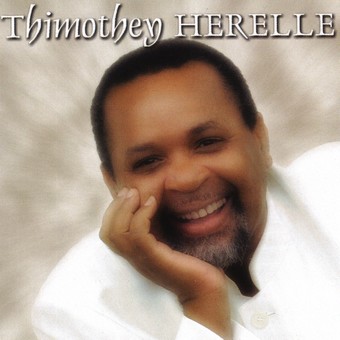
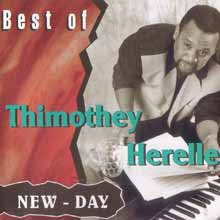
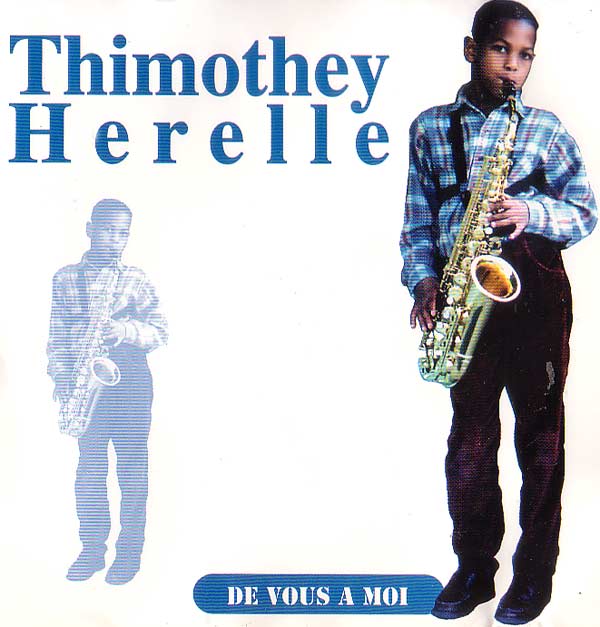
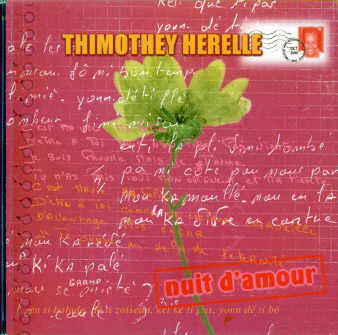
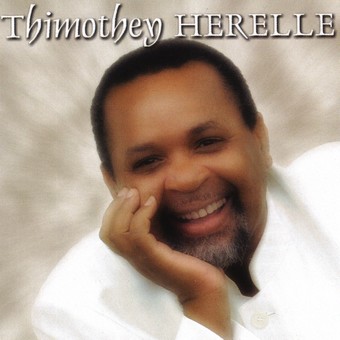
In 1984, a young man arrived from the Caribbean and established his voice among the Parisian cabarets of Pigalle. The following year, his first record – “Allô chérie” – became one of the most widely broadcast hits on Caribbean radio waves. Thimothey Herelle has not changed since: fifty years later, he still sings of love with the same fervor, Martinique in his heart and a loyal public who has never left him.
In Brief
| Full Name | Thimothey Herelle |
| Birth | January 6, 1956, Le Marigot, Martinique (French Antilles) |
| Genre | Zouk, cadence-lypso, compas, slow boléro |
| Signature Works | “Allô chérie”, “L’Amitié”, “Les Antilles péi nou” |
| Distinctions | Solidarity concert for the Saint-Vincent de Paul Society (January 2024) |
Key Dates
| Year | Event |
|---|---|
| 1956 | Birth in Le Marigot, Martinique |
| 1971 | Debut: performances and cabarets in Pigalle (Paris) |
| 1984-1985 | First hit: “Allô chérie” |
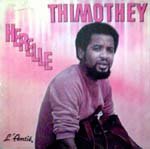
| 1985 | Release of the album L’Amitié (label Kadance) and the first self-titled album |
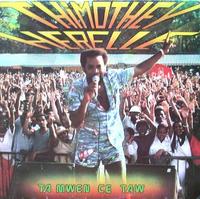
| 1986 | Ta Mwen Ce Taw on Kadance, followed by “Les Antilles péi nou” |
| 1987 | Vieilly Ensem’ (Blue Silver album) |
| 1988-1989 | Collaborations with the Makina family; album Makyna & Thimothey Herelle |
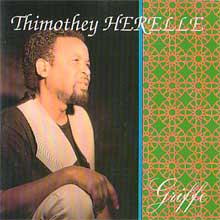
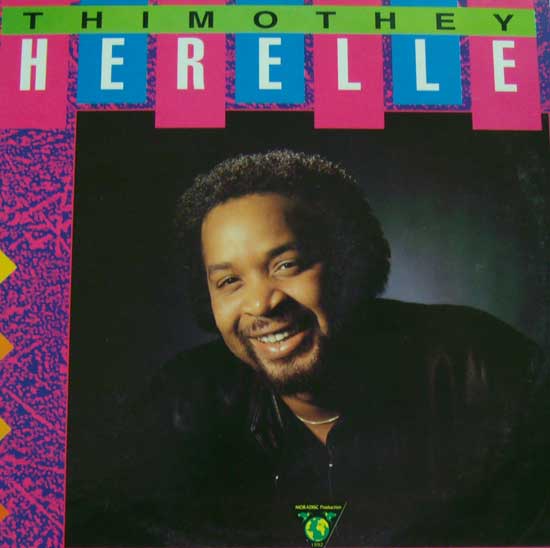
| 1992-1993 | Lévé Yo (Moradisc), Griffe (Mélodie Distribution) |
| 2016 | Release of a new nine-track album: Je veux t’aider (Debs Music) |
| 2024 | Solidarity concert for the Saint-Vincent de Paul Society; regular tours |
A Pigalle Street Parisian Before Zouk
Born in Le Marigot, a popular neighborhood of the Martinican capital, Thimothey Herelle grew up surrounded by Creole rhythms and Caribbean ball culture. The island gave him everything he needed: a language (Creole), rhythms (cadence and lypso), and a natural passion for the stage. Like many Caribbean artists of his generation, he went to train outside the islands – in Paris, where he settled at the beginning of the 1970s.
Between 1971 and the mid-1980s, Thimothey lived in Pigalle, that mythical left-bank Parisian district where lovers of Creole nights and cabarets flocked. He hosted evenings, refined his vocal technique under Henri Guédon – one of those tutelary figures of the Caribbean scene in Paris – and forged lasting bonds with countable diaspora musicians. “My life is a love story, it’s music, it’s Martinique,” he would write decades later to summarize that era where he forged his artist persona.
It was in Paris that he also met Eddy Gustave, producer and arranger who would become his mentor – the tutelary figure of French zouk. The latter founded Kadance, his own label, and signed Thimothey Herelle among his first discoveries.
Caribbean Consecration (1985-1990)
In 1984-1985, “Allô chérie” exploded on Caribbean and metropolitan radio waves. The track, signed to T.H. Production label then distributed by Kadance, immediately established Thimothey’s deep and warm voice: between zouk, cadence-lypso and compas, his style resembled nothing else. The cover, percussion rhythms, and carefully arranged backing vocals made it an instant genre classic.
The following year, Thimothey confirmed his status with L’Amitié, a flagship album on Kadance (K 4246), whose eponymous title he considers his most popular song. The session musicians orbiting around him – guitarist Dominique Gengoul, bassist Marc Elmira, keyboards by Philippe Guez – shaped a sound that Caribbean critics would later qualify.
Ta Mwen Ce Taw (Kadance K 4250, 1986) and Vieilly Ensem’ (Blue Silver, 1987) continued this momentum. Titles multiplied: “Les Antilles péi nou”, “Vyéi ansam”, “Bèl ménaj kassé” – songs speaking of love, island nostalgia and Martinican daily life. The artist also cultivated collaboration: he recorded with the Makina family, a powerful island group sharing his vision of authentic Creole. In 1989, the result was called Makyna & Thimothey Herelle (Massai Records): an album of slow boléros where Thimothey’s unique voice blended with the group’s tender chords.
Decades of Coherence and Commitment
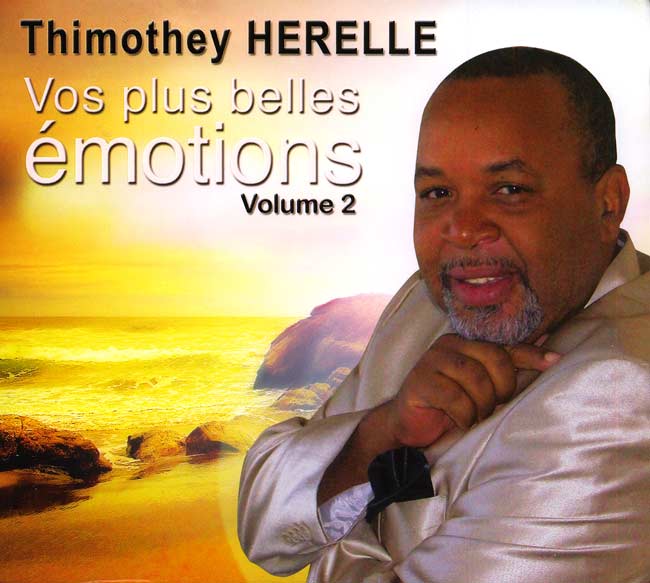
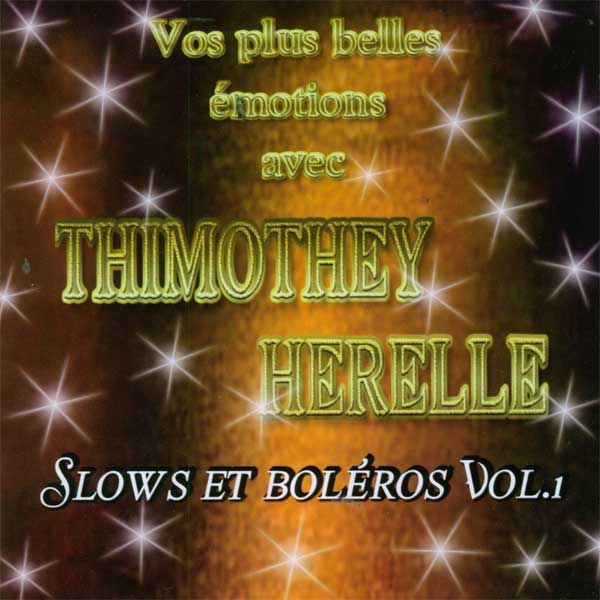
Unlike many of his contemporaries who disappeared in the 1990s, Thimothey Herelle never stopped. He published Lévé Yo (Moradisc, 1992), then Griffe (Mélodie Distribution, 1993). He launched the conceptual project « Makyna » around two compact volumes of slow boléros, Vos Plus Belles Émotions, published on the Debs Music label in the 2010s.
His commitment goes beyond music. He collaborates with engaged figures like Dominique Lorté, Stéphane Ravor and Céline Flériag in solidarity shows. In January 2024, he took the stage for the Saint-Vincent de Paul Society, proof that his voice continues to animate public debates and concerts.
When the 2016 announcement of his return with a nine-track album (Je veux t’aider, Debs Music) was made, his faithful wrote to him: “Who but Thimothey could make us dream and speak of love with a voice that hasn’t aged?” He himself replied: “I put my heart and soul to fill you with happiness and love.” One can feel from these words that Thimothey Herelle’s entire journey can be summarized in one sentence: he has always confined music to what it does best – bringing people together.
Major Works
| Work | Year | Why It’s Essential |
|---|---|---|
| Allô chérie | 1985 | The first hit that introduced him to the waves of the Antilles and Paris |
| “L’Amitié” (album) | 1985 | His most popular song; an anthem of Antillean mutual aid |
| Ta Mwen Ce Taw | 1986 | Confirmation of the zouk-lypso style with arrangements signed by Eddy Gustave |
| Makyna & Thimothey Herelle | 1989 | Powerful collaboration with the Makina family; timeless bolero slow songs |
Legacy and Influence
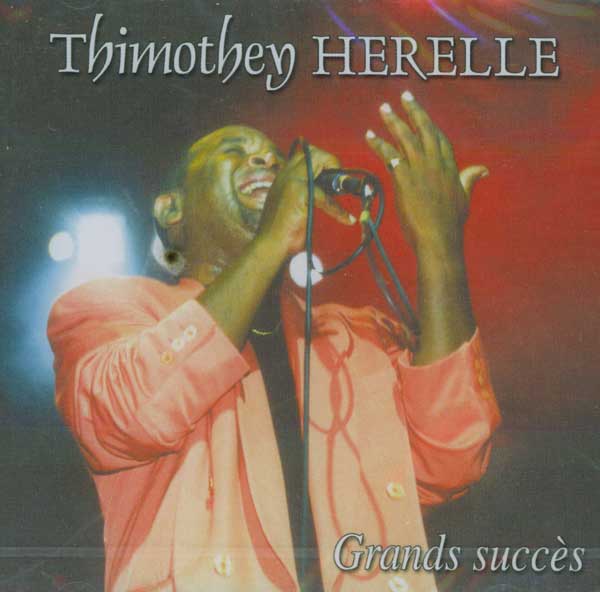
Thimothey Herelle embodies a generation of Antillean artists who managed to transpose the vitality of Creole dancehalls into Parisian studios. His long career – more than fifty years of continuous music – is in itself a message of resilience for Caribbean youth. His spiritual sons, these zouk singers from the 2000s who claim Kadance’s heritage, owe him a great deal: a deep voice laid over sincere rhythms, lyrics that speak of love without indulging in misery.
Even if his name does not always appear in major public compilations, his tracks remain an essential part of Antillean evenings and a landmark for anyone interested in the history of traditional zouk – that Creole big brother of Haitian kadence and Jamaican compas.
Sources and References
- “Thimothey Herelle — Martinican Artist”, Martinique A Nu (article by Jean-Mary Rosillette), https://martiniqueannu.com/artiste-martiniquais/chanteurs-martiniquais/thimothey-herelle, accessed November 10, 2026.
- “Thimothey Herelle still sings love and the joy of living”, France Info Outre-Mer (article by Joseph Nodin, August 26, 2016), https://la1ere.franceinfo.fr/martinique/thimothey-herelle-chante-toujours-l-amour-et-la-joie-de-vivre-391253.html, accessed November 10, 2026.
- “Thimothey Herelle Discography”, Discogs, https://discogs.com/artist/1342899-Thimothey-Herelle, accessed November 10, 2026.
- “Thimothey Herelle — Biography, Discography”, AllMusic, https://allmusic.com/artist/thimothey-herelle-mn0001446926, accessed November 10, 2026.
- “Thimothey Herelle”, Apple Music, https://music.apple.com/us/artist/thimothey-herelle/318847019, accessed November 10, 2026.
- “Timothey Herelle”, Wikipédia Créole Haitien, https://ht.wikipedia.org/wiki/Timothey_Herelle, accessed November 10, 2026.
- “Thimothey Herelle”, Wikidata, https://wikidata.org/wiki/Q12897769, accessed November 10, 2026.