Biography
Yondo Sister
In 2020, as Yondo Sister landed in Zimbabwe for a final concert — or at least promised it — local press was already calling her Queen of Rumba. More than forty years after her first steps on stage, in the tumultuous rehearsal room of Afrisa International, this raspy voice and moving body remain two of the most recognizable signatures of African soukous.
In brief
| Full name | Denise Kusala Yondo |
| Birth | April 23, 1958, Bukavu (Zaire, now the Democratic Republic of the Congo) |
| Genre(s) | Soukous, kwassa-kwassa music |
| Roles | Singer, dancer |
| Signature albums | Bazo, Déviation (Sexy Soukous), Planète |
| Active period | 1980 to present |
Key dates
| Year | Event |
|---|---|
| 1958 | Born in Bukavu, in a family of musicians (Congolese father, Belg Congo mother) |
| 1970s | Started as a dancer with her sister Chantal in Tabu Ley Rochereau’s L’Afrisa International |
| Around 1980 | Switched to singing, spurred by Tabu Ley; solo career in the 1980s |
| 1991 | Release of Bazo, first major solo album |
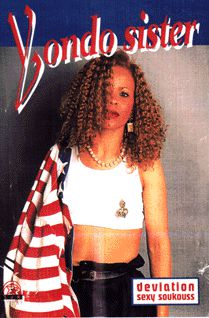
| 1993 | Publication of Déviation (Sexy Soukous) |
| 1995 | Release of Dernière Minute |
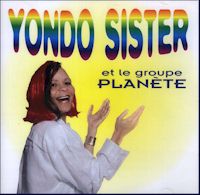
| 1999 | Publication of Planète |
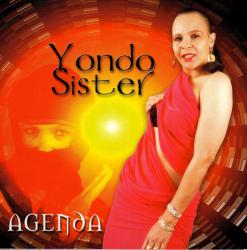
| 2001-2003 | Recording of albums F.B.I. and Agenda in France |
| 2019-2021 | African tours (Tanzania, Zimbabwe); farewell concert announcements |
| Today | Lives in Paris, continues live performances and music distribution |
Origins and revelation: from dancer to voice
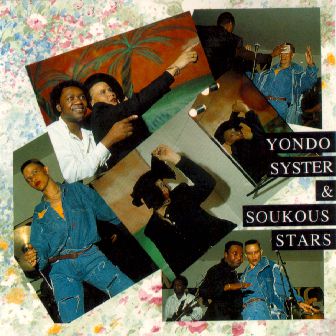
Denise Kusala Yondo grew up in a household where music flowed naturally: her father is Congolese, her mother Belg Congo. This dual heritage shaped her ear very early on. At the beginning of the 1970s, she performed with her sister Chantal under the name Les Yondo Sisters. Talent led them to join L’Afrisa International, the flagship group of mentor Tabu Ley Rochereau, one of the tutelary figures of Congolese rumba.
Yondo Sister herself explains that her entry into the group was initially as a dancer — not as a singer. But it was Tabu Ley who, upon hearing her, made a decisive turn: he put her behind the microphone. This decision, which she attributes entirely to her mentor, changed the course of her musical life.
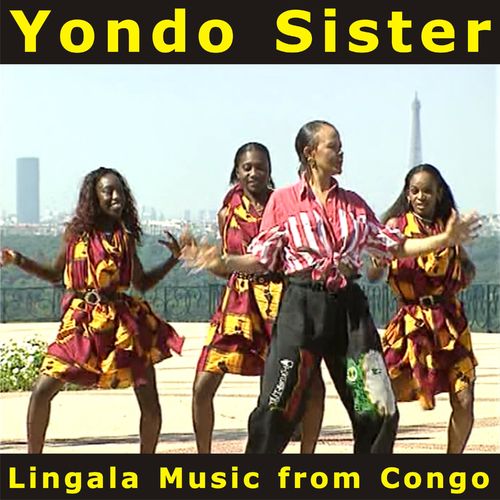
The voice she discovered there — deep, almost spoken, but with immediate stage presence — quickly captivated. Yondo Sister imposed a style where singing and dancing responded to each other, a virile and rhythmic gesture that soon gave its name to kwassa-kwassa, this dance born in the 1970s that became one of the marks of soukous. Kwassa-kwassa takes its name from an inexpensive fabric, made in small pieces that dancers untied to twirl around their hips: Yondo Sister became its most emblematic interpreter.
Consecration and solo career: albums that resonate
In the 1980s, Yondo Sister gradually detached herself from L’Afrisa International to embark on a solo career. She recorded several records with labels Air B. Mas Production, Melodie, and T.J.R. Music, and her fame quickly crossed Zaïrian borders to spread across the continent and then to the European diaspora.
Her first solo album, Bazo, released in 1991, marked a turning point: the singer refined her universe — catchy rhythms inviting movement, simple but catchy choruses, a staging where the strength of the voice never comes before the groove. Déviation (Sexy Soukous) in 1993, then Dernière Minute (1995) and Planète (1999), confirmed this vein: albums designed for dance halls as much as for attentive listening.
Established in France since the 1990s, Yondo Sister produced F.B.I. (2001) and Agenda (2003), two records recorded on French soil that testify to a will to modernize her sound without ever betraying her Congolese roots. On Spotify and YouTube, these albums continue to gather a faithful audience beyond generations.
The stage career remains the heart of the profession: since 2019, Yondo Sister has traversed Africa again — Tanzania, Zimbabwe, Kenya — alternating concerts and festival invitations. In 2020, her manager Rosaria Lubende announced that an African tour would include a final concert before retirement, but the singer has continued since her public appearances.
Major works
| Work | Year | Why it’s essential |
|---|---|---|
| Bazo | 1991 | Her first solo album, where Yondo Sister’s soukous is defined musically |
| Déviation (Sexy Soukous) | 1993 | Groove as identity; a title that becomes a generation’s anthem |
| Planète | 1999 | An expanded sound, influenced by the French diaspora, without abandoning roots |
| F.B.I. | 2001 | Recorded in France: more polished production, rhythms always danceable |
Legacy and influence
Yondo Sister is not just a survivor of soukous — she was one of its architects. Her rapprochement between kwassa-kwassa (dance and rhythm) and solo singing opened a space that few women had occupied in the Congolese scene of the 1980s and 1990s. Today, her name continues to circulate on digital platforms as a quality label: Queen of Soukous, they call her and she accepts it, dancing even harder than she sometimes sings — which, for many of her fans, is merely the mark of an artist who remained faithful to her first instinct.
Sources and references
- “Yondo Sister”, French Wikipedia, https://fr.wikipedia.org/wiki/Yondo_Sister, accessed November 4, 2025.
- “Yondo Sister”, English Wikipedia, https://en.wikipedia.org/wiki/Yondo_Sister, accessed November 4, 2025.
- “Yondo Sister”, Music In Africa, https://musicinafrica.net/fr/directory/yondo-sister/, accessed November 4, 2025.
- Sharon Chirisa, « Rhumba Queen Yondo Sister Coming Back To Zimbabwe For Last Show », iHarare, 7 October 2020, https://iharare.com/yondo-sister-coming-back-to-zimbabwe/, accessed 4 November 2025.
- « Is Yondo Sister on her way to Dar es Salaam? », The Citizen (Tanzania), 29 August 2019, https://www.thecitizen.co.tz/tanzania/news/national/is-yondo-sister-on-her-way-to-dar-es-salaam--2690570, accessed 4 November 2025.
- Jon Pareles, « Pop and Jazz Guide », The New York Times, 31 March 2000, https://www.nytimes.com/2000/03/31/movies/pop-and-jazz-guide-539147.html, accessed 4 November 2025.
- Graeme Ewens, « Congo: Heart of Danceness », in World Music: Africa, Europe and the Middle East, Rough Guides, 2000, p. 464.