From Kinshasa drums to Paris stadiums: the global rise of Congolese rumba
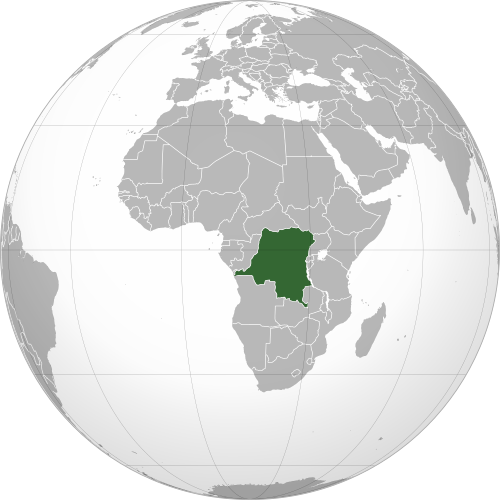
In December 2021, Congolese rumba entered the UNESCO Intangible Cultural Heritage list, marking the first time a musical genre from Central Africa received this distinction1. Fifty years earlier, a young dancer from Kinshasa improvised ndombolo steps — this explosive dance born in the capital’s clubs — and laid the foundations for a style that today still tops the continent. From Wendo Kolosé to the early records of the 1940s, to Fally Ipupa filling two consecutive nights at the Stade de France in May 2026, Congolese music has never stopped exporting a unique sound, a true lingua franca of the continent, understood from Dakar to Johannesburg2.
From Cuban rhythms to Congolese sound
Like many modern African genres, Congolese rumba was born from a crossroads: Cuban rumba — imported via records and radio waves from Havana in the 1930s3 — absorbed the rhythms, languages, and instruments of the Congo Basin. This process, which ethnomusicologist Wolfgang Bender calls re-Africanization, sees Western musical forms take on African meaning, not the other way around4. By the late 1940s, Greek producers based in Léopoldville — Kinshasa today — recorded the first discs: Wendo Kolosé, nicknamed “father of Congolese rumba,” released Love na Moto in 1948, considered the first modern hit of Congo5.
But it was Joseph Kabasélé, known as Le Grand Kallé (1930-1982), who laid the foundations. In 1953, he founded African Jazz, an orchestra that abandoned colonial polkas and mazurkas for rumba and samba, blending folklore and jazz6. The language that quickly dominated the records was lingala — a military and commercial pidgin born from tribal contact, becoming the lingua franca of radio waves and studios, from Congo-Brazzaville to Mozambique7. Kallé and African Jazz were so influential that Bembeya Jazz, the great Guinean orchestra, later acknowledged building its own aesthetic on their foundations8.
The golden age: Franco and Tabu Ley
The 1960s saw the emergence of two quasi-mythical figures whose rivalry would shape the destiny of Congolese music. In 1956, François Luambo Makiadi, known as Franco (1938-1989), founded the OK Jazz, which would become Orchestre Tout Puissant (TPOK) Jazz9. In 1963, Tabu Ley Rochereau (born 1940), formerly of African Jazz, left Kallé and formed with guitarist Dr Nico (1939-1985) the African Fiesta10. After leaving in 1965, Tabu Ley created his own group, Afrisa International, which recorded at the Paris Olympia in 1970 and returned as a national hero11.
Did you know? Tabu Ley is said to have composed more than 2,000 songs during his career — the equivalent of an album per month for 15 years12.
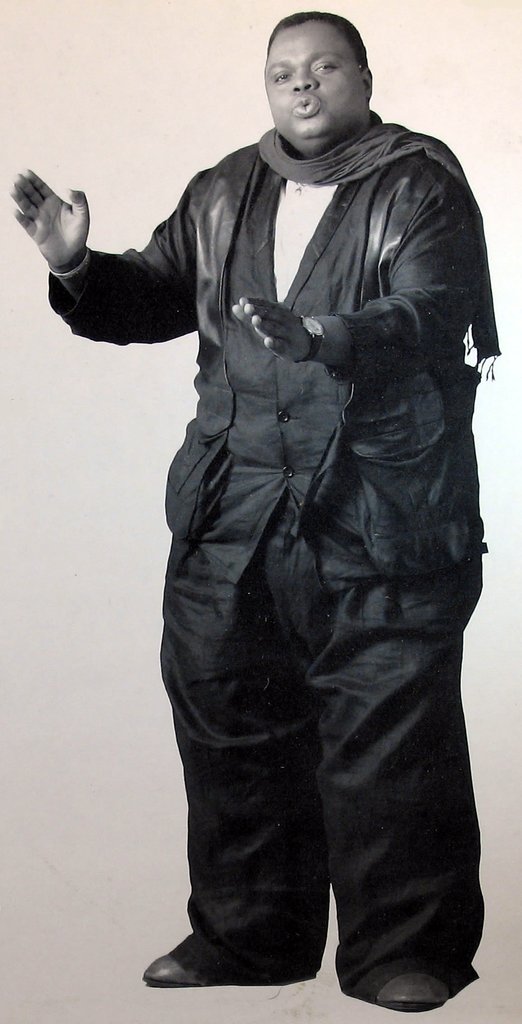
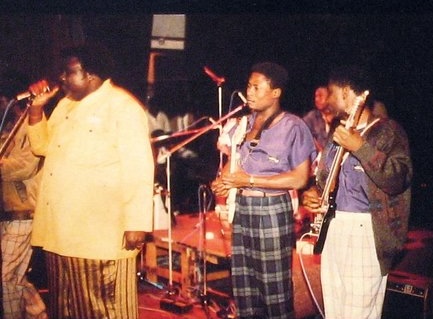
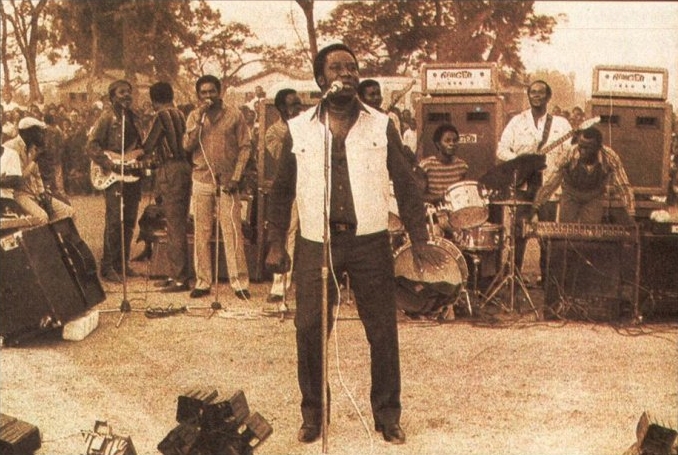
Franco, nicknamed “the guitar magician” and then “the Grand Master,” led TPOK Jazz for over three decades with clockmaker precision. His orchestra counted up to 23 musicians: four brass, four guitars, bass, percussion, and a front-line of singers who alone formed an academy of stars13. Dr Nico, “God of the guitar,” stood out for a less structured and more experimental playing style14. The Franco-Tabu Ley rivalry was not merely a matter of egos: it distinguished two aesthetics, one rooted in tradition, the other open to soul, disco, and salsa influences15.
| Figure | Nickname | Orchestra | Key Period |
|---|---|---|---|
| Le Grand Kallé | Father of rumba | African Jazz | 1953-1965 |
| Franco | The guitar magician | TPOK Jazz | 1956-1989 |
| Tabu Ley | Lord Rochereau | Afrisa International | 1965-1990 |
| Dr Nico | God of the guitar | African Fiesta | 1963-1985 |
| Papa Wemba | Pope of the Sape | Viva La Musica | 1974-2016 |
The 1970s made Congolese rumba the quintessential pan-African sound: from Senegal to Zimbabwe, it resonated in clubs, radio stations, and official ceremonies. The soukous style — an accelerated tempo where guitars chain increasingly torrid solos — established itself as Congo’s rhythmic signature on the continent16.
The turning point: Zaiko, Wemba, Koffi and the ndombolo
By the late 1960s, Congolese youth were moving. Mobutist authenticity indigenized names and forms, but music transformed deeply. Zaiko Langa Langa, founded in 1969, introduced a frenetic tempo, drum kits, and the sebene — that instrumental section where dancers go wild17. In 1974, Papa Wemba (1949-2016), a young singer from Zaiko, left to create his own group: Viva la Musica. With pants called éléphant, flamboyant costumes, and a style he would call the sape (Société des Ambianceurs et des Persons Élégantes), Wemba became an icon of fashion and music — until he died on stage on April 24, 2016, during a concert in Côte d’Ivoire18.
In parallel, the ndombolo — a sensual dance born in the 1980s — and the generation of Koffi Olomide (born 1956), nicknamed “Sankara” or “the Minotaur,” injected new life into soukous. Koffi, mentor to Fally Ipupa, remained the tutelary figure of the Congolese scene for over four decades19. His formula: stretched soukous, chained rhythms, choreography right up close to the audience.
The Heirs: Fally, Ferre and the New Generation
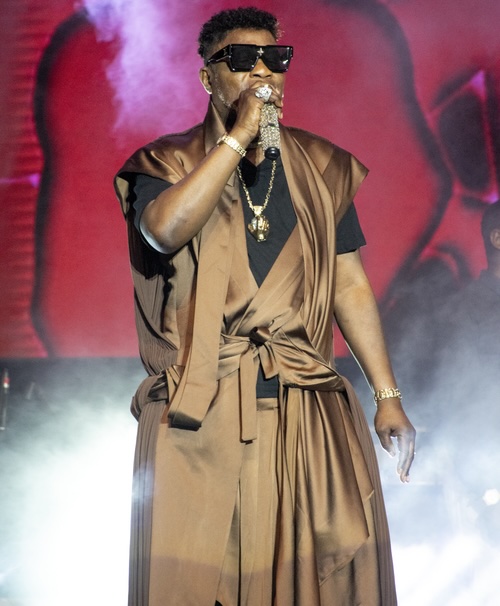
Today, two names dominate the Congolese and African landscape. Fally Ipupa, nicknamed « the Prince of Rumba » (born in 1977), was a student of Koffi Olomide before becoming a transgenerational phenomenon. His album Formule 7 (2022) became the first Congolese rumba album certified gold by the SNEP in France — equivalent to 50,000 sold units20. In May 2026, he filled the Stade de France over two consecutive nights — in front of approximately 140,000 spectators total — becoming the first African artist to achieve this feat21. His style fuses traditional rumba, soukous, ndombolo, R&B and trap, attracting a generation of fans from the digital age22.
On the side of Ferre Gola (born in 1976), a figure of Wenge Musica — the group founded by JB Mpiana, successor to Papa Wemba — the singer embodies a pure approach to rumba, one that pleases purists with vocal power and crystalline diction23. His tour L’incontournable in Europe and America (2025) confirms his willingness to rival Fally Ipupa on the international stage24. The Fally-Ferre rivalry inflames debates among music lovers, a direct legacy of the Franco-Tabu Ley rivalry25.
Even younger, Innoss’B (born in 1997), nicknamed « the Young Leader », explores AfroCongo, a blend of Congolese rumba, local folklore and Nigerian afrobeats26. In 2024, his EP Calcul and single “Sete” — more than one million YouTube views in thirteen days — mark the new generation that does not separate rumba and streaming27.
A sound that never stops
According to Stern’s Guide, Congolese rumba remains the most powerful musical form on the African continent28. Its heritage is not limited to the genre: Bembeya Jazz in Guinea, Makossa in Cameroon, Ziglibithy in Côte d’Ivoire, all have absorbed elements of the Congolese sound29. In the era of streaming, platforms like Boomplay record more than 200 million listens for a single Congolese album30. From Kinshasa to Paris, from Johannesburg to Abidjan, Congolese rumba continues to dance, dance, dance — exactly as Le Grand Kallé predicted in 1960, when he composed “Independence Cha-Cha” and Africa entered its future to the sound of loukoumi — that two-beat rhythm that moves the hips and has not stopped since31.
Sources
-
UNESCO, « Congolese rumba », Reference No. 01711, Representative List of the Intangible Cultural Heritage of Humanity, 2021. Accessed October 26, 2026. https://ich.unesco.org/en/RL/congolese-rumba-01711 ↩︎
-
Ronnie Graham, Stern’s Guide to Contemporary African Music, Vol. 1 (Zwan Publications, 1988), p. 183. ↩︎
-
François Bensignor, Les Musiques du monde (Larousse, 2002), ch. 4, « Central Africa », p. 29. ↩︎
-
Wolfgang Bender, Sweet Mother: Modern African Music (University of Chicago Press, 1991), ch. 2, p. 81-82. ↩︎
-
Ronnie Graham, Stern’s Guide, Vol. 1, p. 186. See also Bensignor, op. cit., p. 30. ↩︎
-
Ronnie Graham, Stern’s Guide, Vol. 1, p. 186. Bender, Sweet Mother, ch. 2, p. 64-65. ↩︎
-
Bender, Sweet Mother, ch. 2, p. 73-74. ↩︎
-
Ronnie Graham, Stern’s Guide, Vol. 1, p. 186. ↩︎
-
Ronnie Graham, Stern’s Guide, Vol. 1, p. 186-187. ↩︎
-
Ronnie Graham, Stern’s Guide, Vol. 1, p. 187. ↩︎
-
Bender, Sweet Mother, ch. 2, p. 74-75. ↩︎
-
Ronnie Graham, Stern’s Guide, Vol. 1, p. 187. ↩︎
-
Ronnie Graham, Stern’s Guide, Vol. 1, p. 186. ↩︎
-
Ronnie Graham, Stern’s Guide, Vol. 1, p. 187. ↩︎
-
Bender, Sweet Mother, ch. 2, p. 76-80. ↩︎
-
Ronnie Graham, Stern’s Guide, Vol. 1, p. 186. Bensignor, Les Musiques du monde, p. 30. ↩︎
-
Bensignor, Les Musiques du monde, p. 30. ↩︎
-
Reuters, « Congo lays to rest music and fashion legend Papa Wemba », May 8, 2016. Accessed October 26, 2026. https://reuters.com/article/us-people-wemba-idUSKCN0XV2B2 ↩︎
-
Wikipedia, « Fally Ipupa », accessed October 26, 2026. https://en.wikipedia.org/wiki/Fally_Ipupa ↩︎
-
Wikipedia, « Fally Ipupa », accessed October 26, 2026. https://en.wikipedia.org/wiki/Fally_Ipupa ↩︎
-
Wikipedia, « Fally Ipupa », accessed October 26, 2026. https://en.wikipedia.org/wiki/Fally_Ipupa ↩︎
-
The EastAfrican, « Is Fally the king of Congolese rumba? Maybe not. All hail the prince! », accessed October 26, 2026. https://www.theeastafrican.co.ke/tea/magazine/is-fally-the-king-of-congolese-rumba-all-hail-the-prince-5128660 ↩︎
-
Congo Herald, « Fally VS Ferre : Who truly embodies rumba 2.0? », accessed October 26, 2026. https://www.congoherald.com/societe/fally-ferre-qui-incarne-vraiment-la-rumba-2-0/ ↩︎
-
Mbote.cd, « Ferre Gola launches his tour “L’incontournable” in Europe and America in 2025 », February 18, 2025. Accessed October 26, 2026. <https://mbote.cd/buzz/ferre-gola-lance-sa-tournee-lincontourna ble-en-europe-et-en-amerique-en-2025/179687/> ↩︎
-
TRT Global, « Fally vs Ferre: DRC stars at centre of fans’ rivalry », October 4, 2024. Accessed October 26, 2026. https://trt.global/afrika-english/article/18216020 ↩︎
-
Wikipedia, « Innoss’B », accessed October 26, 2026. https://en.wikipedia.org/wiki/Innoss%27B ↩︎
-
Wikipedia, « Innoss’B », accessed October 26, 2026. https://en.wikipedia.org/wiki/Innoss%27B ↩︎
-
Ronnie Graham, Stern’s Guide, Vol. 1, p. 183. ↩︎
-
Bender, Sweet Mother, ch. 2, p. 87-89. Bensignor, Les Musiques du monde, p. 27-30. ↩︎
-
Wikipedia, « Fally Ipupa », accessed October 26, 2026. https://en.wikipedia.org/wiki/Fally_Ipupa ↩︎
-
Bender, Sweet Mother, ch. 2, p. 71-72. ↩︎