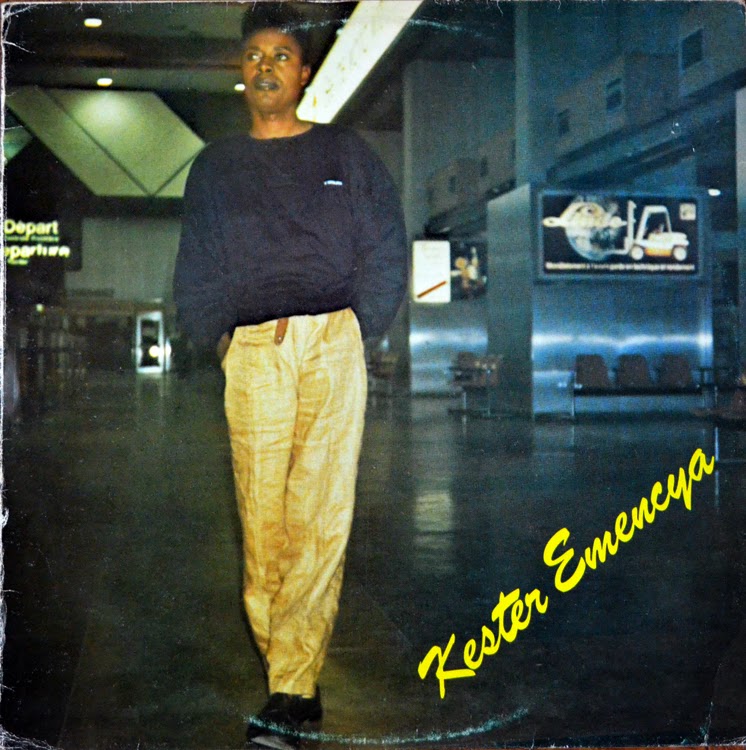
Biography
King Kester Emeneya: the crownless king of Congolese rumba
On November 15, 1997, King Kester Emeneya stepped onto Congolese soil after seven years in exile. Eighty thousand spectators crowded into the Stade des Martyrs in Kinshasa: he became the first Congolese artist to break this record. That evening, the “crownless king” proved that his reign over Congolese rumba had never ended.
In brief
| Full name | Jean Baptiste Emeneya Mubiala Kwamambu |
| Birth | November 23, 1956, Kikwit, Belgian Congo (now DRC) |
| Death | February 13, 2014, Le Plessis-Robinson, France |
| Genre | Congolese rumba, soukous, world music |
| Notable works | Nzinzi, Everybody, Naya |
| Honors | National Order (posthumous), Best Congolese Star 1982–1989 |
Key dates
| Year | Event |
|---|---|
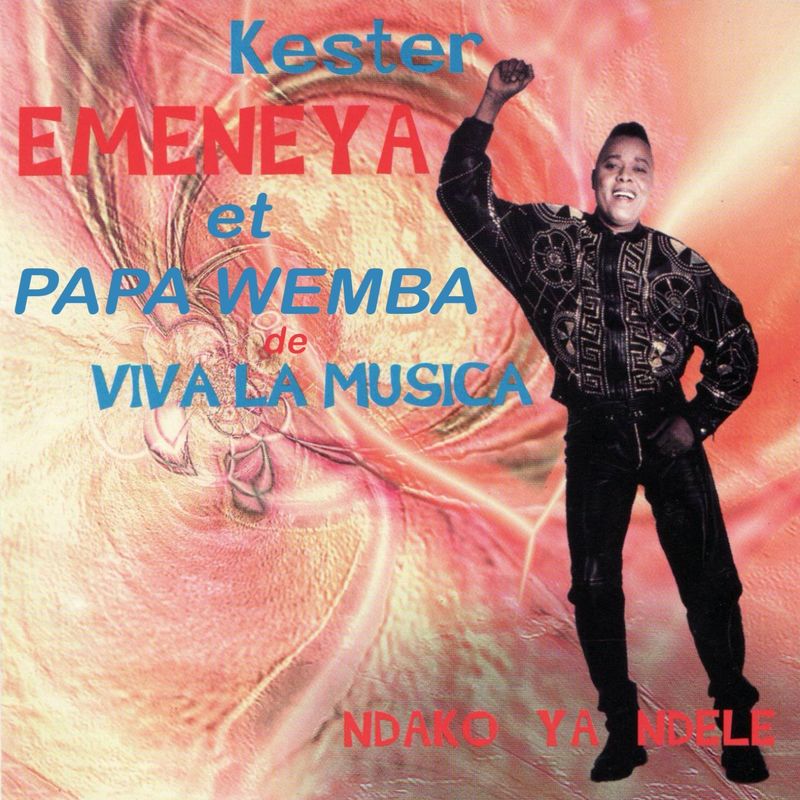
| 1977 | Joined Papa Wemba’s Viva La Musica |
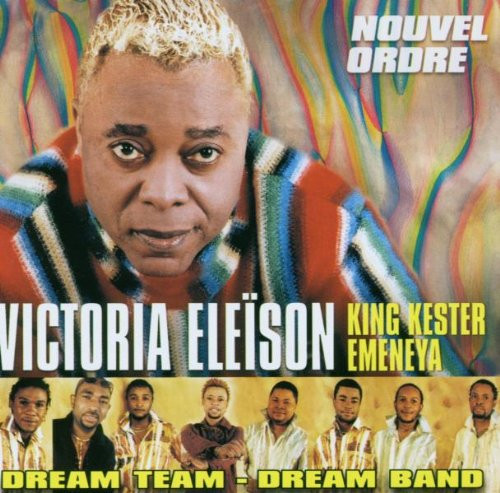
| 1982 | Founded Victoria Eleison (December 24) |
| 1987 | Release of Nzinzi, a continental hit |
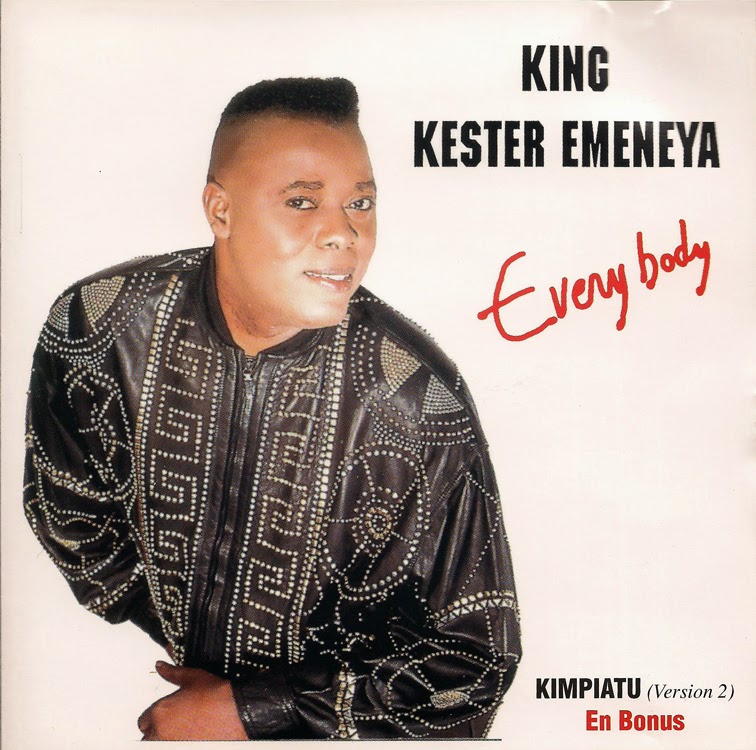
| 1993 | Everybody, first international computerized album |
| 1997 | Record concert of 80,000 people in Kinshasa |
| 2002 | Concert at the Olympia in Paris |
| 2014 | Death and posthumous decoration by President Kabila |
Origins and revolutions (1956–1982)
A student at the Don Bosco Institute in Kikwit, Emeneya discovered music in the choir of the Black Angels. After his high school diploma at the Longo Institute in Idiofa, he enrolled at the University of Lubumbashi to study political science. In 1977, his musical destiny drew him to Kinshasa, where Misha Mulongo opened the doors of Viva La Musica, Papa Wemba’s young orchestra. He joined the group as a second vocalist, but his talent and leadership sense allowed him to climb the ranks very quickly: he became the de facto artistic director, recruiting talents like Dindo Yogo or Djuna Djanana, and even initiating Koffi Olomide in singing, who was then simply a lyricist.
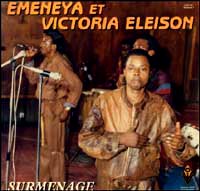
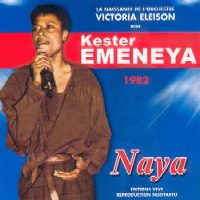
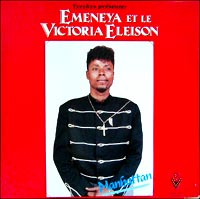
This growing influence created tensions with Papa Wemba. At the end of 1982, during a long stay by the leader in Europe, members of Viva La Musica resigned en masse. On December 24, 1982, Emeneya founded the Victoria Eleison orchestra, taking most of his former accomplices with him. The albums Naya (1982), Surmenage (1983) and Willo Mondo (1985) confirmed the audacity of a singer aspiring to total control over his art.
Innovation and continental triumph (1983–1997)
In 1987, King Kester made a technological leap that would forever mark Congolese music. With the album Nzinzi, he replaced traditional brass sections with synthesizers and a drum machine, hiring Western musicians for programming. The bet was bold: purists denounced it as “sacrilege,” but the public reacted in a frenzy. Nzinzi, whose eponymous title delivers a satire of seducers, sold over one million copies across the continent and beyond. Congolese music shifted into the electronic era.
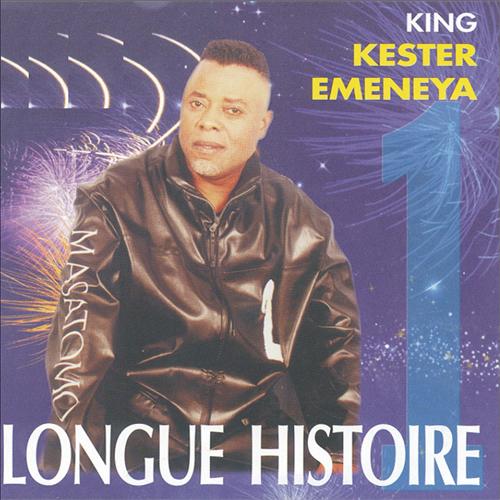
In 1993, he released Everybody (distributed by Sonodisc), an album with a revolutionary computerized sound that achieved international success. During this period, he resided in France starting from 1991 but never stopped producing: Longue Histoire (2000) dominated local charts and established “Tshaku Libondanse,” the dance of the year 2000.
His international tours took him to Japan in 1991, North America, and major European halls: Zénith de Paris in 2001, Olympia in 2002 and 2008. He also auditioned in Switzerland before more than 12,000 spectators, a first for an African artist in that country.
Legacy and memory
Beyond his musical career, King Kester Emeneya was an iconic figure of the sape — a Congolese movement of sartorial elegance — and wore Gianni Versace and Masatomo outfits on stage, contributing to making them popular in Central Africa.
His most lasting influence lies in the formation of the “fourth generation” of Congolese rumba. Werrason and JB Mpiana, founders of Wenge Musica, recognize him as their mentor. “He inspired us the most and coached us on our path to greatness. He is the godfather of the fourth generation” recalls Werrason. JB Mpiana adds on Radio Okapi (March 2014): “It is thanks to the advice he gave us at Wenge that we became what we are today. Emeneya was a genius of sound and melodies.”
The funeral of King Kester Emeneya, on March 2, 2014 at the Nsele necropolis in Kinshasa, was the largest gathering of all time in Congo. On the same day, President Joseph Kabila decorated him posthumously with the National Order for his extraordinary contribution to Congolese music.
Major works
| Work | Year | Why it is essential |
|---|---|---|
| Naya | 1982 | Founding album of Victoria Eleison, launched by hits like Ngabelo |
| Nzinzi | 1987 | Electronic revolution that brought rumba into the digital age |
| Everybody | 1993 | Computerized production driven by international success |
| Longue Histoire | 2000 | Triumphant comeback with the cult dance “Tshaku Libondanse” |
Sources and references
-
« King Kester Emeneya, l’homme du changement », RFI Musique, https://musique.rfi.fr/actu-musique/musique%20africaine/rumba-congolaise/20140214-king-kester-emeneya-d%c3%a9c%c3%a8s.html, accessed October 19, 2026.
-
« King Kester Emeneya », Wikipedia (FR), https://fr.wikipedia.org/wiki/King_Kester_Emeneya, accessed October 19, 2026.
-
« King Kester Emeneya », Wikipedia (EN), https://en.wikipedia.org/wiki/King_Kester_Emeneya, accessed October 19, 2026.
-
« Tribute to King Kester Emeneya, the regent of African rumba and the godfather of the 4th generation », amagep.co.za, https://amagep.co.za/en/tribute-to-king-kester-emeneya-the-regent-of-african-rumba-and-the-godfather-of-the-4-generation/, accessed on 19 October 2026.
-
« RDC: King Kester Emeneya and Victoria Eleison », Musiques d’Afrique, https://musiques-afrique.net/rdc/art-emeneya.html, accessed on 19 October 2026.
-
« King Kester Emeneya: 12 years later, the shadow of the ‘King’ still looms over rumba », AfricaNews RDC, https://www.africanewsrdc.net/culture/king-kester-emeneya-12-ans-apres-lombre-du-king-plane-toujours-sur-la-rumba/, accessed on 19 October 2026.
-
« The immortal songs of Africa: ‘Nzinzi’ by King Kester Emeneya », ADIAC-Congo, https://www.adiac-congo.com/content/les-immortelles-chansons-dafrique-nzinzi-de-king-kester-emeneya-112780, accessed on 19 October 2026.
-
« King Kester Emeneya: already 3 years », Music in Africa, https://musicinafrica.net/fr/magazine/king-kester-emeneya-3-ans-deja/, accessed on 19 October 2026.