Musical History of Kenya
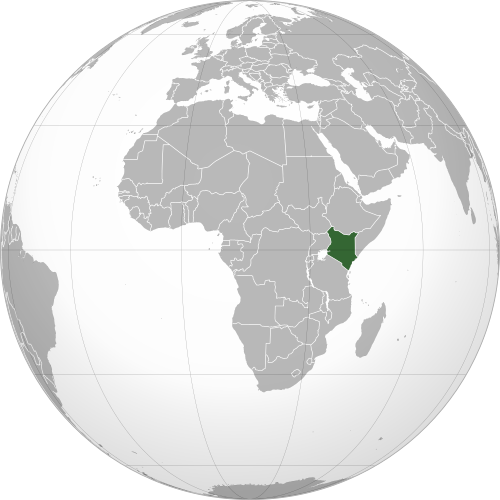
Kenya is one of the first African countries to record commercial music: as early as 1923, labels HMV and Odeon recorded the first discs in Nairobi and Mombasa1. Today, Spotify reports 95 million Kenyan music discovery listens in 2024 — equivalent to twice Kenya’s population listening with headphones2. How did a country long eclipsed by its Nigerian and South African neighbors become a laboratory for genres exported to global platforms?
Thirteen centuries of exchanges along the Swahili coast have shaped a Kenyan music that has never stopped reinventing itself3. From the dry guitar of the 1950s to Nairobi’s Gengetone trap, passing through the benga of Lake Victoria shores and the tarabu of Mombasa nights, Kenya’s musical history is that of a country absorbing external influences to transform them into something deeply local4.
From First Discs to Swahili Orchestras (1920–1963)
The origins of Kenyan popular music lie on the coast, where the first tarabu groups formed as early as the 1900s — a term of Arabic origin (tarab, musical enchantment) designating an instrumented poetic chant, a blend of Arab, Indian and African influences5. Born on Zanzibar in the second half of the 19th century, tarabu spread along the coasts of Kenya, Tanzania and Mozambique6. Its characteristic: instrumentation mixing Arab oud, violin, harmonium and Indian tabla, on lyrics composed using the mafumbo technique — double-meaning poems inviting listeners to decipher social commentary7.
In 1930, singer Siti binti Saad, nicknamed “the mother of tarabu,” recorded the first commercial Swahili music discs at Mombasa for Odeon8. With her orchestra, she blended Egyptian melodies, polyrhythmic coastal rhythms and Indian influences to define a modern Swahili identity9.
Inside the country, music remained first and foremost an oral affair, transmitted by the Kikuyu, Luo, Luhya, Kamba and Maasai peoples. The arrival of the gramophone in the 1920s–1930s enabled the first recordings of traditional music10. Kenya’s history shifted with independence in 1963. Nairobi, the new capital, attracted musicians from across East Africa and established its first vinyl press studio in 195211. The country was on the path to its discographic golden age.
Did you know? Malaika (“The Angel I Love”) is probably one of the most covered African-origin songs in the world — by Harry Belafonte, Boney M., Miriam Makeba and Pete Seeger — but the real composer, Lukas Tututu from Frere Town near Mombasa, was never credited12.
Benga, Hymn of a Generation (1964–1985)
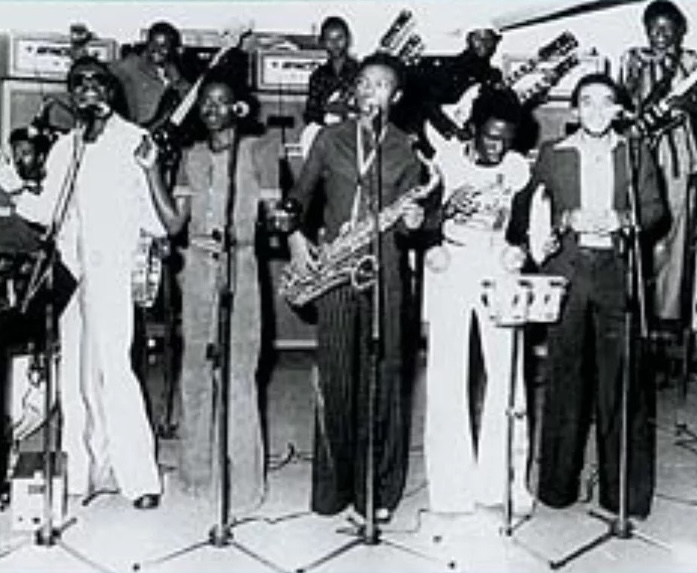
Benga, the quintessential Kenyan musical style, emerged in the second half of the 1960s13. Born within the Luo community of Lake Victoria shores, benga is a cross-over between traditional rhythms (the ubele, the 6/8 dance of Luo women) and staccato electric guitar, reviving techniques from the nyatiti, an eight-string Luo lute14. The result is a sound with fast tempos and powerful bass, becoming the dominant vernacular genre in East Africa15.
The founding father of benga is Daniel Owino Misiani (1940–2006), born in Nyamagongo, Tanzania, into a Luo family16. Settled in Nairobi in 1964, he formed the Victoria Boys and then Shirati Jazz in 196717. With hits like “Simaya Chunye Oketo” and “Dada Jane,” Shirati Jazz dominated East African charts throughout the 1970s18. Nicknamed “the king of history” in Kenya and “the grandfather of benga” abroad, Misiani wrote sharp lyrics that earned him several prison stints under presidents Kenyatta and Moi19.
Benga was not limited to Misiani. Ochieng Nelly Mengo, known as Dr Mengo, formed the Victoria Jazz in 1972 and became the great rival of Shirati Jazz20. Daudi Kabaka, “the revealer of secrets,” recorded his first album in 197621. Joseph Kamaru and Daniel Kamau (DK) popularized Kikuyu benga, with DK founding his own label DK Undugu Sound in 197022.
But benga faced structural challenges. Independent producer P. Oluoch Kanindo, of Luo origin, dominated the landscape with Shirati Jazz and Victoria Jazz — he managed his groups with American-style manager severity, and the bands often earned only a fixed fee per single23. The country lacked vinyl press capacity (only one label, Polygram) and solidly applied copyright laws24. In 1980, the Voice of Kenya radio attempted to impose a 75% quota for Kenyan music: too harsh, the decree was withdrawn after two weeks25. Benga had momentum, but not the structures to generate sustainable revenue.
The Urban Era: Kapuka, Hip-Hop and Diversification (1985–2015)
The 1980s and 1990s saw Nairobi transform into the East African music hub. Tanzanian and Congolese artists flocked to Nairobi, where studios and record labels were most numerous26. Kapuka — a fusion of hip-hop, reggae and traditional elements — emerged in the 1990s and became the first Kenyan urban genre to attract international attention27. K-South (Bamboo and Abass) and Ogopa Deejays played a central role in its popularization28.
Kenyan hip-hop professionalized in the 2000s. Sauti Sol — Bien, Chimano, Willis and Polycarp — formed at Nairobi’s Upper Hill School and became the pillar of pan-African Afro-Kenyan pop29. Their track “Sura Yako” (2014) propelled them onto the continental stage, and their collaboration with Michelle Obama on Netflix in 2018 confirmed their status30. Nyashinski, who returned to Kenya after a stay in the United States, released Now You Know in 2015 and defined a dry, melancholic Kenyan boom-bap style31.
Khaligraph Jones (Brian Ouko Robert, born 1990) became the flagbearer for Kenyan trap from 2019, with “Ay Ay Ay” and “Yes Bana”32. Hailing from Kibera — Africa’s largest slum — Octopizzo embodies conscious rap, with lyrics addressing social stratification and corruption33. Kalamashaka and the Mau Mau ensemble were among the first hip-hop groups to open for Coolio and Lost Boyz Crew in the West, compared by Snoop Dogg to the Wu-Tang Clan34.
This effervescence coexisted with a fragile industrial reality. Artists like Slim Ali (Hodi Boys) and DK achieved commercial success as early as the 1970s, but structures were desperately lacking35. In 2014, Al Jazeera reported that Kenyan music had “no identity” on the international stage, eclipsed by Nigerian afrobeats and South African amapiano36. Many artists hesitated to dedicate themselves fully to music, as the local industry was too poorly structured37.
From Gengetone to Arbantone: The Streaming Revolution (2015–2026)
Streaming changed everything. In 2024, Kenyan artists totaled over 95 million discovery listens on Spotify, with 120,000 listening hours and 16 million playlists created globally38. Local consumption jumped by 277% in three years, and exports rose by 94%39. Kenyan female artists saw their international streams increase by 98%40.
Gengetone, emerging around 2018–2019, was the first Kenyan genre to find a mass audience via TikTok and Spotify41. Born in Nairobi’s popular estates (Eastlands), it mixes hip-hop, dancehall and reggaeton in Sheng — street language mixing Swahili, English and ethnic languages — often provocative and humorous42. Wakadinali (Scar, Mad Munga, Sewer Sydda), Ethic Entertainment, Boondocks Gang and Buruklyn Boyz are the emblematic figures of the movement43. In December 2022, Buruklyn Boyz curated a Boiler Room session in Nairobi44. Gengetone was recognized as a potential Grammy Awards category in 202345.
It, in turn, inspired Arbantone, which emerged around 2023 by reusing beats from Kenyan and Jamaican classics, with artists like Lil Maina, Maandy, Bien, Njerae and Toxic Lyrikali — the latter, the most-listened-to artist in Kenya by late 2025, having seen his track “Chinje” (2024) surpass 11 million YouTube views46.
Spotify Wrapped 2025 figures confirm: Bien tops the list, followed by Sauti Sol, Wakadinali, Toxic Lyrikali, Bensoul, Njerae and Nyashinski47. The Top 5 tracks include “Aki Sioni” by Njerae, “Beta” by Mutoriah and “Midnight Train” by Sauti Sol — a mix of Afro-soul, revisited kapuka and pan-African pop48.
Challenges and the Future
Despite the streaming explosion, the industry remains unfinished. The 40% local music quota for radio — voted in 2014 but poorly applied — remains insufficient against the invasion of afrobeats and amapiano49. Majors opened offices in Lagos and Johannesburg, but not in Nairobi50. Only 15% of Kenyan artists have a verified Spotify profile51. Copyright distribution remains a nightmare: the Malaika case illustrates the problem, with seven parties sharing rights and composer Lukas Tututu receiving only 1,000 pounds after fifteen years52. Digital and physical pirates curb revenues53.
Yet, vital forces are numerous. Festivals like Blankets & Wine in Naivasha and Café Ngoma in Nairobi offer quality platforms54. Elsy Wameyo (Kenyan-Australian), KayCyy (Kanye West collaborator) and the new wave of female rappers (Tulia, Silverstone, Groovy Jo) expand possibilities55.
Kenya’s musical history is that of a country transforming every external influence into something properly Kenyan3. With 95 million discovery listens in 2024 and a generation no longer satisfied with the local market, Kenya seems finally ready to export its sound to the entire continent56. The industry remains fragile, but creativity has never been richer. As Phiona Okumu of Spotify summarizes: “What we observe is the result of incredible talent combined with digital accessibility that allows these unique sounds to reach audiences worldwide”57. The question is no longer if Kenyan music will conquer the world, but how — and at what speed.
Sources
-
Pan African Music, « Setting the record straight on Kenya’s vinyl history », 2024. URL. ↩︎
-
Pulse Kenya, « Breaking borders: Data reveals massive global demand for Kenyan music », 28 April 2025. URL. ↩︎
-
Janet Topp Fargion, Sounds of Other Shores, Wesleyan University Press, 2014. URL. ↩︎ ↩︎
-
Wolfgang Bender, Sweet Mother: Modern African Music, University of Chicago Press, 1984/1991, chapter 4. ↩︎
-
Mwenda Ntarangwi, « A Socio-Historical and Contextual Analysis of Popular Musical Performance Among the Swahili of Mombasa », Cultural Analysis Vol. 2, 2001. URL. ↩︎
-
Ronnie Graham, Stern’s Guide to Contemporary African Music, Zwan Publications, 1988, pp. 235–246. ↩︎
-
Topp (2014), chap. 2, pp. 57–92 ; Fair (2001). ↩︎
-
Ibid.: the binti Saad collective recorded in Mombasa at Odeon in 1930. ↩︎
-
Ntarangwi (2001); Topp (2014) chap. 2. ↩︎
-
WIPO Magazine, « On the Beat — Tapping the Potential of Kenya’s Music Industry ». URL. ↩︎
-
The Guardian, « Kenya Special’s musical history lesson », 24 July 2013. URL. ↩︎
-
Bender (1984), pp. 152–153; Guardian (2013). ↩︎
-
Afropop Worldwide, « The Benga Sound of Kenya »; Wikipedia, article Benga music. ↩︎
-
WIPO Magazine; Afropop; World Music Guide, Les Musiques du Monde, ch. 5. ↩︎
-
Wikipedia, article Benga music. ↩︎
-
The Independent, « D.O. Misiani | Singer and guitarist », obituary, 2006. URL. ↩︎
-
AllMusic, « Daniel Owino Misiani »; Independent (2006). ↩︎
-
AllMusic; Wikipedia Benga music; Independent (2006). ↩︎
-
Independent (2006); AllMusic: mentions of prison passages. ↩︎
-
Wikipedia, article Benga music; Afropop. ↩︎
-
Stern’s Guide Vol. 2 (1992), pp. 238–239. ↩︎
-
Bender (1984), pp. 149–150; Guardian (2013). ↩︎
-
Bender (1984), pp. 148–149: portrait of P. Oluoch Kanindo. ↩︎
-
Bender (1984), p. 147: Polygram monopoly, lack of local press. ↩︎
-
Bender (1984), pp. 154–156: the Voice of Kenya incident of March 1980. ↩︎
-
World Music Guide, ch. 5; Africa Center, « Why Does Kenya’s Music Industry Struggle? ». URL. ↩︎
-
The Native Magazine, « 50 years of Hip Hop: An Inside Look at Nairobi’s Rap Scene ». URL. ↩︎
-
Ibid.: K-South and Ogopa Deejays. ↩︎
-
WorldMusic, Kenyan Hip-Hop genre; Native Magazine. ↩︎
-
WorldMusic; Al Jazeera (2024). ↩︎
-
WorldMusic; BBC News, « Why Kenyan music is drowned out by Nigerian sounds », 2022. ↩︎
-
WorldMusic; Al Jazeera (2024). ↩︎
-
Native Magazine; WorldMusic. ↩︎
-
Native Magazine: Kalamashaka/Mau Mau; « the African Wu-Tang Clan » (Snoop Dogg). ↩︎
-
Bender (1984), pp. 149–152; Guardian (2013). ↩︎
-
Al Jazeera (2024). ↩︎
-
Al Jazeera (2024): Maya Amolo, « just not developed as an industry ». ↩︎
-
Pulse Kenya (2025); TechArena (2025). ↩︎
-
Ibid.: +94% of musical exports. ↩︎
-
Ibid.: +98% for female artists. ↩︎
-
TNX Africa (2025), « From Kapuka to Gengetone ». URL. ↩︎
-
Zakenya (2025), « Gengetone Music Thrives in Kenya as Artists Drop New Hits in 2025 ». URL. ↩︎
-
Native Magazine; The Chronicle (2025), « Sound of Nairobi ». URL. ↩︎
-
Native Magazine: Buruklyn Boyz curators Boiler Room 2022. ↩︎
-
TNX Africa (2025): the Recording Academy recognizes Gengetone as a Grammy category in 2023. ↩︎
-
Chronicle (2025); Zakenya (2025). ↩︎
-
KenyanVibe, « Spotify Wrapped 2025 ». URL. ↩︎
-
Ibid. ↩︎
-
BBC News (2022). ↩︎
-
Al Jazeera (2024). ↩︎
-
Witalents (2026), « Kenya Music Industry Statistics ». URL. ↩︎
-
Bender (1984), pp. 152–153; Guardian (2013). ↩︎
-
Africa Center; WIPO Magazine. ↩︎
-
Chronicle (2025). ↩︎
-
Pulse Kenya (2025): KayCyy; Native Magazine. ↩︎
-
Pulse Kenya (2025). ↩︎
-
Ibid.: quote from Phiona Okumu, Head of Music for Africa, Spotify. ↩︎