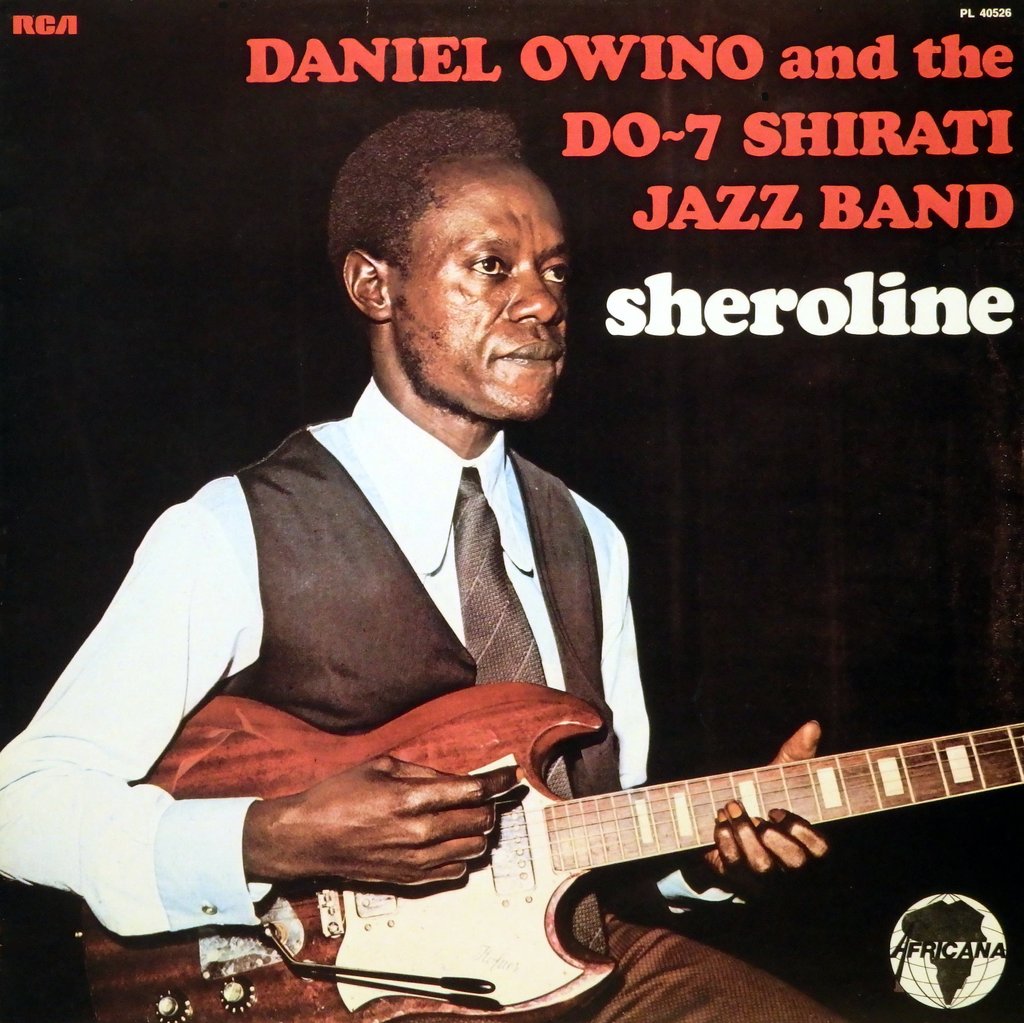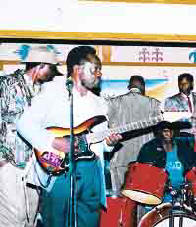
Biography
D.O. Misiani: the grandfather of benga
In 1975, following the assassination of popular politician J.M. Kariuki, a singer narrated the story of a cat devouring its own kitten1. No one in Nairobi was unaware that the message targeted the powerful. This musician, D.O. Misiani, held two nicknames: “king of history” in Kenya and “grandfather of benga” abroad. His journey, from the Tanzanian village of Nyamagongo to Nairobi stages, tells how an artist defied three presidents over four decades while inventing Kenya’s iconic sound.
In brief
| Full name | Daniel Owino Misiani |
| Nicknames | “King of history” (Kenya); “grandfather of benga” (international) |
| Birth | 22 February 1940, Nyamagongo (Shirati), Mara Region, Tanzania |
| Death | 17 May 2006 (age 66), Kisumu, Kenya |
| Genre | Benga (fast electric guitar Kenyan music), soukous |
| Instruments | Vocals, electric guitar |
| Languages | Dholuo, Swahili, English |
| Groups | Shirati Jazz (founder) |
| Notable works | “Simaya Chunye Oketo”, “Madinga Never Dies”, Piny Ose Mer |
| Honours | Founding father of the benga genre |
Key dates
| Year | Event |
|---|---|
| 1940 | Birth in Nyamagongo, near Shirati, Mara Region, Tanzania |
| 1964 | Move to Nairobi |
| 1965 | First recording with the Victoria Boys Band |
| 1972 | First album by Shirati Luo Voice on the Sungura label |
| 1975 | Release of “Kalamindi”, a political song that caused controversy |
| 1982 | Arrest following the coup d’état, for “Piny Owacho” |
| 1989 | Piny Ose Mer and Benga Blast!: international release |
| 2004 | American tour; departure from Nairobi to Shirati |
| 2006 | Death in a road accident near Kisumu |
Origins and struggle
Daniel Owino Misiani was born on 22 February 1940 in Nyamagongo, a village near Shirati in the Mara Region, just kilometres from Lake Victoria2. His parents were singers, but their Christian faith led them to smash his first guitar. Far from breaking him, this trial hardened his determination: he sang in school and church choirs before joining an acoustic Luo group as a teenager.
In 1964, Misiani settled in Nairobi, then the musical capital of East Africa. He founded the Victoria Boys Band and, by 1965, composed what would become benga—a genre rooted in traditional Luo music where fast electric guitar imitates the nyatiti, an eight-stringed Luo fiddle. His group took several names over the years: Shirati Luo Voice, D.O. 7 Shirati Jazz, and finally Shirati Jazz in 19753.
What forged his legend was his political audacity. Ironical and allegorical, his lyrics used animal parables and biblical references to critique power. In 1975, “Kalamindi” condemned President Kenyatta’s inequalities. In 1982, after the coup d’état, “Piny Owacho” praised the mutinous soldiers: Misiani was arrested and imprisoned. Under President Moi, he was extradited for “inciting dissidents.” After the 2002 elections, a new arrest followed “Bim men Bim,” interpreted as an attack on President Mwai Kibaki4. Three presidents, three regimes: Misiani remained faithful to his pen.
Final years
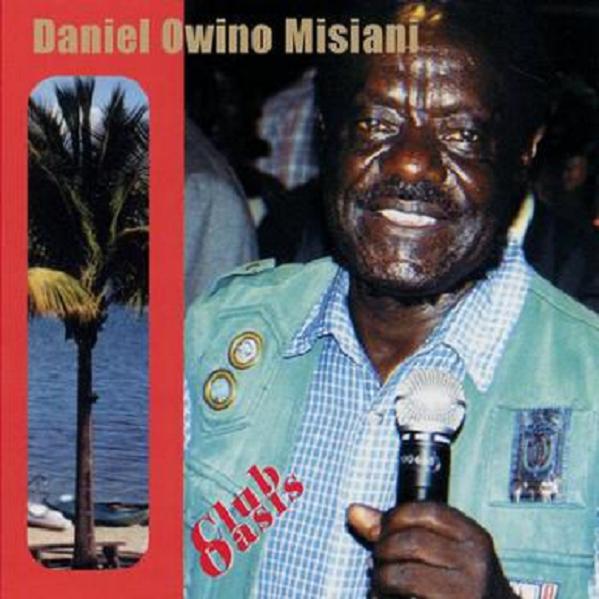
Disappointed by unfulfilled promises, Misiani left Nairobi in 2004 for Shirati. He continued performing with Shirati Jazz, whose long-term residency was the Club Oasis in Kisumu. In 2004, he headlined a brief American tour. On 17 May 2006, returning after a rehearsal, he died in a road accident on the Kakamega highway. He left two wives, Beatrice Atieno Owino (Queen Babito) and Felista, and fourteen children. His widow took over the group’s leadership: “We have no choice but to follow his footsteps.” Raila Odinga, future Prime Minister, hailed him as “an advisor, an inspiration and a support”5.
Legacy
The benga, the genre Misiani popularized, remains today Kenya’s authentic music, listened to by young and old alike. Where state choirs celebrated power, Shirati Jazz questioned it. His legacy extends beyond sound: he showed that a musician can, without renouncing wit, face leaders head-on and sing what many think but dare not say6.
Major works
| Work | Year | Why it’s essential |
|---|---|---|
| “Simaya Chunye Oketo” | ~1970 | Pioneering benga single on Kenyan radio waves |
| “Kalamindi” | 1975 | Protest anthem against inequalities |
| “Piny Owacho” | 1982 | Song about the coup d’état, source of imprisonment |
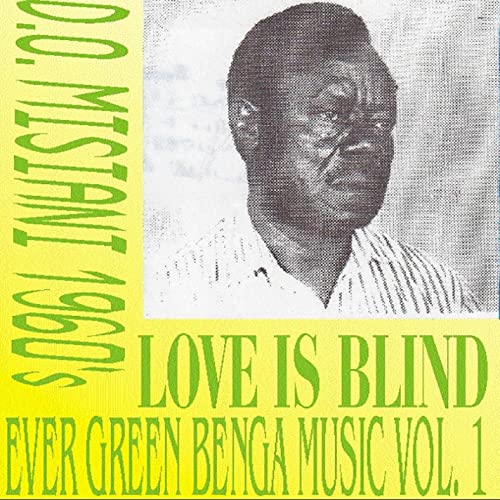
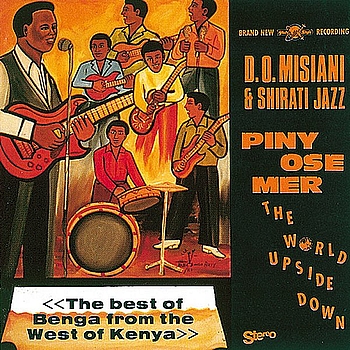
| Piny Ose Mer / The World Upside Down | 1989 | International album with Ben Mandelson |
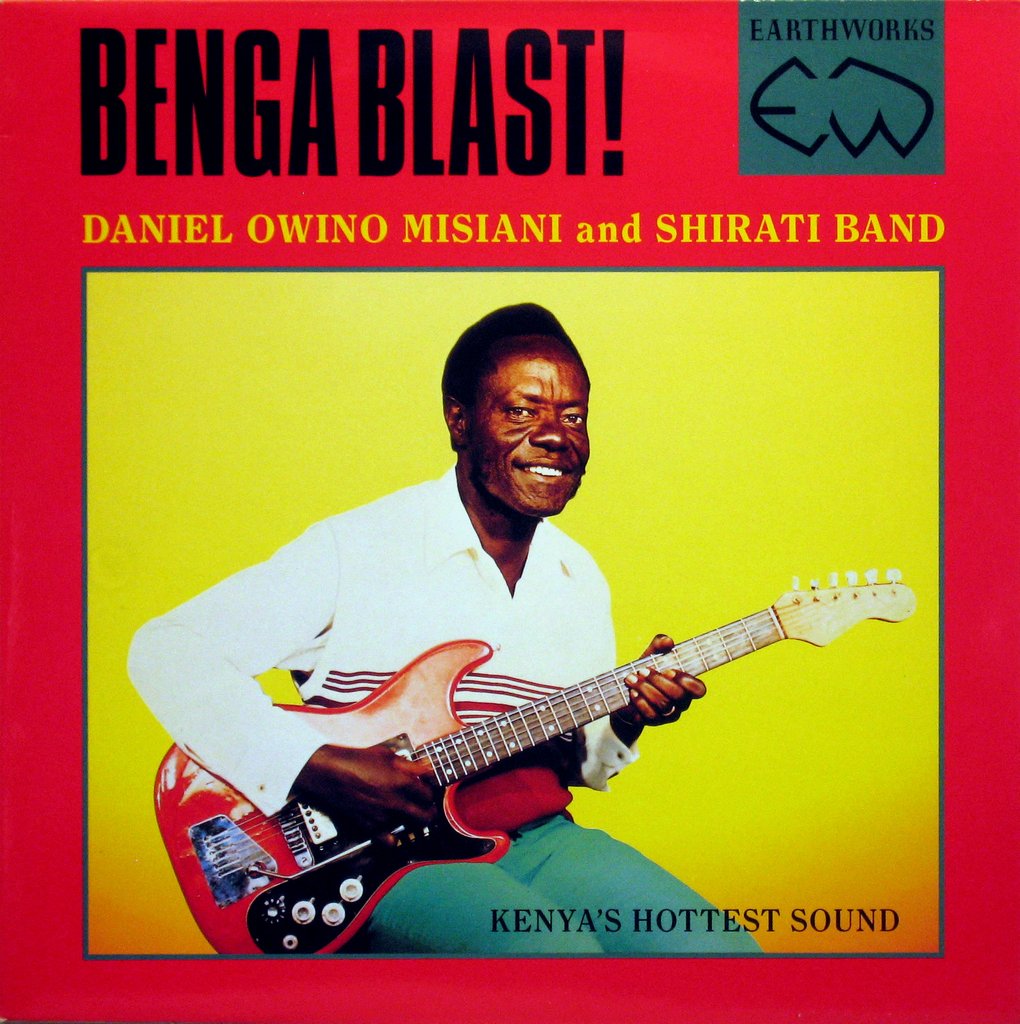
| Benga Blast! | 1989 | Virgin Records compilation, released in the West |
Sources and references
-
Daily Nation, Misiani was true to benga to the end, accessed on 28 October 2026, https://nation.africa/kenya/life-and-style/dn2/misiani-was-true-to-benga-to-the-end-918836 ↩︎
-
Global East Africa, Daniel Owino Misiani (1940-2006), Another World? East Africa and the Global 1960s, accessed on 28 October 2026, https://www.globaleastafrica.org/global-lives/daniel-owino-misiani-1940-2006 ↩︎
-
Wikipedia, Daniel Owino Misiani, accessed on 28 October 2026, https://en.wikipedia.org/wiki/Daniel_Owino_Misiani ↩︎
-
Global East Africa, Daniel Owino Misiani (1940-2006), Another World? East Africa and the Global 1960s, accessed on 28 October 2026, https://www.globaleastafrica.org/global-lives/daniel-owino-misiani-1940-2006 ↩︎
-
Raila Odinga, public eulogy cited in KenyaNations, accessed on 28 October 2026, https://www.kenyans.co.ke/news/how-daniel-owino-misiani-ja-shirati-troubled-presidents-moi-kenyatta-and-kibaki ↩︎
-
Daily Nation, Benga fans gather in Tanzania to honour icon Daniel Owino Misiani, accessed on 28 October 2026, https://standardmedia.co.ke/immortals/article/2001548022/benga-fans-gather-in-tanzania-to-honour-icon-daniel-owino-misiani ↩︎