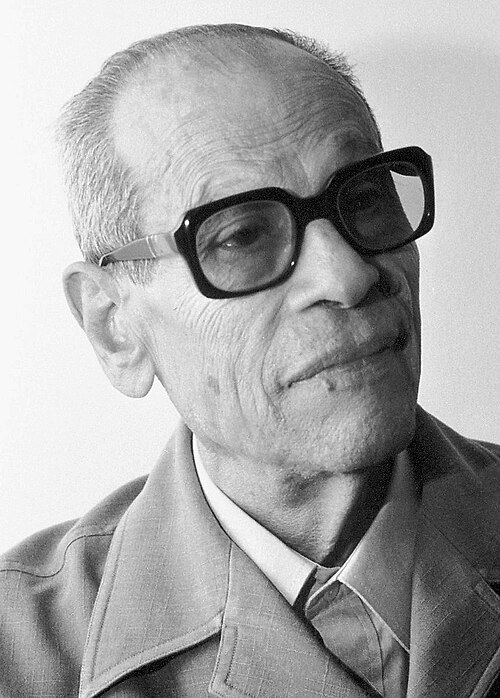
Biography
Biography of Naguib Mahfouz
Discreet civil servant nicknamed the “Balzac of the Nile,” Naguib Mahfouz became on October 13, 1988, the first Arab writer to receive the Nobel Prize in Literature. His universe: the alleyways of old Cairo and the destinies of those who inhabit them.
In brief
| Full name | Naguib Mahfouz Abdelaziz Ibrahim Ahmed Al-Basha |
| Birth | December 11, 1911, Cairo |
| Death | August 30, 2006, Agouza, Cairo |
| Field | Novel, short story, theater — literary realism |
| Emblematic works | The Cairo Trilogy, Children of Gebelawi, The Thief and the Dogs |
| Honors | Nobel Prize in Literature 1988, Order of the Nile |
Key dates
| Year | Event |
|---|---|
| 1911 | Birth in the Gamaliya neighborhood, Old Cairo |
| 1934 | Philosophy degree from Cairo University |
| 1939 | First novel, The Prophet’s Curse |
| 1956–1957 | The Cairo Trilogy, masterpiece |
| 1959 | Children of Gebelawi, controversial novel |
| 1988 | Nobel Prize in Literature, first Arab writer |
| 1994 | Assassination attempt by fanatics |
| 2006 | Death at age 94 |
Writing rooted in Cairo
Naguib Mahfouz was born on December 11, 1911, in the Gamaliya neighborhood of Cairo. Son of a civil servant and a mother from Al-Azhar, he grew up between alleyways and cafés — settings for all his work. His mother took him from childhood to the Egyptian Museum and the pyramids.
He obtained a philosophy degree from Cairo University in 1934, fascinated by great thinkers from Plato to Kierkegaard, then entered the civil service that same year. This double heritage, philosophical and administrative, shaped his entire life: writer in the evenings and on weekends, serious civil servant for the rest of the time, an equilibrium he maintained for thirty-seven years.
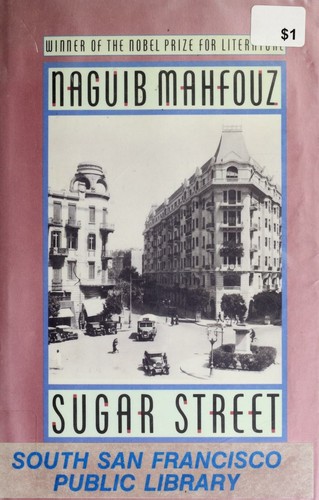
In 1939, he published The Prophet’s Curse, first of a series of novels set in Pharaonic Egypt — Pharaoh’s Mistress, The Struggle for Thebes. The public remained cold. After the 1948 defeat against Israel, he turned away from antiquity to the contemporary streets of Cairo. Midnight Alley (1947) and Night of the Penitents (1949) founded his social realism. The Cairo Trilogy — Palace Walk (1956), Palace of Desire (1957), Sugar Street (1957) — established him as a monument. This masterpiece of 1,500 pages describes three generations of the same Cairo family, from World War I to the overthrow of King Farouk: each novel bears the name of a street from his childhood.
Children of Gebelawi (1959) uses an allegorical fable to criticize power. Accused of blasphemy, it was banned in Egypt. Decades later, this work would lead to an assassination attempt: on October 14, 1994, an Islamist fanatic stabbed him in the neck. He survived, but his right hand remained paralyzed.
Major works
Pharaonic novels (1939–1944)
| Work | Year | Why it’s essential |
|---|---|---|
| The Fate of the Prophet | 1939 | First novel of the Pharaonic era, exploration of destiny and redemption |
| Rhadopis | 1943 | Passion between a courtesan and an enslaved woman under the Ptolemies |
| The Struggle for Thebes | 1944 | Intrigues of the Temple of Amon between politics and spirituality |
Social realism (1945–1958)
| Work | Year | Why it’s essential |
|---|---|---|
| Midnight Alley | 1947 | First major realist novel, Cairo life during World War II |
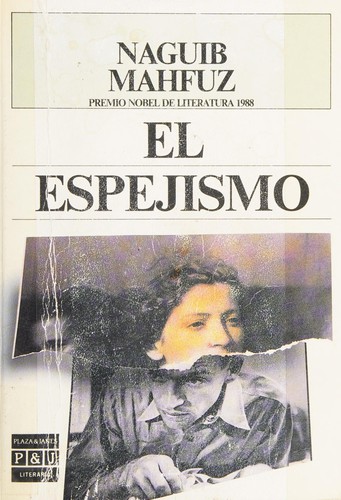
| The Phantom of the Roses | 1948 | Critical portrait of Cairo intellectualism in the 1940s |
| Children of Gebelawi | 1959 | Controversial allegorical fable, major work banned by Egyptian censorship |
The Cairo Trilogy (1956–1957)
| Work | Year | Why it’s essential |
|---|---|---|
| Palace Walk | 1956 | First volume, peak of Mahfouzian realism and Cairo family saga |
| Palace of Desire | 1957 | Second volume, young generation in Cairo of the 1920s |
| Sugar Street | 1957 | Third volume, family saga in post-war Cairo |
Maturity Works (1961–1987)
| Work | Year | Why It Is Essential |
|---|---|---|
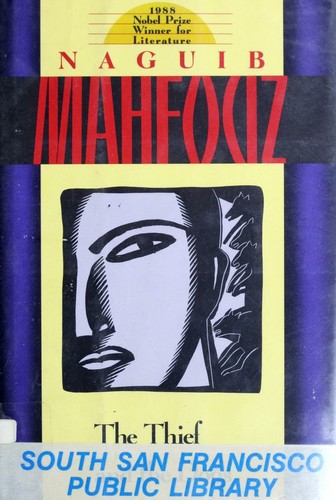
| The Thief and the Dogs | 1961 | Existentialist novel inspired by a true event, influenced by Kafka and Sartre |
| The Quail in Autumn | 1962 | Suez Crisis and Egyptian political transformations |
| God’s World | 1962 | Collection of realistic and metaphysical short stories about Egypt in transition |
| The Quest | 1964 | A young man confronted with the contradictions of modern society |
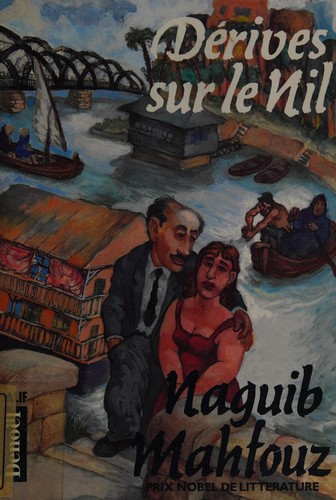
| Adrift on the Nile | 1966 | Intellectual debate aboard a Cairo barge in the spring |
| Miramar | 1967 | Polyphonic novel set in an Alexandrian boarding house, featuring Egyptian and Israeli voices |
| Mirrors | 1972 | Choral portrait of the author through the mirrors of the world around him |
| Karnak Café | 1974 | Students and dreams during the turbulent years of Nasser’s Egypt |
| His Excellency | 1975 | Egyptian bureaucracy and ascent to hell |
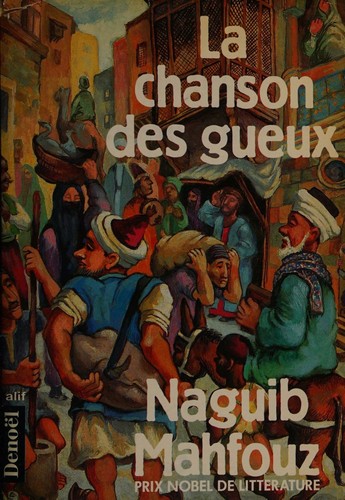
| The Epic of the Harafish | 1977 | Popular epic of Cairo’s outcasts, blending orality and mythology |
| Love at the Foot of the Pyramids | 1979 | Fourteen short stories with remarkable thematic diversity |
| The Devil Is at the Door | 1979 | Fall, shame, and human fragility within a Cairo family |
| The Age of Love | 1980 | Passions and illusions in Egyptian society |
| The Wedding Song | 1981 | Family scandals and human fragility through a play |
| Arabian Nights | 1982 | Mahfouz extends the Arabian Nights into modern true events |
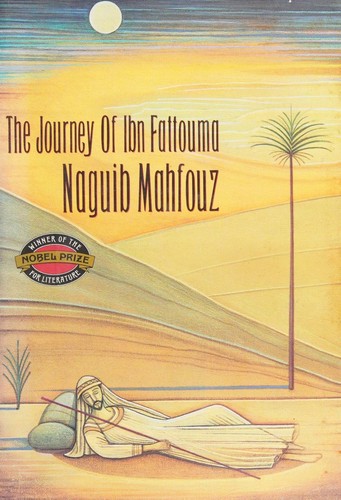
| The Journey of Ibn Fattouma | 1983 | Spiritual fable about a traveler in an imaginary world |
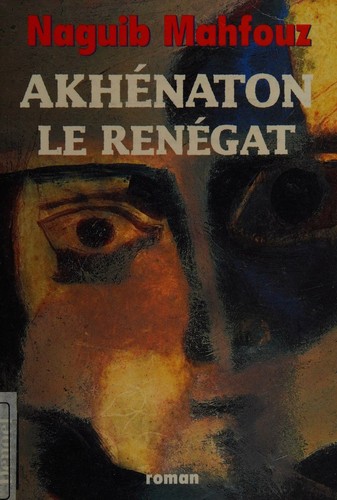
| Akhenaten the Heretic | 1985 | Quest for truth about the heretical pharaoh between history and legend |
| The Day the Leader Was Killed | 1985 | Political consequences of an assassination in contemporary Egypt |
| Morning and Evening Talks | 1987 | Characters listed alphabetically tracing Egypt’s history since the 19thth century |
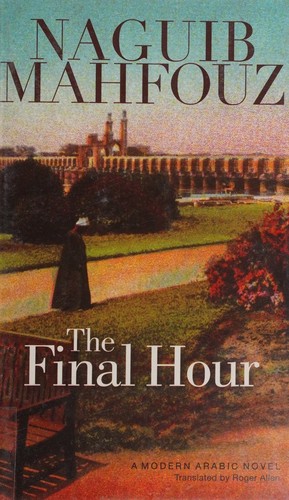
| An Hour Remains of Time | 1982 | Experimental novel with a fragmented narrative structure |
Legacy
Naguib Mahfouz is the founding father of modern Arabic fiction. By transforming Cairo’s alleyways into a universal universe, he showed that the “small” — merchants, officials, thieves — carried eternal questions. His influence transcends Arab borders: African authors, Latin Americans, French writers, and postcolonial novelists all claim him. The “Naguib Mahfouz Medal,” instituted in 1996, perpetuates this role of mentor. A museum was opened for him in 2019 in old Cairo — right where he was born.
Sources and References
- “Biographical — Naguib Mahfouz”, NobelPrize.org, https://www.nobelprize.org/prizes/literature/1988/mahfouz/biographical/, accessed October 18, 2026.
- “Naguib Mahfouz Interview — March 2006”, NobelPrize.org, https://www.nobelprize.org/prizes/literature/1988/mahfouz/interview, accessed October 18, 2026.
- “Naguib Mahfouz”, Wikipedia, https://en.wikipedia.org/wiki/Naguib_Mahfouz, accessed October 18, 2026.
- “Naguib Mahfouz”, Encyclopædia Britannica, https://britannica.com/biography/Naguib-Mahfouz, accessed October 18, 2026.
- “Naguib Mahfouz”, Wikipedia (FR), https://fr.wikipedia.org/wiki/Naguib_Mahfouz, accessed October 18, 2026.
- “Naguib Mahfouz — Egyptian Figures”, Government of Egypt (sis.gov.eg), https://sis.gov.eg/en/egypt/egyptian-figures/naguib-mahfouz, accessed October 18, 2026.
- “Nobel Prize in Literature 1988 — Press Release”, NobelPrize.org, https://www.nobelprize.org/prizes/literature/1988/press-release/, accessed October 18, 2026.