
Biography
Abraham Afewerki: the heroic voice of Eritrean music
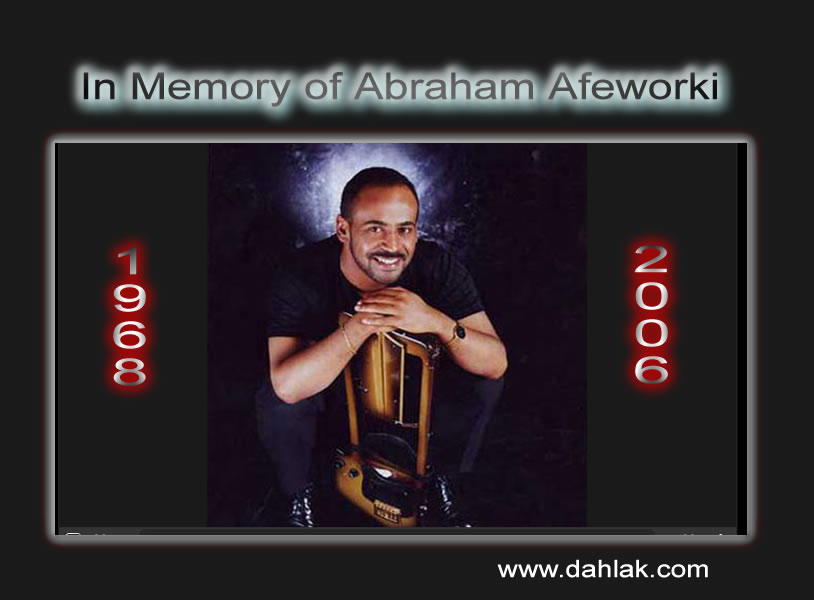
On October 7, 2006, the body of Abraham Afewerki was recovered from the Red Sea off the coast of Massawa. Eritrea thus lost, at the age of 40, the most international artist the country had ever produced. His music continues to resonate in the streets of Asmara and the salons of Washington, Rotterdam, and Toronto.
In brief
| Full name | Abraham Afewerki (Tigrinya : ኣብርሃም ኣፈወርቂ) |
| Birth | January 30, 1966, Asmara (Ethiopia) |
| Death | October 7, 2006 (40 years), Massawa, Eritrea |
| Genre | Eritrean music — pop, folk, world music, jazz, reggae |
| Instruments | Voice, krar, guitar, harmonica, percussion, keyboards |
| Labels | Negarit Productions (own label), Virgin Records |
| Notable works | Wegahta, Tesfa’ya sinqey, Semai |
Key dates
| Year | Event |
|---|---|
| 1966 | Born in Asmara during the independence war |
| 1978 | At 12, joined the cultural troupe of the EPLF (Popular Front for Liberation) |
| 1979 | Fled to Sudan as a refugee; composed his first songs in the camps |
| 1980s | Settled in Italy; learned the krar, a traditional six-stringed Eritrean lute |
| 1980s-1990s | Immigrated to the United States; earned a bachelor’s degree with honors |
| 1991 | First album Wegahta, at the time of Asmara’s liberation |
| 1998 | MsTir fQri (“The secret of love”) |
| 2002 | Historic concert in Rotterdam |
| 2006 | Final album Semai; died drowned in the Red Sea on October 7 |
An artist between war and modernity
Abraham Afewerki grew up in Asmara during the Eritrean independence war — that conflict from 1961 to 1991 between Ethiopian forces and Eritrean liberation movements. From adolescence, he engaged through culture: at twelve, he joined the EPLF cultural troupe and performed songs he wrote himself. He first played the harmonica, a portable instrument he slipped into his pocket during the war. The family fled to Sudan in 1979, among thousands of Eritrean refugees. In Sudan, Abraham composed in the camps, writing songs blending poetry and resistance messages. Then Italy, where he discovered the krar — a small six-stringed lute whose nylon strings produce a crystalline sound, close to a harp. He learned it, mastered it, and made it the sonic signature of his music. America welcomed him next: he earned a university degree with distinction, a rare achievement for an artist from his background. This journey, from guerrilla to campus, shaped a musician capable of juggling between traditional rural Eritrean influences and international ones.
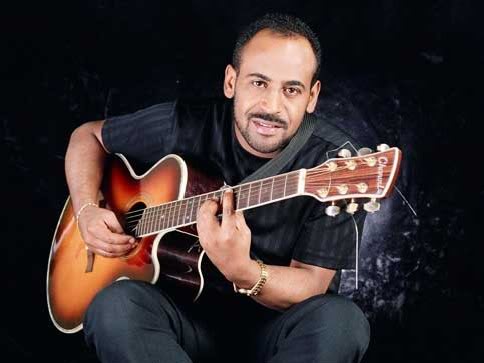
His first album, Wegahta (“Dawn”), was released in 1991, the year of Asmara’s liberation. Abraham fused the traditional krar with modern rhythms, expressing a still-vibrant national pride. His lyrics, written in Tigrinya — the most spoken language in Eritrea — weave poetic images of Eritrean culture and people. He touched both veterans and civilians, the young and the old. In the 1990s and 2000s, he revolutionized the guayla — that popular Eritrean musical genre, a sort of festive and militant choral song, traditionally very conventional. He modernized the arrangements by introducing jazz, rhythm and blues, and reggae, and above all he liberated the language of love: titles like “Shikor-shikorina” (“sweet and darling”) or “Fiqrey” (“my love”) became anthems of Eritrean youth, breaking the conservative restraint of the scene. His fame crossed borders. He performed in Europe (Rotterdam, 2002), in the United States (Seattle, New York, Oakland, Washington DC) and in Canada (Toronto). On stage, he played several instruments at once, and his presence, described by Asmarinos as magnetic, captivated an audience that did not necessarily speak Tigrinya. He created his own production structure, Negarit Productions, based in Silver Spring, Maryland. His final album, Semai (“The sky”, 2006), is a masterpiece of collaboration: he gathered several Eritrean musicians and achieved a perfect synthesis between jazz, R&B, reggae, and traditional Eritrean sounds. The title track, “Semay”, became one of the most popular hits in Eritrea.
Three months after the release of Semai, Abraham Afewerki plunged into the Red Sea off Massawa, where he had come to produce a musical comedy. According to the African Music Library, he drowned while trying to save a friend. It was the brutal end of a 40-year-old man at the peak of his creation.
Major works
| Work | Year | Why it’s essential |
|---|---|---|
| Wegahta (Dawn) | 1991 | Historic first album, released on the day of Asmara’s liberation |
| Tesfa’ya sinqey (Hope is my treasure) | 1994 | Cult cassette of the diaspora; confirms Abraham’s style |
| MsTir fQri (The secret of love) | 1998 | Love revolution: sensual lyrics breaking with tradition |
| Semai (The sky) | 2006 | Final album, masterpiece of synthesis between jazz and traditional krar |
Legacy and influence
Abraham Afewerki remains the most international figure in Eritrean music history. He modernized the guayla without betraying it, opened international stages to Eritrean artists, and elevated the krar to the rank of a global stage instrument. Ethiopian artists have covered his titles in other languages; his songs continue to be streamed on YouTube (over 18 million views for “Tmnitey”); and his music proves that a small country can dialogue with the jazz of Miles Davis, the reggae of Bob Marley, and American R&B. His name has become synonymous with cultural dignity and creative resilience.
Sources and references
- Emmanuel K. Akyeampong & Henry Louis Gates Jr., « Abraham, Afewerki (1966–2006) », Dictionary of African Biography, vol. 6, Oxford University Press, 2012, p. 49-50.
- « Abraham Afewerki », Wikipédia, https://en.wikipedia.org/wiki/Abraham_Afewerki, consulté le 3 novembre 2026.
- Gary Hill, « Abraham Afewerki — Biography », AllMusic, https://www.allmusic.com/artist/abraham-afewerki-mn0000769270, consulté le 3 novembre 2026.
- « Abraham Afewerki Discography », Discogs, https://www.discogs.com/artist/3333067-Abraham-Afewerki, consulté le 3 novembre 2026.
- « Remembering Abraham Afewerki – Mr Music Ambassador », Asmarino, https://asmarino.com/articles/151-video/4950-remembering-abraham-afewerki-mr-music-ambassador, consulté le 3 novembre 2026.
- « Abraham Afewerki Profile and Discography », African Music Library, https://africanmusiclibrary.org/artist/Abraham%20Afewerki, consulté le 3 novembre 2026.
- « Abraham Afewerki Music Channel », YouTube, https://www.youtube.com/channel/UCO1u_DqxUJQJ7xSUqbXMDHQ, consulté le 3 novembre 2026.