Biography
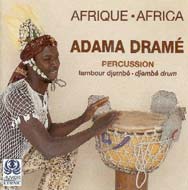
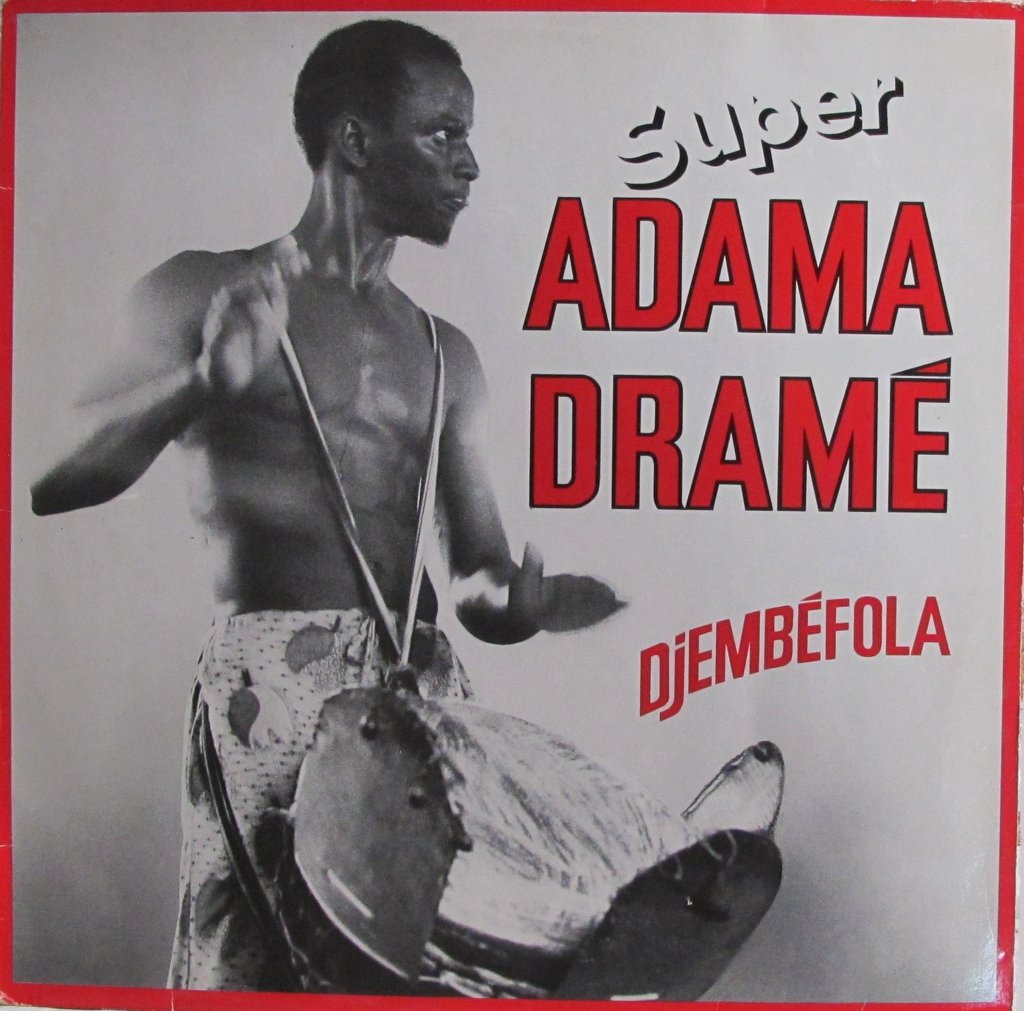
Adama Dramé: sixth-generation griot, master of the djembé
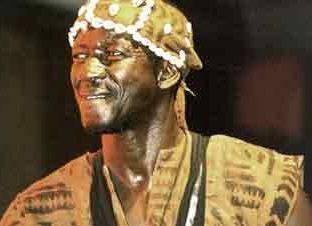
1954. In the old town of Nouna, in Burkina Faso, a child named Adama Dramé grew up surrounded by the ancestral rhythms of the djélis — these griots, guardians of memory and tradition. His father, Salifou Dramé, is a renowned master. At twelve, Adama joined local ceremonies: weddings, births, baptisms. There he learned that the djembé is not just a drum — it is a language.
In brief
| Full name | Adama Dramé |
| Birth | June 7, 1954, Nouna, Burkina Faso |
| Field | Percussion, traditional Manding music |
| Main instruments | Djembé, tama (speaking drum), bongolo, tchoun |
| Emblematic works | Percussions mandingues, The Giant of Djembe, Dakan |
| Distinctions | Grand Prix de l’Académie Charles Cros (2015) |
Key dates
| Year | Event |
|---|---|
| 1954 | Born in Nouna, Burkina Faso, in a Malinké griot family |
| 1966 | Begins at age twelve as a professional musician in traditional ceremonies |
| 1970-1972 | Performs with Les Ballets de Volta (Burkina Faso) |
| 1974 | Settles in Côte d’Ivoire and joins the Ballet National Ivoirien in Abidjan |
| 1978 | First tour in Europe |
| 1979-2000 | International career: tours in Europe, North America, and Japan |
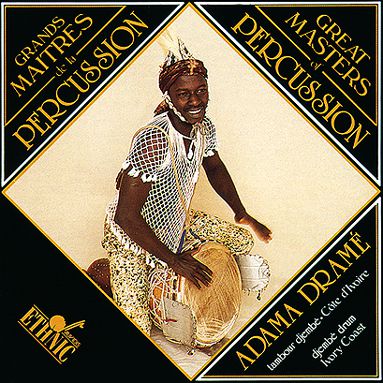
| 1987 | First significant album: Grands Maîtres De La Percussion / Great Masters Of Percussion |
| 1990 | Creates the grand ensemble Foliba (35 musicians and dancers) |
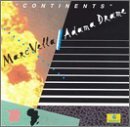
| 1992 | Continents, collaboration with French guitarist Marc Vella |
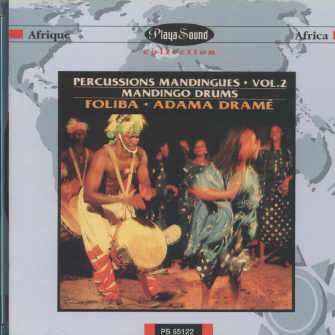
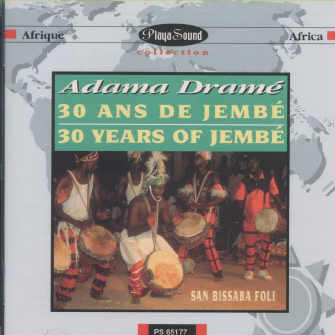
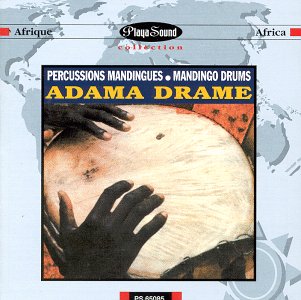
| 1993 | Percussions mandingues, double album, Playa Sound |
| 2006 | Djembe Solo: establishes the djembé as a solo instrument |
| 2015 | Grand Prix de l’Académie Charles Cros; release of Dakan (Buda/Universal) |
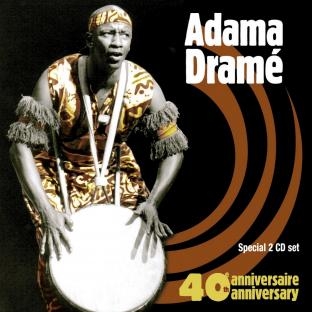
| 2016 | Jubilee tour with the album Dakan |
From Nouna to world stages
Adama Dramé is the son of Salifou Dramé, a famous griot and djembefola. Coming from a lineage of djélis stretching back six generations, he grew up in the Malinké culture of West Africa — this cultural area that extends from Senegal to Côte d’Ivoire, passing through Mali and Guinea. Contrary to common belief, Adama was not forced into music: “I grew up in a griot family. So I am one by default, but I was not forced into it,” he explained in an interview with La Boutique Afrique Vivre in 2016. His father, on the contrary, broadened his group’s palette by integrating guitar, accordion, and brass, thus paving the way for early fusion.
Becoming master of the djembé, Adama turned to other instruments — tama (the Malinké speaking drum), bongolo, and tchoun. And at twelve, he stepped onto the stage as a professional musician, accompanying his father in family ceremonies. In this Manding tradition, the djembé is not mere accompaniment: it is the instrument that leads the ceremony and carries its universal message, in his own words.
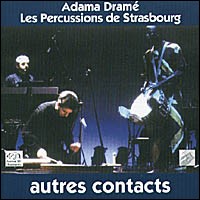
His career truly took off in the 1970s. In 1974, he settled in Abidjan and joined the Ballet National Ivoirien — an experience that anchored him firmly in Côte d’Ivoire, where many discovered him. Then, from 1978 to 2000, he traveled the world: tours in Northern Europe, the United States, and Japan. These journeys opened astonishing musical dialogues with French artists: Royal de Luxe, André Ceccarelli (jazz drummer), Bernard Lubat, Marc Vella, and Les Percussions de Strasbourg. Adama Dramé does not hide in world music: he categorically refuses that label. “I do not make African music,” he states firmly. “There are so many different musics. The one I make is universal because the djembé adapts to all the musics of the world. It goes everywhere.”
In 1990, after decades of solitary collaborations, he founded Foliba — a vast ensemble of 35 musicians and dancers divided into four percussion sections, completed by a keyboard, a balafon, and polyphonic choirs. The name comes from Manding: Foliba means peace, harmony among people. The group explores Manding tradition while opening it to jazz, world music, and cross-genre collaborations.
Major works
| Work | Year | Why it is essential |
|---|---|---|
| Grands Maîtres De La Percussion / Great Masters Of Percussion | 1987 | First international album, introducing Malinké djembé to Europe |
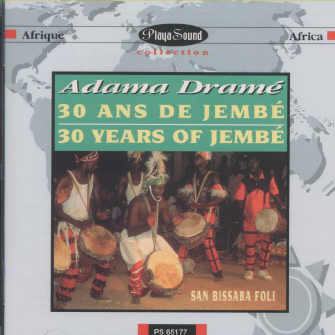
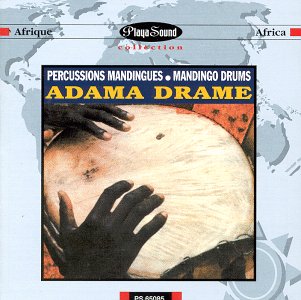
| Percussions mandingues (2 volumes) | 1993 | Reference of pure tradition, double album on the Playa Sound label |
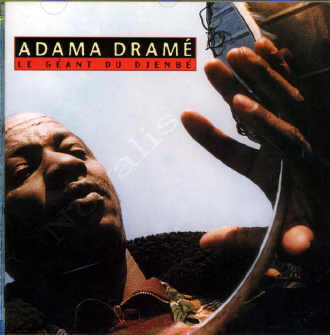
| The Giant of Djembe (Le Géant du Djembé) | 1999 | Consecration: the djembé as soloist, without accompaniment from other instruments |
| Dakan (destiny, in Malinké) | 2016 | Jubilee anniversary album, with Jean-Philippe Rykiel and Ray Lema |
Legacy and influence
Adama Dramé is one of the few djembefolas to have elevated the djembé to a concert solo instrument — a passage from functional music (ceremonies, dances) to stage and recording music that has inspired generations of percussionists. The Grand Prix de l’Académie Charles Cros awarded in 2015 officially recognized a career that many music lovers and Western musicians had been discovering since the 1980s. Today, the djembé has become one of the most practiced African instruments in the world: behind these millions of hands striking djembés, there is that of Adama Dramé, who refused to put his music in a museum display case and carried it — drum on the temple, voice in hand — to the great stages of the world.
Sources and references
- “The fabulous destiny of Adama Dramé”, La Boutique Afrique Vivre, https://www.laboutiqueafricavivre.com/content/23064-le-fabuleux-destin-d-adama-drame, accessed November 3, 2026.
- Heather Phares, “Adama Drame — Biography”, AllMusic, https://allmusic.com/artist/adama-drame-mn0000501520, accessed November 3, 2026.
- Adama Dramé, Music In Africa Directory, https://musicinafrica.net/fr/directory/adama-drame, accessed November 3, 2026.
- “Adama Dramé”, Wikipedia (FR), https://fr.wikipedia.org/wiki/Adama_Dramé, accessed November 3, 2026.
- “Adama Dramé” (EN), Wikipedia, https://en.wikipedia.org/wiki/Adama_Dram%C3%A9, accessed November 3, 2026.
- SPLA — Adama Dramé, https://www.spla.pro/en/file.person.adama-drame.3809.html, accessed November 3, 2026.