From the balafon to auto-tune: history of Burkinabè music, from pioneers to today’s stars
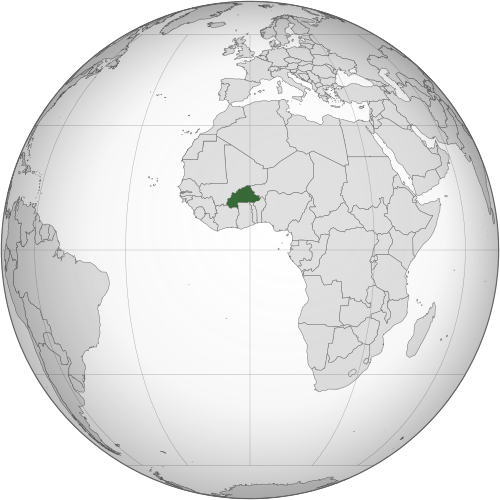
Burkina Faso is a landlocked country at the heart of West Africa, but its music has crossed borders for decades. From the grating sound of the Sénoufo balafon to the engaged rap choruses that contributed to bringing down Blaise Compaoré in 2014, passing through the African funk orchestras of the 1970s that fused Cuban influences and Manding heritage, the Burkinabè music scene is a narrative of resilience, hybridization, and identity pride. The year 2025 sees more than 600 musical works nominated for the Kundé awards1 — proof that a generation of artists does not shy away from precarious security or limited infrastructure. How did this scene, long ignored by the international industry, build itself and project itself today?
An ethnic treasure: 60 peoples and 300 musical expressions
In Burkina Faso, music is first a living heritage. The country counts seventy-two ethnic groups2, each having developed on average five distinct musical genres, totaling more than three hundred identifiable expressions3. The mapping of the Georges Ouédraogo Music Museum in Ouagadougou distinguishes four instrumental zones: the North, dominated by flutes and lutes of the Peuls and Bellao; the Center and Center-East, where cylindrical drums and percussion of the Mossé, Bissa, and Gourounsi compete; the Northwest, land of the Samos, Marka, and Gourounsi, excellent players of flutes and whistles; and the West and Southwest, region of the Sénoufo and the balafon, a wooden percussion instrument that inspired griots throughout West Africa4.
This last practice — the Sénoufo balafon — is inscribed on the UNESCO Representative List of the Intangible Cultural Heritage5. But the balafon is not the only instrument to carry Burkinabè musical memory: one also finds there the djembé, the tama (speaking drum), the kora, and traditional flutes, some of which are handmade from natural materials according to techniques transmitted from generation to generation6. Traditional Burkinabè music is not played only during ceremonies — baptisms, weddings, funerals, initiations —; it also accompanies field work, markets, and political gatherings.
Did you know? The name « Burkina Faso » means « Land of Integrous Men » in mòoré and dioula. Artists often echo this, like Floby who titled an entire album simply « Burkina Faso »7.
1960-1980: the era of orchestras and the « Voltaic sound »
At independence (1960), like in the rest of Francophone Africa, Burkinabè music electrifies. Orchestras multiply, mixing local rhythms, brass of Congolese influence, and Cuban sounds brought by touring ensembles8. The capital Ouagadougou becomes the nerve center of this effervescence.
The pioneers are L’Harmonie Voltaique and Super Volta, led by Amadou Balaké, who laid the foundations of a distinctive style: African funk fused with Manding melodies from Mali and Guinea, traditional Islamic rhythms, and Afro-Latin sounds of visiting Cuban ensembles9. Modern compilations by Analog Africa, such as Bambara Mystic Soul: The Raw Sound of Burkina Faso 1974-1979, restore this era as an unknown jewel of the continent10.
Other names mark this period: Abdoulaye Cissé, Tidiani Coulibaly and Dafra Star, Issouf Compaoré, Georges Ouédraogo, Pierre Sandwidi, the Bozambo ensemble, and Youssouf Diarra11. These groups played in dance halls in Ouagadougou and Bobo-Dioulasso, and exported qualified musicians to the capital. The Abidjan-Ouagadougou connection is particularly important: many recording sessions take place at the Maison du Peuple in Abidjan, the great Ivorian studio12.
Thomas Sankara, who took power in 1983 and renamed the country « Haut-Volta » to « Burkina Faso », encourages artists to express themselves. He notably inaugurates a twelve-member female group, the « Colombes de la Révolution »13. But his authoritarian regime, paradoxically, also limits musical freedom of expression — a tension that persists in collective memory.
Militant rap: Smockey, Sams’K Le Jah and the fall of Blaise Compaoré
In the 2000s, Burkinabè rap established itself as a voice of dissent. Smockey (Serge Bambara) and Sams’K Le Jah (Karim Sama, born in 197114) founded the Balai Citoyen movement (“The Citizen’s Broom”)15 together in 2013. The idea stemmed from a simple observation: if the rapper and reggae man could unite their influence among Ouagadougou’s youth, they could also mobilize the population against Blaise Compaoré’s attempt to extend his power after twenty-seven years of rule16.
The songs became mobilization tools. Smockey’s Cravate, Costards et Pourriture, “Thomas Sankara” in collaboration with Senegalese rapper Didier Awadi17, and “À qui profite le crime ?”: these tracks, blending vernacular French, local languages, and excerpts from the late President Thomas Sankara’s speeches, resonated with hundreds of thousands of young people18. In October 2014, Balai Citoyen organized a series of rallies that culminated on October 31 with Compaoré’s forced resignation19.
The documentary On a le temps pour nous (FESPACO 2019), directed by Katy Léna Ndiaye, retraces this democratic turning point with Smockey as a central figure20. Smockey, an avowed disciple of Sankara, also founded the Abazon studio upon his return from France, creating a hip-hop production infrastructure that transcends his own career21.
Sams’K Le Jah, a student of lawyer and activist Norbert Zongo and a figure of the anti-corruption resistance, died in 202122. His legend remains inseparable from Burkinabè militant music.
Today’s faces: Floby, Kayawoto, Kanazoé and resilience in the face of insecurity
While the militant generation marked political history, the contemporary music scene is plural. Floby (Florent Belemgnègré) is undoubtedly the country’s greatest pop star. Born in Kouritenga and raised by his griot grandmother23, he survived six years of misery on the streets of Ouagadougou before launching his career in 200624. His seventh studio album, “Burkina Faso”, released on June 30, 2024, is a love letter to his country. He won the Kundé d’or in 201025.
Kayawoto (Abdoul Kaboré) embodies the rise of Ouagadougou rap in packed venues: in 2022, his first album “Maouland” allowed him to fill the Palais des Sports de Ouaga 2000, which holds 5,000 seats26. The name Kayawoto comes from mòoré and means “Here is how it is”27. Smarty, with his album “Élévation” released in 2026, and Dez Altino complete this trio of rappers and singers who weigh heavily in the industry28.
Instrumental music is also experiencing a remarkable renaissance. Seydou Diabaté, a griot by birth, formed the Kanazoé Orkestra in Paris, where he blends balafon with productions influenced by Nigerian afrobeats. His album “Balabeatz” places two balafons at the center of catchy compositions, with Losso Keïta as lead vocalist29. Kaito Winse, Issiaka Dembélé and other artists integrate balafon, kora, Fulbe flutes and tama into ultra-modern studio productions30.
Reggae remains a strong presence: Paul Béni (Paulin Wendpanga Ilboudo), born in the South-West of Côte d’Ivoire but adopted as Burkinabè, released “Tougnan” in 2023 and plans a Burkina-Côte d’Ivoire festival31. The gospel scene is also organizing, with artists like Sœur Anne-Marie Kaboré and Séraphine Bancé32.
The Burkinabè music industry faces major challenges. The security crisis that has struck the country since 2019 has made touring within the territory nearly impossible: some artists who previously held 60 concerts a month can now organize only in secure major cities33. Piracy and the weakness of streaming models compromise revenues, while access to quality studios remains limited34. Despite this, initiatives are structuring professionalization: the Kundé awards (the 23rd edition in 2025 cataloged 626 works35), leYaar Music — the market for performing arts —, the Soko Festival, and the Orange Music Talents project which selected 26 candidates from over 600 videos received36. The Minister of Culture, Pingdwendé Gilbert Ouédraogo, advocates for “giving Burkinabè music its own identity”37.
Tomorrow: a musical identity in the making
Burkinabè music is not a remnant of the past nor exotic folklore. It is a living ecosystem where the balafon dialogues with Auto-Tune, where rap engaging in mòoré rubs shoulders with gospel, and where Burkinabè reggae tours Côte d’Ivoire. While the security crisis weighs heavily, artists’ resilience is their trademark — a direct legacy of the Sankara era and Balai Citoyen.
What is being played out today is the professionalization of this scene. With a young audience connected to streaming, international festivals (FESPACO, Visa for Music) and structural projects like Orange Music Talents, Burkinabè music holds all the cards to conquer a wider audience — provided it finds the institutional and financial support that is still lacking38. As Paul Béni summarizes: “What Burkinabè music lacks is support and promotion”39.
The Land of Integrous Men has already proven that its music can change history. It is up to it to continue.
Sources
-
Infos Culture du Faso, « Kundé 2025 : la liste des nominés officiellement dévoilée », April 3, 2025. URL: https://www.infosculturedufaso.net/kunde-2025-la-liste-des-nomines-officiellement-devoilee/ ↩︎
-
Music In Africa, « La musique traditionnelle au Burkina Faso », June 5, 2017. URL: https://musicinafrica.net/node/21494 ↩︎
-
Musée de la musique Georges Ouédraogo, cartography cited in Music In Africa (2017), ibid. ↩︎
-
Music In Africa, ibid. The four zones: North (Peuls/Bellao), Centre (Mossé/Bissa/Gourounsi), Northwest (Samos/Marka/Gourounsi), West and Southwest (Sénoufo). ↩︎
-
Music In Africa, ibid. The Sénoufo balafon is inscribed on the UNESCO Intangible Cultural Heritage list. ↩︎
-
Stern’s Guide to Contemporary African Music, Vol. 1, Ronnie Graham (Zwan Publications, 1988), p. 156-157. Reference on traditional Burkinabè music. ↩︎
-
RFI Musique, « Floby, le Burkina Faso au cœur », September 11, 2024. URL: https://www.rfi.fr/fr/musique/20240911-floby-le-burkina-faso-au-c%C5%93ur ↩︎
-
Analog Africa, Bambara Mystic Soul: The Raw Sound of Burkina Faso 1974-1979, digital compilation and vinyl, 2011. ↩︎
-
Analog Africa, ibid.: « The raw sound of Burkina Faso combined Afro-Funk, traditional Islamic rhythms and subtle Afro-Latin sounds brought over by visiting Cuban ensembles. Mandingue melodies and guitar techniques from Mali and Guinea, however, were by far the most defining traits. » ↩︎
-
Analog Africa (No 10), Bambara Mystic Soul, 2011. See also: World Music UK, review of the compilation. ↩︎
-
BlueTree Audio, « Burkinabé Orchestras: Volta Jazz, Amadou Balake, Farafina and Victor Deme ». Compilation The Original Sound of Burkina Faso, Mr Bongo Records. ↩︎
-
BlueTree Audio, ibid. « Sessions at Maison du Peuple in 1975 involved Super Volta and Désiré Traoré; later work connected to Abidjan. » ↩︎
-
Stern’s Guide to Contemporary African Music, Vol. 1, Ronnie Graham, p. 157: « Inaugurated by the guitar-playing President, the late Thomas Sankara » — 12-member female group, the « Colombes de la Révolution ». ↩︎
-
Wikipedia, « Sams’K Le Jah ». Karim Sama, born in 1971, reggae musician, radio host and Burkinabè political activist. ↩︎
-
Wikipedia, « Le Balai Citoyen »: protest movement founded in summer 2013 by Sams’K Le Jah and Smockey. ↩︎
-
La Libre Afrique, « Fespaco: Smockey, porte-parole du mouvement Balai Citoyen et disciple de Thomas Sankara ». ↩︎
-
BlueTree Audio, « Rap, gospel and instruments in a restless present »: Smockey’s work with Didier Awadi, Thomas Sankara and À qui profite le crime ?. ↩︎
-
BlueTree Audio, ibid. Burkinabè rap connects « rap, reggae, vernacular French, local languages and excerpts from Thomas Sankara’s speeches to public mobilisation around the 2014 uprising. » ↩︎
-
Le Monde diplomatique, « Coup de Balai citoyen au Burkina Faso » by David Commeillas, April 2015. ↩︎
-
Site FESPACO 2019: « On a le temps pour nous » (Time is on our side), documentary by Katy Léna Ndiaye. ↩︎
-
BlueTree Audio, ibid.: « Smockey built a studio as well as a political voice… Production work made the studio part of Ouagadougou’s hip-hop infrastructure rather than a backdrop to one star. » ↩︎
-
Wikipedia, « Sams’K Le Jah »: death confirmed in 2021 (see also TV5Monde: « Sams’k Le Jah, artiste burkinabé entre musique et activisme »). ↩︎
-
Wikipedia, « Floby (musician) »: born in Kouritenga, raised by his griot grandmother. ↩︎
-
BBC Afrique, « Pourquoi au Burkina Faso Floby est appelé « papa des orphelins » » by DJ Edu, January 11, 2022. URL: https://www.bbc.com/afrique/region-59921364 ↩︎
-
Qobuz, Floby discography: « Golden Kundé in 2010. » ↩︎
-
BlueTree Audio, ibid.: « A 2022 profile recorded his ability to fill the 5,000-seat Palais des Sports de Ouaga 2000. » ↩︎
-
BlueTree Audio, ibid.: « His stage name is explained through Mooré as ‘here it is like this.’ » ↩︎
-
BlueTree Audio, ibid. Smarty, Élévation (2026); Dez Altino, Kundé 2025 category. ↩︎
-
RootsWorld, « Kanazoé Orkestra’s balafons and tech driven Burkinabe music ». Losso Keïta as lead vocalist, balafons by Seydou Diabaté and Mamadou Dembélé. ↩︎
-
BlueTree Audio, ibid. Kaito Winse (Reele Bumbou, February 2025), Issiaka Dembélé (Dji, January 2025): « balafon and kora to bass, piano, flute, chorus and electronics. » ↩︎
-
Evasion Magazine, « PAUL BENI, REGGAE MAKER », January 23, 2025. URL: https://evasion.bf/paul-beni-reggae-maker-ce-qui-manque-a-la-musique-burkinabe-cest-le-soutien-et-la-promotion/ ↩︎
-
Infos Culture du Faso, « Kundé 2025 », ibid. Religious artist categories: Séraphine Bancé, Serge Bethsaleel, Sœur Anne-Marie Kaboré. ↩︎
-
Studio Yafa, « Burkina Faso : quand la musique ne nourrit plus ses artistes », March 26, 2025. URL: https://www.studioyafa.bf/29802-burkina-faso-quand-la-musique-ne-nourrit-plus-ses-artistes ↩︎
-
Fabrice Guy Zigane, L’industrie de la musique enregistrée au Burkina Faso, Éditions universitaires européennes, 2025. ↩︎
-
Infos Culture du Faso, ibid.: « 626 musical works and 197 clips initially recorded, 45 works in contention. » ↩︎
-
Burkina24, « Orange Music Talents: La relève musicale burkinabè », April 16, 2025. 600+ videos received, 26 selected, 8 finalists. ↩︎
-
Burkina24, ibid.: « Our fight today is to give Burkinabè music its own identity. » ↩︎
-
Team2Faso, « La musique burkinabè à la conquête du monde », April 24, 2025. ↩︎
-
Evasion Magazine, ibid.: « What Burkinabè music lacks is support and promotion. » ↩︎