Biography
Adama Yalomba: scent of the homeland, breath of the strings
In 2003, on the paved square of Timbuktu, Adama Traoré set down his twelve strings and sang in Bambara. This was not a world music concert for Westerners: it was the Festival au Désert, and Yalomba—his stage name—was already a local star there. Six months later, his music broadcast across the Atlantic on the compilation Festival au Désert 2003, propelling a Malian musician beyond the continent’s borders without ever betraying his roots.
In brief
| Full name | Adama Traoré, known as Yalomba |
| Birth | 20 January 1974, Ké-Macina (Ségou, Mali) |
| Field | Malian afro-pop, traditional music (dan, n’goni, guitar) |
| Signature works | Kassa, Waati Sera, Tanou |
| Honors | Participation in the Grammy-nominated album Ba Power by Bassekou Kouyate (2016) |
Key dates
| Year | Event |
|---|---|
| 1974 | Birth in Ké-Macina, Ségou district, to Samadji Traoré, farmer and virtuoso dan player |
| 1980s-1992 | Fourteen years of musical training: playing dan under his father’s guidance, practicing bara, and training with the Balazan of Ségou and the Bronkoni of Niono |
| 1992 | Move to Bamako, beginnings as accompanist (Hawa Dramé, Bakoroba Diabaté, Nanou Coul) |
| 1995 | First recording: cassette Yalomba on the Maikano label, immediate local success |
| 1997 | Release of Ni Kelenni Kadi via Labita; collaborative album Gnumankè with Awa Bako Diabaté |
| 2001 | M’Bora, first solo studio album produced by Yves Wernert, ten tracks in varied styles |
| 2003 | Participation in the Festival au Désert and the eponymous compilation; international breakthrough |
| 2007-2009 | Recording of Kassa at the Studio Bogolan in Bamako (with Toumani Diabaté, Rokia Traoré, Bassekou Kouyate); international release in 2009 on Metis Records |
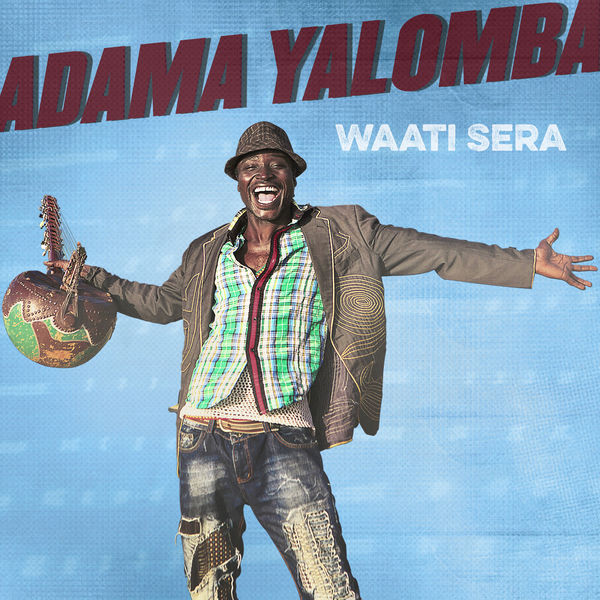
| 2016 | Release of Waati Sera, an album with texts committed to Malian peace, produced by Paul Chandler |
| 2016 | Collaboration with the Vendée-based group Sloï on traditional music |
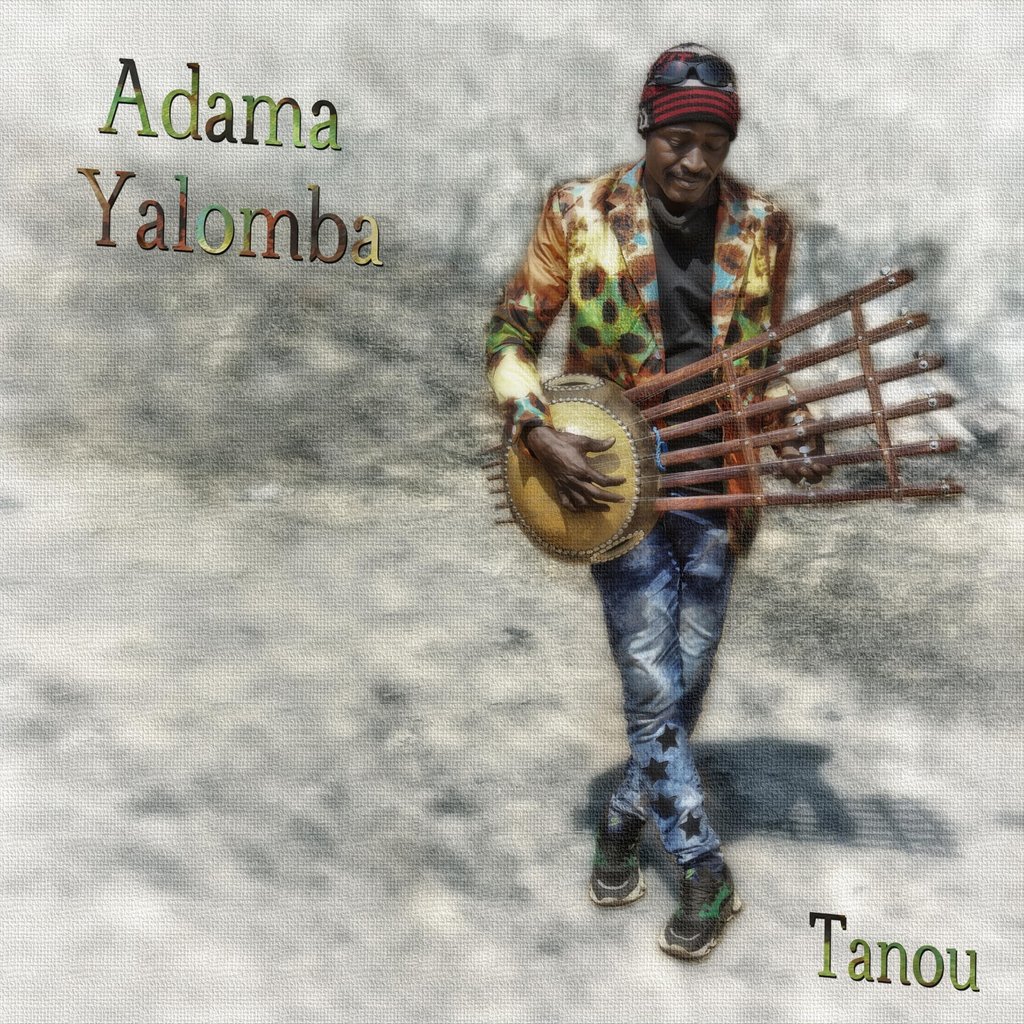
| 2024 | Release of Tanou, an album dedicated to the renewal of the n’dan, an instrument he redesigned with twelve strings |
Heir to the dan, modernist of afro-pop
Adama Traoré grew up in the Ségou district in Mali. His father, Samadji, was a farmer and musician—a virtuoso of the dan, a mythical six-string, six-neck instrument intended to welcome travelers returning from the homeland in public. In his father’s footsteps, Yalomba discovered the vara and polyrhythms at an early age. Over fourteen years, he refined his craft with the Balazan of Ségou and the Bronkoni of Niono, forging a repertoire blending Boso heritage and emerging afropop.
In 1992, he settled in Bamako and began as an accompanist. Quickly sought after, he rubbed shoulders with the greatest artists of the moment—Hawa Dramé, Bakoroba Diabaté—and learned studio discipline. His first cassettes (1995, 1997) circulated locally. Then M’Bora in 2001 laid the foundations of a personal style: songs in Bambara, Boso, and Lingala, between driven afropop and intimate ballads.
The consecration came via an unexpected path: the Festival au Désert in Timbuktu, in 2003. Music world curious observers then heard a musician who did not play by the rules: he played the dan, guitar, n’goni, and percussion; he sang in four languages; he inscribed his texts in the Mali of his time, while remaining faithful to his paternal lineage. His music subsequently circulated on compilations Festival au Désert 2003 and African Odyssey (Putumayo), opening doors in Europe, Malaysia, and at WOMEX in 2004. Kassa, released in 2009, was his first album truly exported off the continent. Recorded at the Studio Bogolan in Bamako—the same studio where Ali Farka Touré, Tinariwen, and Björk laid down their instruments—he invited Malian giants: Toumani Diabaté, Rokia Traoré, Bassekou Kouyate. Kassa means scent in Bambara; the album is, says Yalomba, the madeleine of Proust for the exiled Malian.
With Waati Sera (2016), produced by Paul Chandler, he deepened this approach: eleven tracks where dance meets meditation, texts invoking peace and unity in a Mali marked by northern conflicts. Tanou, published in 2024, is a manifesto for the n’dan: Yalomba carried the ancestral instrument from six to twelve strings, each representing an ethnic group in Mali. Specialists hail this renewal of a heritage on the brink of disappearance (World Music Central, 2024).
Major works
| Work | Year | Why it is essential |
|---|---|---|
| M’Bora | 2001 | First solo studio album; establishes Yalomba’s afropop identity, between varied styles and paternal lineage |
| Kassa | 2009 | First album exported outside Africa; features Toumani Diabaté, Rokia Traoré, and Bassekou Kouyate; scent of the homeland |
| Waati Sera | 2016 | Committed album on Malian peace; international production by Paul Chandler |
| Tanou | 2024 | Manifesto for the n’dan; instrument redesigned with twelve strings for future generations |
Legacy and influence
Adama Yalomba embodies an overlooked fringe of contemporary Malian music: that which does not seek to export an ethnic sound but makes the instrumental heritage dialogue with modern pop. His work on the n’dan, which he evolved into a twelve-string version, is an act of active preservation—not a museum but a laboratory. His collaborations with the greatest Malian musicians, from Toumani Diabaté to Bassekou Kouyate (album Ba Power, Grammy nomination 2016), attest to his respected status. The world of world music discovered him on a compilation; he continues, alone, to forge his path between tradition and modernity.
Sources and references
- “Frank Bessem’s Musiques d’Afrique / Mali: Adama Yalomba”, Musiques d’Afrique, https://musiques-afrique.net/mali/art-yalomba.html, accessed 3 November 2026.
- « Adama Yalomba, A champion of the rare n’dan harp », World Music Central, https://worldmusiccentral.org/2024/01/29/adama-yalomba-a-champion-of-the-rara-ndan-harp/, accessed on November 3, 2026.
- « Stream Adama Yalomba ‘Waati Sera,’ a Beautiful Record Calling for Peace and Unity », VICE/Noisey, https://vice.com/en/article/adama-yalomba-album-stream, accessed on November 3, 2026.
- « Adama Yalomba », RFI Musique, https://musique.rfi.fr/musique/20091216-adama-yalomba.html, accessed on November 3, 2026.
- « Adama Yalomba », Last.fm, https://last.fm/music/Adama+Yalomba/+wiki, accessed on November 3, 2026.
- « Adama Yalomba », Apple Music, https://music.apple.com/ml/artist/adama-yalomba/7420817, accessed on November 3, 2026.