Biography
Afia Mala: the princess of the Mono who sang to the world
On the banks of the Mono River, in Togo, the Habobo group gathered about sixty women every evening for social satire performances featuring songs and dances. Her eldest daughter, Afiwavi Mawulana Catherine Missohou, immersed herself very early in this tradition and began writing her own songs.
In brief
| Full name | Afiwavi Mawulana Catherine Missohou |
| Pseudonym | Afia Mala, known as “Princess of the banks of the Mono” |
| Birth | 1950s, Vogan, Togo |
| Field | Singer — Togolese traditional music, afro-jazz, salsa, zouk, RnB, afrobeat |
| Emblematic works | “Ten Hompte”, Es La Manana, Afia à Cuba, Identité |
| Distinctions | RFI Discoveries Prize (1984), best African artist (1992), Officer of the Order of the Mono (2020) |
Key dates
| Year | Event |
|---|---|
| 1974 | Begins her career at the Palais des Congrès in Lomé before 4,500 spectators |
| 1979 | Releases her first album, Djalele, via Lassatel Editions (Benin) |
| 1984 | “Ten Hompte” voted best song by RFI listeners; wins the RFI Discoveries Prize |
| 1987 | Releases Es La Manana, produced by Afia Mala, arranged by Boncana Maïga |
| 1992 | Voted best African artist |
| 2003 | Releases Plaisir (Milan / Universal), featuring a duo with Lokua Kanza |
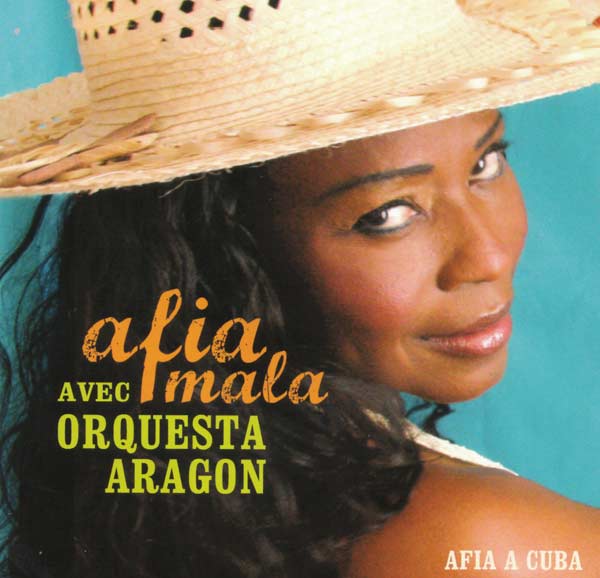
| 2008 | Records Afia à Cuba at the Egrem studios with Orquesta Aragon |
| 2019 | Publishes Identité, her ninth album |
| 2020 | Promoted to Officer of the Order of the Mono |
A musical destiny from Vogan to Havana
Afiwavi Mawulana Catherine Missohou was born in Vogan, Togo, to a mother from a royal family of Vogan and a father originally from Dogbo, Benin. Coming from a family of twenty-five children, she grew up cradled by the Habobo — an all-female choir and theater troupe that humorously addressed societal flaws. This immersion in an oral and satirical tradition deeply influenced the future artist.
Her father, a teacher, dreamed of her becoming a lawyer. But from college on, Afia began writing and singing, performing both her own compositions and titles by Miriam Makeba, Edith Piaf, or other world divas. She was already being compared to Bella Bellow, the great Togolese blueswoman.
In 1974, facing 4,500 spectators at the Palais des Congrès in Lomé, she made her decision: she would become a singer. Djalele, released in 1979 via Lassatel Editions in Benin, marked her first steps in the studio. Lonlon Vevie was recorded the following year in Paris at Studio Harry Son, under the direction of Jimmy Hyacinthe, with a prestigious lineup including Emmanuel “Manu” Lima, Michel Alibo, Lokassa Ya Mbongo, and Yves N’Djock. Afia Mala then performed across Africa, the United States, and Paris.
In 1984, Ten Hompte was voted best song by RFI listeners, winning the Discoveries Prize. This track, taken from Es La Manana (1987), was produced by Afia Mala herself and arranged by Boncana Maïga at the JBZ studio in Abidjan. From this album onward, the artist established herself as an independent producer.
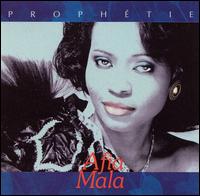
After a break dedicated to her family, she continued releasing albums and touring. Prophétie (1995), Angelina (1997), and Plaisir (2003) marked her exploration of styles — afro-jazz, Latin rhythms, RnB. On Plaisir, she shared the microphone with Lokua Kanza on “Matesso,” sung in Ewe, Adja, Lingala, Swahili, Douala, French, English, and Spanish.
In 2008, she realized a long-held dream: recording an entirely salsa album at the Egrem studios in Havana with Orquesta Aragon. “A completely salsa album is madness! A dream I’ve had for a long time,” she confided to RFI.
In 2019, Identité marked a notable comeback. The album is a patchwork of sounds and percussion where Togolese tradition and modern production converse with each other. The pandemic interrupted her stage activities, but Afia Mala continued her associative commitment through a foundation dedicated to child protection.
Major works
| Work | Year | Why it’s essential |
|---|---|---|
| Djalele | 1979 | First album; laid the foundations for a multi-decade career |
| “Ten Hompte” / Es La Manana | 1984-1987 | Hit voted best by RFI listeners; first self-produced album |
| Prophétie | 1995 | Exploration of social and spiritual themes |
| Plaisir | 2003 | Latin album with a duo featuring Lokua Kanza; blend of cultures |
| Afia à Cuba | 2008 | Recording at Egrem studios with Orquesta Aragon |
| Identité | 2019 | Ninth album blending tradition and modernity |
Legacy
Afia Mala embodies a generation of African female singers who drew from local traditions to build music open to the world. From Vogan to Havana, from Paris to Chicago, her journey shows how fidelity to roots can be reconciled with the exploration of new horizons. Forty-nine years of career and nine albums constitute the living trace of an artist who sings with sincerity.
Sources and references
-
“Afia Mala”, Wikipedia, https://fr.wikipedia.org/wiki/Afia_Mala, accessed October 23, 2026.
-
“Biography – Afia Mala”, Official Afia Mala Site, https://afiamala.com/biographie/, accessed October 23, 2026.
-
“Albums – Afia Mala”, Official Afia Mala Site, https://afiamala.com/albums/, accessed October 23, 2026.
-
“Afia Mala”, Afrisson, https://www.afrisson.com/afia-mala-415/, accessed October 23, 2026.
-
“Afia Mala – Koma”, African Grooves, https://www.africangrooves.fr/artist/afia-mala, accessed October 23, 2026.
-
“Afia Mala”, RFI Musique, https://musique.rfi.fr/musique/20071113-afia-mala.html, accessed October 23, 2026.
-
Eglantine Chabasseur, “Afia Mala in Cuba”, RFI Musique, https://musique.rfi.fr/musique/20081125-afia-mala-cuba.html, accessed October 23, 2026.
-
« Afia Mala biography », Last.fm, https://last.fm/music/Afia+Mala/+wiki, accessed 23 October 2026.