Biography
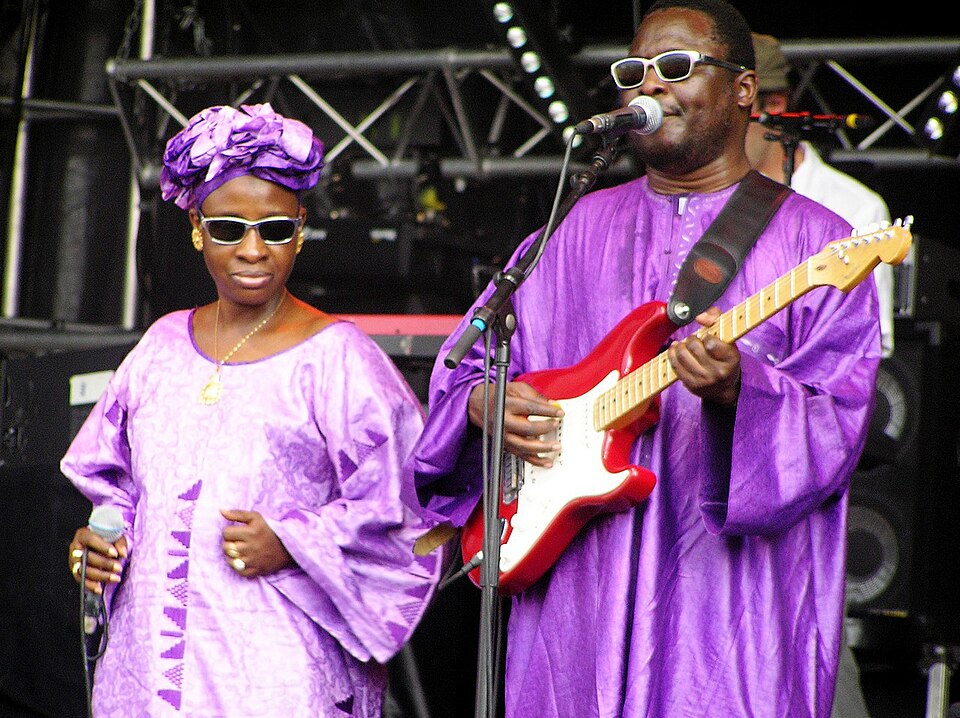
Amadou & Mariam
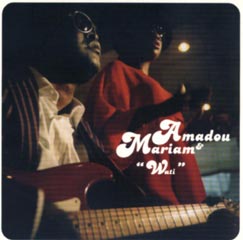
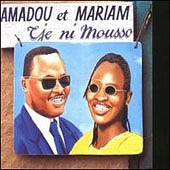
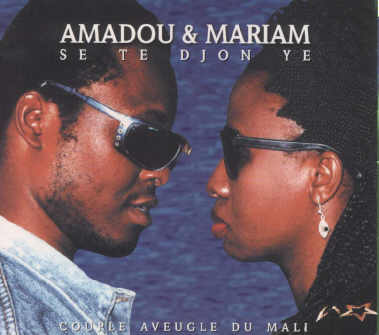
At the opening of the 2006 World Cup, under the spotlights of Munich’s Allianz Arena, a blind Malian couple sang Celebrate the Day alongside a German singer. Their names were Amadou Bagayoko and Mariam Doumbia. Twenty-two years later, upon Amadou’s death on April 4, 2025, humanity lost one of its most extraordinary musical figures. Two blind men born in Bamako had woven a bridge between Jimi Hendrix’s blues and Bambara rhythms, selling millions of records and opening the biggest stages on the planet1.
In Brief
| Stage Name | Amadou & Mariam |
| Legal Names | Amadou Bagayoko (1954–2025) and Mariam Doumbia (1958–) |
| Birth | Amadou: October 24, 1954, Bamako — Mariam: April 15, 1958, Bamako |
| Death | Amadou: April 4, 2025, Bamako |
| Genre | Afro-funk, worldbeat, Malian music |
| Instruments | Amadou: guitar, vocals — Mariam: vocals |
| Labels | Because Music, Nonesuch, Emarcy |
| Awards | Victoires de la Musique 2005 and 2013, Grammy nomination 2010 |
Key Dates
| Year | Event |
|---|---|
| 1974 | Amadou’s debut with Les Ambassadeurs du Motel de Bamako |
| 1976 | Meeting at the Institut des Jeunes Aveugles de Bamako |
| 1980 | Marriage of Amadou and Mariam |
| 1986 | Move to Abidjan; recording of cassettes Volume 1 and 2 |
| 1990 | Volumes 3 and 4 at Maïkano’s studio |
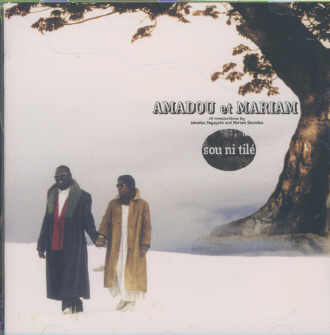
| 1998 | Sou Ni Tilé, first album outside Africa |
| 2004 | Dimanche à Bamako, produced by Manu Chao |
| 2005 | Victoire de la Musique for Best World Music Album |
| 2006 | Official World Cup Anthem: Celebrate the Day |
| 2008 | Welcome to Mali (collab. Damon Albarn); Grammy nomination |
| 2012 | Folila, Victoire de la Musique 2013 |
| 2017 | La Confusion |
| 2023 | Eclipse, recorded in total darkness |
| 2025 | Death of Amadou; Mariam continues |
The Eclipse Orchestra: When Music is Born from Blindness
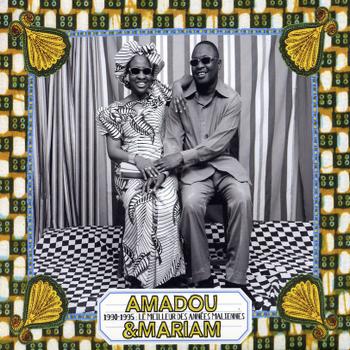
Amadou Bagayoko was born on October 24, 1954, in Bamako. Blind since the age of fifteen due to untreated cataracts, he discovered music through the flute and harmonica before dedicating himself to guitar after hearing Jimi Hendrix and James Brown. He joined the Institut des Jeunes Aveugles in 1975, learned several instruments there, and joined Les Ambassadeurs du Motel de Bamako, the legendary orchestra where Salif Keita progressed. Mariam Doumbia, who went blind at five following measles, joined the institute in 1973. Discovered for her voice, she taught singing there. On October 24, 1976, at eighteen years old, she crossed paths with Amadou, twenty-one, in the Eclipse orchestra directed by Idrissa Soumaoro. The connection was immediate2. They married in 1980 and had three children. In the early 1980s, they formed Mali’s Blind Couple and, in 1985, recorded two cassettes in Abidjan thanks to producer Maïkano. Their sound, then restrained, relied on Amadou’s guitar, influenced by Eric Clapton and David Gilmour, and Mariam’s velvety voice.
Dimanche à Bamako and the Global Breakthrough
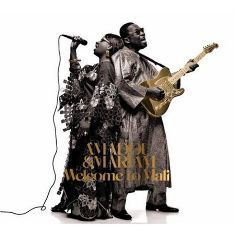
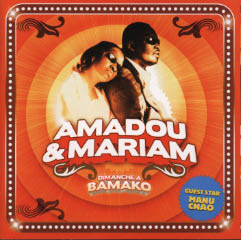
In 1996, the couple settled in Paris and secured a six-month residency at an African restaurant. A label executive spotted them and signed them to Emarcy, a Polygram subsidiary. Sou Ni Tilé (“Day and Night”), released in 1998, swept French radio thanks to the track Je pense à toi, a love song written by Amadou for his wife. Three years later, superstar Manu Chao produced Dimanche à Bamako (2004), an album blending Bougouni rhythms, blues guitar, Syrian violins, Cuban trumpets, and Indian tablas. The buzz was immediate: Victoire de la Musique for Best World Music Album 2005, two BBC Radio 3 Awards for World Music, and over 500,000 sales just in France. Welcome to Mali (2008), co-produced by Because Music and Nonesuch, crossed the final threshold. Damon Albarn produced Sabali, a piece of ethereal beauty where Mariam’s fifty-year-old voice whispers tenderness. Sabali was ranked 15th in Pitchfork’s Top 100 Best Songs of 2008 and became the most-played French single worldwide in 2009. The duo opened the inaugural match of the 2010 World Cup in South Africa. Folila (2012) and La Confusion (2017) confirmed their status, and Eclipse (2023), recorded in total darkness at the Manchester International Festival, stands as an ultimate testament3.
Legacy
Amadou Bagayoko passed away on April 4, 2025, in Bamako at the age of 70. Mariam Doumbia, 67 years old, continues alone. Their concerts, which opened the 2006 World Cup and closed the 2024 Paralympic Games, testify to an influence that far exceeds music. Their work has established itself as one of Africa’s greatest exports, and their voice remained, until the very end, a vibrant plea for people with disabilities4. “Music has no borders. You can listen even if you don’t understand the lyrics,” Mariam used to say.
Major Works
| Work | Year | Why It’s Essential |
|---|---|---|
| Sou Ni Tilé | 1998 | First album outside Africa; Je pense à toi radio breakthrough |
| Dimanche à Bamako | 2004 | Manu Chao production; Victoire de la Musique, 500,000 sales |
| Welcome to Mali | 2008 | Collab. Damon Albarn; Sabali Pitchfork n°15, Grammy nomination |
| Folila | 2012 | Victoire de la Musique 2013; artistic maturity |
| Eclipse | 2023 | Recorded in total darkness; ultimate testament |
Sources and References
-
Laurence Durán, Amadou Bagayoko: the blind Malian musician whose joyful songs changed west African music, The Conversation, April 7, 2025 ↩︎
-
Britannica Editors, Amadou and Mariam, Encyclopaedia Britannica ↩︎
-
Scott Simon and Danielle Kaye, Musicians Amadou Bagayoko and Mariam Doumbia on their new album, Eclipse, NPR, April 1, 2023 ↩︎
-
Agence France-Presse, Amadou Bagayoko of music duo Amadou & Mariam dies aged 70, The Guardian, April 5, 2025 ↩︎