Biography
Amy Koïta
In 1977, at the Festival des Arts Nègres in Lagos, the 25-year-old Malian artist performed on a world stage alongside the Guinean kora player Sory Kandia Kouyaté. Under the spotlights, her Manding voice exploded, cascaded, and fell back with a freedom unlike any other. That evening, Amy Koïta realized her place was elsewhere: not within the collective framework of the Ensemble Instrumental National du Mali, but as a soloist, free to chart her own musical paths. A decade later, her work was applauded at UNESCO in the presence of François Mitterrand.
In Brief
| Full Name | Amy Koïta (also spelled Ami Koita) |
| Birth | 1952, Djoliba (Mali, then French Sudan) |
| Genre | Manding music, afro-folk, traditional African music |
| Instrument | Voice (griotism) |
| Signature Works | Tata Sira, « Bomboli Niaré », Mamaya |
| Distinction | Félix Houphouët-Boigny Prize (UNESCO) |
Key Dates
| Year | Event |
|---|---|
| 1952 | Birth in Djoliba, a village on the banks of the Niger, near Bamako |
| 1955 | Death of her father, Bengaly Fodé Koïta; move to Bamako with her mother |
| 1964-1965 | Discovered during a singing competition in Mali |
| 1969 | Joined the Ensemble Instrumental National du Mali (at age 17) |
| 1970-1975 | International tours with the ensemble; first studio recording at Radio Mali |
| 1977 | Participation in the Festival des Arts Nègres (FESTAC 77) in Lagos, Nigeria |
| 1978 | Launch of her solo career and release of her first personal album, Néné Daou |
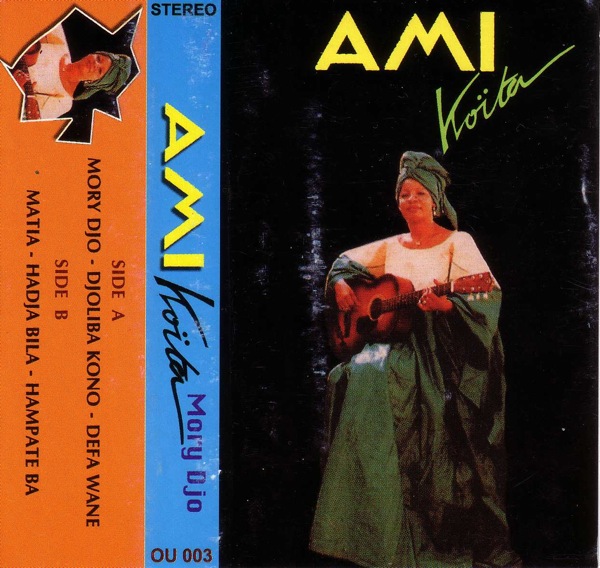
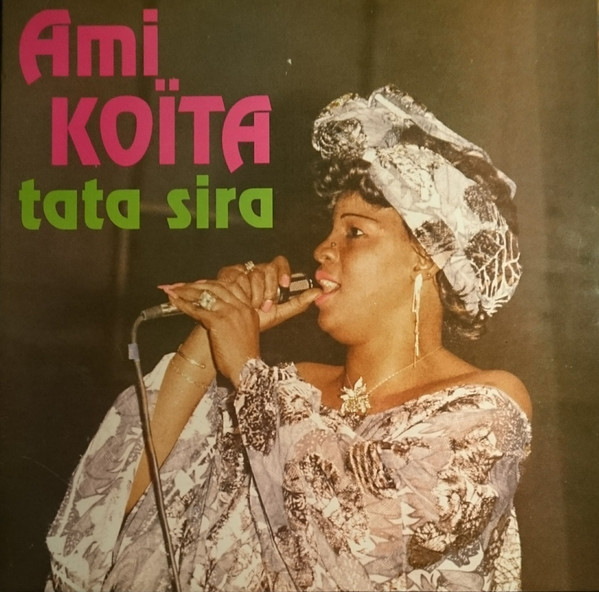
| 1986-1989 | Period of prolific output: Tata Sira (1986), Nakan (1988), Mamaya and Mory Djo (1989) |
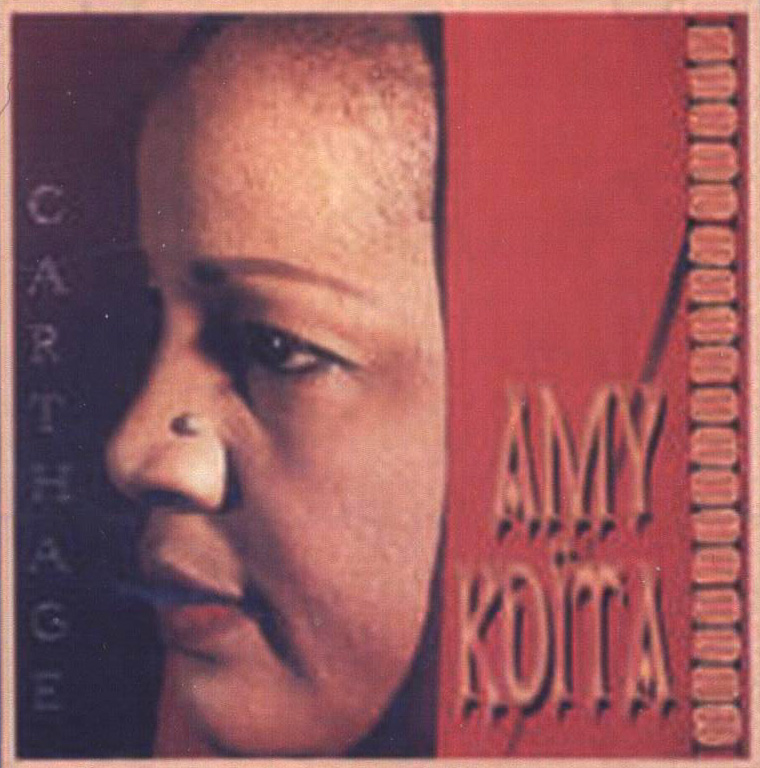
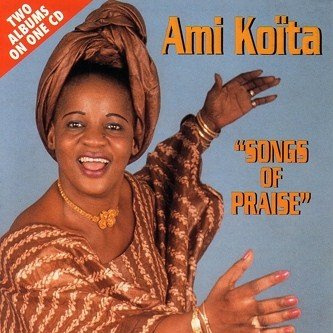
| 1994-2003 | Diversification: Songs of Praise (1994), Carthage (1995), Djiguy (1998), Africawé (2003) |
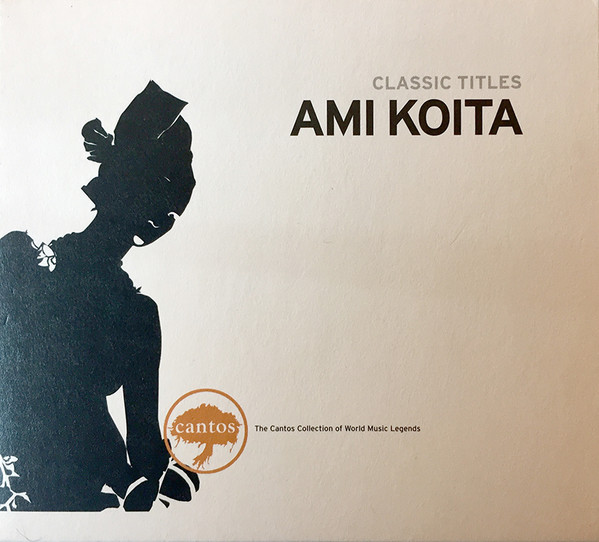
| 2004-2006 | Compilations: Best of and Classics Titles, attesting to international editorial recognition |
Griot Origins and Musical Revelation
Amy Koïta was born in 1952 in Djoliba, a small village nestled on the banks of the Niger River, sixty kilometers southwest of Bamako. From birth, she was immersed in deep Mandé culture—a territory where Malinke culture structures local identity. Her family belongs to this lineage of griots (or jalis), these storytellers, poets, and historians who, since the thirteenth century, have transmitted the memory of Mali from one generation to the next.
Her father, Bengaly Fodé Koïta, was already a respected name: a traditionalist djeli of the pure line, he recounted with precision the battles of the Mandé emperors—Soundiata Keïta, Samory Touré, Babemba of Sikasso—and the exploits of nineteenth-century conquerors. Unfortunately, he died when Amy was only three years old. Following the death of this patriarch, she moved with her mother to Bamako, the capital of the young independent Mali, but the bond with Djoliba was never broken.
It was her mother who became her first singing master, transmitting vocal fluctuations—those characteristic inflections of griot singing that uninitiated ears sometimes mistake for improvisation, but which are in reality the fruit of rigorous training. Her maternal grandmother, a centenarian who died in 1992, taught her respect for tradition and the sensitivity of human connection. It was also to her that her mother’s nephew, Wa Kamissoko—an international Manding historian whose works still serve as a reference today—provided cultural education for twenty years.
By age twelve, Amy was already a coveted star at children’s parties in Bamako. In 1966, she won a national competition organized by Malian authorities to recruit the best voices and historical knowledge for the Ensemble Instrumental National du Mali. At seventeen, she joined the country’s official formation and discovered international stages. It was also there that she recorded her first studio sessions at the stables of Radio Mali.
Towards a Solo Career: Break and Assertion
The decision to leave the Ensemble in 1977, after the Festival des Arts Nègres in Lagos, was not taken lightly. For a griot from a lineage so deeply rooted in the collective, committing to a solo career on the musical stage is an almost revolutionary act. Griots traditionally perform only for private patrons, not on public stages. By releasing Néné Daou in 1978, Amy Koïta was among the first to cross this threshold.
Her voice asserted itself: a blend of power and melodic finesse that made her immediately recognizable, she navigated between traditional Manding music, afro-folk, and afro-pop. This hybridization also attracted critical attention: as she noted, « when I attempted modern orchestration […] I feared losing my older fans, but on the contrary, they were the first to encourage me ».
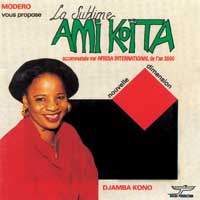
From 1986 to the end of the 2000s, her discography accelerated: Tata Sira (1986), one of the albums that marked the Malian scene; Mamaya (1989), an album noted on the Syllart label; Djamba Kono (1992), followed by Songs of Praise (1994) and Carthage (1995), published respectively by Stern’s Africa and Sonodisc, two European labels specializing in African music. In 1998, Djiguy confirmed her status as a major artist. In total, more than thirteen productions marked her solo trajectory.
Her performance at UNESCO, during the awarding of the Félix Houphouët-Boigny Prize for peace research, constituted a pivotal moment. In the presence of French President François Mitterrand and fifty world personalities, her remarkable performance confirmed the natural charisma that her first listeners had recognized since the age of twelve.
Major Works
| Work | Year | Why It’s Essential |
|---|---|---|
| Tata Sira | 1986 | First major solo album; a classic of the Malian scene that establishes Amy Koïta’s sonic codes: griot vocals, Manding rhythms, and modern orchestration. |
| “Bomboli Niaré” | 1976 | First recording made (with the Ensemble Instrumental National du Mali); a Manding hymn whose verses express love for the land and the Niger River. |
| Mamaya | 1989 | Flagship album on Syllart Productions; the culmination of a period where Amy Koïta found her balance between tradition and African pop. |
| Djiguy | 1998 | Final studio album of the classic period; a polished production where traditional instruments meet refined contemporary arrangements. |
Legacy and Influence
Amy Koïta helped bring the traditional griot figure out of private settings and onto international stages. Her work—a solo career spanning forty years—paved the way for generations of Malian and West African female musicians who claim this heritage, blending Malinke purity with contemporary boldness. Her recordings, notably Tata Sira and Mamaya, continue to be reissued and rediscovered by collectors and radio programs worldwide. Her performance at UNESCO now stands as one of the most memorable moments of African cultural diplomacy in the 1980s.
Sources and References
- “Amy Koïta: An Artist Who Won Everything in Mali,” Maliweb, https://web.archive.org/web/20171107060756/http://www.maliweb.net/category.php?NID=31665 (archive), accessed November 8, 2026.
- “Amy Koïta,” Afrisson, article by Nago Seck, https://www.afrisson.com/amy-koita-655/, accessed November 8, 2026.
- “Amy Koita,” Frank Bessem’s Musiques d’Afrique, https://www.musiques-afrique.net/mali/art-koita-amy.html, accessed November 8, 2026.
- “Ami Koita,” Wikipedia, https://fr.wikipedia.org/wiki/Amy_Koita, accessed November 8, 2026.
- “Ami Koita,” Wikipedia (English), https://en.wikipedia.org/wiki/Amy_Koita, accessed November 8, 2026.
- “Ami Koita,” AllMusic, https://www.allmusic.com/artist/ami-koita-mn0000025095, accessed November 8, 2026.
- “Amy Koïta,” Qobuz, https://www.qobuz.com/be-fr/interpreter/amy-koita/24113, accessed November 8, 2026.