Biography
Boncana Maïga: the maestro who connected the Sahel to Havana
Gao, Niger’s caravan city, preserves the echo of Boncana Maïga’s saxophones. At sixteen, young Sonrai launched the Négro-Band on Mali’s roads. This atypical journey—from Gao to Cuba and then Abidjan—shaped a unique style where Sahel sound meets Cuban clave.
In brief
| Full name | Boncana Issa Maïga |
| Stage name | “Le Maestro” |
| Birth | 1949, Gao, French Sudan (Mali) |
| Death | February 28, 2026, Bamako, Mali |
| Instruments | Saxophone, transverse flute |
| Genre(s) | Afro-Cuban, African salsa, funk, soul |
| Groups founded | Las Maravillas de Mali (1963), Africando (1992) |
| Distinctions | Kora Award for Best Arranger (1997) |
Key dates
| Year | Event |
|---|---|
| 1949 | Birth in Gao, eastern Mali |
| 1959-1960 | Founding of the Gao Négro-Band |
| 1963 | President Modibo Keïta’s scholarship to Cuba |
| 1964-1973 | Training at the Alejandro García Caturla Conservatory, Havana |
| 1965 | Recording of the album Las Maravillas de Mali |
| 1973-1974 | Return to Mali, group reformed as Le National Badema |
| 1974 | Relocation to Côte d’Ivoire, direction of the RTI orchestra |
| 1986-1988 | Film composition: Aya and Bal Poussière |
| 1992 | Co-founding of the Africando project with Ibrahima Sylla |
| 1997 | Kora Award for Best Musical Arranger |
| 2005 | Final return to Bamako, creation of Maestro-Sound Mali |
From Gao to Cuba: the school of clave
Boncana Issa Maïga was born in 1949 in Gao, the Songhai-Sonrai city perched on the Niger River. His environment valued measured speech and silence as virtues—a discipline that would mark his musical approach. Without prior training, the young boy learned rhythms from afar via radio before taking up the saxophone. Around 1959, he founded the Gao Négro-Band and toured Mali1.
In 1963, President Modibo Keïta selected ten young Malian musicians for a study scholarship in Cuba2. Boncana Maïga was part of the group. He studied solfège, transverse flute, guitar, and clave—the binary rhythmic motif at the heart of montuno sound, bolero, and Cuban cha-cha-chá. His Gao ear reappropriated these rhythms with remarkable ease.
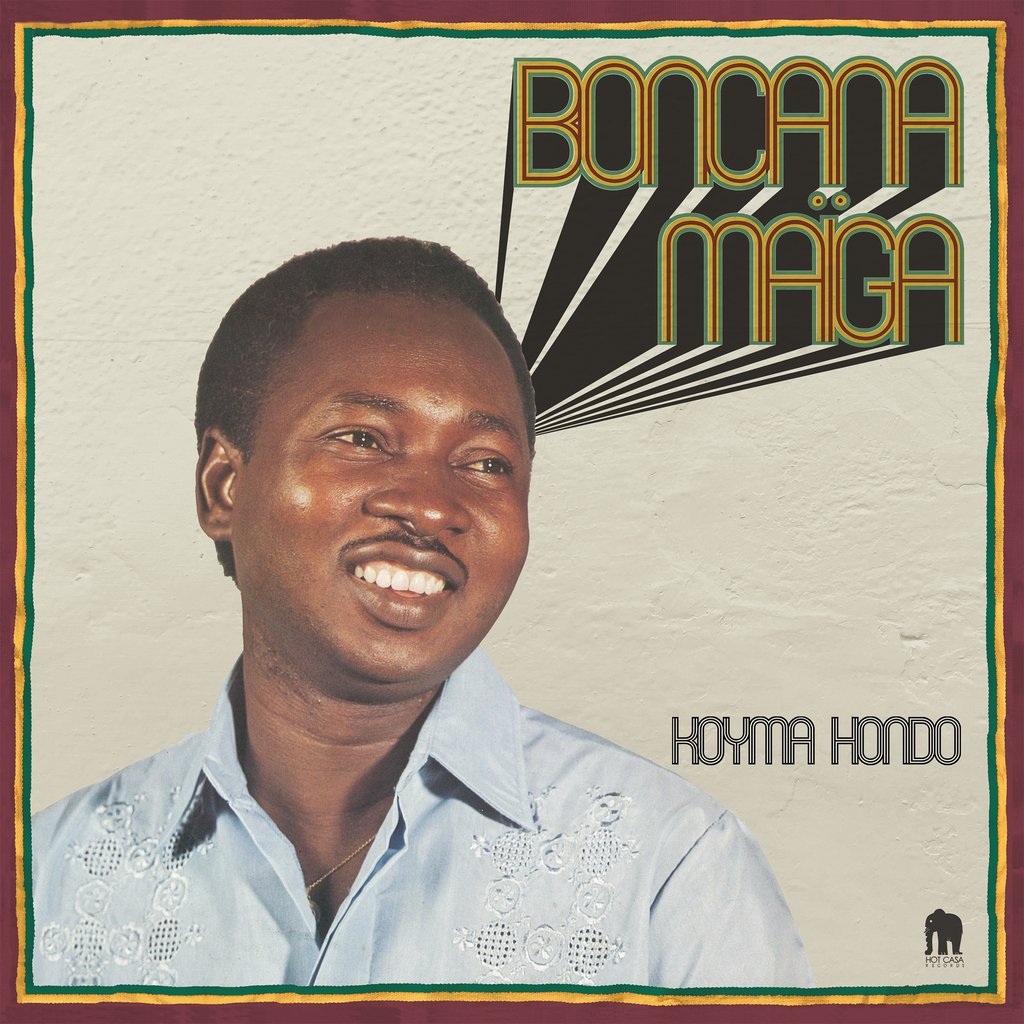
In 1965, the group, Las Maravillas de Mali, recorded a memorable album. Male voices, flutes, violins, piano, and percussion—pieces in Spanish, French, and Malian languages. All major forms of Cuban dance are featured there, with the charanga sound (flutes and violins) performed with virtuosity that testifies to young Maïga’s power of assimilation3.
Abidjan: the arranger at work
The return to Mali was brief. In 1974, Boncana Maïga crossed the Ivorian border. “I left Mali through a window and Côte d’Ivoire opened its doors wide to me,” he would later confess. In Abidjan, West Africa’s cultural capital, he secured a teaching position at the Institut National des Arts before becoming deputy director of the Conservatoire de Côte d’Ivoire4. He founded and directed the RTI orchestra for fourteen years.
The arranger developed his trademark. He wrote brass and string arrangements for Alpha Blondy, Aïcha Koné, Kandia Kouyaté, Oumou Sangaré, and Abdoulaye Diabaté. He composed the music for the TV miniseries Aya (1986) and the feature film Bal Poussière by Henri Duparc (1988). In 1992, he co-founded the Africando project with producer Ibrahima Sylla. The group brought together Senegalese singers—Pape Seck, Medoune Diallo, and Nicolas Menheim—with a New York-based rhythm section specialized in salsa. The Africando project produced a series of albums from 1992 to 2013, filling dance halls in Abidjan and New York3.
Final years
In 2001, he launched the program Stars Parade on CFI TV, then TV5 Monde—the show celebrated its thousandth episode in 2018. In 2005, he returned to Bamako and opened Maestro-Sound Mali5. He composed the music for Moolaadé, Ousmane Sembène’s film (2006). Starting in 2009, he co-hosted with journalist Aïssata Cissé the program Tounkagouna, dedicated to new talents.
Legacy
Boncana Maïga is the last survivor of Las Maravillas de Mali. His death on February 28, 2026, triggered tributes across West Africa. He left a model: proof that a musician trained in Gao, who passed through Havana and Abidjan, can open unprecedented sonic routes1.
Boncana Maïga proved that African music could draw inspiration from traditions as distant as Cuban sound. His journey—from Niger to the Sahel, then to the Malecón of Havana, and finally to Abidjan and Bamako—draws a map of cultural connections between Africa and Latin America. His arranging style, where brass intertwines with flutes and African rhythms reinterpret the clave, has influenced decades of dance music in West Africa6.
Major works
| Work | Year | Why it’s essential |
|---|---|---|
| Las Maravillas de Mali | 1965 | First African salsa album recorded in Cuba, fusion of Sahelian rhythms with montuno sound |
| Africando — Trovador | 1993 | Afro-Cuban fusion with New York section and Senegalese voices, launched by Sylla and Maïga |
| Bal Poussière (B.O.) | 1988 | Film score by Duparc, synthesis between Ivorian funk and African brass |
| Moolaadé (B.O.) | 2006 | Score for Ousmane Sembène’s masterpiece |
Sources and references
-
Lucy Durán, Mali’s maestro of African salsa: how Boncana Maïga shaped dance music, The Conversation, 11 March 2026 ↩︎ ↩︎
-
Ecofin Agency, Boncana Maïga, the Maestro Who Bridged African and Cuban Music, 19 July 2026 ↩︎
-
AllMusic, Boncana Maïga — Biography, by Craig Harris, accessed 31 October 2026 ↩︎ ↩︎
-
Wikipedia, Boncana Maïga, French version, accessed 31 October 2026 ↩︎
-
Discogs, Boncana Maïga, artist profile, accessed 31 October 2026 ↩︎
-
Africultures, Boncana Maïga (Maestro), person profile, accessed 31 October 2026 ↩︎