Biography
Coumba Sidibé: the booming voice of wassoulou
In the 1970s, as Mali sought its own voice after independence, a young woman from the south emerged with an unheard-of sound: wassoulou. Her deep, raspy voice, compared to nocturnal jazz by contemporary listeners, carried messages about romance and women’s rights—themes previously reserved for traditional griots. This is the story of Coumba Sidibé, the “Queen of Wassoulou,” who paved the way for a generation of singers among whom Oumou Sangaré became the most famous.
In brief
| Full name | Coumba Sidibé |
| Birth | around 1950, village of Koninko (Wassoulou, Mali) — some sources indicate 1959 |
| Death | May 10, 2009, Brooklyn (New York) |
| Field | Wassoulou — traditional music from southern Mali |
| Signature works | Gnogonté, Sanghan, “Diya ye Banna” |
| Honors | Nicknamed the “Queen of Wassoulou” by Malian media in the 1980s |
Key dates
| Year | Event |
|---|---|
| around 1950/1959 | Birth in Koninko, a village in the Wassoulou region of southern Mali |
| 1974–1977 | Wins Best Female Singer award at national competitions in Bamako; joins the Ensemble Instrumental National du Mali |
| 1977 | Leaves the ensemble and founds Le Super Mansa de Wassoulou, in collaboration with Alata Brulaye (inventor of the electric kamelen-nyani) |
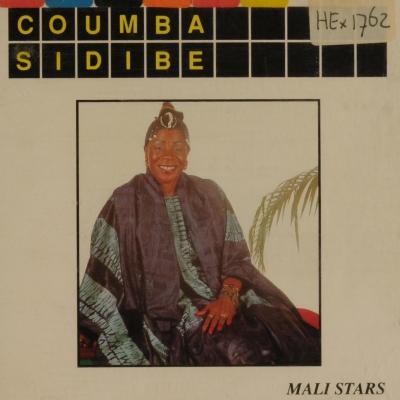
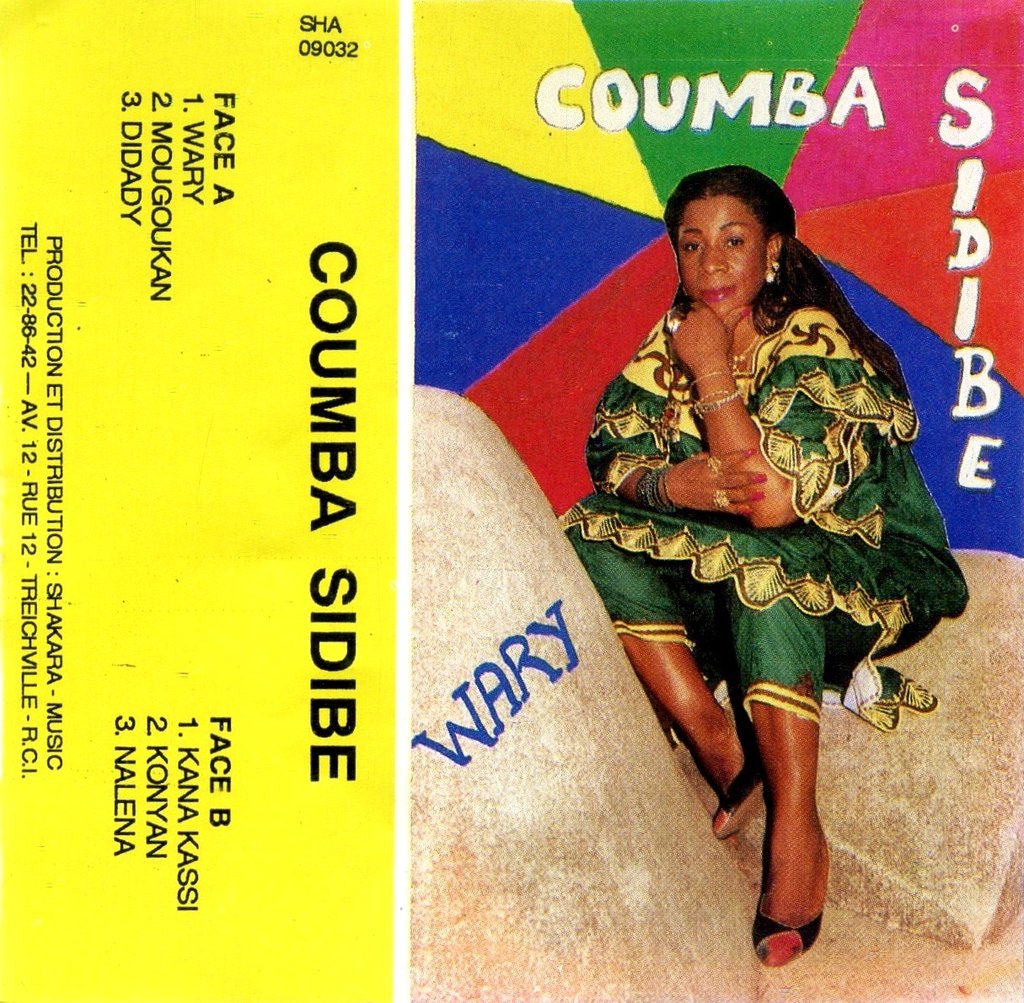
| 1980s | First solo discography (Gnogonté, Wari / Mali Stars) |
| 1992–1994 | Appearances on compilations Women of Mali (The Wassoulou Sound, label Stern’s Africa) |
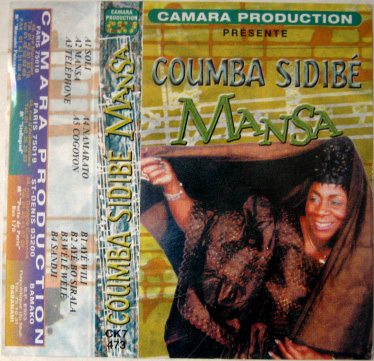
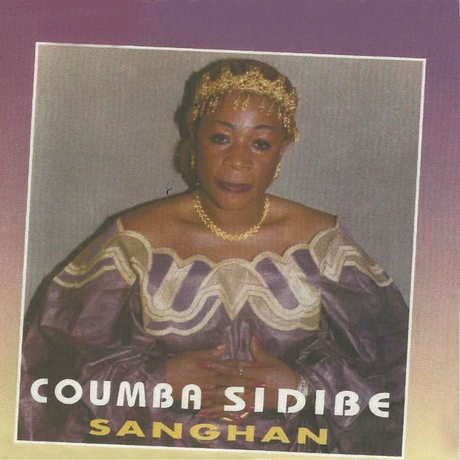
| 1995–2001 | Albums Sanghan (1996), Djandjoba (2000), Mansa (2001) |
| Late 1990s | Move to New York; weekly residency at St. Nick’s Pub in Harlem |
| May 10, 2009 | Death in Brooklyn at approximately fifty-nine years old |
Origins and revelation: a new voice for Mali
Coumba Sidibé grew up in an environment where music was a matter of life and death. In Koninko, her village in the Wassoulou region of southern Mali, her mother was a traditional singer and her father’s brother a sogoninkun dancer, a spectacular form of percussion and dance associated with harvest festivals. From the age of seven, the girl followed in her family’s footsteps and began singing at local ceremonies. Her first major moment came when she replaced her mother at a wedding—her talent was immediately spotted.
Coumba’s professional career took a decisive turn when she joined, between 1974 and 1977, the Ensemble Instrumental National du Mali. This state-subsidized ensemble was created to represent the country’s folk traditions. The name given to her—wassoulou—refers to the region and, by extension, to the musical style that emerged from it. This was not yet an official recognition of the term, but rather a distinctive sound born from the meeting of the dosongoni (traditional hunter’s harp) and new electric amplification techniques. The rhythms are repetitive, hypnotic, but leave room for string instrument improvisation.
Upon leaving the Ensemble Instrumental du Mali in 1977, Coumba partnered with Alata Brulaye—family friend and inventor of the kamelen-nyani (or kamele ngoni), a six-string harp inspired by the dosongoni, an instrument previously reserved for shamans. The electric sound of the kamelen-nyani blended with Coumba’s deep voice, creating an entirely new aesthetic. This neo-traditional music challenged the historical authority of the jelis, the traditional caste of griot musicians whose songs praised the powerful. The kono (“songbirds”), these primarily Peul female singers from Wassoulou who express themselves in Bambara, tackled more concrete themes: feminine romance, women’s rights, social realities. “Diya ye Banna” or “Nalé Na” became popular anthems. These titles earned her the nickname “Queen of Wassoulou” (Reine du Wassoulou) among Malian critics.
Final years: from Bamako to Harlem
The fame of wassoulou grew until Coumba’s recordings became the best-selling by a female singer in Mali. Her first album achieved unexpected success, and her regular tours across Africa, then Europe and the United States, exposed wassoulou sound to an international audience. In parallel, Le Super Mansa de Wassoulou became a nursery for artists: Oumou Sangaré, the future star of Malian music, sang as a chorus member there in the 1980s.
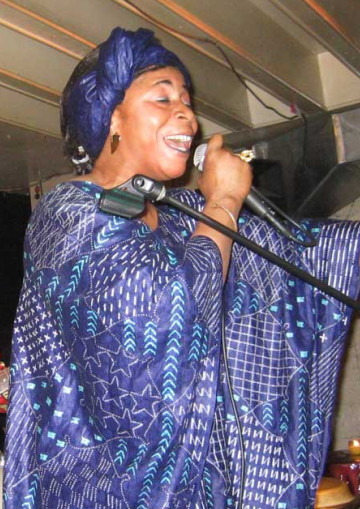
By the late 1990s, despite her reverence in her homeland and growing international performances, Coumba Sidibé remained largely unknown to the global public. To ensure stability, she and her family settled in New York. She held a Sunday residency at St. Nick’s Pub in Harlem, where every Sunday evening her raspy, jazzy voice resonated in packed halls. She raised three sons and four daughters, splitting her time between the New York stage and trips to Mali.
Coumba Sidibé died in Brooklyn on May 10, 2009, from complications of illness. She was buried in Konatébougou, in her native Wassoulou region. Pan-African press paid tribute to a silent pioneer whose musical legacy continues to resonate from Harlem clubs to African festivals.
Major Works
| Work | Year | Why It’s Essential |
|---|---|---|
| Gnogonté | 1987–1989 | First solo album; marks Coumba’s entry into the professional Wassoulou scene |
| “Diya ye Banna” | 1980s | Emblematic title that earned her the nickname “Queen of Wassoulou”; anthem for women’s rights |
| Women of Mali (Stern’s Africa compilation) | 1993–1994 | International exposure for Wassoulou; places Coumba alongside Oumou Sangaré |
| Sanghan | 1996 | First mature album; explores the Peul roots of Wassoulou with newfound sophistication |
Legacy and Influence
Coumba Sidibé never received the international acclaim bestowed upon her contemporary Oumou Sangaré, but her influence is undeniable. The Wassoulou sound as the world knows it today — this driving music propelled by electric kamelen-nyani and powerful female voices — owes much to her experiments in the 1980s. The label Stern’s Africa, which discovered her through compilations like Women of Mali, presents her as a silent pioneer whose sound prefigured the Wassoulou revolution.
Her music continues to be rediscovered: albums Sanghan and Gnogonté circulate on digital platforms, and African festivals are increasingly programming Wassoulou artists who claim her aesthetic as their own. Her motto — “Cultivate a good heart and your life will be happy” — summarizes a simple yet powerful philosophy that every generation of Wassoulou singers has adopted.
Sources and References
- “Coumba Sidibe: Malian singer who helped to popularise West African Wassoulou music”, The Independent, June 4, 2009, https://the-independent.com/news/obituaries/coumba-sidibe-malian-singer-who-helped-to-popularise-west-african-wassoulou-music-1697261.html, accessed November 15, 2025.
- “Coumba Sidibe — Biography”, AllMusic (Jason Ankeny), https://allmusic.com/artist/mn0000129807, accessed November 15, 2025.
- Frank Bessem, “Coumba Sidibé (1959–2009)”, Musiques d’Afrique, https://www.musiques-afrique.net/mali/art-sidibe-coumba.html, accessed November 15, 2025.
- Sylvie Clerfeuille, “Coumba Sidibé”, Afrisson, https://www.afrisson.com/coumba-sidibe-9486, accessed November 15, 2025.
- “Coumba Sidibe”, Discogs, https://www.discogs.com/artist/454531-Coumba-Sidibe, accessed November 15, 2025.
- “Ayub Ogada and Sali Sidibe: RIP”, Afropop Worldwide (Jon Lusk), https://www.afropop.org/articles/ayub-ogada-and-sali-sidibe-rip, accessed November 15, 2025.