Biography
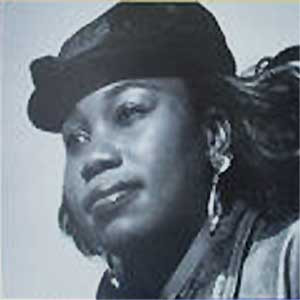
Djanka Diabaté
At the age of seven, Djanka sat among the adult griots of the legendary Ensemble Instrumental de Kankan, her small hands striking the balafon keys with a confidence that surprised visitors. Forty years later, this same soft voice — so far removed from the raspy timbre of traditional griottes — resonates on the albums Djanka (1989), Sira Foula (2003) and in the backing vocals for Mory Kanté on the globe-trotting Yéké Yéké. The Divine, as she is called in Guinea, has spent her life weaving bridges between Mandingue tradition and international stages.
In Brief
| Full Name | Djanka Diabaté |
| Birth | Unknown year, Kankan (Guinea) — nicknamed “The Divine” |
| Genre | Mandingue music, soukous — singing, balafon |
| Notable Works | Djanka (1989), Sira Foula (2003) |
| Honors | Honorific nickname “The Divine” in Guinea; international collaborations (Gipsy Kings, Mory Kanté) |
Key Dates
| Year | Event |
|---|---|
| ~1970s | Childhood in Kankan: singing and balafon playing in the Ensemble Instrumental de Guinée from age 7 |
| ~1980 | Move to Côte d’Ivoire following her father’s death; discovered by Alpha Blondy |
| 1984 | Move to Paris and joining Mory Kanté as a backing vocalist; participated in recordings of Ten Cola Nuts and the hit Yéké Yéké |
| 1986 | First recordings under the name “Djanka La Divine” |
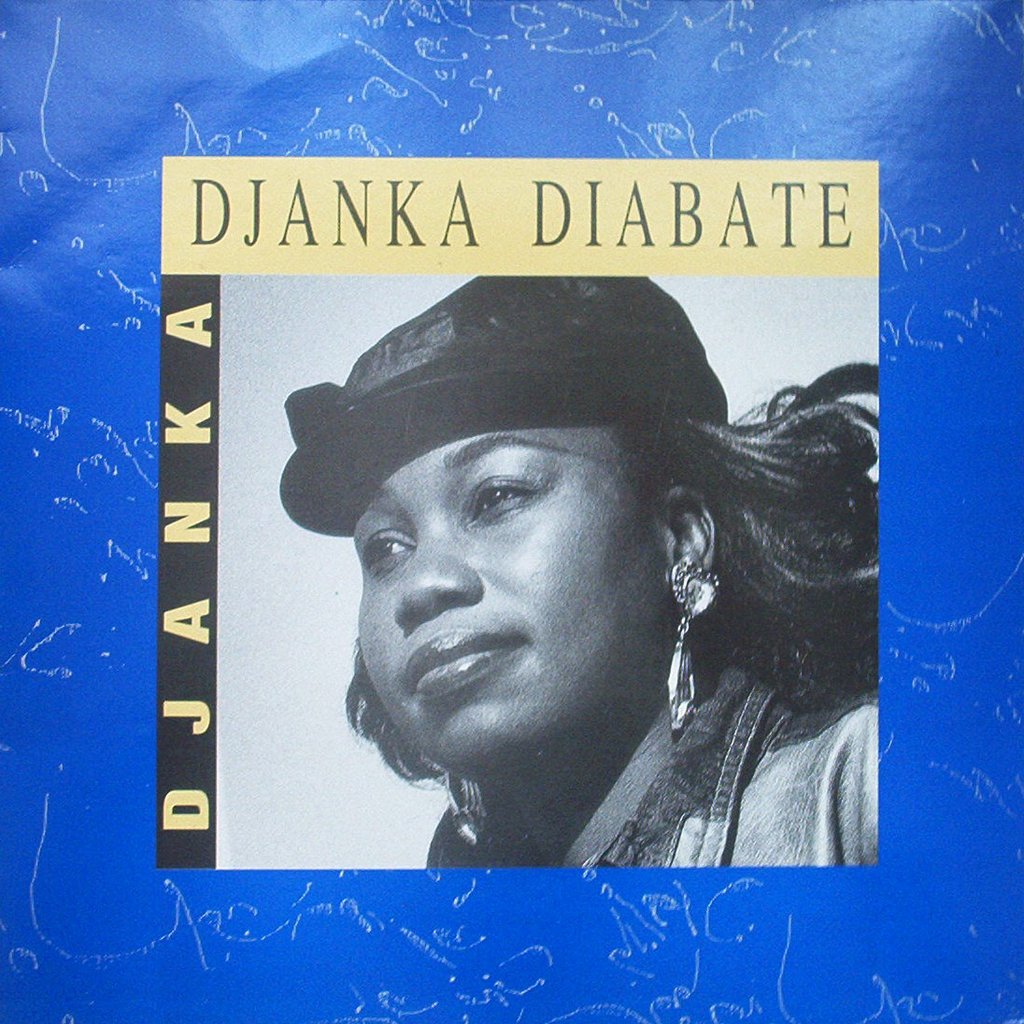
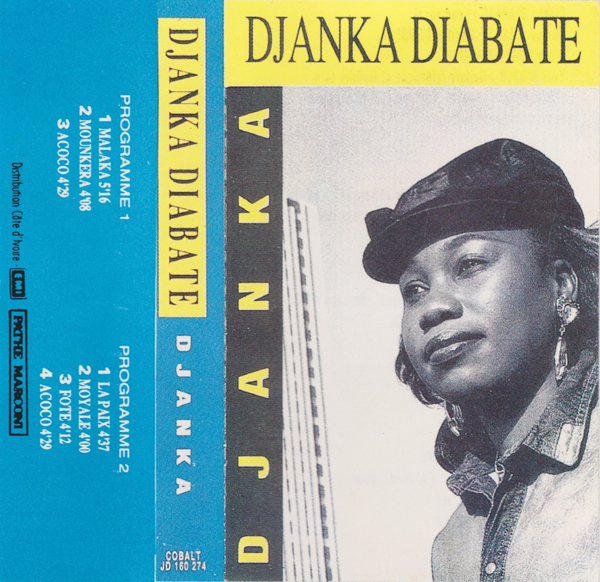
| 1989 | Release of first international album Djanka (Cobalt/Warner); participation in the Gipsy Kings’ album Alma De Noche |
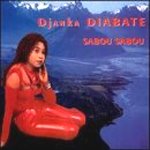
| 1997 | Release of two albums with Sekou Bembeya Diabaté: Sabou Sabou (Sonima) and Samba Gaye (Dakar Sound/CNR Music) |
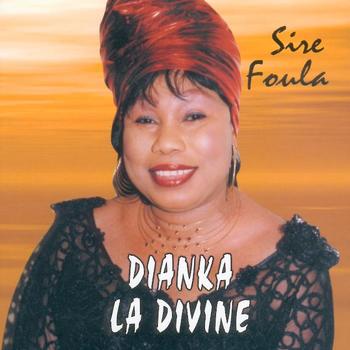
| 2003 | Recording of solo album Sira Foula (Espace Africa) in Paris |
| 2014+ | Presence on digital platforms (Spotify, Apple Music) — reissues and rediscoveries |
Griot Origins and Musical Training
Djanka Diabaté was born into the griot household of Kankan, a historic city in upper Guinea where Mandingue culture has been woven for centuries. Her father, Mamadi Diabaté, was a balafon player in the Ensemble Instrumental de Guinée — the national orchestra created shortly after the country’s independence under the leadership of Sékou Touré. Her mother was a singer, and the whole family followed the tradition: her three uncles (Sidi Karamogo, Sidi Mamadi, Sidi Moussa) are known figures in West Africa; her aunt, Sara Diabaté, shone as a singer; her brother Sidi later joined the 22 Band of Kankan; and his sisters, like him, played the balafon and sang. In this family, music was a living heritage.
From the age of seven, Djanka learned the balafon among the ranks of the Ensemble Instrumental de Kankan. Her voice, unusually soft for a young girl from the region, attracted the attention of elders. But it was after her father’s death that her trajectory shifted: the family moved to Côte d’Ivoire, where she lived in Abidjan, the West African musical capital. It was there that Alpha Blondy took notice of her; his stage at the time gathered promising talents from the diaspora. The singer encouraged her and allowed her to record her first tapes, opening a door onto the continent.
Towards International Stages
In 1984, Djanka moved to Paris to join her cousin Mory Kanté — the “electric griot” who, with Yéké Yéké, was in the process of shifting African music onto global stages. She joined as a backing vocalist and, behind the scenes during recording sessions for Ten Cola Nuts, she encountered rhythms and studios. It was at this time that her nickname, “The Divine,” spread from mouth to ear: her voice had nothing of the usual roars of griot singing, but a caressing timbre that cut against the norms of the era.
Simultaneously, a decisive meeting shifted her towards the Ivorian scene: Fulgence Kassy, host of RTI and manager for Alpha Blondy, invited her to his show “Première chance.” She performed Tara — a famous title by Kouyaté Sory Kandia — with such assurance that it could not go unnoticed. Georges Benson (the Guinean guitarist, unrelated to the American jazzman) heard her and produced her first record, Chérie a tout cassé, a track at the crossroads of Mandingue music and variety influences.
Marriage, Duos, and Established Solo Career
In 1989, Djanka stepped onto the international stage with her first album Djanka (Cobalt label, distributed by Warner). That same year, she participated in the Gipsy Kings’ album Alma De Noche — a marriage of Spanish flamenco and African sonorities that astonished with its precision. These two publications positioned her as a figure of European world music.
Her marriage to Sekou Bembeya Diabaté, lead guitarist of the Bembeya Jazz National nicknamed “Diamond Fingers” (Doigts de Diamant), sealed a major musical alliance. Together, they released two albums in 1997: Sabou Sabou (Sonima Music) and Samba Gaye (Dakar Sound/CNR Music), where the Mandingue guitar and Djanka’s voice intertwined with virtuosity.
Then came the album Sira Foula (2003), recorded in Paris and published by Espace Africa. This record, often cited as her mature work, features tracks like Siaka (a variation of the traditional song Chéri) and I Willi (a reinterpretation of Diarabi, a popular West African song about love and deep friendship). One also hears Femme d’Afrique, a piece that sees her in collaboration with Tshala Muana and Nayanka Bell — a trio of African women that resonates as a collective voice.
Major Works
| Work | Year | Why It’s Essential |
|---|---|---|
| Djanka | 1989 | First international album, launch on the European stage with Cobalt/Warner |
| Alma De Noche (with Gipsy Kings) | 1989 | Unusual and emblematic flamenco-African collaboration |
| Samba Gaye (with Sekou Bembeya Diabaté) | 1997 | Virtuoso Mandingo duo: guitar and voice in perfect harmony |
| Sira Foula | 2003 | Maturity album recorded in Paris, varying between tradition and modernity |
Legacy and Influence
Djanka embodies a generation of female griots who dared to transpose ancestral knowledge into modern studios. Her soft voice — far from the powerful and rough vocals that make up the reputation of griot singing — opens a space for other timbres, more intimate and just as poignant. The artists she accompanied — Mory Kanté, Salif Keïta, Youssou N’Dour — and those she joined — the Gipsy Kings, Johnny Halliday (as a backing vocalist) — testify to the versatility of a singer capable of adapting to all genres.
Today, her music circulates on Spotify and Apple Music, carried by world music and African discovery playlists. Young generations of West Africa rediscover her as a pioneering figure in the passage between traditional balafon and international recordings — simply, a bridge.
Sources and References
- “Djanka Diabaté”, Afrisson, https://www.afrisson.com/djanka-diabate-781/, accessed November 16, 2025.
- “Djanka Diabate — Biography”, AllMusic, https://allmusic.com/artist/djanka-diabate-mn0000166194, accessed November 16, 2025.
- “Discography of Djanka Diabate”, Chants d’Histoire Mande, http://chantshistoiremande.free.fr/Html/dianka_diabate_disco.php, accessed November 16, 2025.
- “Djanka Diabate”, Discogs, https://discogs.com/artist/342180-Djanka-Diabate, accessed November 16, 2025.
- “Djanka Diabate — Djanka”, Awesome Tapes From Africa, https://awesometapes.com/djanka-diabate-djanka/, accessed November 16, 2025.
- “Djanka Diabate”, MusicBase.net, https://musicbase.net/djanka-diabate, accessed November 16, 2025.
- “Djanka Diabaté”, Qui’est-qui-en-Guinee, https://quiestquienguinee.com/liste-des-personnalites/p0565/djanka-diabate, accessed November 16, 2025.