Biography
Etran Finatawa: The Stars of Sahelian Tradition
At the twilight of the Sahel, an electric guitar chord blends with the polyphonic chants of a group of men dressed in indigo burnouses and embroidered tunics. In 2004, following the Festival au Désert near Timbuktu, two nomadic groups—one Tuareg, the other Wodaabe—shared the stage for the first time. The crowd cheered. This was the birth of Etran Finatawa, the group that would invent nomad blues, a sound that makes the deserts of Niger dance all the way to European festivals1.
In Brief
| Group Name | Etran Finatawa (« the stars of tradition ») |
| Origin | Niger |
| Genre | Nomad blues, desert blues, world music |
| Formed in | 2004, Festival au Désert (Timbuktu, Mali) |
| Language | Tamajaq (Tuareg), Fulfulde (Wodaabe) |
| Albums | Introducing Etran Finatawa (2006), Desert Crossroads (2008), Tarkat Tajje / Let’s Go! (2010), The Sahara Sessions (2013) |
| Label | World Music Network / Riverboat Records |
Key Dates
| Year | Event |
|---|---|
| 2004 | Formation at Festival au Désert, near Timbuktu |
| 2005 | First European tour (Germany, Netherlands, Switzerland, Ireland) |
| 2006 | Release of first album; debut at WOMAD (Reading, UK) |
| 2007 | Nomination for BBC Radio 3 Awards for World Music |
| 2008 | American tour; release of Desert Crossroads |
| 2010 | Release of Tarkat Tajje / Let’s Go! |
| 2013 | Release of The Sahara Sessions; death of Bagui Bouga (August 2) in Switzerland |
From Nomadic Dunes to the World Stage
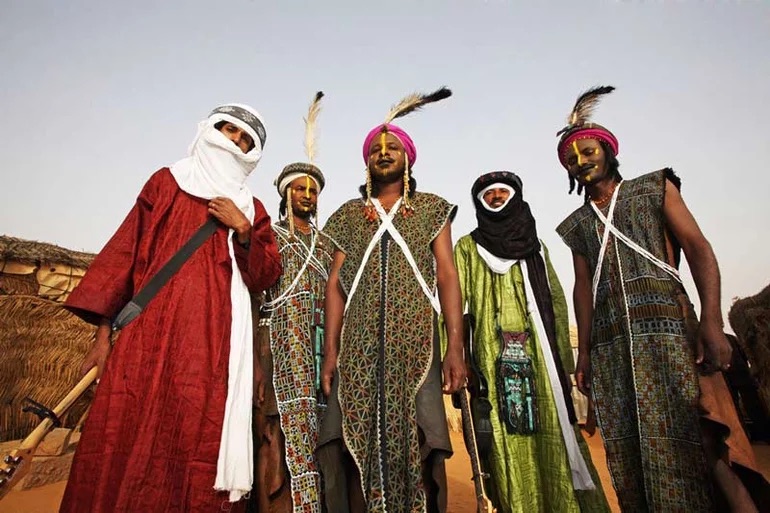
Tuaregs and Wodaabe share Sahelian pastures, but their relations have historically been tense. The former, camel herders speaking Tamajaq, perpetuate a tradition centered on the bowed string instrument—the assouded—and, since the 1970s, the electric guitar, a style baptized ichumar. The latter, Wodaabe cattle herders, are famous for their polyphonic chants in Fulfulde, their gourd percussion, and their slow dances that mimic animal movements2. Neither of the two peoples had ever integrated a stringed instrument into their musical tradition.
The idea to unite them germinated in the home of Sandra van Edig, a former German anthropologist settled in Niamey. The 2004 Festival au Désert had separately invited the Etran N’Guefan troupe (Tuaregs) and Wodaabe dancers3. On the terrace of Sandra van Edig’s house, where a first demo recording was made, the musicians prepared two tracks together. “It is completely new to find a guitar melody for a Wodaabe chant; it had never been done before,” she recounts. In Timbuktu, during their joint performance, the crowd exulted. Back in Niger, the musicians decided to formalize their collaboration.
The group took the name Etran Finatawa, “the stars of tradition.” The composition reflected a deliberate balance: six Tuaregs and three Wodaabe. The founder is Bagui Bouga, a Wodaabe percussionist and singer born in 1978 in Tchintabaraden. Uneducated, he learned from his grandmother the knowledge of plants and traditional medicine. Tuareg co-founder: Alhousseini Mohamed Anivolla, guitarist and singer. The formation met with reservations: “Many in the community did not like the idea of combining two tribes, but Bouga was determined,” reports Alhousseini. “He fought for the issue of being a nomad in modern times4.”
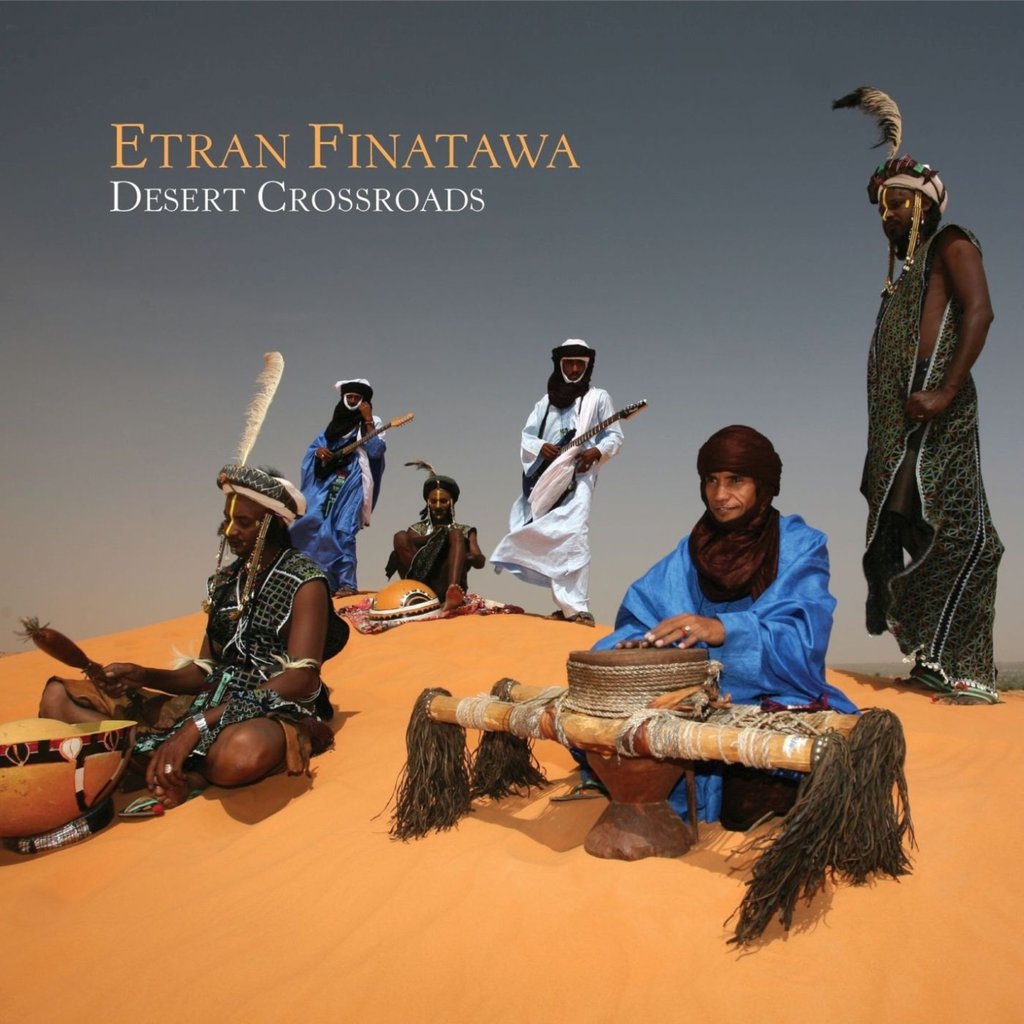
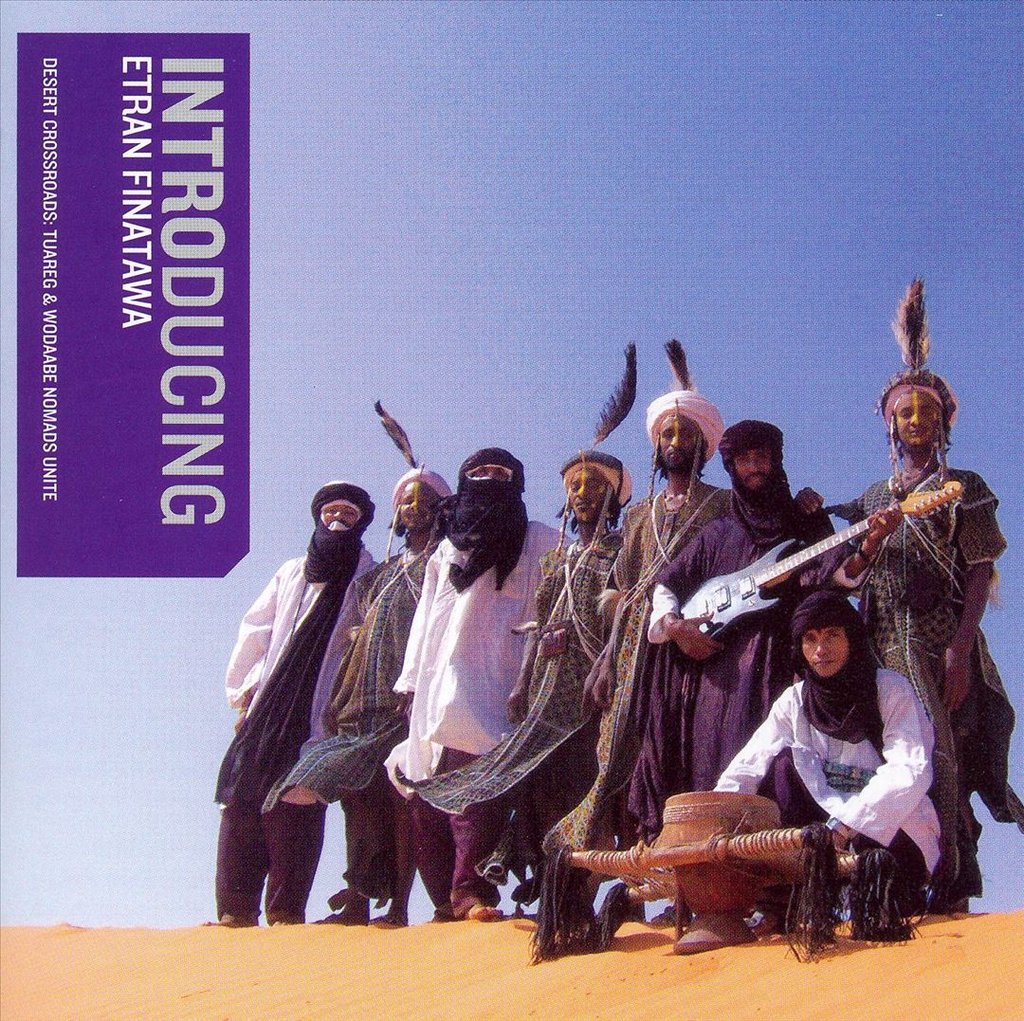
The demo attracted the attention of the World Music Network label, which published Introducing Etran Finatawa in 20065. The album, recorded in France by producer Chris Birkett at Château Richard with minimal overdubs, captured the raw energy of the formation6. The group invented the term nomad blues to qualify their music. The invitation from WOMAD arrived immediately. In April 2008, the New York Times qualified their American arrival as an “enchanting” evocation of the desert7. Desert Crossroads (2008) and Tarkat Tajje / Let’s Go! (2010) confirmed their dynamic8. The LA Weekly highlighted that their approach distinguished them from other desert blues groups by the preeminence of Wodaabe voices and gourds, instruments unprecedented in this sub-genre.
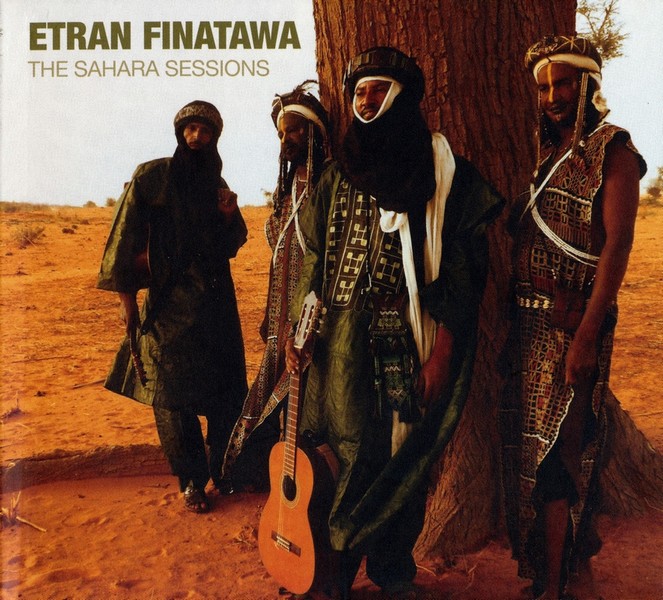
In 2013, they released The Sahara Sessions, recorded live in the Sahelian desert9. Shortly after, on August 2, 2013, Bagui Bouga passed away from an asthma crisis in Switzerland at the age of 35. The Wodaabe drummer and singer, who played gourd and flute odilirou, had contributed to the group’s four albums.
Major Works
| Work | Year | Why It Is Essential |
|---|---|---|
| Introducing Etran Finatawa | 2006 | First album, recorded quasi-live; unprecedented Tuareg-Wodaabe fusion |
| Desert Crossroads | 2008 | Consolidation of nomad blues; international recognition |
| Tarkat Tajje / Let’s Go! | 2010 | Gourd percussion in the foreground |
| The Sahara Sessions | 2013 | Live recording in the desert; last testimony of Bagui Bouga |
Legacy
Etran Finatawa opened a new path in world music: instead of adapting African traditions to Western standards, they integrated the electric guitar as a tool for cultural preservation2. Their music is played in schools and villages of Niger, where young people call it “their music.” The collaboration between two once-rival peoples has become, for many in Niger, a symbol of peace and unity. In 2020, electronic duo Disclosure sampled their sound on the track “Etran,” introducing nomad blues to an even wider audience10. Etran Finatawa remains one of the most fascinating hybridizations on the Sahelian music scene.
Sources and references
-
Wikipedia, Etran Finatawa, accessed 27 October 2026. https://en.wikipedia.org/wiki/Etran_Finatawa ↩︎
-
AllMusic, Etran Finatawa — Biography, accessed 27 October 2026. https://allmusic.com/artist/etran-finatawa-mn0000734938 ↩︎ ↩︎
-
Grokipedia, Etran Finatawa, accessed 27 October 2026. https://grokipedia.com/page/etran_finatawa ↩︎
-
The Independent, Bagui Bouga: Master of the Nomadic Blues, 19 Sept. 2013. https://www.independent.co.uk/news/obituaries/bagui-bouga-master-of-the-nomadic-blues-8812870.html ↩︎
-
World Music Network / Riverboat Records. https://www.etranfinatawa.com/recordings.html ↩︎
-
NPR, Etran Finatawa: Niger’s Nomadic Blues, World Cafe, 11 Dec. 2008. https://www.npr.org/2008/12/11/98124415/etran-finatawa-nigers-nomadic-blues ↩︎
-
Jon Pareles, The New York Times, Etran Finatawa: Evoking Their Desert Home in Song, 21 April 2008. https://www.nytimes.com/2008/04/21/arts/music/21etra.html ↩︎
-
LA Weekly, Mission of Niger. https://www.laweekly.com/mission-of-niger/ ↩︎
-
Joe Tangari, Pitchfork, Etran Finatawa: The Sahara Sessions, 10 June 2013. http://pitchfork.com/reviews/albums/18157-etran-finatawa-the-sahara-sessions/ ↩︎
-
Apple Music, Etran Finatawa — Energy, 2020. https://music.apple.com/us/artist/etran-finatawa/152131976 ↩︎