Biography
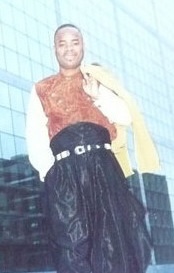
Géo Bilongo
In Paris, during the 1980s and 1990s, Congolese rumba found its second wind. In this capital that became a stage for both music and improvisation, a Kinshasa-based guitarist — songwriter, arranger, singer — established himself as the right hand of the groove. He followed up sessions with Papa Wemba, Tshala Muana, or Aurlus Mabélé before founding his own group Malinga Système, and then the Soukouss Gentlemen project. The life that keeps him turning around social issues and sound is that of an eclectic musician, heir to Django Reinhardt, Jimi Hendrix, and Wes Montgomery.
In brief
| Full name | Géo Bilongo (civil name not established) |
| Birth | Not established in consulted sources (originally from Kinshasa, DRC) |
| Field | Music — Congolese rumba and soukous, rhythm and solo guitar |
| Instrument(s) | Guitar (rhythm and solo), vocals, arrangements |
| Notable works | Malinga System (1988), Embargo — Loketo with Aurlus Mabélé (1991), Soukouss Gentlemen Vol. 1 (1994) |
| Distinctions | No official distinction established in consulted sources |
Key dates
| Year | Event |
|---|---|
| 1985 | Release of LP Pina (African/Soukous) |
| 1986 | Records Le Roi Du Malinga — En Action! (Christiana Satel) |
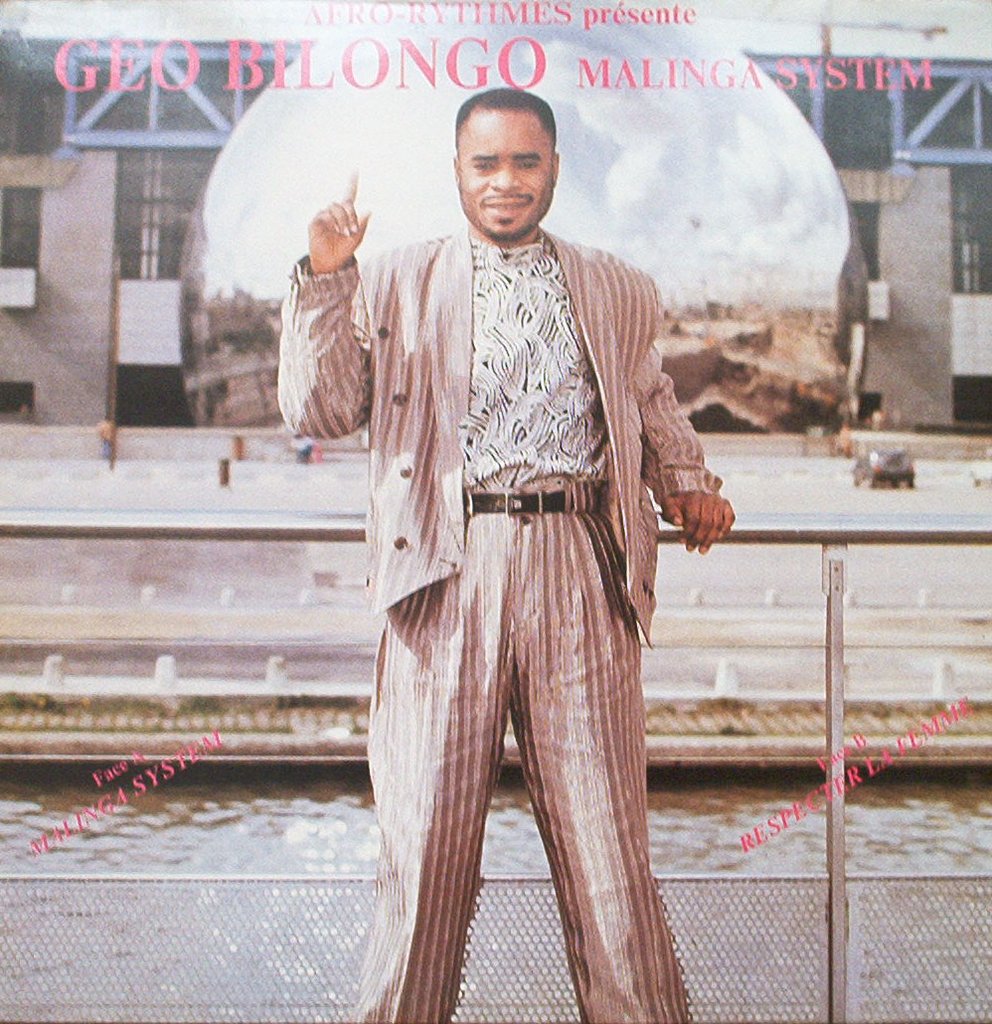
| 1988 | Group Malinga Système — LP Malinga System (Afro-Rythmes) |
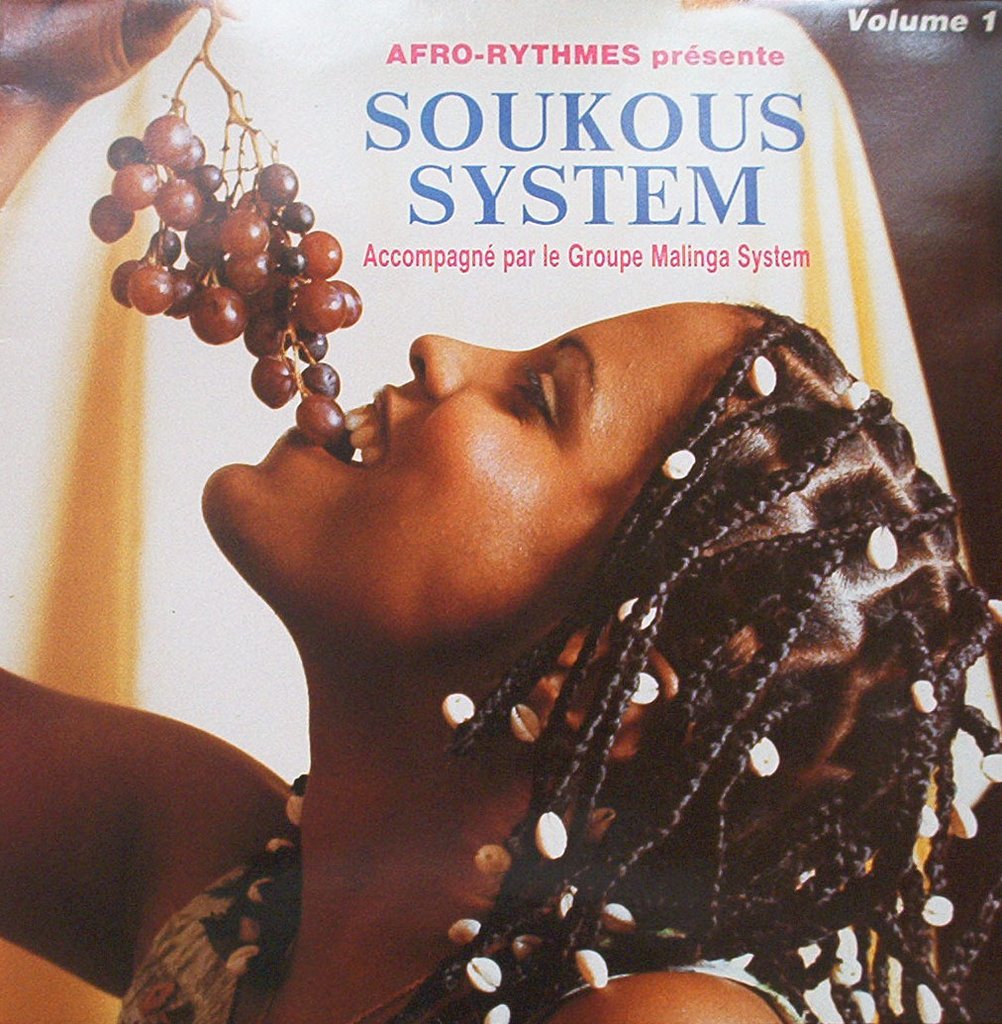
| 1989 | Group Malinga Système — LP Soukous System Volume 1 (Afro-Rythmes) |
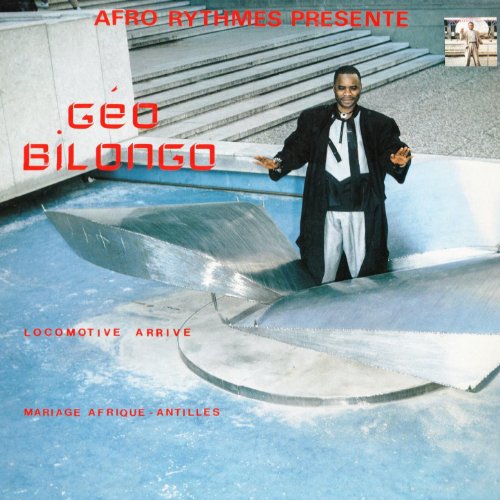
| 1990 | Locomotive Arrive — Mariage Afrique-Antilles (Afro-Rythmes) |
| 1991 | Embargo — Loketo with Aurlus Mabélé (rhythm guitar, with Blandin Wabacha) |
| 1992 | LP Polygamie (Bleu Caraïbes) |
| 1994 | Soukouss Gentlemen Vol. 1 (Blue Silver) ; Kinshasa Ambiance |
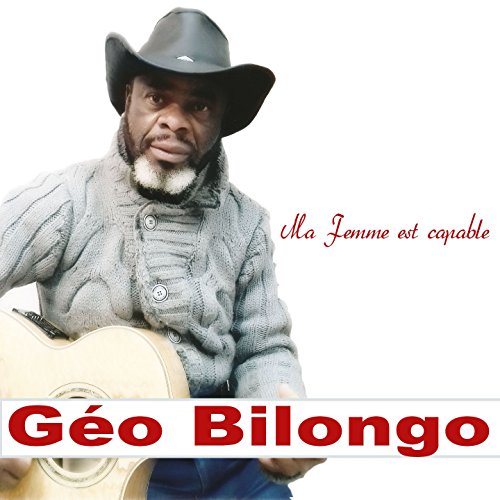
| 1996 | CD Ma Femme Est Capable (Madeline Records) ; participation in Tshala Muana’s Mutuashi |
| 1997 | Compilation The Best of Geo Bilongo (Sonodisc) |
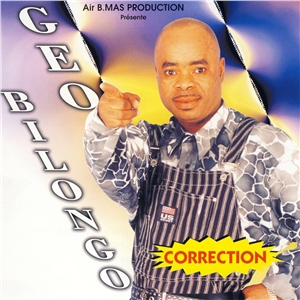
| 1999 | CD Correction (Air B.Mas Production / DEBS Music) |
A Kinshasa guitarist trained in Congolese rumba
Passionate about music since his tender childhood, Geo Bilongo started playing guitar at the age of eleven in Kinshasa. He then immersed himself in the references of Django Reinhardt, Jimi Hendrix, and Wes Montgomery — three guitarists who do not play the same music but share the demand for an expressive playing style and a refusal of strict school-based learning. His first Kinshasa groups were Mokako, Bisengo (by Gérard Madiata), Orchestre Kara, or Master Torro’s Kossa-Kossa.
Congolese rumba, or soukous as it is understood in Côte d’Ivoire and elsewhere on the continent, is a dance music born at the end of the 1970s and popularized in the early 1980s. It absorbed Western influences — highlife, big band, ska — while remaining anchored in Congolese urban rhythms. It is precisely this fusion between tradition and modernity that Geo Bilongo explores: the guitar is central, both for rhythmic lines and fiery solos. His eclecticism goes further: he is interested in jazz, blues, funk, folk, pop, salsa, zouk, flamenco, waltz, or tango, and attempted to integrate a touch of classical music into Congolese rumba.
Paris, sessions and creation of the Malinga Système group
In the 1980s-1990s, Paris became the musical capital of Congolese rumba. The passage through this city was decisive for Geo Bilongo, who recorded in sessions featuring Papa Wemba, Tshala Muana, Evoloko Jocker, and Aurlus Mabélé — but also the Cameroonians Guy Lobé and Papillon, without forgetting Antillean artists. His guitar is regularly credited as a base instrument on these records, sometimes as co-arranger.
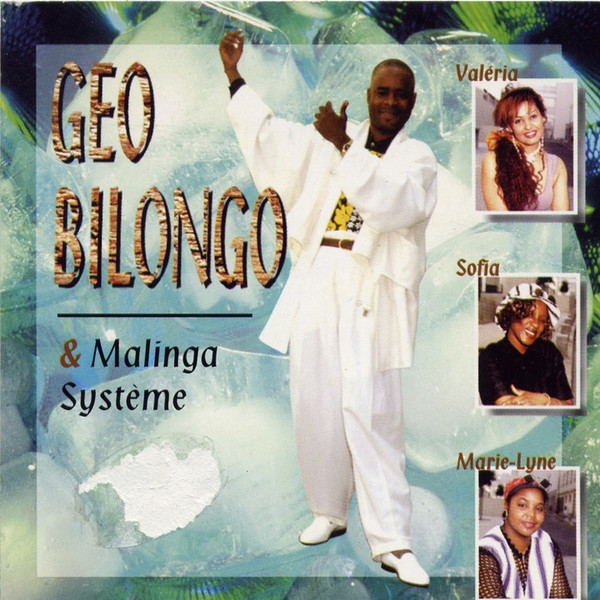
It was in this environment that Solo Sita — Kinshasa dancer and singer who formed his group Malinga System with Geo Bilongo — and other Parisian musicians elevated the project as a brand of rumba. Jarrys Fimbo, Komba Bello, and Chellid completed the lineup. The group recorded Malinga System (1988, Afro-Rythmes) and then Soukous System Volume 1 (1989, same label), sounding the call of the soukous world towards the Antilles — Locomotive Arrive, a collaboration Locomotive Arrive (1990).
Loketo, Soukouss Gentlemen and the legacy
In the 1990s, Geo Bilongo played rhythm guitar on the album Embargo (1991), the monument of Loketo — a group formed in 1986 in Paris by Aurlus Mabélé, Diblo Dibala, Jean Baron, and Mark Macaire. This album sold as a continental hit inaugurated the dance style that traversed East Africa. Geo Bilongo was co-rhythm guitarist with Blandin Wabacha, while the bassist was Rémy Sahlomon and the drummer Mark Macaire.
In 1994, Geo Bilongo created the Soukouss Gentlemen project with Fédé Lawu, Papa Wemba (RIP), Sam Mangwana, and Shimita — all names of Kinshasa soukous. Volume 1 (Blue Silver, France) united four voices and the guitarist played lead and rhythm; the titles “Muasi Ya Interet”, “Bassala”, or “Dr Olela” carry his lines and the lyrics of those with whom he shares the stage. Kinshasa Ambiance (1994) and Ma Femme Est Capable (1996, Madeline Records) followed; the compilation The Best of Geo Bilongo (Sonodisc, 1997) and the CD Correction (Air B.Mas Production / DEBS Music, 1999) conclude his recorded career as documented by the sources.
He faded from the Congolese scene after these 1990s years, and no official distinction or subsequent revival is documented in the consulted sources. His name remains nevertheless associated with the rumba/soukous generation that marked the 1980s-1990s in DRC, in his Kinshasa groups such as Parisien.
Major Works
| Work | Year | Why It’s Essential |
|---|---|---|
| Malinga System | 1988 | The first LP by the group co-founded by Geo Bilongo and Solo Sita — signature of 1980s rumba/soukous |
| Embargo (Loketo) | 1991 | With Aurlus Mabélé and Diblo Dibala — continental album that became a reference for Parisian soukous, for which Geo Bilongo plays rhythm guitar |
| Soukouss Gentlemen Vol. 1 | 1994 | Collective project uniting the biggest names in Kinshasa soukous — his central interpretation |
| Ma Femme Est Capable | 1996 | Solo LP recorded by Madeline Records — the guitarist asserts himself as interpreter and songwriter |
| Correction | 1999 | Final documented CD — marks the end of his recorded career as sources depict it |
Legacy and Influence
Geo Bilongo embodies that generation of Congolese guitarists whose technical playing captivated Parisian studios and brought rumba to an international audience. He did not produce a single major work but rather a corpus of sessions, collaborations, and LPs that marked the soukous of the 1980s–1990s — a groove precisely calibrated for concerts, according to the standard that rumba/soukous exported to Europe. His traces in repertoires still appear today on records by Loketo, Solo Sita, and other Kinshasa formations — a discreet but enduring legacy in the archives of Congolese music.
Sources and References
- « Geo Bilongo », Afrisson (Nago Seck), article created on 15/05/2007 and updated on 24/05/2020, https://www.afrisson.com/geo-bilongo-772/ , accessed 25 November 2026.
- « Géo Bilongo », musicbase.net (discographic data), https://musicbase.net/geo-bilongo , accessed 25 November 2026.
- « Congolese crooner Solo Sita set to launch his newest album in Kenya », Daily Nation (Kenya), 1 July 2011 (updated on 3 July 2020), https://nation.africa/kenya/news/congolese-crooner-solo-sita-set-to-launch-his-newest-album-in-kenya--774274 , accessed 25 November 2026.
- « The Soukous Ace Who Sang & Danced His Way to Our Hearts », Jabulani Radio, 7 March 2025, https://www.jabulaniradio.website-radio.com/news/the-soukous-ace-who-sang-danced-his-way-to-our-hearts-240 , accessed 25 November 2026.
- « Soukouss Gentlemen Vol. 1 », Discogs (varied artists), https://www.discogs.com/release/16174081-Various-Soukouss-Gentlemen-Vol-1 , accessed 25 November 2026.