Biography
Helder, the “King of Kuduro”
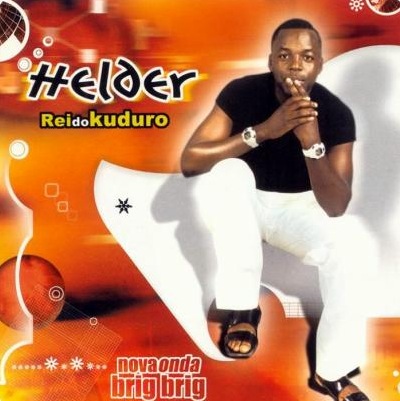
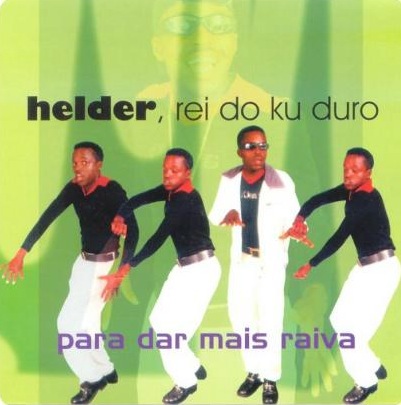
In 1999, on a track titled “Felicidade Se Bem”, a powerful voice launches into a fast and electric rhythm that resembles nothing else in Africa. The artist is named Helder, or more exactly Rei do Kuduro — the King of kuduro. This man, born in Luanda in the early years after independence, became for decades one of the major figures of a genre that makes clubs vibrate from Lisbon to Paris, passing through Amsterdam.
In brief
| Stage name | Helder Rei Do Kuduro, also Rei do Kuduro |
| Birth name | Domingos Silva |
| Birth | May 19, Luanda, Angola (year uncertain) |
| Field | Kuduro — Angolan electronic music |
| Emblematic works | “Felicidade”, “Frique Frique”, “Festa da Paz”, “Angola Me Leva” |
| Labels | Sons D’África, Vidisco |
Key dates
| Year | Event |
|---|---|
| ~1968 | Birth in Luanda (estimation, based on a 40-year career) |
| 1998 | First album recorded, Mete Raiva, at Zé Orlando |
| 1999 | Felicidade Se Bem, first album at Sons D’África, launches his notoriety |
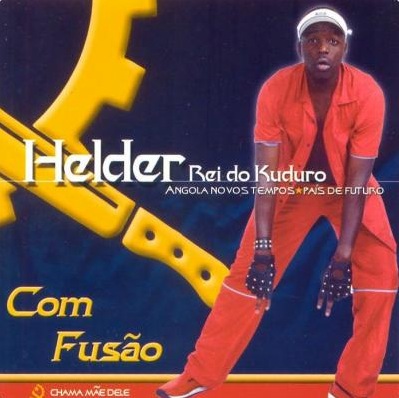
| 2002 | Com Fusão, exploration of the limits of kuduro with other genres |
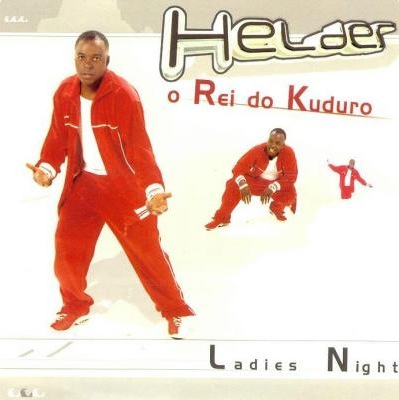
| 2003 | Ladies Night, at Vidisco, major commercial success |
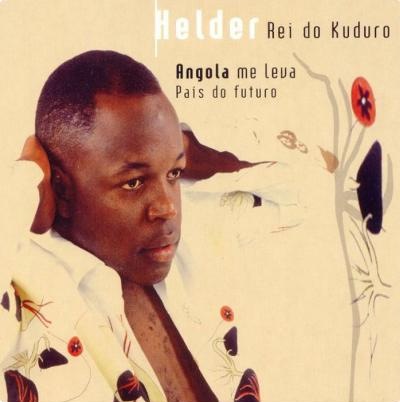
| 2004 | Angola Me Leva País De Futuro, patriotic and festive anthem |
| 2008 | Kizomba No Pé, fusion of kuduro with kizomba |
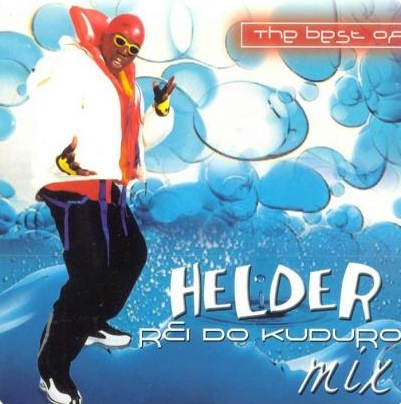
| 2015 | The Best Of, official retrospective |
| 2019–2020 | 40 Anos de Carreira, compilation celebrating four decades of career |
From the musseques to Europe’s bright lights
Kuduro is born in the musseques — the poor neighborhoods of Luanda — around the turn of the 1990s, during the Angolan civil war. Local producers, inspired by batida (a rhythm derived from Antillean zouk béton) and European electronic music, assemble African percussion on house and techno beats. The result is furious, fast, dancing: a sound that speaks to the youth of a devastated country.
Helder comes to the forefront around 1998, at the same time as the first studios record pioneers of the genre like Sebem and Tony Amado — the latter claiming to be the inventor of kuduro, inspired by a scene from the film Kickboxer (1989). Helder, for his part, forges his reputation on clear lyrics, catchy melodies and a stage presence that quickly makes him one of the most recognizable voices in the style.
It is also in Portugal, and more specifically Lisbon, that Helder finds a favorable ground for recognition. The Angolan community settled in the Portuguese capital constitutes an immediate audience, curious to hear their own sound on European stages. Helder plays there, records and distributes his discs, carrying kuduro beyond Angolan borders long before the genre was discovered by international circuits.
From war to party
Helder sings with what is called “animação” — the art of the MC who, on an electric sound, improvises, comments, stimulates the crowd. His lyrics speak of life in the musseques, of simple joys like Felicidade (“happiness”), of parties that bring people together, of festive patriotism with Angola Me Leva (“Angola, take me away”). Helder’s interpretation is uncompromising: kuduro is a music of joy, and not a channel for meditation on the horrors of war.
This position is shared by many kuduristas. Choreographer Manuel Kanza explains that it is about “making the maximum of pleasure with something really serious”, transforming the movements of war wounded into a powerful dance that rejects the status of victim.
Major works
| Work | Year | Why it is essential |
|---|---|---|
| Felicidade Se Bem | 1999 | First major album at Sons D’África, consecrates the track “Felicidade” |
| Com Fusão | 2002 | Exploration of the genre’s limits by mixing with other styles |
| Ladies Night | 2003 | Album at Vidisco, wide audience, powerful festive tracks |
| Angola Me Leva País De Futuro | 2004 | Anthem both patriotic and dancing, one of the most played songs |
| Kizomba No Pé | 2008 | Fusion of kuduro with kizomba, demonstrating the style’s capacity for evolution |
Legacy and influence
Helder’s kuduro is that of the first generation, before the genre became a global phenomenon carried by collectives like Buraka Som Sistema or Os Kuduristas. His tracks have totaled several million streams on digital platforms, notably “Felicidade” (more than 900,000 streams on Spotify) and “Frique Frique” (more than 670,000), attesting to a success that spans decades.
In 2021, NTS Radio, the famous London station, broadcasts his tracks, marking a late but real international recognition. In Angola itself, he is recognized as one of the founding names of kuduro, alongside Sebem, Tony Amado and DJ Kilamu.
The controversy surrounding Helder — notably the reproach raised by the Cambridge Companion to Electronic Dance Music of having reissued under his name songs by Sebem and Tony Amado during his Portuguese period — recalls the difficulties of the Angolan music industry: lack of copyright protection, informal circulation, and artists in rivalry for visibility. Rather than diminishing his contribution, this episode highlights the complexity of a scene where personal assertion and borrowings intertwine, a dynamic typical of the Angolan musical context of the 1990s.
Helder remains today a living reference: his career spans forty years, and he continues to record and perform.
Sources and references
- Stefanie Alisch, « Angolan Kuduro in the Context of Sound System Cultures of the Black Atlantic », in Hillegonda C. Rietveld and Toby Young (eds), The Cambridge Companion to Electronic Dance Music, Cambridge University Press, 2026.
- « Kuduro », Wikipedia (in English), https://en.wikipedia.org/wiki/Kuduro, accessed 5 November 2026.
- Discogs, « Helder Rei Do Kuduro », https://www.discogs.com/artist/2833289-Helder-Rei-Do-Kuduro, accessed 5 November 2026.
- Anastasia Tsioulcas, « ‘Kuduro,’ The Dance That Keeps Angola Going », NPR / The Record, 22 December 2012.
- Inês Cordeiro Dias, « Angolan Kuduro: Dance Conquers the City », FIELD — A Journal of Socially-Engaged Art Criticism, https://field-journal.com/editorial/angolan-kuduro-dance-conquers-the-city/, accessed 5 November 2026.
- « Brand Kuduro », Africa Is a Country, 7 April 2012.
- « Helder Rei Do Kuduro », NTS Radio, https://www.nts.live/artists/111618-helder-rei-do-kuduro, accessed 5 November 2026.
- Spotify, « Helder Rei Do Kuduro », https://open.spotify.com/artist/3uyj2YTnYpVf5RUZ2w4AGR, accessed 5 November 2026.
- « Rei Helder launches the new album “40 anos de Carreira” », RTV África, https://www.facebook.com/bemvindosrtpafrica/videos/rei-h%C3%A9lder-lan%C3%A7ou-o-novo-disco-40-anos-de-carreira-o-kudurista-cantou-para-n%C3%B3s-o/922790199760935/, accessed 5 November 2026.