Angola, the rhythms of freedom: from semba to kuduro, a music that conquered the world
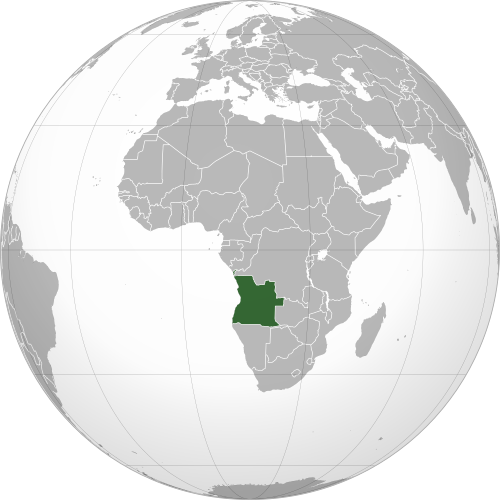
From the dance floors of Lisbon to the clubs of Los Angeles, passing through festivals in Berlin, Angolan music resonates everywhere — yet its history remains largely unknown in Europe. From the semba, root of Brazilian samba, to the kizomba, a planetary romantic dance, passing through the kuduro, its frenetic electronic sound from the slums of Luanda: three genres born on a single soil have shaped global music geography. How did Angolan music, forged by four centuries of colonization and a twenty-seven-year civil war, become a cultural power?
The roots: semba, ancestor of Brazilian samba
The musical history of Angola is rooted in the traditions of the Bantu peoples from central Angola — Kimbundu, Ovimbundu, Bakongo — whose historical kingdom stretched between present-day Angola and the Republic of Congo1. The semba takes its name from the Kimbundu word « nzemba » meaning « navel »: in traditional dance, body contact symbolizes genealogical union and belonging to a people2.
At the turn of the 20th century, semba modernized. Traditional instruments — the dikanza (bamboo scraper), the ngoma (wooden drum) and voice — were accompanied by acoustic guitar in coastal cities. In Luanda, urban groups crystallized this movement: in 1947, the N’Sanda brothers founded Ngola Ritmos, the most emblematic ensemble of the pre-independence era3. Their music married Kimbundu chants, guitar and brass, laying the foundations of modern semba. During the independence war (1961-1974), semba lyrics became calls for freedom4.
Did you know? The word « samba » in Brazil comes directly from Angolan semba. Slaves deported from Angola to Brazil in the 17th century carried rhythms, dance steps and musical vocabulary that, fused with other influences, gave rise to Rio samba. Angolan samba is therefore the ancestor of Brazilian samba5.
Music as a political weapon: Bonga, ambassador of semba
When the independence war broke out in 1961, after four hundred years of Portuguese domination, music shifted to the resistance camp. Singers became spokespeople, songs acts of defiance.
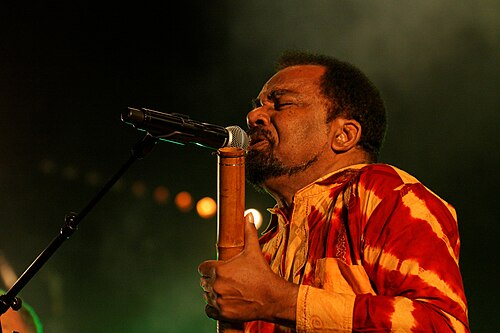
The most famous name from this era is Bonga — his real name José Adelino Barceló de Carvalho, born in 1942 in Kipiri6. Before music, Bonga was a high-level athlete: runner and high jumper, sent to Portugal by the colonial regime. It was in Lisbon that he became aware of the political dimension of his presence. He left athletics for music and joined the antifascist movement7.
In 1972, while war raged, Bonga recorded his first album in Rotterdam, Angola 72, with Cape Verdean musicians8. The texts denounced colonization and celebrated resistance. « Mona ki ngi xica » (« The child I leave behind me ») became the generational anthem of Angolan exile9. Colonial authorities sought to arrest him. Bonga fled through Germany and Belgium, living as a nomad for years10.
Bonga’s music inspired an entire generation. After independence proclaimed on November 11, 1975 by the MPLA and its first president, poet Agostinho Neto11, the best Angolan soloists were gathered in the state orchestra Semba Tropical. The goal was to « rebuild the national music industry »12.
Other artists embodied this period. David Zé sang the revolution. Urbano de Castro and Artur Nunes mobilized crowds. Several of them died young in post-independence political violence13.
The civil war era: kizomba, refuge and creativity
Between 1975 and 2002, Angola was torn apart by a devastating civil war. More than 500,000 people killed, more than two million refugees14. In this chaos, music transformed.
At the end of the 1970s and during the 1980s, Luanda musicians slowed down semba, plugged it into synthesizers and mixed it with Antillean zouk — from groups like Kassav’ and Cape Verdean coladeira15. The result was a slow, sensual sound sung in Portuguese and Kimbundu. This new style is called kizomba — a Kimbundu word meaning « party »16.
Kizomba was born in the late-night gatherings of apartments, discotheques and quintais in Luanda17. It was a sound of refuge against war, scarcity and uncertainty.
Paulo Flores, born in Luanda, is the architect of modern kizomba. He recorded his first album at sixteen in 198818. His song Cabelos de Moda (1990s) is a masterpiece of social irony: he mocks the trend of young women frequenting older, wealthy men, advising them to dye their hair white19. With humor, he transformed Angolan social realities into universal popular music.
Did you know? Paulo Flores is the UN Goodwill Ambassador for Angola. In 2008, he sang before 25,000 people at Luanda’s Coqueiros stadium, and his ticket price did not exceed 5 dollars so everyone could attend his concert20.
Another major figure: Waldemar Bastos, a soft-styled singer-songwriter who blends Angolan melodies, Portuguese influences and Brazilian tropicalism21.
Kuduro: the revolt of the musseques
If kizomba is the sound of patience, kuduro is that of revolt. Literally “hard butt” in Portuguese22, this genre was born in the musseques, the informal neighborhoods of Luanda, at the end of the 1980s and during the 1990s.
Kuduro is a fast electronic sound (130 to 145 beats per minute), punchy, blending programmed rhythms and references to hip-hop23. Unlike kizomba, which is danced in couples, kuduro is danced alone or in a circle—an affirmation of the individual body and a way for young people from the musseques to reclaim urban space24.
Kuduro dancers master every muscle contraction, transforming it into waves and acrobatic falls. Bodies marked by war recompose themselves in dance25.
The pioneers include Tony Amado, who appeared on Angolan television in 1996 with a choreography named Kuduro26, and Sebem, a radio host who popularized the genre. In the 2000s, groups like Os Lambas and Nagrelha brought kuduro to the top of the charts27.
From the 2010s onward, kuduro exploded beyond borders. Artists like Coréon Dú, son of the former president, launched the festival Os Kuduristas, which traveled to Berlin, Paris, Amsterdam, New York, and Washington28. Kuduro became a tool of cultural diplomacy: Angola is no longer just a war-torn country, but a source of international creativity.
The diaspora and the current scene: from kuduro to afro-house
Like all influential music scenes, Angolan music has experienced a major diasporic dynamic. Since the 1970s, significant Angolan immigration has settled in Portugal, particularly in Amadora, a suburb of Lisbon29.
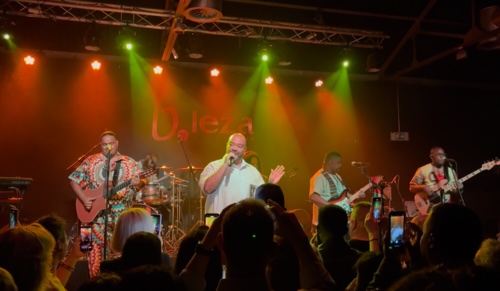
The most famous group born from this scene is Buraka Som Sistema, founded in Lisbon in 200230. Their sound fuses Angolan kuduro, European techno, and Caribbean zouk. Their single " Sound of Kuduro " (2007) became a global hit, followed by the album Black Diamond, signed with Sony BMG31. They performed at Glastonbury and Roskilde, becoming one of the most exported electronic groups from the continent after a break in 201632.
Today, the Angolan scene is expanding rapidly. The population of Angola counts 34 million inhabitants with a median age of 16.7 years33. Digital music consumption increased by 42% between 2022 and 202434. Several artists are shining Angola:
- Anselmo Ralph: flagship artist of modern kizomba, he fuses R&B and kizomba in ballads that tour the Lusophone world35.
- C4 Pedro (born in Luanda in 1983, raised in Belgium): the country’s most popular kizomba singer. His album King Ckwa (2015) was the best-selling album in Angola that year. In 2025, he signed with Universal Music Portugal36.
- Nair Nany: the most-listened-to Angolan artist in the world, with 1.67 million monthly listeners on Spotify in 202537.
- Pongo: Angolan-Portuguese afro-fusion artist, on tour in the United States and Europe38.
- Cabo Snoop and Buraka Som Systema continue to export kuduro to global stages39.
Producers like DJ Satélite and Gálio released the album Raízes in 2025, an Afro-house trilogy celebrating African ancestry and digital innovation40.
Towards a rhythmic future
Angola’s musical history is a lesson in resilience. Four centuries of colonization, thirty years of civil war, a dispersed diaspora: Angolan music has resisted, evolved, and conquered the world from within.
From semba, which inspired Brazilian samba, to kizomba dancing in Seoul as well as New York, to kuduro vibrating in Berlin raves41: Angolan music is not a survivor of the past. It is a voice that has never stopped speaking, even when no one dared to listen.
Sources and references
-
Wolfgang Bender, Sweet Mother: Modern African Music (University of Chicago Press, 1984/1991), French-speaking chapter 2; ↩︎
-
Kizombalove Academy, « The Semba Music », kizombalove.com ; ↩︎
-
Ronnie Graham, Stern’s Guide to Contemporary African Music, chap. 20 (Angola), Zwan Publications, 1988; ↩︎
-
Afropop Worldwide, « Hip Deep Angola: Music and Nation in Luanda », afropop.org ; ↩︎
-
Angola Travel Guide, « Angola Music & Artists to Know », angolatravelguide.com ; ↩︎
-
Euronews, « Bonga: The portrait of a revolutionary singer », December 8, 2020, euronews.com ; ↩︎
-
Lusafrica, « Bonga — Our Artists », lusafrica.com ; ↩︎
-
A4 Arts Archive, « Angola 72 », album note, a4arts.org ; ↩︎
-
Wikipedia, « Bonga (musician) », encyclopedia article; ↩︎
-
Kizombalove, « Semba History », educational site; ↩︎
-
Wikipedia (PT), « Agostinho Neto », free encyclopedia; ↩︎
-
Wikipedia, « Bonga (musician) »; ↩︎
-
Angola Travel Guide, op. cit.; ↩︎
-
Ronnie Graham, Stern’s Guide to Contemporary African Music, Vol. 2, Pluto Press, 1992, pp. 222-224; ↩︎
-
Mail & Guardian (South Africa), « Hums and buzzes: From semba to kuduro in Luanda », February 4, 2022, mg.co.za ; ↩︎
-
Wikipedia, « Music of Angola »; ↩︎
-
Marissa Moorman, Intonations: A Social History of Music and Nation in Luanda, Angola (Ohio University Press, 2008); ↩︎
-
Wikipedia, « Paulo Flores »; ↩︎
-
Mail & Guardian, op. cit.; ↩︎
-
Wikipedia, « Paulo Flores »; ↩︎
-
Angola Travel Guide, op. cit.; ↩︎
-
Marissa Moorman, Intonations, op. cit.; ↩︎
-
Angola Travel Guide, op. cit.; ↩︎
-
Mail & Guardian, op. cit.; ↩︎
-
Mail & Guardian, op. cit.; ↩︎
-
Marissa Moorman, op. cit.; ↩︎
-
Angola Travel Guide, op. cit.; ↩︎
-
Mail & Guardian, op. cit.; ↩︎
-
Marissa Moorman, Intonations, op. cit.; ↩︎
-
Wikipedia, « Buraka Som Systema »; ↩︎
-
Red Bull Music Academy, « Buraka Som Systema: Rave Against the Machine », redbull.com ; ↩︎
-
« Buraka Som Systema reunite for NOS Alive 2026 », NOS Alive; ↩︎
-
AfroFlow, « Angola’s Kuduro Evolution », July 30, 2025, afroflow.substack.com ; ↩︎
-
Afropop Worldwide, « Paulo Flores interview », afropop.org ; ↩︎
-
AllMusic, « C4 Pedro — Biography », allmusic.com ; ↩︎
-
AngoRussia, « C4 Pedro announced by Universal Music Portugal », July 16, 2025, angorussia.com ; ↩︎
-
Platina Line, « Nair Nany torna-se a artista angolana mais ouvida do planeta », August 17, 2025, platinaline.com ; ↩︎
-
Hive Music, « Pongo — Artist », hivemusic.com ; ↩︎
-
Wikipedia, « Buraka Som Systema »; ↩︎
-
AngoRussia, « Angolan Record Producers Release «Roots» in Portugal », August 2, 2025, angop.ao ; ↩︎
-
Britannica, « Angola: Cultural Life », britannica.com ; ↩︎