Biography
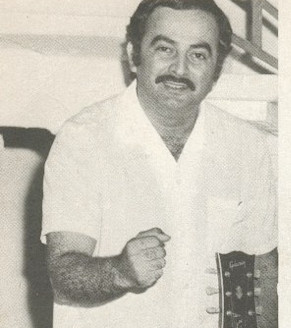
Henri Debs: The Builder of Antillean Music
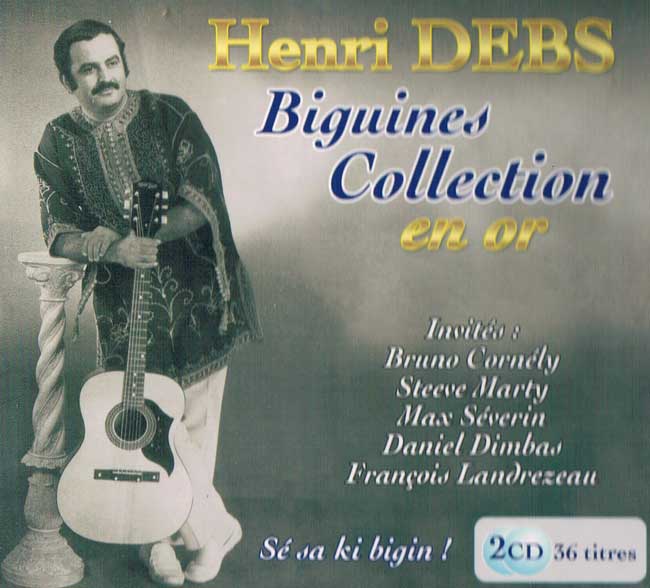
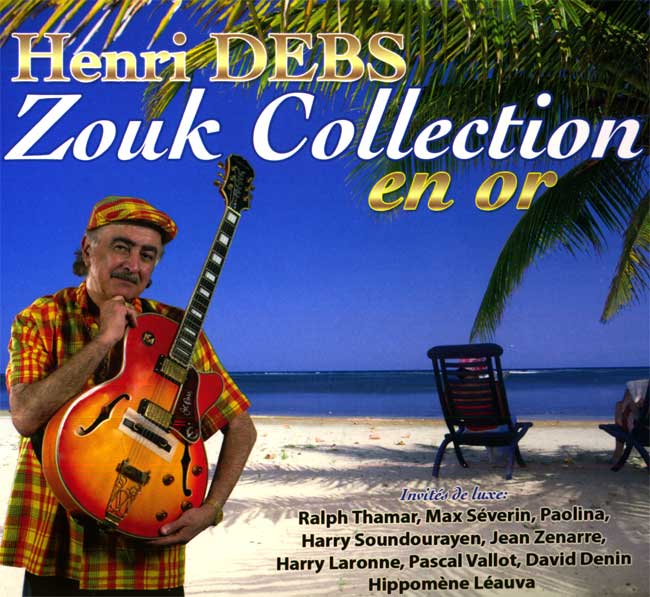
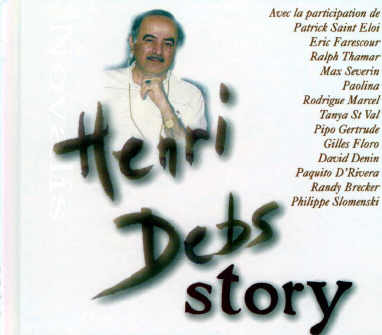
In 1959, in Pointe-à-Pitre, an independent producer pressed his first 45s and placed them for sale in his clothing store. A week later, all copies were sold. The story of a life that would make the whole Caribbean dance was sealed at that moment. Henri Farid Debs — Guadeloupean author, composer, performer and producer of Lebanese origin — recorded more than 6000 titles and became the greatest Antillean music producer in the world.
In Brief
| Full Name | Henri Farid Debs |
| Birth | 24 November 1932, Pointe-à-Pitre, Guadeloupe |
| Death | 19 August 2013 (aged 80), Les Abymes, Guadeloupe |
| Origins | Family of Lebanese origin settled in Guadeloupe at the end of the 19the century |
| Activities | Singer-songwriter, music producer |
| Genres | Biguine, cadence, zouk, bolero, tango |
| Instruments | Guitar, saxophone, pipeau, double bass |
| Labels | Debs International Records (1958) |
| Emblematic Works | “Horoscope en Moin”, Maldon (Zouk Machine), « Titan-la » |
| Awards | Alexandre Stellio Prize (1985), International Arc d’Europe Gold Prize (2010) |
Key Dates
| Year | Event |
|---|---|
| 1932 | Birth in Pointe-à-Pitre, third of the ten children of the Debs family |
| 1947 | Musical debut: plays Duke Ellington and Django Reinhardt before the age of 15 |
| 1958 | Opening of a clothing store, rue Lamartine in Pointe-à-Pitre |
| 1959 | First 45s “Pain, boudin et limonade”, pressed under Socodisc |
| 1963-1968 | Opening of stores in Guadeloupe and Fort-de-France; formation of the combo |
| 1969 | Creation of La Terreur studio at Club 97-1, Le Gosier |
| 1982 | Acquisition of the SSL 4000G console; first major pro studio in the Antilles |
| 1985 | Alexandre Stellio Prize; Zouk Machine releases Maldon which becomes a platinum record |
| 2010 | International Arc d’Europe Gold Prize category for “the quality and excellence of his work” |
| 2013 | Death; the Henri Debs & Fils label digitizes the entire catalogue |
From Store to Studio: Five Decades of Passion
Born in a post-war Guadeloupe, Henri Debs grew up with the saxophone and guitar. His father Farid, a merchant from Lebanon, ran a shop; mother Julia died in 1935. His stepmother Manouche raised Henri and his brother Jean as her own children. At thirteen, Debs left school to work — store boy then street vendor on the sidewalks of Pointe-à-Pitre. Music was not a hobby: it is what kept him standing.
His friend Roland Balthazar introduced him to the guitar and taught him harmonies. Before the age of 15, they were already playing beautiful music together: jazz, Ellington, Reinhardt — these references forged a style that disrupted local sounds. He joined El Calderon Jazz of Brunel Averne, then the Esperanza orchestra. He learned double bass and composed his first pieces — tangos, boleros and biguines that crossed borders with surprising ease.
In 1958, Debs opened a clothing store at 20 rue Lamartine. It was there that the producer’s career began by accident — or almost. Musicians frequented his shop to listen to records; very quickly, he arranged the back room. Equipped with a single microphone and a one-track tape recorder, he recorded his first titles under the Socodisc label. The first 45s sold out in a week, proving he had hit the mark — as reported by France Info Outre-mer.
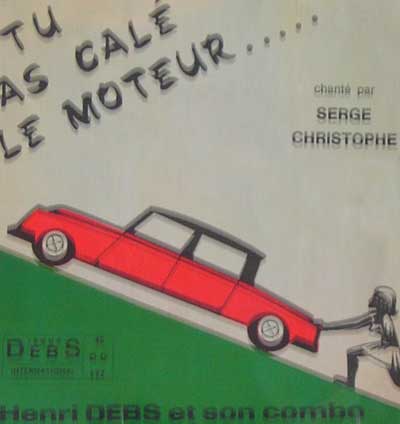
In 1960, Debs installed a music store at 43 rue Frébault. He opened a second one in Fort-de-France entrusted to his brother Georges. The turning point came with the creation, in 1968, of the group « Henri Debs et son combo ». The musician finally performed his own compositions on stages in Le Gosier and the Riviera. He had the Club 97-1, nightclub whose upper floor housed La Terreur — the professional studio that would give its name to a legend.
When zouk emerged around 1979, Henri Debs was ready. His network, his studios and his taste for production made him the natural producer of an entire generation. Juslisen reports that since the emergence of zouk, he became the largest Antillean music producer in the world. His label published Les Aiglons, Expérience 7, Tanya Saint-Val, Malavoi, Francky Vincent. In 1982, Debs invested in an SSL 4000G console and hired American engineers led by Bob Katz. His studio became the first to offer international standards in the Antilles: 16 tracks, then 32. “He was a good producer because he was a very, very good musician,” recalls Michel d’Alexis, founder of Les Aiglons. “His love for sound” added Max Séverin (Maxo), with whom Debs formed a duo: 25 albums and popular melopées such as “An ké bo’w la”. In 1985, Zouk Machine released Maldon, an album that secured a platinum record with more than 300,000 copies sold.
Major Works
| Work | Year | Why It Is Essential |
|---|---|---|
| “Horoscope en Moin” | 1975 | Standard of Guadeloupean cadence, broadcast under the title “El Horoscopo” in Colombia |
| “Titan-la” | 1967 | Debs’ first solo hit; signature piece of Latin biguine |
| Maldon (Zouk Machine) | 1985 | Platinum record, 300,000 copies; zouk conquers the metropolis |
| “An ké bo’w la” (Max & Henri) | 1988 | Debs-Séverin duo; popular melopée among the most sung in the Caribbean |
Heritage and influence
Upon his death in August 2013, Henri Debs left behind a repertoire that defines the musical identity of French Antilles. “A totemic personality,” according to Claudy Siar; “one of the craftsmen behind the radiance of Antillean music,” according to Victorin Lurel; “an unparalleled producer,” concludes Michel d’Alexis. Pan African Music Magazine recognizes him as the creator of biguine latine — this genre of sung salsa in Creole that made the “Gran Moun ball” of the 1970s vibrate.
After his passing, his son Riko resumed digital distribution under the label Henri Debs & Fils. “It is a fund that we must be able to find again in 50 years,” he explains, “it is a work of memory.” Compilations such as Mizik la ka dansé (Atangana Records, 2020) breathe new life into the studio archives and introduce new generations to a catalogue that Debs built with nothing but the passion of a man who, “from sunrise to sunset,” spoke only of “music” and “religion”.
Sources and references
- “Henri Debs”, Wikipedia, fr.wikipedia.org/wiki/Henri_Debs, accessed 18 November 2026.
- “Music: the saga of Guadeloupean producer Henri Debs”, Outre-mer La 1ère (France Info), la1ere.franceinfo.fr, published 23/10/2026.
- “Legendary Creole music producer Henri Debs passes on”, Dominican News Online, dominicanewsonline.com, accessed 18 November 2026.
- “Atangana Records exhumes sound treasures from mythical Guadeloupean studio”, Pan African Music Magazine, pan-african-music.com, published 18 November 2020.
- “Henri Debs – Horoscope en Moin”, Juslisen, juslisen.fr, accessed 18 November 2026.
- “Biographie Henri Debs”, debs-music-studio.com, debs-music-studio.com, accessed 18 November 2026.