Biography
Ibro Diabaté
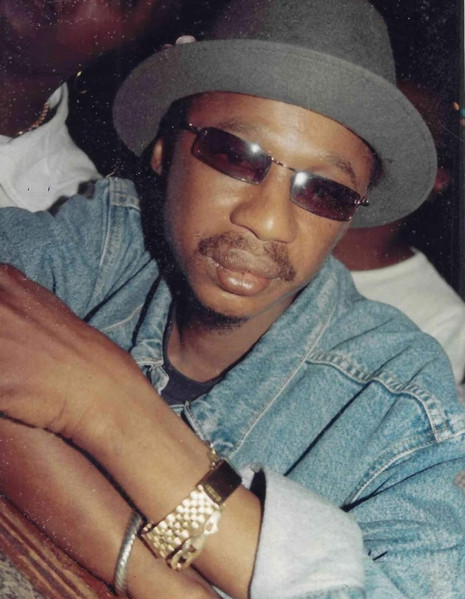
Born in 1966 in the coastal region of Boké, at the heart of a Diakhanké griot family, Bouraïma “Ibro” Diabaté built his career on a simple conviction: the Manding tradition is only valuable if it dialogues with the world. In just a few decades, he became one of Guinea’s most accomplished musicians of his generation — guitarist, singer, arranger — and a sonic bridge between Conakry and the diaspora.
In brief
| Full name | Bouraïma Diabaté, known as “Ibro” |
| Birth | 1966, Boké (Guinea) |
| Field | Fusion Manding music (guitar, vocals) |
| Signature works | Allah Nana, Eh ! Wotan, Esclave de l’argent |
| Awards | Elected best Guinean artist by boubah.com/Guineenews (2004) |
Key dates
| Year | Event |
|---|---|
| 1966 | Birth in Boké into a Diakhanké griot family |
| 1983 | Move to Conakry; meetings with figures of the local Manding scene (Maître Aliou Barry, Kélétigui Traoré) |
| 1988 | Trip to Mali; meeting with Boncana Maïga, his idol arranger |
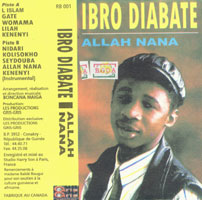
| 1992-1993 | Recording of Allah Nana at Studio Harry Son (Paris); album release |
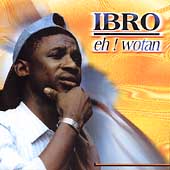
| 1995-1997 | Release of Affaires and Eh ! Wotan, the first album where he co-arranged |
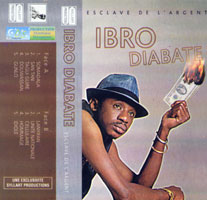
| 2003 | Release of Esclave de l’argent, an album committed to Guinean social life |
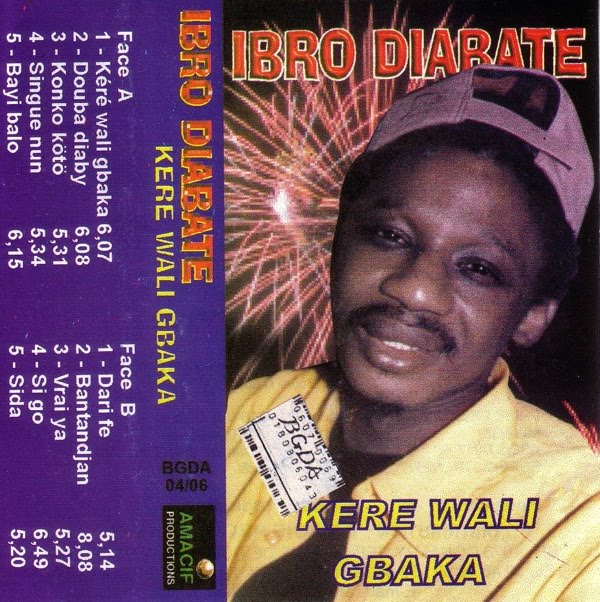
| 2006-2011 | Kéré Wali Gbaka (2006, including a track on AIDS) and M Maloloe (2011) |
| 2009 | Participation in the International Festival Nuits d’Afrique (Montreal) |
| 2023 | Concert at Zénith Paris for Nuit de la Guinée |
From griots to the studio: training through experience
Ibro Diabaté grew up surrounded by music. His mother and uncles, specialized griots, took him very young to weddings, baptisms, and neighborhood festivals. It was there that he learned the codes of Manding singing, vocal modulations, and dialogue with the audience. But academic results did not convince him, and at sixteen he preferred to invest in music rather than pursue a university path.
In 1983, he left Boké for Conakry. In the Guinean capital, he frequented café-concert scenes and rubbed shoulders with major figures: Maître Aliou Barry of the legendary Kaloum Star, Momo Wandel Soumah, Kélétigui Traoré. He refined his vocal technique and sense of orchestration. Curious, he crossed the country to reach Kankan and work with Djéli Balakala and Sidi Diabaté of the 22 Band. His thirst for learning led him to Mali in 1988: the meeting with Boncana Maïga, an internationally renowned arranger, left a lasting mark on him.
Consecration and commitment: between Conakry and the diaspora
The turning point came in 1992. Rougi Baldé, manager of Gris-Gris Productions, proposed he record his first album. Ibro insisted on calling Boncana Maïga, who would arrange the tracks and serve as a link between the Manding heritage and modern sounds. The album was recorded at Studio Harry Son in Paris; released in 1993 under the title Allah Nana, it made a sensation: the Manding-funk-soul-jazz fusion instantly captivated the Guinean audience and opened doors for sub-regional tours.
Ibro sings in three languages — Diakhanké, Soussou, and French — and his lyrics systematically address social issues: national unity, male-female relations, precariousness. His second album Affaires (1995, reissued digitally in 2011 under the name M Maloloe, after N’Malolo) and his third, Eh ! Wotan (1997), where he signed his first own co-arrangement, confirmed this ambition. Ibro dreamed of being a great arranger: he became one.
After Esclave de l’argent (2003, Syllart), an album questioning Guinean social life and calling for national unity, he was distinguished as best Guinean artist by the site boubah.com (renamed Guineenews). Followed by Kéré Wali Gbaka (2006, Amacif Productions), featuring a track on AIDS, and M Maloloe (2011). His orchestra blends kora, ngoni, djembé, balafon and modern instruments: guitar, bass, drums, keyboards.
More than thirty years after his debut, Ibro Diabaté remains active: concert at Zénith Paris (2023) for Nuit de la Guinée, participation in the Nuits d’Afrique Festival in Montreal (2009). He advocates for artists’ rights against piracy and trains the new generation of Guinean musicians. His daughter, Ibro Gnamet Diabaté, has been a singer since 2015.
Major works
| Work | Year | Why it is essential |
|---|---|---|
| Allah Nana | 1993 | First opus, arranged by Boncana Maïga: the Manding-funk-soul fusion that launched a career |
| Eh ! Wotan | 1997 | First album where Ibro co-arranged: proof of his ambition as a complete songwriter-composer |
| Esclave de l’argent | 2003 | Committed album on Guinean society, praised by boubah.com/Guineenews |
| Kéré Wali Gbaka | 2006 | Reaffirmation of the orchestral sound, with a track dedicated to AIDS |
Legacy and influence
Ibro Diabaté embodies the generation of Guinean musicians who dared to graft Manding traditions onto modern rhythms without betraying them. His approach — rich instrumentals, socially committed lyrics, careful arrangements — paved the way for younger artists who claim this hybridity. His fight for copyright rights against piracy and his role as a mentor to new Guinean voices ensure that his contribution goes beyond the simple discography.
Sources and references
- “Ibro Diabaté”, Afrisson, https://www.afrisson.com/ibro-diabate-14295, accessed November 16, 2026.
- “Biography of Ibro Diabaté”, Qui est Qui en Guinée, https://quiestquienguinee.com/en/list-of-personalities/p0812/ibro-diabate, accessed November 16, 2026.
- “Ibro Diabaté (Guinea)”, Frank Bessem’s Musiques d’Afrique, https://musiques-afrique.net/guinee/art-diabate-ibro.html, accessed November 16, 2026.
- « Ibro Diabaté », MusicInAfrica, https://musicinafrica.net/node/12124, accessed on 16 November 2026.
- « Ibro Diabaté », AllMusic, https://allmusic.com/artist/ibro-diabat%C3%A9-mn0001608695, accessed on 16 November 2026.
- « La Nuit de la Guinée au Zénith », Le Courrier de Conakry / Sitanews, https://www.sitanews.net/la-nuit-de-la-guinee-se-tient-le-1er-octobre-au-zenith-paris-la-villette, accessed on 16 November 2026.