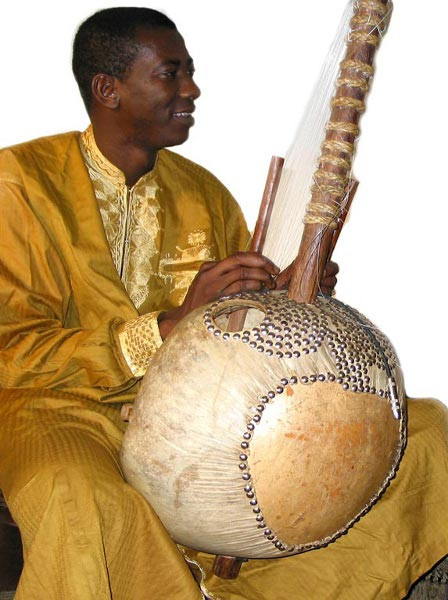
Biography
Jali Nyama Suso
Bakau, Gambia, circa 1925. In a family of korafolá (Manding kora players), a boy named Mohamadu Lamin Suso learned the first chords on the eight-string instrument at age eight. Fifty-five years later, he would die in 1991 of tuberculosis, after being one of the first kora players to introduce this instrument outside the African continent — teaching at an American university, contributing to Roots by Alex Haley, and touring European stages in the 1980s.
In Brief
| Full Name | Mohamadu Lamin Suso, known as Jali Nyama Suso |
| Birth | Circa 1925, Bakau, Gambia (then) |
| Death | 1991, Gambia |
| Genre | Manding music — kora, vocal |
| Notable Works | Gambia: The Art of the Kora, “Kinte’s Tune” (Roots) |
| Honors | Arrangements for the Gambian national anthem Fode Kabba |
Key Dates
| Year | Event |
|---|---|
| Circa 1933 | Beginning of kora training (around age 8) |
| Circa 1941 | Loss of a leg after a fall, at age 16 |
| 1956 | Joined Radio Gambia and hosted a weekly program for 20 years |
| 1965 | National reputation, protection from Prime Minister Jawara |
| 1971-1972 | Taught at the University of Washington, recorded first solo album for label OCORA |
| 1977 | Contributed to the music of Roots, Alex Haley’s miniseries, with “Kinte’s Tune” |
| 1980-1988 | Toured Sweden, France, Germany, and England; final recording in Berlin (July 1984) |
| 1986-1991 | Afflicted by tuberculosis, died in 1991 |
Origins and Transformations
Jali Nyama Suso was born circa 1925 in the village of Bakau, northwest of present-day Gambia. His birth name was Mohamadu Lamin Suso; he became known artistically as Jali Nyama, combining the title of jalin (griot, specialized musician) with that of Nyama Suso, his father. He descended from a lineage of korafolá tracing back to Madi Wlen Suso, the mythical inventor of the kora more than four centuries ago.
From age eight, young Mohamadu Lamin already knew how to handle the instrument. His first song learned was “Kelefaba,” a Manding traditional chant dedicated to the warrior Kelefa Saane of the Kaabu aristocracy. However, at sixteen, a serious fall cost him a leg. For a musician accustomed to traveling for weddings and ceremonies, this was a hard blow — but Nyama Suso turned back. Rather than give up, he turned to radio and joined the Radio Gambia team in 1956, where he hosted a weekly program that lasted nearly two decades.
Through his radio work, his popularity rose rapidly. By the mid-1960s, he was a celebrated national figure and benefited from the goodwill of President Dawda Jawara’s first wife, who supported his career. Far from conforming to the tradition of the itinerant griot, Nyama Suso became a studio musician and arranger — to the point that the president entrusted him with arranging the Gambian national anthem, Fode Kabba, a traditional melody he adapted for orchestra. A mispronounced word in the president’s presence would later lead to his disgrace, and Jawara would no longer be his protector.
International Revelation
The dawn of the 1970s marked a decisive turning point. Two American musicologists — Professor Roderic Knight, curator at the University of Washington and specialist in West African musics, as well as Samuel Charters — discovered Nyama Suso during a stay in Gambia. The invitation arrived: to teach in the United States. He accepted and joined Seattle in 1971, remaining at the University of Washington until 1973.
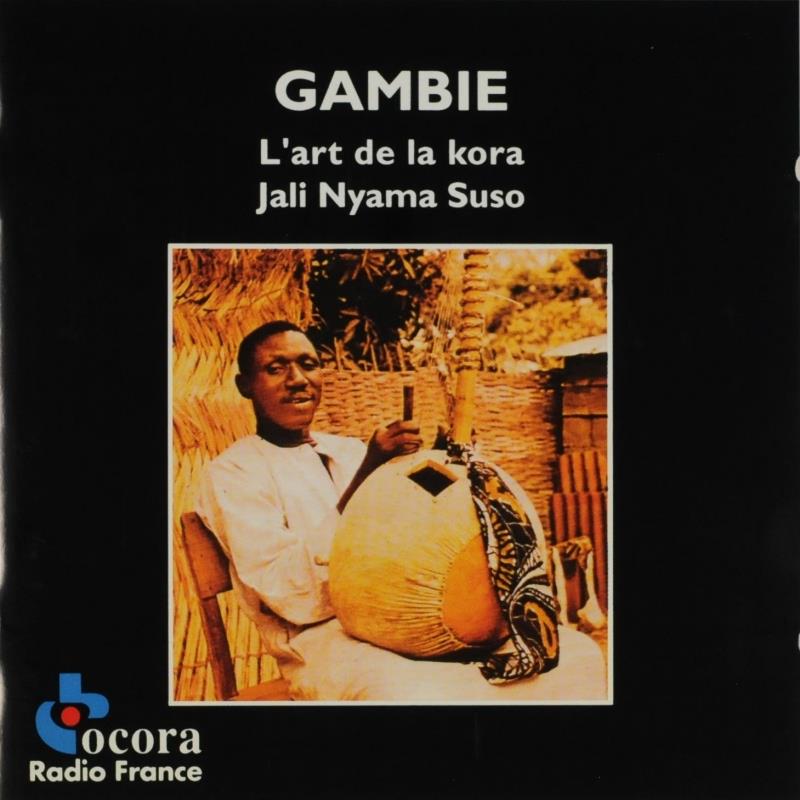
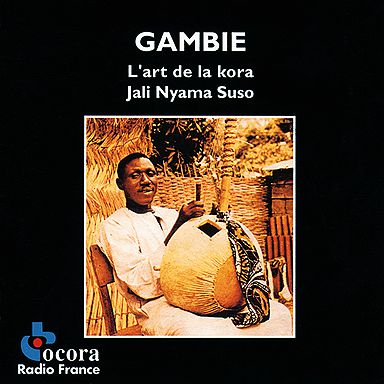
In Seattle, on funds from the French label OCORA (Radio France), he recorded ** Gambia: Mandinka kora par Jali Nyama Suso **. This album was a historic first: it was the first record in the world entirely devoted to solo kora, recorded by a house already renowned for the quality of its African musical archives. Nyama Suso played and sang alone, laying the foundations for the instrument’s repertoire for decades to come.
It was also during this period that he came into contact with Alex Haley, then in Gambia researching his novel Roots. Nyama Suso became the Gambian historical advisor and composed ** “Kinte’s Tune” **, a kora piece featured on the soundtrack of the miniseries that became a global phenomenon in 1977, awakening the interest of millions of African Americans for their African roots.
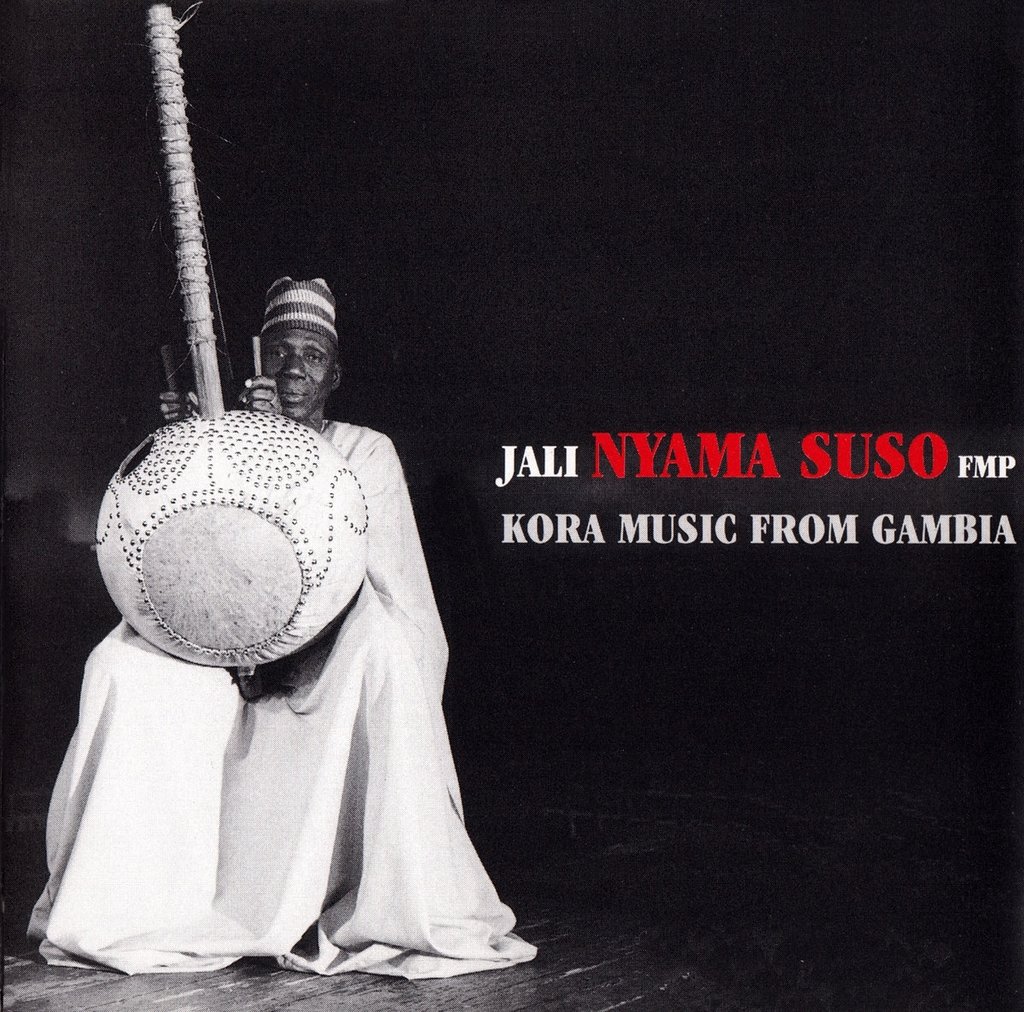
In the 1980s, Nyama Suso toured Europe: Sweden, France, Germany, England. His final recording dates to July 1984 in Berlin (on label FMP, at Free Music Production), where he arrived escorted by municipal police — a presidential arrival, as his student and friend Roderic Knight recalls. His playing is distinguished by a warm timbre, clear voice, and unique harmonic colors on the instrument.
End of Life and Legacy
In 1986, Nyama Suso contracted tuberculosis. For several years, he struggled against this illness before passing away in 1991 in Gambia. Despite his early death, his influence persists: he was one of the first kora players to teach this instrument outside Africa, forming a Western generation of students and enthusiasts.
After his death, several posthumous reissues appeared — Gambia: The Art of the Kora reissued by OCORA in 1996-1997, and Kora Master of Gambia published by FMP in 2007 — allowing the general public to rediscover the generosity of his playing. Current kora players, including Toumani Diabaté, cite Nyama Suso as one of the most accomplished masters of the twentieth century.
Major Works
| Work | Year | Why It’s Essential |
|---|---|---|
| Gambia: Mandinka kora by Jali Nyama Suso | 1972 | First album in the world entirely dedicated to solo kora, released on OCORA — a fundamental reference |
| “Kinte’s Tune” | 1977 | Kora piece added to the soundtrack of Roots, introducing the instrument to American audiences |
| 「Fode Kabba」 (arrangements) | Circa 1965 | Orchestral adaptation of the traditional melody for the Gambian national anthem |
| Kora Master of Gambia | 1988 (ed. 2007) | Last known recording, captured in Berlin; published posthumously by FMP in 2007 |
Legacy and Influence
Jali Nyama Suso paved the way for generations of korafolá who crossed the Atlantic. By becoming the first jalin to hold a university teaching position in the West, he desacralized an art once reserved for itinerant griots of West Africa. His radio work, participation in Roots, and records for OCORA created bridges between Manding tradition and Western audiences — a legacy that players like Toumani Diabaté or the Suso family continue to uphold.
Sources and References
- “Jali Nyama Suso”, Wikipedia in English, https://en.wikipedia.org/wiki/Jali_Nyama_Suso, accessed November 9, 2026.
- “Nyama Suso, the late Gambian kora player”, Oberlin University (Roderic Knight), https://www2.oberlin.edu/faculty/rknight/nyama.htm, accessed November 9, 2026.
- “Jali Nyama Suso”, AllMusic, https://www.allmusic.com/artist/jali-nyama-suso-mn0000782773, accessed November 9, 2026.
- “Jali Nyama Suso”, Discogs, https://discogs.com/artist/1189318-Jali-Nyama-Suso, accessed November 9, 2026.
- “Jali Nyama Suso”, AccessGambia, http://accessgambia.com/information/jali-nyama-suso.html, accessed November 9, 2026.
- “Liner notes CD FMP 121 — Jali Nyama Suso: Kora Music from the Gambia”, FMP / Free Music Production (Jost Gebers), http://fmp-label.de/fmplabel/catalog2 liner/fmpcd121_t.html, accessed November 9, 2026.
- “Living Legacies — Jali Nyama Suso”, Tunde Jegede, https://tundejegede.org/Living_Legacies/Jali_Nyama_Suso.html, accessed November 9, 2026.