Biography
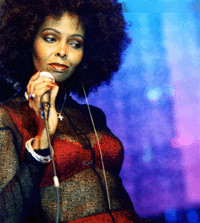
Joëlle Ursull
In May 1990, in Zagreb, a singer of Guadeloupean origin took the stage at the Eurovision Song Contest with an anthem bearing Antillean accents. Joëlle Ursull, former Miss Guadeloupe 1979, performed “White and Black Blues” — lyrics by Serge Gainsbourg, music by Georges Augier de Moussac — and finished ex æquo in second place. The single sold nearly 500,000 copies in France, propelling an artist born into the heart of the islands and trained on stage.
In Brief
| Birth Name | Joëlle Ursule |
| Stage Name | Joëlle Ursull |
| Birth | 9 November 1960, Pointe-à-Pitre, Guadeloupe |
| Genre | Zouk, biguine, reggae, blues |
| Notable Works | “White and Black Blues”, Miyel, Black French |
| Awards | Miss Guadeloupe 1979; 2nd at Eurovision 1990 |
Key Dates
| Year | Event |
|---|---|
| 1960 | Born in Pointe-à-Pitre, Guadeloupe |
| 1979 | Elected Miss Guadeloupe |
| 1986 | Backing vocalist for Expérience 7, integration into Zouk Machine |
| 1988 | Departure from Zouk Machine; solo album Miyel |
| 1990 | France at Eurovision; album Black French |
| 1993 | Release of Comme dans un film |
| 2000 | Compilation White & Black Blues |
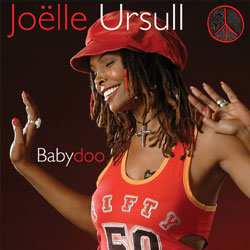
| 2003 | Single “Babydoo”; stage return |
Origins and Early Steps
Born Joëlle Ursule on 9 November 1960 in Pointe-à-Pitre, the future singer grew up in Guadeloupe, where music is part of daily life: zouk, biguine, quadrille, salsa. Her artistic career began late, through a beauty pageant. Elected Miss Morne-à-l’Eau, she became Miss Guadeloupe in 1979 at eighteen, then turned to modeling and a sitcom produced by RFO. This media exposure opened unexpected doors for her.
She met producers Yves Honoré and Guy Houllier during a Zouk Machine tour. The opportunity arose through a friendly connection: Lisette Obydol, nicknamed “Mama Zouk,” is a reference of the Antillean zouk scene, and her daughter Christiane Obydol, Joëlle’s close friend, was already in the forming trio. Joëlle impressed with her vocal performance and joined the group as early as 1986. Zouk Machine became a phenomenon in the Caribbean, then in Paris, where a series planned for a few weeks turned into months of recitals.
Revelation and Consecration
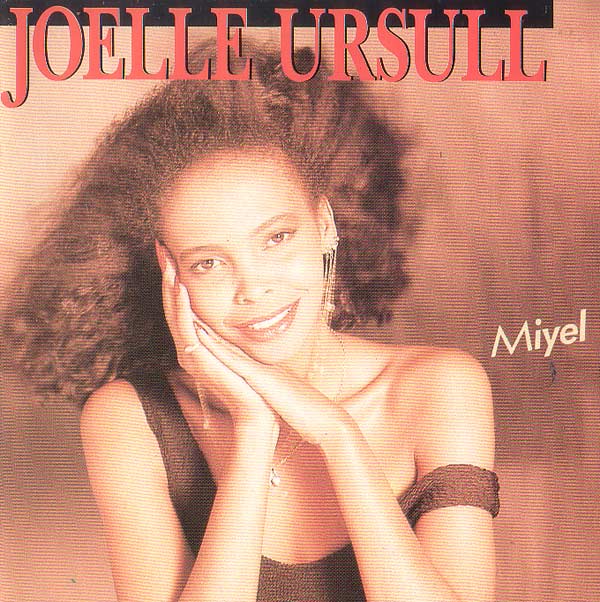
Joëlle Ursull left Zouk Machine in 1988 — replaced by Jane Fostin — and launched her solo career. Her first album, Miyel, was released that same year. Well received, it allowed her to perform in France as a solo artist. It was during one of these performances that Serge Gainsbourg spotted the singer. His velvety voice struck the legendary songwriter, who proposed a title for Eurovision to her.
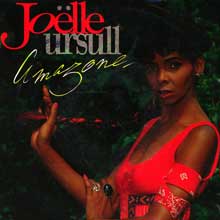
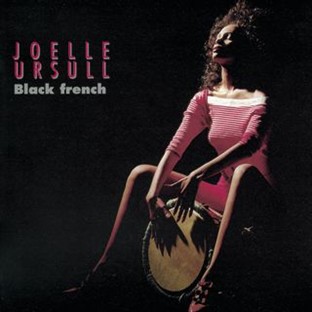
On 5 May 1990, in Zagreb, she defended “White and Black Blues,” a song of rare honesty for the contest, with marked Antillean style. She finished ex æquo in second place with 132 points. The single reached 2nd place on the French Top 50, stayed charted for 26 weeks and approached 500,000 sales. The album Black French was released immediately, blending zouk, blues and reggae. The singer signed several tracks and asserted her creative authority.
Between Withdrawal and Return
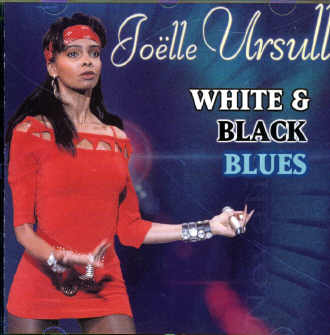
After the third album, Comme dans un film (1993), marked by personal compositions with blues accents, Joëlle Ursull took an unexpected step back from the stage. Becoming a mother to two daughters, she devoted herself to their education. The break lasted about ten years. She reappeared in 2003 with the single “Babydoo,” followed by concerts in the Antilles and Paris between 2004 and 2006. The compilation White & Black Blues (2000) allowed her admirers to rediscover her hit tracks. Collaborations with Djamatik (1999), Arsenik (2005) or Daddy Yod (2006) attest to her continued presence in the music scene, but no new studio album followed.
Major Works
| Work | Year | Why It’s Essential |
|---|---|---|
| Zouk Machine (with Zouk Machine) | 1986 | Trio that inaugurated zouk love in Guadeloupe |
| Miyel | 1988 | First solo album, transition to solo artist |
| “White and Black Blues” (single) | 1990 | Gainsbourg’s Eurovision title, Top 50 #2, 500,000 sales |
| Black French | 1990 | Confirmation after Eurovision, zouk, blues and reggae |
| Comme dans un film | 1993 | Last studio album, personal compositions |
Legacy and Influence
Joëlle Ursull embodies a precise moment in Antillean music: that where zouk, after Kassav’s breakthrough, became a pan-Caribbean phenomenon with interpreters from all French overseas territories. Her participation in Eurovision, with a text by Gainsbourg on darkness and color, remains a memorable passage of French song on the continental stage. Even withdrawn from the front of the stage, her voice and tracks continue to inspire Antillean artists who see in her proof that one can conquer the world starting from Pointe-à-Pitre.
Sources and References
-
“What happened to… singer Joëlle Ursull?”, Télé-Loisirs, https://www.programme-tv.net/news/people/43494-que-devient-la-chanteuse-joelle-ursull/, accessed 9 January 2026.
-
“Joëlle Ursull”, Wikipedia (English version), https://en.wikipedia.org/wiki/Jo%C3%ABlle_Ursull, accessed 12 January 2026.
-
“Joëlle Ursull”, Wikipedia (French version), https://fr.wikipedia.org/wiki/Jo%C3%ABlle_Ursull, accessed 12 January 2026.
-
“White and black blues: song / music, Georges Augier; lyrics, Serge Gainsbourg”, General Catalog of the BnF, https://catalogue.bnf.fr/changerPage.do?afficheRegroup=false&critereRecherche=&index=TOUS3&listeAffinages=&motRecherche=&nbResultParPage=50&numNotice=39581187&pageEnCours=1&pageRech=rsi&triResultParPage=4&trouveDansFiltre=NoticePUB&trouverDansActif=false&typeNotice=C, accessed 12 January 2026.
-
« Joëlle Ursull Biography », Chérie FM, https://www.cheriefm.fr/artistes/joelle-ursull/biographie, accessed 12 January 2026.
-
« White and Black Blues », Wikipedia, https://en.wikipedia.org/wiki/White_and_Black_Blues, accessed 12 January 2026.
-
« Zouk Machine », AllMusic, https://www.allmusic.com/artist/zouk-machine-mn0000813238, accessed 12 January 2026.