Biography
Kaya: the pioneer of seggae who fused séga and reggae
On February 21, 1999 at dawn, a body is discovered in the bottom of a police cell in Port-Louis. With a fractured skull, singer Joseph Réginald Topize, nicknamed Kaya, has just died in custody1. Within a few days, the entire island of Mauritius ignites. The man who gave Mauritius one of its most powerful voices — creator of seggae, this blend of traditional séga and Jamaican reggae — leaves a legacy that spans decades.
In brief
| Full name | Joseph Réginald Topize |
| Stage name | Kaya |
| Birth | August 10, 1960, Roche-Bois, Port-Louis, Mauritius |
| Death | February 21, 1999 (38 years), Port-Louis |
| Genre | Seggae — fusion of Mauritian séga and reggae |
| Instruments | Guitar, vocals |
| Labels | Cyper Produktion |
Key dates
| Year | Event |
|---|---|
| 1960 | Birth in Roche-Bois, a modest neighborhood of Port-Louis |
| 1976 | Called to play guitar; joins the group Wind and Fire |
| 1982 | Abandons pop-rock covers; founds the group Racinetatane |
| 1989 | Release of Seggae Nu La Mizik, the first foundational album |
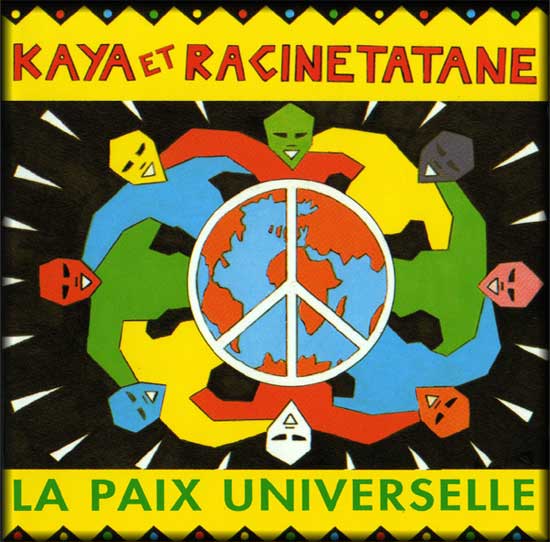
| 1991 | La Paix Universelle, an album with strong social impact |
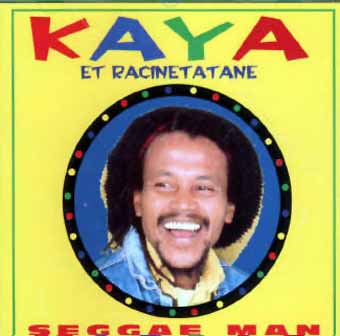
| 1993 | Seggae Man, the most celebrated album of his career |
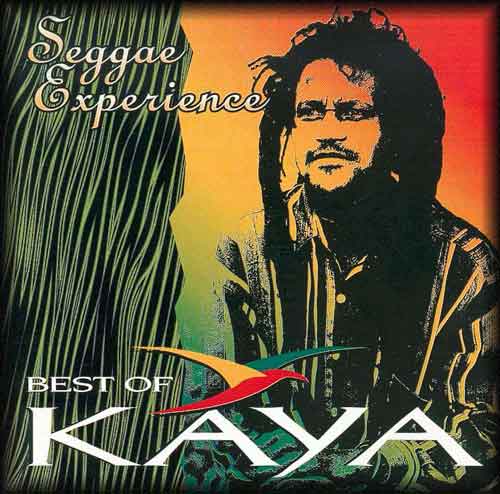
| 1998 | Seggae Experience, a best-of synthesizing ten years of creation |
| 1999 | Death in custody; riots across the island |
From séga to seggae, the revolution of an artist
Joseph Réginald Topize grew up in poverty, son of a fisherman unable to finance his schooling. He was entrusted to an uncle and started working from the age of eight2. A victim of racism as a Mauritian of African descent, he learned resilience very early. At sixteen, he gets a guitar and joins Wind and Fire, performing covers of Mike Brant and Deep Purple hits at local weddings.
The turning point comes with the discovery of reggae and Bob Marley. Topize adopts the name Kaya in homage to Marley’s eponymous album, released in 1978. He converts to Rastafari philosophy and leaves behind the pop-rock covers3. Spotted on guitar, he joins the group Lélou Menwar and records his first studio album, Letan Lenfer.
After a long tour, Kaya returns to Roche-Bois and founds Racinetatane with childhood friends — named after a Malagasy prince exiled to Mauritius. He identifies with Marley’s messages but begins to question: does this Jamaican culture fit the Mauritian reality?
In 1986, he has the intuition that will change everything: mixing reggae with séga, this traditional music born from slavery, rhythmically driven by the ravane, kayamb and triangle4. Seggae is born from this union. His first album, Seggae Nu La Mizik (1989), recorded within Racinetatane on the Cyper Produktion label of Percy Yip Tong, unveils this new sound to the world. Kaya performs as an opener for Danyèl Waro in Réunion, where he electrifies an audience that only knew maloya.
Struggle, arrest and legacy
Kaya sings in Mauritian Creole; his lyrics defend the rights of Creoles and denounce inequalities5. On February 16, 1999, during a free concert for the decriminalization of cannabis in Rose-Hill, Kaya sets off a firecracker on stage as a sign of emancipation. Two days later, the police intervene. His bail, arranged by his wife Véronique and friends, is delayed due to administrative errors. On February 21, he is found dead in his cell.
The counter-autopsy by the coroner from Réunion, Dr Ramstein, concludes with police brutality6. The news triggers riots across the entire island, “Black February.” Another seggae singer, Berger Agathe, dies during the unrest. In 2005, the Mauritian state pays Véronique Topize a compensation of 4.5 million rupees.
The singer Blakkayo summarizes: “Kaya was a pioneer. He gave us the desire to make seggae and reggae. When he left, we continued the fight.” The Roche-Bois stadium bears his symbolic name, and in 2025, Seggae Man receives its first officially authorized digital edition by the Estate7.
Major works
| Work | Year | Why it’s essential |
|---|---|---|
| Seggae Nu La Mizik | 1989 | The birth act of seggae |
| Seggae Man | 1993 | The most celebrated album, reissued in 2025 |
| La Paix Universelle | 1991 | Hymn to Creole dignity |
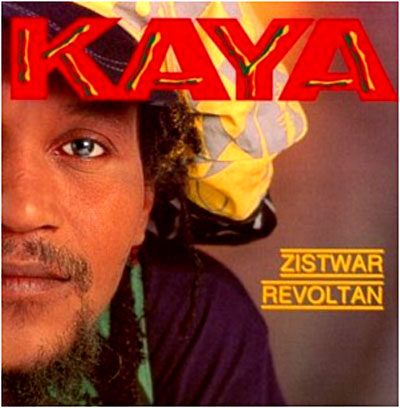
| Zistwar Revoltan | 1996 | Committed narratives on revolt |
| Seggae Experience | 1998 | Best-of of ten years of creation |
Legacy
Kaya was never rich. With his wife Véronique, a professional hairdresser, and their children Azaria and Lumia, he lived modestly. Percy Yip Tong, the one who discovered him and built Cyper Produktion, summarizes: without him, Kaya’s story would never have reached the world.
Today, seggae is a Mauritian institution. The festival Reggae donn sa attracts tens of thousands of people every summer, and the new generation — Blakkayo, OSB Crew, Tiras — all cite Kaya as the first spark8. Kaya died at 38, almost at Marley’s age; but the child of Roche-Bois continues to make souls vibrate.
Sources and references
-
The Guardian, Rioting in Mauritius set off by jail death of singer par Clifford Vellien, 25 February 1999, accessed on 29 October 2026 ↩︎
-
Le Mauricien, Kaya, l’âme sensible by Sabrina Quirin, accessed on 29 October 2026 ↩︎
-
kaya.mu, Official archives of the Kaya Estate, accessed on 29 October 2026 ↩︎
-
Music In Africa, Le seggae à Maurice by Jean-Clément Cangy, 2013, accessed on 29 October 2026 ↩︎
-
Le Mauricien, 21 February 1999: Kaya décédé, l’île Maurice a le souffle coupé, accessed on 29 October 2026 ↩︎
-
Wikipedia, Kaya (Mauritian musician), accessed on 29 October 2026 ↩︎
-
kaya.mu, Kaya Day · 10 August, accessed on 29 October 2026 ↩︎
-
Music In Africa, Le seggae à Maurice — quote by Blakkayo, 2013, accessed on 29 October 2026 ↩︎