Biography
Les Tambours du Burundi: the sacred rhythm that went around the world
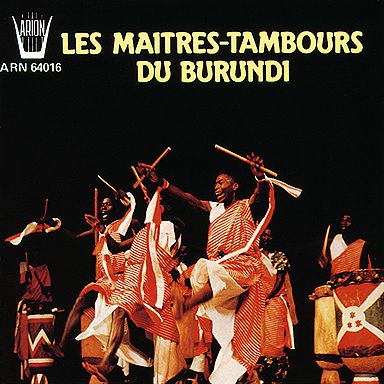
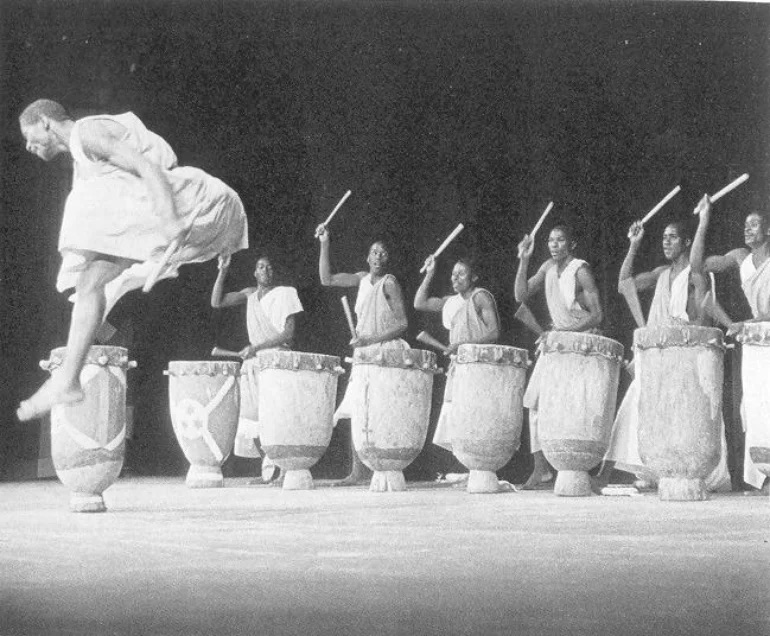
When the drummers take the stage, balancing instruments of vertiginous weight on their heads, the audience holds its breath. These men, dressed in animal skins, deploy a semi-circle and, one by one, each takes over the central drum, executing acrobatic jumps on rhythms that never cease. Since the 1960s, the Royal Drummers of Burundi have traveled around the world, carrying with them a millenary tradition born in the heart of the Burundian monarchy. Their sound, baptized Burundi beat, has been heard on Joni Mitchell’s records, in a Werner Herzog film, and inspired the creation of the WOMAD festival, the first event dedicated to world music.
In brief
| Official name | Les Tambours du Burundi (also the Maîtres-tambours du Burundi) |
| Origin | Burundi |
| Active period | 1960s – present |
| Domain | African traditional percussion, world music |
| Iconic works | Batimbo (1991), The Master Drummers of Burundi (1981) |
| Distinctions | Inscription on the UNESCO Intangible Cultural Heritage list (2014) |
Key dates
| Year | Event |
|---|---|
| 18th century | Foundation of the Burundian monarchy; sacred drums (ingoma) become symbols of royal power |
| 1960 | Start of the Royal Drummers’ international tours |
| 1966 | End of the Burundian monarchy; drums lose their ritual function but remain a cultural marker |
| 1975 | Participation in Joni Mitchell’s album The Hissing of Summer Lawns |
| 1981 | Release of The Master Drummers of Burundi on Disques Dreyfus |
| 1982 | Influence on Thomas Brooman, who founded the WOMAD festival |
| 1983 | Appearance on Echo & the Bunnymen’s single Zimbo |
| 1991 | Recording of the album Batimbo (Musiques Et Chants) |
| 1993-2005 | Period of civil war in Burundi; tours are suspended |
| 2014 | Recognition by UNESCO as Intangible Cultural Heritage of Humanity |
From sacred drums to the world stage
The ingoma — this Kirundi word that designates both the drum and the kingdom — is at the heart of Burundi’s history. Since the rise of the monarchy in the 16th century, the seven sacred drums embody the power of the mwami (the king). They are credited with divination powers: the sovereign listened to their beats to read the future. Each had a name, was treated as a living being and entrusted to aristocrats charged with watching over it. The most feared, the Nyabuhuro, was guarded by a man swearing to die rather than hand it over to the enemy.
After the fall of the monarchy and the arrival of German then Belgian colonizers, the drums lost their political role but retained their symbolic power. The lineage of the Batimbos, the families of drummers, perpetuated the transmission from father to son.
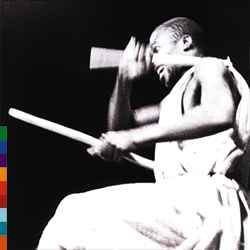
In the 1960s, shortly after independence, the Royal Drummers of Burundi began to perform abroad. Their show fascinates with its energy: the artists leap and whirl like acrobats, sometimes brandishing a shield or a spear. The leader, seated at the central drum called Inkiranya, sets the tempo; the others follow on the Amashako (continuous rhythm) and the Ibishikiso (counter-rhythms). Each performance is unique because the leader improvises constantly.
Between tradition and international recognition
The civil war that tore Burundi apart from 1993 to 2005 suspended the tours. The return of the Royal Drummers to the international stage symbolized a fragile peace but also hope. Burundi beat also marked Western music: besides Joni Mitchell in 1975, their sound influenced Adam and the Ants and Bow Wow Wow at the beginning of the 1980s. They can also be heard in the soundtrack of Fitzcarraldo, Werner Herzog’s film.
In 2014, the ritual dance at the royal drum was inscribed on the Representative List of the Intangible Cultural Heritage of Humanity by UNESCO. This recognition consecrates a tradition whose very survival seemed threatened by war, globalization and the controversial 2017 regulation that restricted the commercial exploitation of drums outside Burundi.
Major works
| Work | Year | Why it is essential |
|---|---|---|
| The Master Drummers of Burundi | 1981 | First recording documenting the traditional repertoire in its most authentic form |
| Batimbo (Musiques Et Chants) | 1991 | Major discographic comeback after the end of the 1980s, capturing the group’s vitality |
| The Drummers of Burundi (Real World) | 1993 | Recorded at Peter Gabriel’s Real World studio, marks the crossing between the group and the world stage |
Legacy
The Royal Drummers of Burundi contributed to inventing, or at least popularizing, the genre of world music. Their meeting with Thomas Brooman, who discovered them at the Rennes festival in 1981, inspired the creation of WOMAD in 1982 — a festival that became the spearhead for African and non-Western world music. Their legacy goes beyond music: in 2014, their recognition by UNESCO anchored the sacred drums as an emblem of Burundian national identity, a symbol of reconciliation after years of civil war. The ingoma continues to resonate, today as yesterday, as the beating heart of a country.
Sources and references
- « Royal Drummers of Burundi », Wikipédia, https://en.wikipedia.org/wiki/Royal_Drummers_of_Burundi, accessed October 24, 2026.
- « Tambour du Burundi », Wikipédia, https://fr.wikipedia.org/wiki/Tambour_du_Burundi, accessed October 24, 2026.
- Joel Dwek, « BURUNDI: Les Maitres-Tambours du Burundi », 200 World Albums, https://www.200worldalbums.com/post/burundi-les-maitres-tambours-du-burundi-les-maitres-tambours-du-burundi, accessed October 24, 2026.
- « Les Tambours du Burundi », Fédération des Jeunesses Musicales Wallonie-Bruxelles, https://jeunessesmusicales.be/blog/artistes/tambours-du-burundi-belgique-burundi/, consulté le 24 octobre 2026.
- « Les Tambours du Burundi », IDLM, https://www.idlm.be/fr/profils/6263-les-tambours-du-burundi, consulté le 24 octobre 2026.
- « Ritual dance of the royal drum », Wikipedia, https://en.wikipedia.org/wiki/Ritual_dance_of_the_royal_drum, consulté le 24 octobre 2026.
- « Maîtres tambours du Burundi », Philharmonie de Paris, https://pad.philharmoniedeparis.fr/player.aspx?id=0825278, consulté le 24 octobre 2026.
- « Live at WOMAD 1982 », Wikipedia, https://en.wikipedia.org/wiki/Live_at_WOMAD_1982, consulté le 24 octobre 2026.