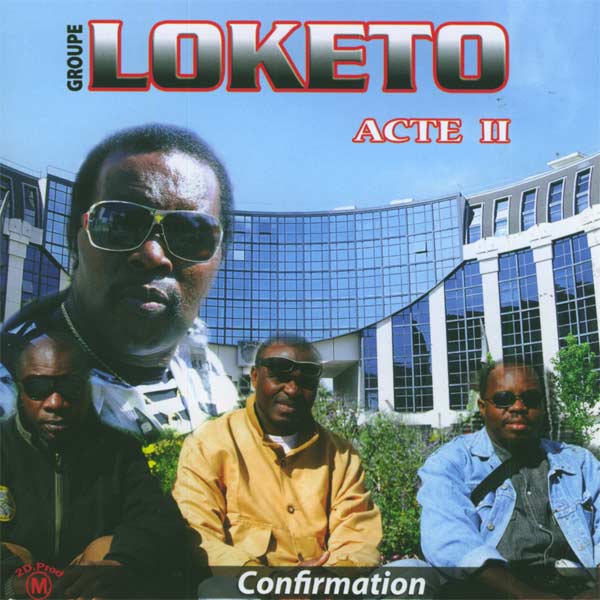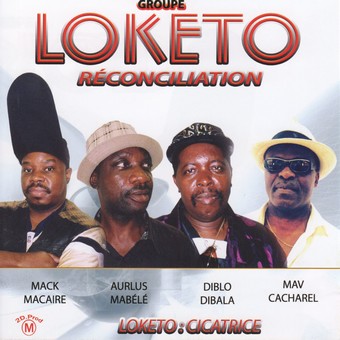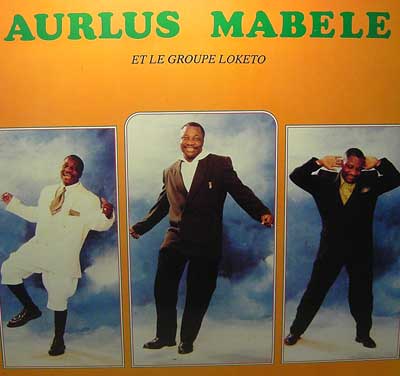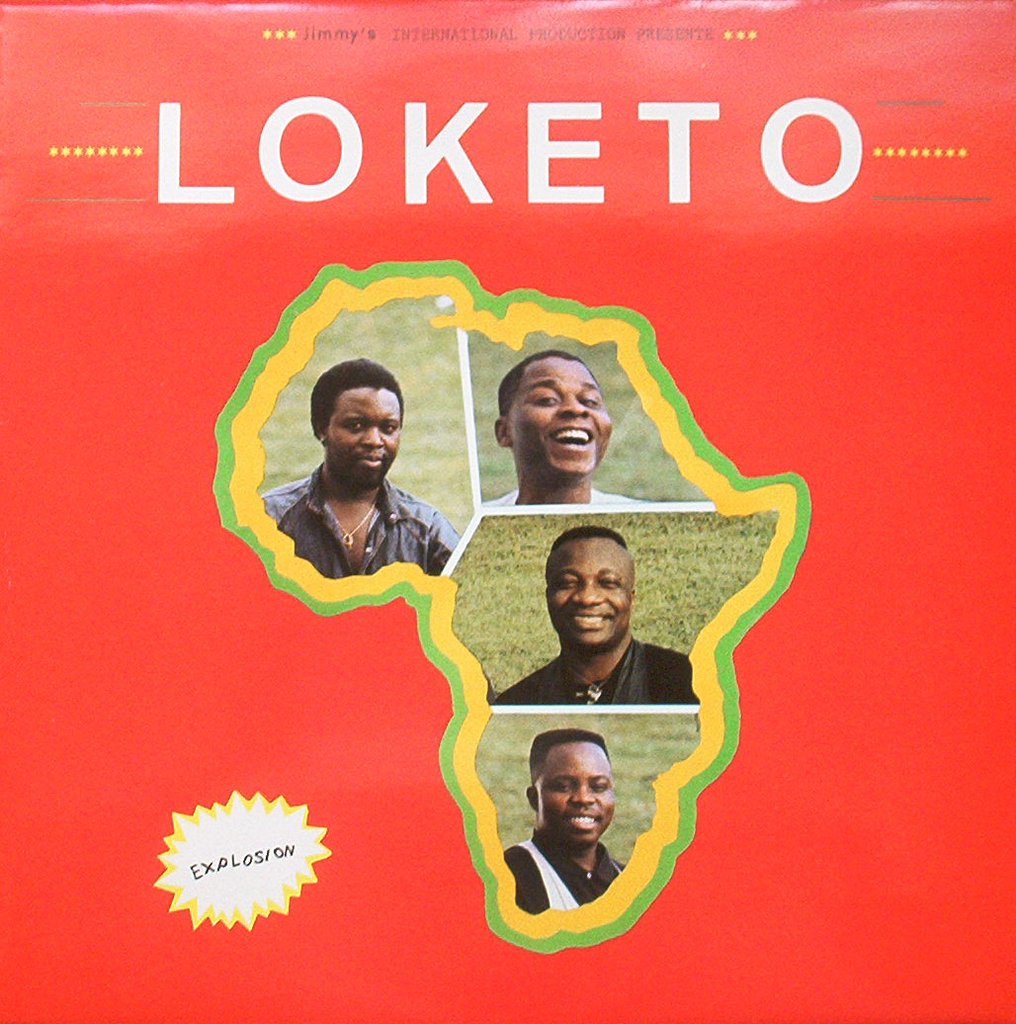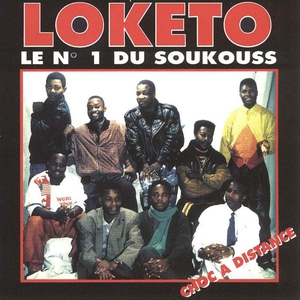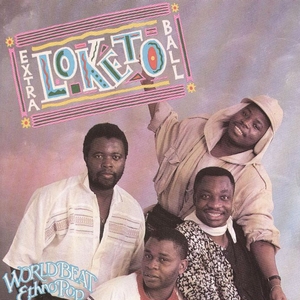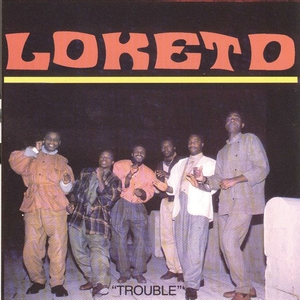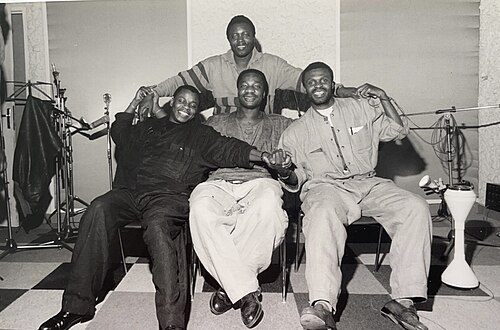
Biography
Loketo: when Congolese rumba turned Paris into a dance floor
On the evening of 1989 at the SOB’s club in New York, the first notes of Loketo echoed through the hall and the crowd surged toward the dance floor as if by magic. Behind these chords, notes flew: a Zairian guitarist nicknamed “Machine Gun” for the velocity of his fingers on the strings, and a Brazzaville singer who danced as if he had no bones1.
In brief
| Name | Loketo (“hips” in Lingala) |
| Country of origin | Republic of the Congo / France (Paris) |
| Genres | Soukous — the accelerated version of Congolese rumba centered on the sebene, the instrumental guitar section that propels the rhythm — and ndombolo |
| Active period | 1986–1997, 2007–2009 |
| Founding members | Aurlus Mabélé (vocals), Diblo Dibala (guitar), Mav Cacharel (vocals) |
| Labels | Jimmy’s International Production, Shanachie |
Key dates
| Year | Event |
|---|---|
| 1954 | Birth of Diblo Dibala in Kisangani |
| 1974 | Aurlus Mabélé co-founds Les Ndimbola Lokolé in Brazzaville |
| 1981 | Diblo Dibala moves to Paris; records Iyole with Kanda Bongo Man |
| 1986 | Founding of Loketo in Paris by Mabélé, Diblo, and Mav Cacharel |
| 1988 | First album Trouble; appearance in Black Mic-Mac 2 |
| 1989 | Album Explosion; tour at SOB’s, New York; departure of Mav Cacharel |
| 1990 | Diblo Dibala leaves Loketo and founds Matchatcha |
| 1991 | Album Extra Ball; final hit title Embargo |
| 1997 | Mabélé signs with JPS Production |
| 2004 | Last Loketo album, Ça va se savoir ? |
| 2007 | Group relaunched with Réconciliation |
| 2009 | Loketo ends its activities |
| 2020 | Death of Aurlus Mabélé on March 19 in Eaubonne |
Two paths, one capital
Diblo Dibala, originally from Kisangani, had fled Kinshasa in the 1970s before settling in Paris in 1981, where he recorded Iyole with Kanda Bongo Man2. This collaboration made him a highly sought-after session guitarist.
Aurlus Mabélé, for his part, had co-founded Les Ndimbola Lokolé in Brazzaville in 1974 before settling in Paris. His album Africa Mousso won the Maracas d’Or in 1986 and inspired him to form an expanded group3.
The TGV soukous: speed, dance, and conquest
Loketo formed as an informal supergroup around Mabélé, Diblo Dibala, Mav Cacharel, Blondin Wabacha, and Mack Macaire. The group’s name, “hips” in Lingala, came from a repeated shout on Africa Mousso and summed up the very essence of the music4.
The sound rested on a radical choice: where traditional Congolese rumba opened with a slow introduction to build tension, Loketo plunged straight into the sebene, this accelerated instrumental section where guitars interlaced. The electronic drum kit, synthesizers, and stripped-down lyrics created an immediate groove. Parisian fans dubbed this acceleration “TGV soukous”5.
Loketo toured non-stop at New Morning in Paris, the SOB’s in New York, and clubs in Martinique and Guadeloupe6.
Dissolution and end
In 1990, tensions led Diblo Dibala to leave Loketo to found Matchatcha7. Mabélé continued the group with new guitarists until his retirement in 2009.
Major works
| Work | Year | Why it’s essential |
|---|---|---|
| Trouble | 1988 | First album, foundations of the TGV sound with raw energy |
| Explosion | 1989 | Propelled the group onto the international stage |
| Extra Ball | 1991 | Last Mabélé-Diblo collaboration, peak of complicity |
| Embargo | 1991 | Mabélé’s album with Kimoko; hit titles “Betty”, “Asta Di” |
Legacy
Loketo played a decisive role in the modernization of soukous. By accelerating tempos, the group popularized kwassa kwassa and transformed soukous into planetary club music8.
Loketo’s music remains a cultural bridge: between Congo and the Antilles, between Paris and Africa, between the dance floors of the 1980s and contemporary playlists6.
Sources and references
-
Afropop Worldwide, Loketo Live in NYC, accessed October 29, 2026 ↩︎
-
Gary Stewart, Jabulani Radio, Diblo Dibala Biography, 2011, accessed October 29, 2026 ↩︎
-
Gary Stewart, Jabulani Radio, Diblo Dibala Biography, 2011, accessed October 29, 2026 ↩︎
-
Wikipedia, Loketo, accessed October 29, 2026 ↩︎
-
Red Bull Music Academy, Roots of Soukous, 2018, accessed October 29, 2026 ↩︎
-
AllMusic, Loketo Biography, accessed October 29, 2026 ↩︎
-
Wikipedia, Loketo, accessed October 29, 2026 ↩︎