Musical History of the Congo
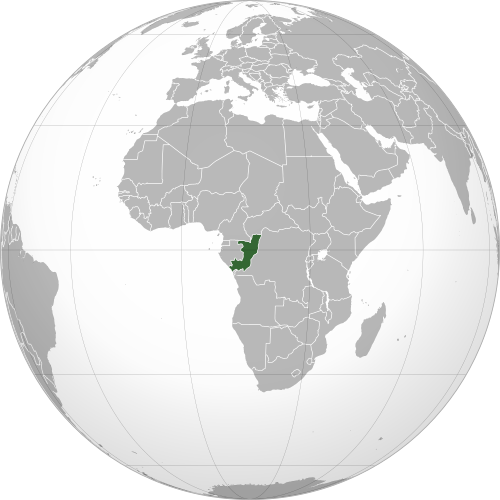
On December 15, 2021, UNESCO inscribed Congolese rumba on the Representative List of the Intangible Cultural Heritage of Humanity. This recognition, jointly promoted by the Republic of Congo and the Democratic Republic of the Congo, crowns more than eighty years of musical creation born on the banks of the Congo River — a music that crossed the Atlantic, conquered clubs around the world, and shaped the sound of all Africa.
The two Congos, Kinshasa and Brazzaville, separated by barely six kilometers of river, have continuously nourished each other since the 1930s. Congolese rumba, born from the meeting between rhythms of the Kongo kingdom and the Cuban sound brought by cargo ships to the ports, transformed into one of the most exported genres on the African continent. From mawete to soukous, from ndombolo to Congolese rap, this music tells the modern history of the Congo: urban migrations, independences, dictatorships, and renaissances.
From mawete to bars-dancing: the roots of Brazzaville
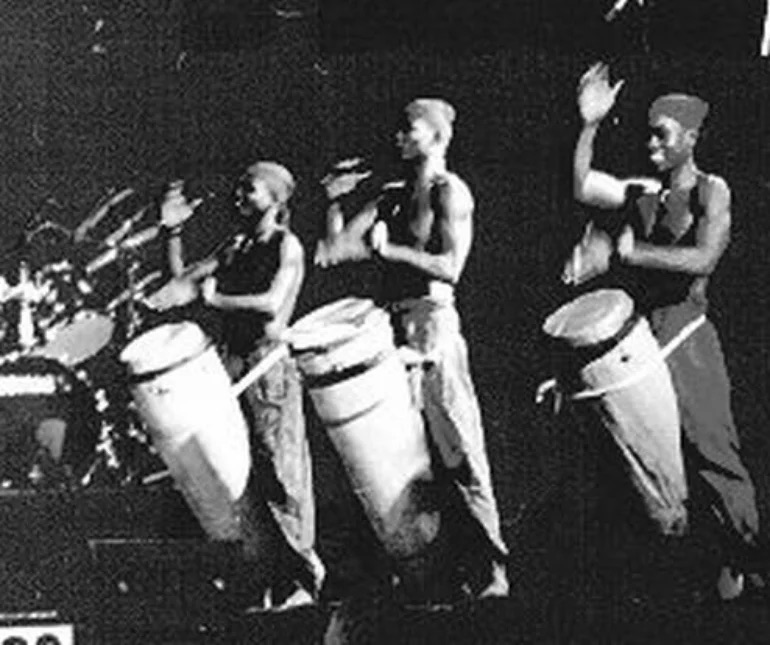
Even before the arrival of Cuban rumba at the end of the 1930s, music had already accompanied life in the regions along the Congo River. Mawete, a dance and rhythm carried by riverine communities, constituted one of the most widespread musical expressions in what is today called the Republic of Congo. These dances, played on ngoma (hollowed wooden drums), likembe (thumb piano), and glass bottles, rhythmized celebrations and community gatherings 1.
With colonization and the urban expansion of Brazzaville, these traditions transformed. The maringa — a couple dance of Kongo origin from the former Loango kingdom — took a central place in bar-dancing culture, this social phenomenon that saw the emergence of music venues both in Brazzaville and Léopoldville (current Kinshasa) 2. In these spaces, improvised formations mixed African rhythms, Martinican biguine (brought by soldiers from the Antilles stationed in Congo), and early recordings of Cuban rumba broadcast by radio 3.
The 1940–1950 period saw the emergence of the first professional formations. In Brazzaville, Paul Kamba founded Victoria Brazza in the 1940s, one of the first Congolese rumba groups 4. Simultaneously, major Greek labels from Kinshasa — Ngoma (1948), Opika (1950), Loningisa, and Esengo (1957) — began to capture the creative energy of the entire region 5. 78 rpm records circulated between both banks of the river, blurring borders and forging a common sound.
Did you know? Congolese rumba is now listed in UNESCO heritage since 2021, alongside Jamaican reggae and Cuban rumba. The inscription was jointly promoted by Kinshasa and Brazzaville, recognizing that this music belongs to both Congos 6.
The Golden Age: rivalry of the giants and creative exodus
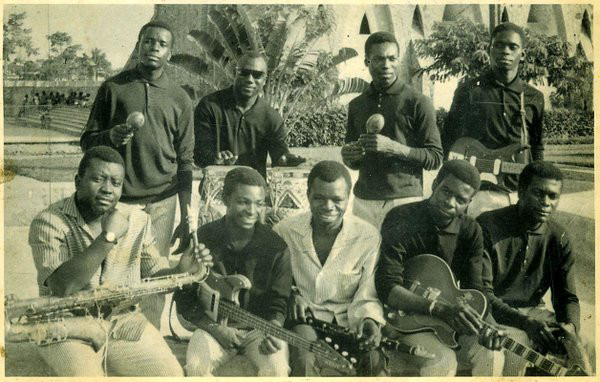
The 1950s marked a decisive turning point. In Kinshasa, Le Grand Kallé (Joseph Kabasélé) founded African Jazz in 1953, while Franco (Luambo Makiadi) created OK Jazz in 1956 7. These two orchestras became the pillars of a musical scene that extended from the Congo banks to all the continent. Congolese rumba enriched itself with modern instruments: double bass, brass, electric keyboards. Each orchestra developed its own style — Grand Kallé privileged complex arrangements, while Franco refined an inimitable guitar line.
In Brazzaville, the scene was not left behind. Les Bantous de la Capitale — whose name refers to all peoples of the Congo — recorded at the end of the 1950s, carrying Congolese music beyond the river. Young Brazzaville musicians formed their own groups, and a distinct style emerged, tinted with local influences: Bantu languages, traditional rhythms, and this geographical proximity to the Kinshasa scene that served as a permanent laboratory 5.
Competition between the two cities became an artistic engine. Tabu Ley Rochereau, trained in Kinshasa within Grand Kallé’s orchestra, returned to Brazzaville where he refined his career and composed classics. Franco and Tabu Ley, great rivals of the 1960s–1970s, together shaped the sound of Africa 8. “To beat him, I used his own weapons”: Tabu Ley’s words on the rivalry with Franco illustrate the creative health of this period.
The 1970s also saw the emergence of soukous — “shake” in French, this accelerated rumba style that became the dominant dance sound of Congo. The music migrated from Brazzaville to Paris, where a growing Congolese diaspora installed studios and dissemination venues 9.
Rumba exporters: Aurlus Mabélé and the Parisian adventure
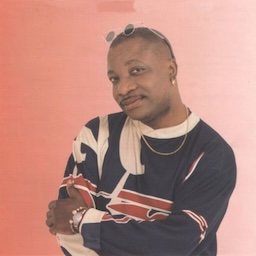
Among all the names that carried Congolese music beyond the continent’s borders, one from Brazzaville stands out: Aurlus Mabélé, nicknamed “the king of soukous”. Born in 1953 in the Poto-Poto district, he began his career in 1974 with Les Ndimbola Lokole — a group that became a cornerstone of the Congolese scene. His extravagant stage presence, blending exuberant choreography and contagious charisma, made him an extraordinary artist 10.
Settled in Paris in 1981, Mabélé became a central figure of the Congolese scene in Europe. In 1986, he founded the group Loketo with guitarist Diblo Dibala, singer Mav Cacharel and other major musicians. The name means “hips” in lingala: the group made all of Europe dance. With Loketo, Mabélé modernized soukous by removing the traditional slow introduction to plunge directly into the sebene — this accelerated instrumental section where guitars interweave — and popularized dances like kwassa kwassa and soundama 10.
Mabélé sold more than ten million albums worldwide and contributed to anchoring sape — this sartorial tradition of Congolese dandys — as a major cultural element associated with Congolese music. He died in Paris in 2020, taken by the coronavirus, leaving a legacy that transcends borders 11.
The Congolese diaspora in France is not limited to Mabélé. Other artists from Brazzaville or the left bank of the river settled there and built international careers — Tshala Muana, born in Lubumbashi but raised within the Congolese orbit, or Mbilia Bel, trained within Kinshasa orchestres before establishing herself as one of the greatest female voices of rumba 12.
The contemporary scene: from soukous to Congolese rap
Today, Brazzaville’s Congolese music bears the marks of its history while embracing the most contemporary forms. Rumba remains the backbone, but young artists fuse soukous, afrobeat, hip-hop and dance to create their own sound.
The Congolese rap scene is experiencing remarkable growth. Jessy B, born in 2002 in Brazzaville and daughter of rapper DJ King Biggerman, has established herself as one of the major figures of Congolese female rap. Winner of the RFI Prix Découvertes 2023, she surpassed two million streams on social media with tracks like “Give Me Freedom” and “Oklm”. Her powerful flow attracted the attention of French rappers like Booba 13.
Nayan’k, born in 1999 in Pointe-Noire, alternates social commitments with an afro-urban aesthetic. She sang in ten languages during the #Tosala collective (“Let’s Act!” in lingala), supported by eighteen female artists against violence towards women 13. While artists like Tidiane Mario, born in 1994 in Brazzaville, fuse Congolese rumba and afro-pop, reaching one million YouTube views with “Give Me Freedom” 14.
Beyond rap, rumba continues to produce generations of musicians. The group Extra Musica, founded in Ouenzé (Brazzaville) in 1993, perpetuates the tradition with tracks like “État Major” that blend rhythmic guitars and collective vocal calls. The Pan-African Music Festival (FESPAM), returning to Brazzaville in 2023, stages the diversity of the local scene with Congolese rumba as its central theme, from original mawete to the most contemporary forms 15.
Modern traditional musics are also an integral part of the landscape: groups like BBGM and Bane B’Siane in Pointe-Noire, Kingoli Authentique or N’Kota in Brazzaville, take up ancestral rhythms adapting them to modern instruments 16.
A sound that never stops
The musical history of Congo-Brazzaville is a story of resilience and blending. From the bar-dancing of the 1940s to the digital studios of the diaspora, Congolese music has crossed economic crises, dictatorships and exiles to reinvent itself with each generation. The recognition of Congolese rumba by UNESCO in 2021 consecrates this unique ability: to turn a separating river into a musical bridge, a colonial history into a creative crucible, and an entire continent into a dance community.
With an heir like Jessy B, a continuator like Extra Musica and thousands of young musicians climbing into the bars of Poto-Poto and Bacongo every day, Congo is not done making the world dance.
Sources and references
-
Music In Africa, « Traditional music in Congo-Brazzaville », musicinafrica.net, accessed 25 October 2024. ↩︎
-
« Music of the Democratic Republic of the Congo », Wikipédia, kiwix.enszfarms.org, accessed 25 October 2024. ↩︎
-
« Rumba congolaise », Wikipédia en français, fr.wikipedia.org, accessed 25 October 2024. ↩︎
-
Al Jazeera, « ‘The soul of the Congolese’: Rumba added to UNESCO heritage list », 15 December 2021, aljazeera.com. ↩︎
-
Wolfgang Bender, Sweet Mother: Modern African Music, University of Chicago Press, 1984, p. 64-65 (chap. 2 « Francophone Connections »). ↩︎ ↩︎
-
UNESCO, « Congolese rumba inscribed on the Representative List of the Intangible Cultural Heritage of Humanity », 15 December 2021, ich.unesco.org. ↩︎
-
Ronnie Graham, Stern’s Guide to Contemporary African Music, Zwan Publications, 1988, chap. 18 « Congo-Zaire ». ↩︎
-
Bender, op. cit., p. 76-79. ↩︎
-
« Rumba congolaise », fr.wikipedia.org, op. cit. ↩︎
-
Wikipédia, « Aurlus Mabélé », en.wikipedia.org, accessed 25 October 2024. ↩︎ ↩︎
-
New York Times, « Aurlus Mabele, Congolese King of Soukous Music, Dies at 66 », 23 March 2020, nytimes.com. ↩︎
-
« Rumba on the River : Tshala Muana », rumbaontheriver.com, accessed 25 October 2024. ↩︎
-
Afrisson, « Jessy B », afrisson.com, 18 December 2023 ; Music In Africa, « Nayan’k », musicinafrica.net, accessed 25 October 2024. ↩︎ ↩︎
-
Qobuz, « Tidiane Mario Discography », qobuz.com, accessed 25 October 2024. ↩︎
-
RFI, « Au Congo, le Fespam est de retour à Brazzaville après huit ans d’absence », 16 July 2023, rfi.fr/fr/afrique. ↩︎
-
Music In Africa, « Traditional music in Congo-Brazzaville », musicinafrica.net, accessed 25 October 2024. ↩︎