Biography
Les Tambours de Brazza: when the ancestors of Congo beat to the rhythm of jazz
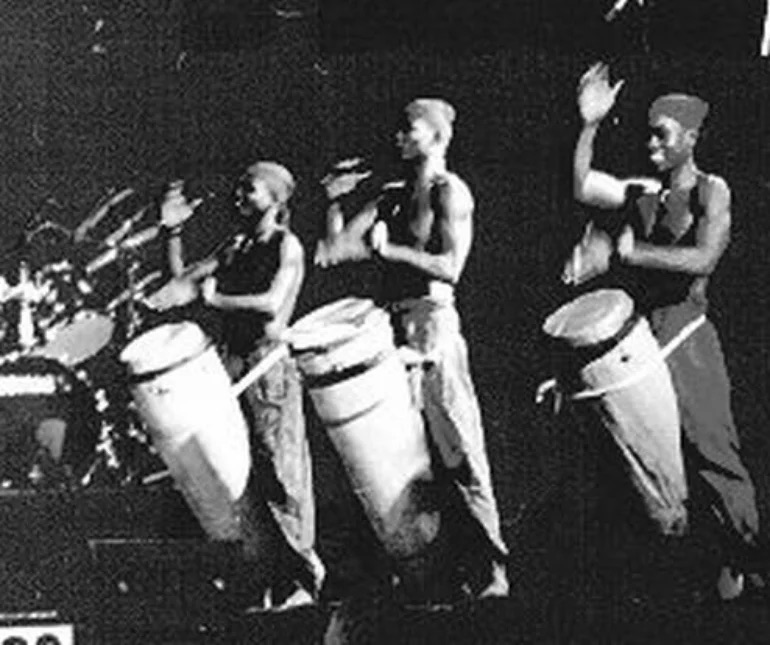
Brazzaville, 1994. On the stage of the Francophonie Games, ngoma drums crash down on the audience like a tornado. Before this spectacle of raw percussion and aerial choreography, the world discovers that Congo-Brazzaville possesses many other treasures than rumba. Behind these drums rumbling like awakened ancestors, Jean-Émile « Goldfinger » Biayenda built one of the most singular musical projects in Central Africa: a percussion big-band where traditional drums meet jazz drum kits, hip-hop and reggae.
In brief
| Group name | Les Tambours de Brazza |
| Founder | Jean-Émile Biayenda (« Goldfinger ») |
| Place of formation | Brazzaville, Congo-Brazzaville |
| Year of creation | 1991 |
| Style | Fusion — traditional Congolese rhythms, jazz, hip-hop, reggae |
| Key instruments | Ngoma (sacred drum), ngouri (bass drum), lokolé (slit drum), jazz drum kit, bass guitar, guitar |
Key dates
| Year | Event |
|---|---|
| 1965 | Birth of Jean-Émile Biayenda in Brazzaville |
| 1986 | Biayenda returns to Brazzaville and turns towards jazz |
| 1991 | Formation of the group following a carnival in Brazzaville |
| 1994 | Silver medal at the Francophonie Games; first international tours |
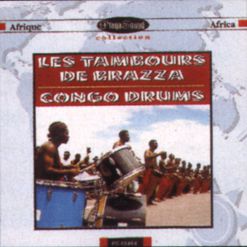
| 1996 | Release of Congo Drums (Playa Sound) |
| Late 1990s | Exile in Benin and then France due to civil war |
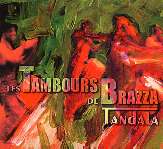
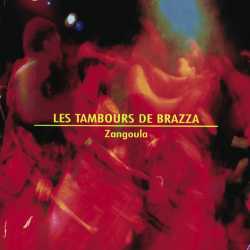
| 2000 | Release of Zangoula (Contre-Jour) |
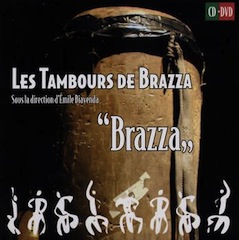
| 2008 | Release of Brazza (CD+DVD, Marabi / Harmonia Mundi) |
| 2013 | Sur la route des caravanes; anniversary concert at the Trianon in Paris |
| 2018 | Release of Kongo (Buda Musique) |
A big-band of tradition and modernity
Born in 1965 in the Bacongo district, Brazzaville, Jean-Émile Biayenda grew up cradled by the sounds of his city. Against his father’s will, he turned very early towards traditional percussion, which he learned at home in the village and then perfected in Porto-Novo. In 1982, he undertook his first tour with a singer. His talent earned him the nickname « Goldfinger ».
Returning to Brazzaville in 1986, Biayenda immersed himself in jazz. He rubbed shoulders with Biks Bikouta, a friend of John Coltrane’s, who instilled in him the taste for be-bop. He played in several ensembles — the Africa Brass group, the Mic Mac quartet — and created Brazzaville’s first jazz festival. A six-month stay with the Baabi pygmies in 1987 changed everything: fascinated by their vocal polyphonies and polyrhythmic structure, he realized that this music was the key to marrying ancient percussion tradition with modern jazz.
In 1991, at the closing of a carnival, Biayenda placed under his direction a hundred percussionists. The effect was such that he transformed the event into a permanent ensemble. He recruited among these musicians from all the ethnic groups of Congo. Les Tambours de Brazza were born.
The group quickly conquered the local audience and embarked on its first international tour in Southern Africa. At the Abidjan Arts Festival, invitations from Europe and America poured in. In 1994, the silver medal at the Francophonie Games in Paris signed contracts and multiplied concerts: Musiques métisses in France, Moers Jazz Festival in Germany, Roots Festival in the Netherlands.
The civil war of 1997 forced the group into exile. Being multi-ethnic, the ensemble was put to the test: some members risked their lives. Biayenda settled in Benin, then in France, where the support of the Musiques métisses festival in Angoulême allowed the group to continue. « The wager was to find a place for drums without, at the same time, having a discourse that claimed traditional percussion », he summarizes.
Each album introduced a new orientation. Sur la route des caravanes (2013) retraces the itinerary of the slave route, from Zanzibar to Pointe-Noire. Kongo (2018) borrows from rock and calls on younger musicians. With collaborators like Ray Lema, Gino Sitson and Amen Viana, Biayenda pushes the limits of his ensemble.
Major works
| Work | Year | Why it is essential |
|---|---|---|
| Congo Drums | 1996 | First international album; reveals the group’s universe to the world. Mixes traditional drums, bass and jazz drum kit. |
| Zangoula | 2000 | Recorded live (Contre-Jour); captures stage power. The title imposes rhythm as a universal language. |
| Brazza | 2008 | Best-of enriched with a three-hour DVD; summarizes seventeen years of career with filmed concerts in Namibia, Belgium and France. |
| Kongo | 2018 | Afro-rock orientation, younger lineup, more present singing; homage to the Kongo kingdom. |
Legacy
Les Tambours de Brazza have proven that Congo-Brazzaville possesses far more than rumba, soukous or ndombolo. Jean-Émile Biayenda demonstrated that a jazz drummer can draw from the ancestral structure of the ngouri, and that the Baabi pygmies are to jazz what Ornette Coleman is to improvisation. The group carries a message of fraternity: « mix the influences, learn from each other, and you will create something new », said Biayenda. The sacred drum keeps traveling.
Sources and references
- « Portrait d’Africajarc: Émile Biayenda et Les Tambours de Brazza », ADIAC-Congo, https://www.adiac-congo.com/content/portrait-dafricajarc-emile-biayenda-et-les-tambours-de-brazza-1877, accessed October 24, 2025.
- « Les Tambours de Brazza », RFI Musique, https://musique.rfi.fr/musique-africaine/20080307-tambours-brazza.html, accessed October 24, 2025.
- « Congolese band breaks new ground with sacred drum », RFI (in English), https://www.rfi.fr/en/africa/20130127-congolese-band-breaks-new-ground-sacred-drum, accessed October 24, 2025.
- Sylvie Clerfeuille, « Emile Biayenda (Les Tambours de Brazza) », Afrisson, https://www.afrisson.com/jean-emile-biayenda-les-tambours-de-brazza/, accessed 24 October 2025.
- Angel Romero, « Artist Profiles: Les Tambours de Brazza », World Music Central, https://worldmusiccentral.org/artist-profiles-les-tambours-de-brazza, accessed 24 October 2025.
- « Emile Biayenda (Musiker) », Wikipedia (DE), https://de.wikipedia.org/wiki/Emile_Biayenda_(Musiker), accessed 24 October 2025.
- « Les Tambours de Brazza », WOMEX / LMD Productions, https://www.womex.com/virtual/lmd_productions/les_tambours_de, accessed 24 October 2025.
- « Les Tambours de Brazza », RFI Musique (in English), http://www1.rfi.fr/musiqueen/articles/099/article_8034.asp, accessed 24 October 2025.