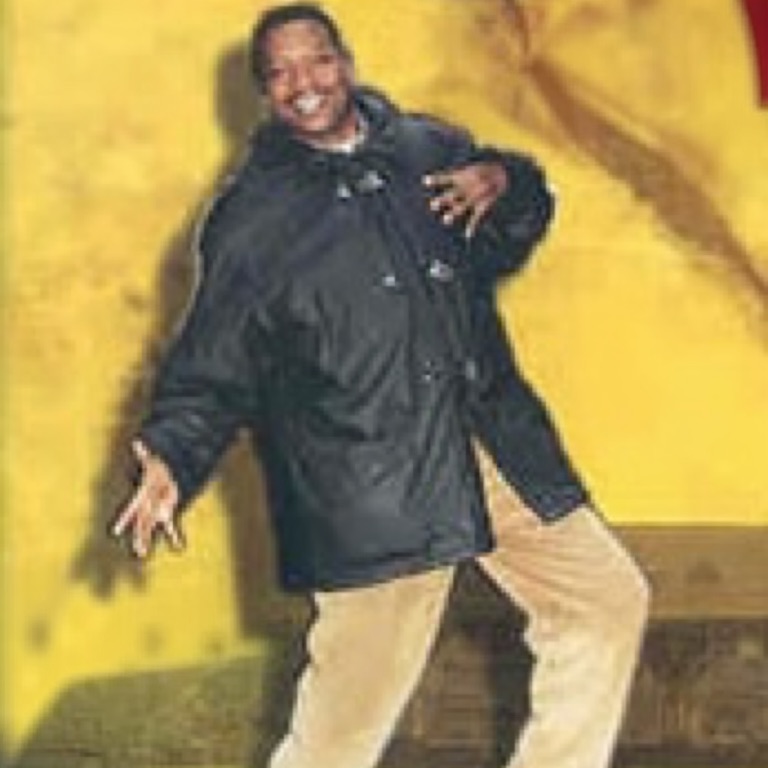
Biography
Zao
In the mid-1980s, while the Republic of Congo lived under a Marxist regime dispensing slogans and shortages, a voice rose in the bars of Brazzaville: a man in an eccentric uniform stood on stage and launched, with a drawling voice, the burlesque narrative of a soldier listing his imaginary exploits1. This track is called Ancien combattant, and it became the most popular antimilitarist hymn of Francophone Africa. The man is Casimir Zoba, nicknamed Zao, drawing from the tradition of Congo to extract humor that heals the continent’s ills.
In brief
| Full name | Casimir Zoba |
| Stage name | Zao (acronym for Zéro-Admis-Omniprésent) |
| Birth | March 24, 1953, Goma Tsé-Tsé (Republic of Congo) |
| Field | African music, engaged humor |
| Languages | French, Lingala, Lari |
| Emblematic works | Ancien combattant, Corbillard, Soulard |
| Awards | RFI Découvertes Prize 1982, Commander of the Order of Congolese Merit (2017) |
Key dates
| Year | Event |
|---|---|
| 1953 | Birth in Goma Tsé-Tsé, a neighborhood of Brazzaville |
| 1965 | Debut in religious choirs and traditional ballets |
| 1978 | Enrollment at the École normale des instituteurs |
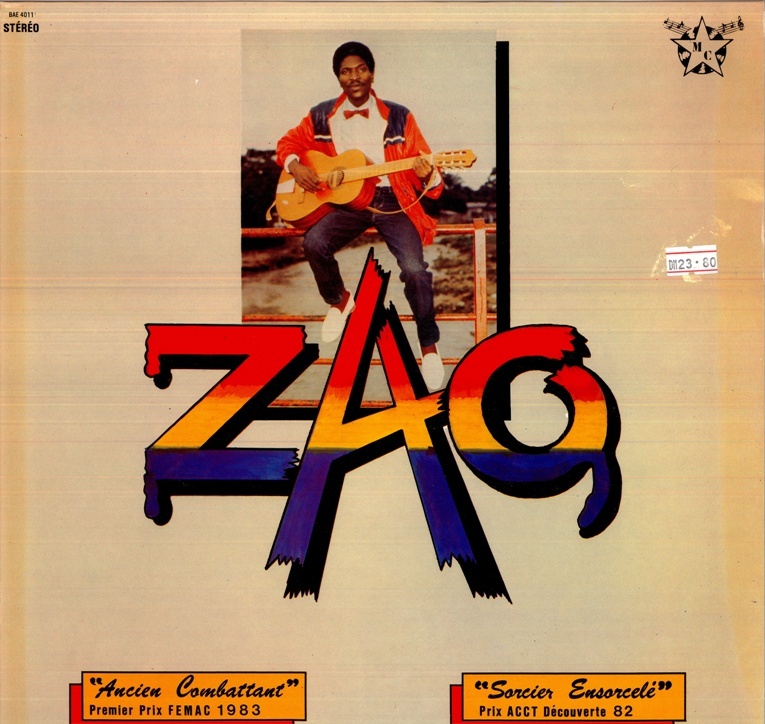
| 1982 | RFI Découvertes Prize with Sorcier ensorcelé |
| 1984 | Release of the album Ancien combattant, first major success |
| 1988 | Participation in the film Camp de Thiaroye by Ousmane Sembène |
| 1998 | His son dies during the Congolese civil war |
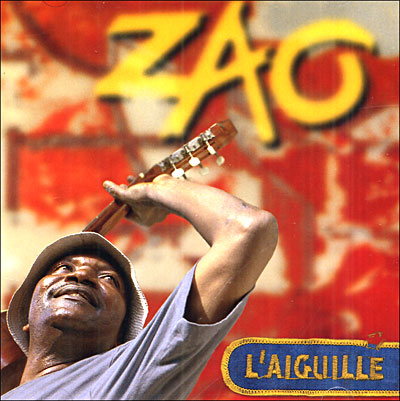
| 2006 | Return with L’aiguille, produced by Lusafrica |
| 2015 | Surprise at Stromae’s concert in Brazzaville: he sings Soulard, the song that inspired Formidable |
| 2017 | Elevated to Commander of the Order of Congolese Merit |
| 2021 | Release of Kwiti Kwiti |
From the keyboard to the stage: origins and revelation
Casimir Zoba grew up in Goma Tsé-Tsé, a popular neighborhood of Brazzaville, within a family where music occupies a central place. His father is a great lover of the sanza, that little piano with metal keys that one makes sing between the thumbs. From the age of twelve, Casimir received his musical education in religious choirs and traditional ballets. At high school, he joined several groups, the Adhérents and the Gloria, but his parents noticed that his studies suffered from this passion and sent him back to the Christian choir of the church of the Three Martyrs, where he sang between 1973 and 19752.
In parallel, he was recruited as a percussionist by the ensemble Les Anges, one of the most renowned orchestras of the time. Under the Marxist-Leninist regime, leading Congolese groups were sent to sing in “brother” countries — USSR, Cuba, GDR. Zao toured the continent and Europe while continuing his teacher training at the École normale, which he joined in 1978. For a few years, he led a double life: teacher by day, musician by night.
At the beginning of the 1980s, Zao launched a solo career. His style is immediately identifiable: an implacable second degree that dresses sensitive, even taboo subjects in Africa. His career exploded with Ancien combattant, released in 1984. The title became a cultural phenomenon: 50,000 copies sold officially, hundreds of thousands of cassette copies distributed throughout the continent. The song tells the story of a former soldier who lists, with inexhaustible verve, the spoils and imaginary battles3. Antimilitarist and provocative, the piece hits hard under the regime of Denis Sassou N’Guesso.
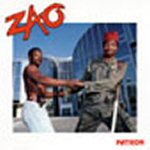
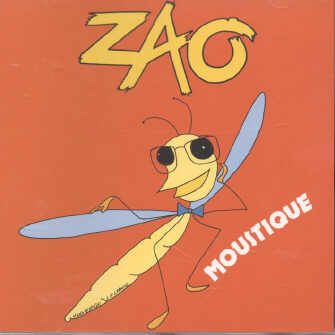
Corbillard won the prize for best song at the Festival of Central African Musics. The text describes a dead man who categorically refuses to go to the cemetery4. Barclay signed Zao the following year, and a series of albums followed: Soulard (1985), Moustique (1988), Patron (1989).
Turning points, trials and resilience
The Congolese civil war of 1997-1998 hit Zao hard2. In 1998, he had to flee with his family from the Makélékélé neighborhood in Brazzaville, taking refuge in the southern forests for more than eight months. His four-year-old son lost his life under these tragic conditions. The musician would take the road again much later, but this wound crosses his subsequent creations.
Despite the success, the war also cost him his studio in Brazzaville. He then produced more traditional artists and attempted a return in 2006 with L’aiguille, an album recorded in Brazzaville and released by Lusafrica5. The themes are serious (L’aiguille, Mon enfant), but the legendary humor persists (Elle a deux diables, Ze t’aime).
Zao continues to tour through Francophone Africa and in Europe. In 2015, he achieved a singular moment during Stromae’s visit to Brazzaville6. He went on stage and sang Soulard in front of the Belgian artist, who often cites Zao among his references, recognizing in this song the source of inspiration for Formidable.
Major works
| Work | Year | Why it’s essential |
|---|---|---|
| Ancien combattant | 1984 | Antimilitarist hymn that defines the Zao style and conquers Francophone Africa |
| Corbillard | 1986 | Black humor on death, prize at the Festival of Central African Musics |
| Soulard | 1985 | Cornerstone of the repertoire, will inspire Stromae’s hit Formidable |
| Pierre de Paris | 1984 | Precursor of spoken word and Congolese rap, a hybrid of jazz, funk and traditions |
| L’aiguille | 2006 | Return after the civil war, serious themes but intact verve |
Legacy
Zao spent forty years of his career transforming political insults into collective laughter1. His nickname Monsieur Cadavéré is not accidental: it summarizes this artist’s ability to make people laugh with the darkest subjects. More than seventy years after his birth, Zao is not done making Africa dance and think.
Sources and references
-
Adiac-Congo, Les immortelles chansons d’Afrique : Ancien combattant de Zao, 2023. ↩︎ ↩︎
-
Wikipedia, Zao (singer), article accessed October 30, 2026. ↩︎ ↩︎
-
Lyombe S. Eko, Zao and the champagne socialism, Bibliolore / RILM, 2020. ↩︎
-
Adiac-Congo, Les immortelles chansons d’Afrique : Pierre de Paris de Zao, 2024. ↩︎
-
Frank Bessem, Zao (Congo-Brazzaville), Musiques d’Afrique, accessed October 30, 2026. ↩︎
-
RFI Musique, Zao, official biography, accessed October 30, 2026. ↩︎