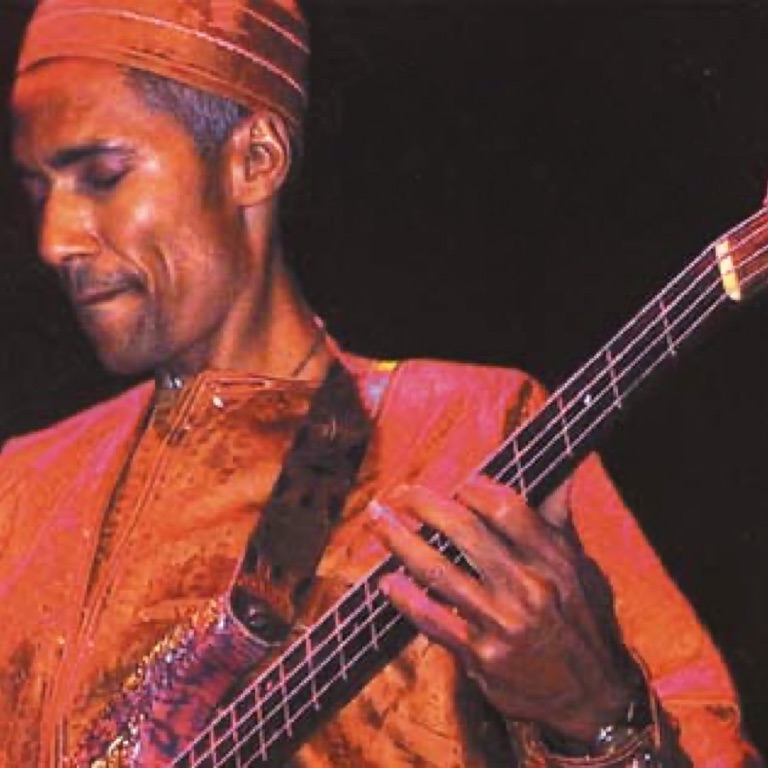
Biography
Moussa Diallo: The bassist who reclaimed his roots
In 1999, on a stage in Copenhagen, Moussa Diallo plucked his first bass chord. Behind him, a kora — this centuries-old stringed instrument from Mali — resonated alongside a Scandinavian acoustic guitar. The resulting sound was unlike anything else: the meeting of a Malian raised in West African culture and a Dane who became one of the most sought-after bassists in his country.
In brief
| Name | Moussa Diallo |
| Birth | February 17, 1955, Paris, France |
| Origin | Mali (raised in Bamako) |
| Field | Bass, vocals, composition — afro-fusion, worldbeat, jazz |
| Notable works | Chiwara, The Kékéliba Project, Mali Ba |
| Awards | Danish Music Award 2003, Ken Gudman Award 2006, Tivoli Jazz Prix 2024 |
Key dates
| Year | Event |
|---|---|
| 1955 | Born in Paris, son of a Malian lawyer and a Dane |
| Around 1960 | Childhood spent in Bamako, Mali |
| 1973 | Departure for Denmark, to his mother, with the intention of becoming a musician |
| Late 1970s–1980s | Became a professional bassist, collaborating with figures from Danish rock, soul, and jazz |
| Late 1990s | First major return to Mali, where he listened to his country’s music with new ears |
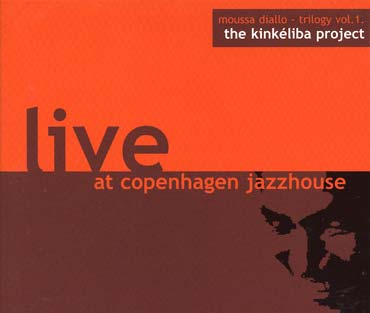
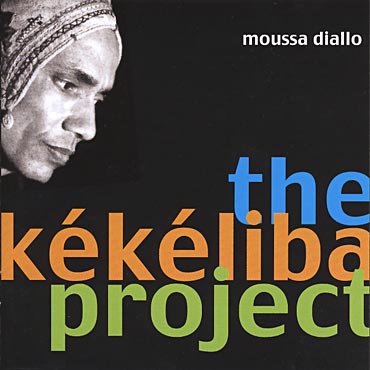
| 1999 | Release of The Kékéliba Project |
| 2003 | Danish Music Award for Chiwara (album of the year) |
| 2008 | Simultaneous release of Acoustic Groove and Out of Tune |
| 2006 | Recipient of the Ken Gudman Award |
| 2024 | Tivoli Jazz Prix for his commitment to children’s music |
From Mali to Denmark, and back to the sources
As a child in Mali, Moussa Diallo grew up cradled by the rhythms of West African music, a fertile ground where griots and traditional musicians wove the history of a people. His father, a lawyer and recognized politician, envisioned an academic career for him. Moussa’s dream lay elsewhere: Hendrix, James Brown, Earth, Wind & Fire captivated an eighteen-year-old adolescent. In 1973, he left Mali for Denmark, his mother’s country. In Copenhagen, his bass talent was soon spotted. Within a few years, he established himself as one of the most prized bassists on the Danish stage, playing alongside the greatest figures of rock, pop, soul, and jazz.
At thirty, however, he underwent an existential crisis. His marriage wavered; he no longer had time to see his children. Professional success did not satisfy him. He went to India to seek a spiritual answer, then returned to Mali to rediscover his country’s music with the ears of an adult. The return to Mali proved foundational: he began listening to his country’s music no longer as a child who endured it, but as a musician who sought it. This return to the sources shaped the rest of his career.
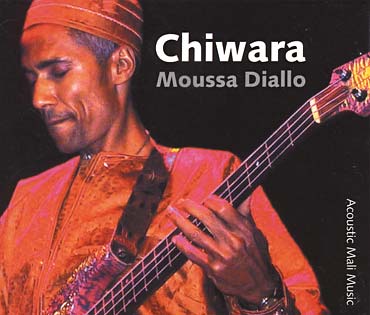
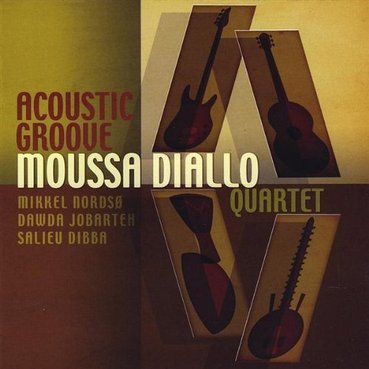
From the late 1990s onward, Moussa Diallo released albums blending electric and acoustic bass, African percussion, and Scandinavian guitar. The Kékéliba Project (1999) — named after a Malian instrument, the kora — was the first manifesto of this approach. His group, the Moussa Diallo Quartet, brought together the Danish guitarist Mikkel Nordsø, the Gambian kora player Dawda Jobarteh, and the Saloumese percussionist Salieu Dibba. Chiwara (2003), awarded the Danish Music Award, confirmed this path. The title refers to a hunter’s mask from Mali, an emblem of Dogon initiation societies. Moussa Diallo invited singer Nampé Sadio to contribute, crafting a sound that was both intimate and universalist, where the kora, acoustic bass, and electric bass dialogued without any one dominating.
In 2008, he released two albums on the same day: Acoustic Groove and Out of Tune, the former dedicated to his African roots, the latter to the funk and rock he had cultivated since his Danish youth. The producer of the time described his approach as an example of eloquent creativity (official press release).
Beyond the stage: storyteller and educator
For fifteen years, Moussa Diallo has dedicated a significant portion of his energy to music for children. He writes books, composes songs, and creates shows blending African storytelling and music. His tours in Scandinavia, Asia, and Africa have touched thousands of children. He also founded the Spot On Mali festival with Keld Hosbond, international coordinator of the Aarhus Conservatory, to build cultural bridges between Denmark and Mali.
Based today in Copenhagen, Moussa Diallo continues to travel the world with his children’s music project linked to the animated film Cirkeline, Coco & le Rhin sauvage by Jannik Hastrup.
Major works
| Work | Year | Why it is essential |
|---|---|---|
| The Kékéliba Project | 1999 | First manifesto of afro-Scandinavian fusion |
| Chiwara | 2003 | Danish Music Award; sound that is both intimate and universalist |
| Acoustic Groove | 2008 | Return to African roots with acoustic guitar and kora |
| Out of Tune | 2008 | Danish funk and rock from his youth |
| Cirkeline og Coco rejser til afrika | 2018 | Music and storytelling for children |
Legacy and influence
Moussa Diallo paved a little-trodden path: that of a musician born outside Africa and raised in Europe who reclaimed his roots without folklorizing them. Artists like Toumani Diabaté have cited him as a colleague and collaborator. Spot On Mali continues to shine as a bridge between the Danish and Malian scenes. In a context where the African diaspora is seeking its voice, Diallo shows that roots are reclaimed through sound as much as through memory.
Sources and references
- “SOUND TRACKS of life – Moussa Diallo on bass”, SPOR Media, https://www.spormedia.dk/dokumentarfilm/moussa-diallo-manden-og-musikken/moussa-diallo-manden-og-musikken-uk/, accessed November 3, 2026.
- “Bio”, Moussa Diallo — Official Website, https://moussadiallo.com/bio, accessed on 3 November 2026.
- “Press Release: Moussa Diallo - Acoustic Groove / Out of Tune”, moussadiallo.com, https://www.moussadiallo.com/download/ag_oot_pressrelease_en.pdf, accessed on 3 November 2026.
- “Moussa Diallo”, Discogs, https://www.discogs.com/artist/385419-Moussa-Diallo, accessed on 3 November 2026.
- “Moussa Diallo” biography, Last.fm, https://www.last.fm/music/Moussa+Diallo/+wiki, accessed on 3 November 2026.
- “« Tivoli Jazz Prix 2024 »: Moussa Diallo awarded in Denmark”, Maliweb, https://www.maliweb.net/musique/tivoli-jazz-prix-2024-moussa-diallo-recompense-au-danemark-pour-son-engagement-artistique-en-faveur-des-enfants-3080954.html, accessed on 3 November 2026.
- “Call for applications: Spot On Mali 2023”, Music In Africa, https://musicinafrica.net/fr/magazine/appel-ouvert-spot-mali-2023-creativite-et-fraternite/, accessed on 3 November 2026.
- “Moussa Diallo”, AllMusic, https://www.allmusic.com/artist/moussa-diallo-mn0000502732, accessed on 3 November 2026.
- “Projects”, Moussa Diallo — Official Website, https://moussadiallo.com/projects, accessed on 3 November 2026.