Biography
Mutabaruka
The midday sun bakes the grass at the National Stadium in Kingston. In 1981, on the stage of Reggae Sunsplash, Mutabaruka steps alone with his microphone. No instruments, no choir — just a voice booming over a bassline. The Jamaican public, accustomed to singers and selectors, discovers a new art form: poetry spoken over reggae. That night, a genre just born finds one of its founding fathers.
In brief
| Full name | Allan Hope, known as Mutabaruka (currently used name: Hallan Hope) |
| Birth | December 26, 1952, Rae Town, Kingston (Jamaica) |
| Field | Dub poetry — the form of poetic declamation over reggae instrumentals — and political reggae |
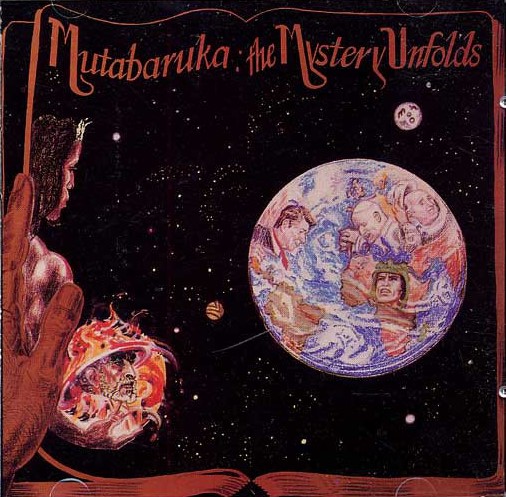
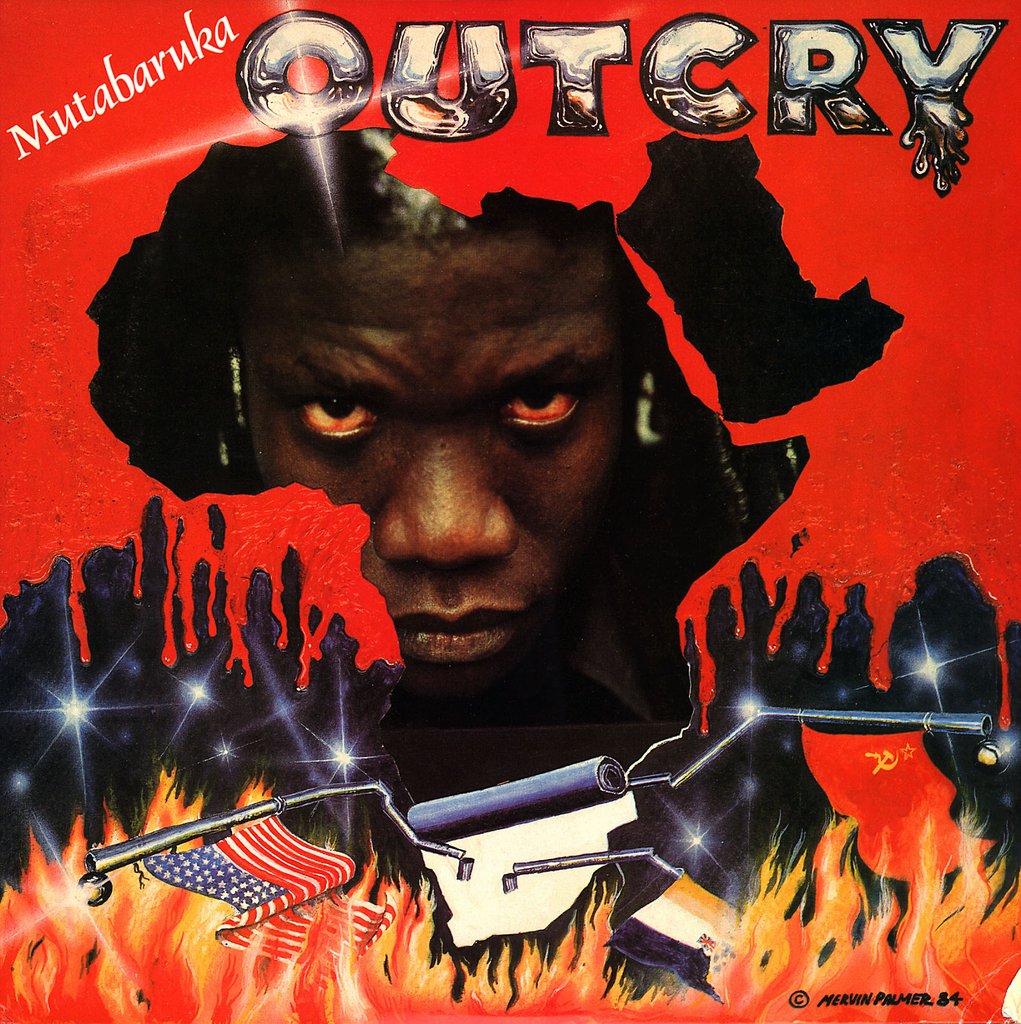
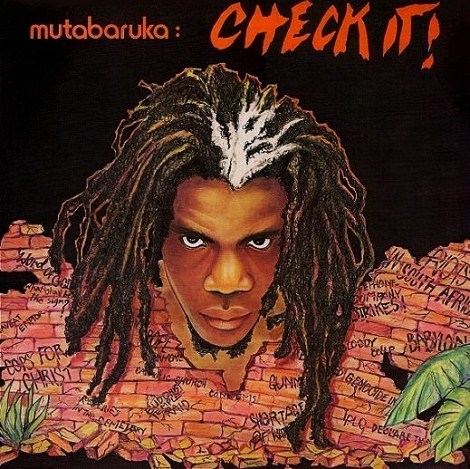
| Notable works | Check It, “Outcry”, The Mystery Unfolds |
| Honors | Commander of the Order of Distinction (CD, Jamaica), Doctor Bird Award |
Key dates
| Year | Event |
|---|---|
| 1952 | Birth of Allan Hope in Rae Town, Kingston |
| 1960-64 | Secondary studies at Kingston Technical High School, electronics track |
| 1971 | Leaves the Jamaican Telephone Company; first publication in Swing Magazine |
| 1973 | First poetry collection published, Outcry |
| 1974-76 | “Wailin’” and Sun and Moon mark his written beginnings |
| 1978 | First single recorded, “Outcry” (with Cedric Brooks on production) |
| 1981 | Performance at Reggae Sunsplash: international breakthrough |
| 1983 | First album, Check It, on Alligator Records label (Chicago); curator of the compilation Word Sound ‘ave Power |
| 1984-86 | Success of The Mystery Unfolds (Shanachie Records); collaborations with Gregory Isaacs and Dennis Brown |
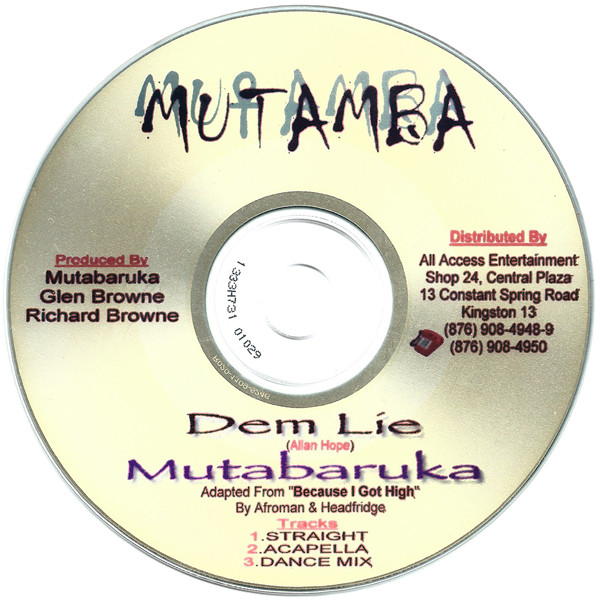
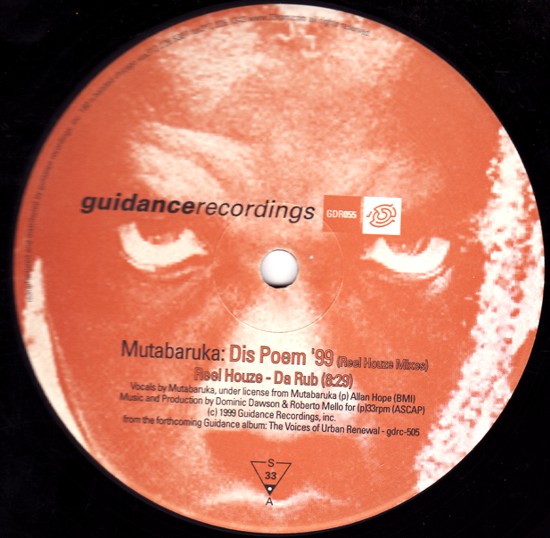
| 1990-93 | Sample of “Dis Poem” on the track The Poem (Bobby Konders, Nu Groove); appearance at Lollapalooza |
| 2000-2001 | Lecture at Stanford; narrator of Stephanie Black’s documentary Life and Debt |
| 2007-23 | Teaching in American studies (Merritt College, California); regular concerts at international festivals (Rototom Sunsplash 2023) |
From anger to word: a way of life
Allan Hope grew up in Rae Town, Kingston, raised by his mother and sisters after his father’s death when he was eight. After studying electronics at Kingston Technical High School, he worked for the Jamaican Telephone Company — but forbidden books called to him. At eighteen, Eldridge Cleaver’s Soul on Ice and Malcolm X’s Autobiography unleashed an anger he did not yet know how to name. Switching from Catholicism to Rastafarianism, he let his dreadlocks grow, adopted an ital diet (natural food), and forged a new identity: Mutabaruka, a name of Rwandan origin meaning always victorious.
In 1971, he quit his job to write full-time. Swing Magazine published his first poems; the collection Outcry (1973) was his first book. His reputation took root in 1974 with “Wailin’” and solidified in 1976 with Sun and Moon. In 1977, he founded the group Truth and began reciting over dub instrumentals — this stripped-down reggae where the bass reigns alone. With Linton Kwesi Johnson, he is one of the two founding fathers of dub poetry, a genre where political speech dances on the basslines of Jamaican studios.
His international breakthrough came from Reggae Sunsplash in 1981: his patois poetry, raw and funny, lashed out at racism, poverty, and colonial oppression. The collaboration with guitarist Earl « Chinna » Smith on “Every Time a Ear Di Sound” became a local hit. In 1983, Check It (Alligator Records) opened him to the American market; he curated the compilation Word Sound ‘ave Power (Heartbeat). The Mystery Unfolds (Shanachie, 1986) and collaborations with Gregory Isaacs (“Hard Road to Travel”) and Dennis Brown (“Great Kings of Africa”) solidified his status. In 1990, his line “Dis Poem” served as an introduction to the house track The Poem by Bobby Konders. After Lollapalooza (1993), he launched The Cutting Edge on Irie FM, a show that made him a central and controversial radio presenter.
After 2000, he expanded his reach: lectures at Stanford (2000), narration of the documentary Life and Debt (Stephanie Black, 2001). He taught American studies at Merritt College (2007), collaborated with Groupation and Mad Professor, and shared the Rototom Sunsplash stage in 2023. Commander of the Order of Distinction and recipient of the Doctor Bird Award, he lives between the United States and Jamaica — and continues to perform.
Major works
| Work | Year | Why it’s essential |
|---|---|---|
| Outcry (collection) | 1973 | First printed volume: the anger of the ghetto in words |
| Check It (album) | 1983 | Entry onto the international stage, Alligator Records label |
| The Mystery Unfolds (album) | 1986 | Mature realization, Shanachie production, Mutabaruka style signature |
| “Hard Road to Travel” (feat. Gregory Isaacs) | ~1984 | Foundational collaboration between the poet and a major reggae vocalist |
| Life Squared (album) | 2002 | Postcolonial heritage and testimony on Life and Debt |
Heritage and influence
Mutabaruka shaped an entire genre. Dub poetry, this bridge between political speech and Jamaican studio bass, owes its existence to him — just as Linton Kwesi Johnson does. But while Johnson wrote in standard English to reach the British academic readership, Mutabaruka retains a raw Jamaican patois, verses that strike like kicks on a bus door. His uncompromising political voice inspired an entire generation of reggae producers and performers — Anthony B, Capleton, Sizzla — and crossed the Atlantic to nourish American spoken word (Saul Williams, Spike Lee).
More than forty years after his first collection, his voice can be heard in punk reggae, house, and European dub tracks. University archives study his texts as militant literature of the 21st century. The artist remains what he has always been: a troublemaker who uses the microphone to say what others stay silent about.
Sources and references
- « Mutabaruka — Biography », AllMusic, https://www.allmusic.com/artist/mutabaruka-mn0000519020, accessed November 6, 2025.
- « Mutabaruka », Wikipedia (en), https://en.wikipedia.org/wiki/Mutabaruka, accessed November 6, 2025.
- « Mutabaruka », Wikipedia (fr), https://fr.wikipedia.org/wiki/Mutabaruka, accessed November 6, 2025.
- « Every time I hear di sound: a short history of dub poetry », The Wire, https://www.thewire.co.uk/in-writing/essays/every-timei-hear-di-sound-a-short-history-of-dub-poetry, accessed November 6, 2025.
- « Mutabaruka – Jamaica », Revue Noire, https://www.revuenoire.com/en/mutabaruka-jamaica/, accessed November 6, 2025.
- « Mutabaruka Remembers Bob Andy », Reggae Vibes, https://www.reggae-vibes.com/news/2025/03/mutabaruka-remembers-bob-andy/, accessed November 6, 2025.
- « Order of Distinction », Wikipedia (en), https://en.wikipedia.org/wiki/Order_of_Distinction_(Jamaica), accessed November 6, 2025.
- « Mutabaruka with Mad Professor @ Rototom Sunsplash 2023 », ReggaeVille, https://www.reggaeville.com/artist-details/mutabaruka/, accessed November 6, 2025.