Biography
Nayanka Bell
In 1983, a young Ivorian artist recorded Amio in Paris, the first album sung entirely in English by an artist from her country. Arranged by Jacob Desvarieux — before he later founded Kassav’ — the album contains Iwassado, a title that would become a continental classic. Nayanka Bell, nicknamed « la Barbra Streisand d’Afrique » by the Ivorian press, had just paved a new path: blending disco and funk with African roots.
In brief
| Full name | Aka Louise de Marillac, épouse Leibel |
| Birth | 1963 (some sources indicate 1954), Agboville, Côte d’Ivoire |
| Field | Singing, composition — disco, funk, world music |
| Notable works | “Iwassado”, Visa, “Je t’aime… moi non-plus” (feat. Koffi Olomidé) |
| Awards | Trophées des Lions d’Or (best female voice of Africa, 1994), Africa Music Award (1994) |
Key dates
| Year | Event |
|---|---|
| 1981 | Vocalist in the orchestra of the Ivorian Radio and Television (RTI) |
| 1982 | Resounding success performing Woman in Love and Don’t Leave Me This Way, which revealed her at the national level |
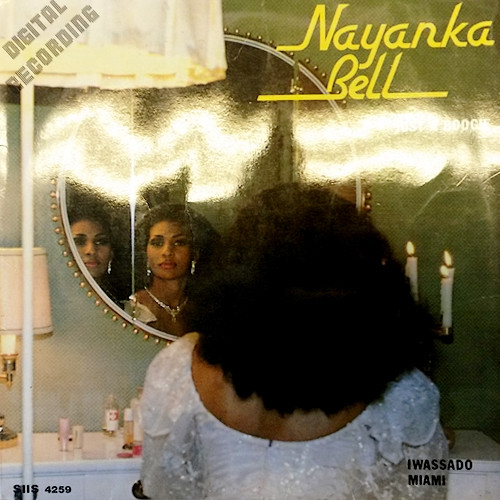
| 1983 | Release of the first album, Amio, with the title Iwassado; collaborations with Jacob Desvarieux and Jimmy Hyacinthe |
| 1984 | Move to Paris and production of If You Came to Go, arranged by Boncana Maïga, Ray Lema and Jacob Desvarieux |
| 1985 | Second album Chogologo, asserting a mixed African identity |
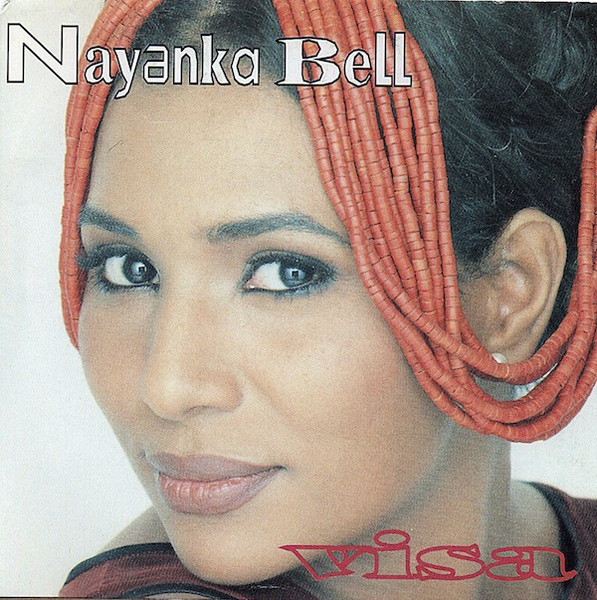
| 1994 | Album Visa, crowned with the Trophées des Lions d’Or in Paris and winner of the Africa Music Award |
| 2000 | Recording of Je t’aime… moi non-plus with Koffi Olomidé, performed before 17,000 spectators at the Palais Omnisports de Paris-Bercy |
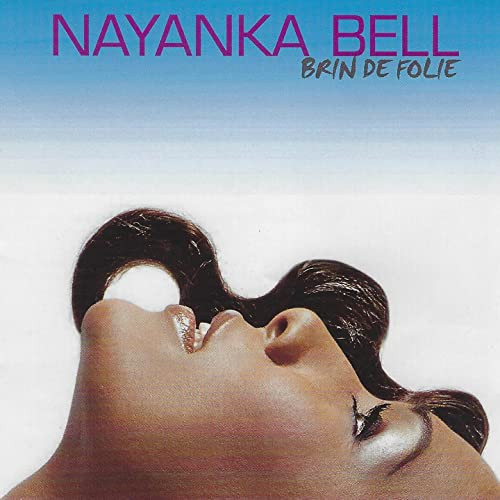
| 2001 | Release of the fourth album, Brin de folie, featuring French rapper Passi |
| 2009 | Serious car accident; survived and returned to the stage |
| 2019 | New release: Seïzo and Démissénou sabaly, proof of a still-active career |
| 2025 | Interview granted to Média Prime Mag; announcement of a book about her life currently in progress |
From origins to consecration
Nayanka Bell, born Aka Louise de Marillac in 1963 in Agboville, carries in her veins the history of a continent. Her father, Aka N’cho, is an Abbey-Agni, the first official of the village of Offa. Her mother, a French Corsican-Touareg métisse, transmitted to her a musical talent inherited from her grandmother, who played the traditional violin. « My mother prevented my grandmother from making music because it reminded her of painful childhood memories », she confesses. Nayanka’s vocation was forged in this contradiction: an Abbey-Agni father, a Corsican-Touareg mother, and the Ivorian land.
The professional career began in 1981 at the age of eighteen, as a chorus member in the orchestra of the Ivorian Radio and Television (RTI). In 1982, her interpretation of Woman in Love and Don’t Leave Me This Way impressed the public. The press immediately attributed to her the nickname « la Barbra Streisand d’Afrique ».
Amio, released in 1983 and arranged by Jacob Desvarieux — before he later founded Kassav’ — contains Iwassado, a title composed by Nayanka. The word means: be content with what you have — in Malinké. The song, born from the memory of a brother who died at twenty-four, became a universal hymn. In Paris in 1984, she produced If You Came to Go, arranged by Boncana Maïga, Ray Lema and Desvarieux: the Francophone Caribbean influence blended with Ivorian disco. In 1994, the album Visa won the trophy for best female voice of Africa at the Lions d’Or and the Africa Music Award. In 2000, she recorded Je t’aime… moi non-plus with Koffi Olomidé before 17,000 spectators at Bercy. Despite a serious car accident in April 2009, she survived and returned to the stage. In 2019, Seïzo confirmed a still-active career, and in March 2025 she announced a book about her life.
Major works
| Work | Year | Why it is essential |
|---|---|---|
| Amio | 1983 | First English album by an Ivorian artist, driven by Iwassado, a hymn to acceptance |
| If You Came to Go | 1984 | Francophone disco and Caribbean influences, arranged by Desvarieux, Maïga and Lema |
| Visa | 1994 | Peak album, crowned at the Lions d’Or and Africa Music Award; synthesis of musical métissage |
Legacy and influence
Nayanka Bell opened a breach in the African musical landscape by proving that an Ivorian artist could sing in English without renouncing her roots. Iwassado remains cited as a great classic, and her ability to produce international albums with Desvarieux and Lema was exceptional for a woman in the 1980s. By affirming that she remained in Côte d’Ivoire despite the instabilities, she embodies a rare figure: the artist who chooses her country as her destiny.
Sources and references
- « Nayanka Bell », Wikipédia, https://fr.wikipedia.org/wiki/Nayanka_Bell, accessed November 3, 2025.
- « Nayanka Bell », Wikipedia (English), https://en.wikipedia.org/wiki/Nayanka_Bell, accessed November 3, 2025.
- « PORTRAIT D’ARTISTE : NAYANKA BELL », Évasion Magazine, https://evasion.bf/portrait-dartiste-nayanka-bell/, accessed November 3, 2025.
- « Nayanka Bell / On veut me faire tomber », Média Prime Mag, https://mediaprimemag.com/nayanka-bell-on-veut-me-faire-tomber/, accessed November 3, 2025.
- « Nayanka Bell », Africultures, https://africultures.com/personnes/?no=27433, accessed November 3, 2025.
- Nayanka Bell — Brin De Folie (CD), Discogs, https://www.discogs.com/release/15654488, accessed November 3, 2025.
- Nayanka Bell, Deezer Artist, https://deezer.com/us/artist/84310, accessed November 3, 2025.