Biography
Ouza
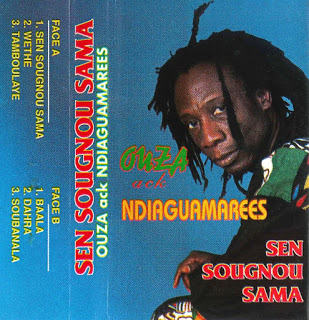
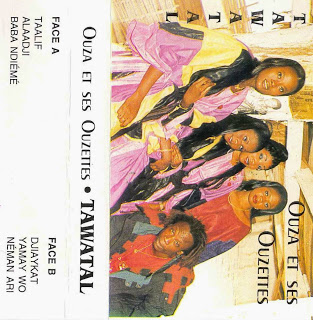
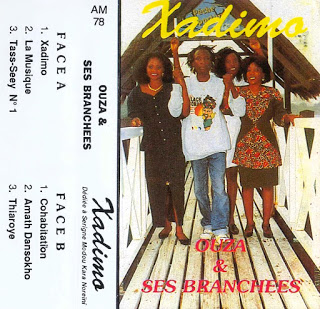
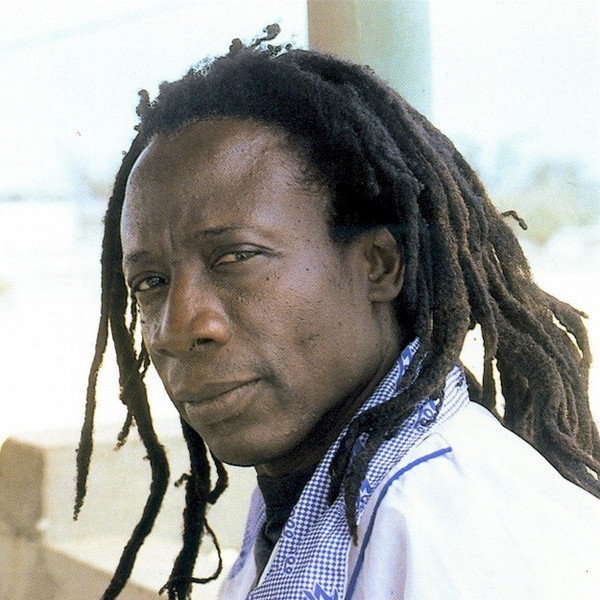
In 1972 in Dakar, a musician dared the impossible: mounting an entire orchestra of female singers and dancers. At a time when the Senegalese stage was a male space dominated by afro-cubaine, this idea caused scandal. This musician’s name is Ousmane Diallo; the public would soon call him Ouza.
In brief
| Birth name | Ousmane Diallo |
| Stage name | Ouza (nickname popularized by Cheikh Ahmed Tidiane Diop) |
| Birth | 1947, Rufisque, Senegal |
| Active period | Since the 1960s |
| Genre(s) | Mbalax, afro-blues, afro-jazz, mbalax pop-soul |
| Roles | Singer, guitarist (bass and solo), saxophonist, keyboardist, arranger, composer |
| Groups founded | Ouza et ses Ouzettes, Les Quatre Femmes dans le Vent, Les Filles Branchées |
Key dates
| Year | Event |
|---|---|
| 1959 | Obtains his elementary school certificate; joins the pan-African orchestra Las Ondas |
| 1965 | Forms his first group; leaves to study music in Côte d’Ivoire |
| 1972 | Returns to Senegal; creation of Ouza et ses Ouzettes |
| 1975-1977 | First records with Ouza et ses Ouzettes then Les Quatre Femmes dans le Vent |
| 1980 | Appointed director of the National Orchestra of Senegal upon its creation |
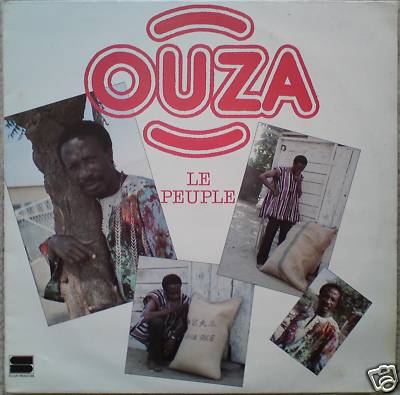
| 1983-84 | Release of two cassettes on the Syllart label: Le Peuple and The Best |
| 1990-1995 | Exile in the United States; return and creation of Les Filles Branchées (1995) |
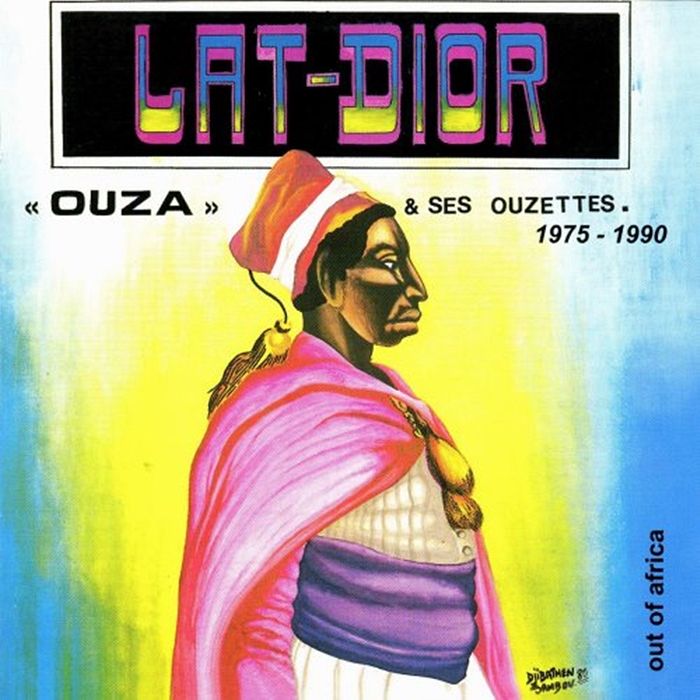
| 2001-2002 | Two CD compilations in the West: Ouza Best of and Ouza & ses Ouzettes 1975-1990 |
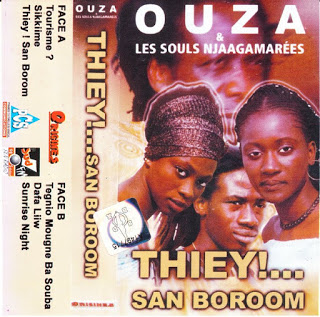
| 2007 | Last recorded album: Six Heures |
From Rufisque to the National Orchestra
Ousmane Diallo was born in 1947 in Rufisque, a town neighboring Dakar[^1]. Passionate about music since primary school — he obtained his elementary school certificate in 1959[^2] —, he very early joined the pan-African orchestra Las Ondas, a touring ensemble of young West African musicians[^2]. It was in this crucible that his nickname “Ouza” came to life: Cheikh Ahmed Tidiane Diop, host of the show “Jeunesse Sans Frontières”, gave him this name upon seeing his troupe of young women on stage[^2].
At the end of the 1950s, Ouza left to study music in Côte d’Ivoire[^3]. He attended the Abidjan conservatory and the School of Fine Arts[^1][^2], where he learned and taught, perfecting himself on the guitar (bass and solo), saxophone, and keyboards[^1][^2]. He then played in the Ivorian national orchestra, alongside Jean Joseph Bango and under the patronage of President Houphouët-Boigny[^2]. These years provided him with a theoretical and practical training that most Senegalese musicians of his generation did not possess[^2].
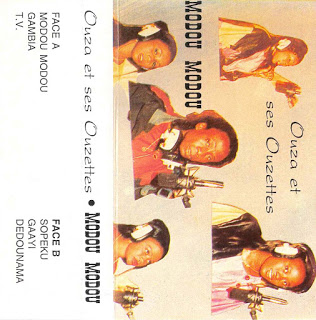
In 1972, Ouza returned to Senegal and created Ouza et ses Ouzettes, a revolutionary formation: young women from Rufisque, among whom were Binta Thiam and Marième Ndoye[^2]. It was the first time in Senegal that a modern orchestra integrated female singer-dancers[^1][^2], disrupting the male tradition of afro-cubaine[^1].
An engaged artist: music as a political platform
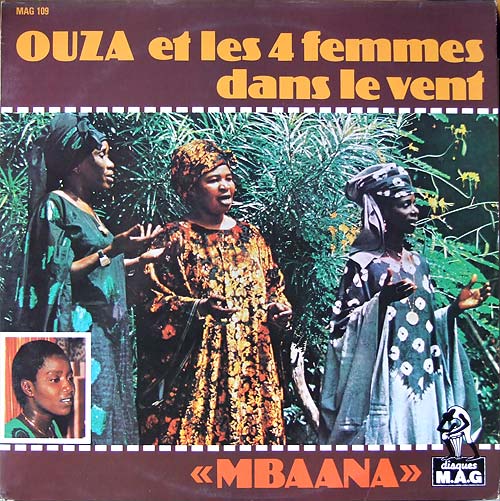
Ouza very quickly forged a reputation as an incorruptible artist[^2][^4]. From his first records with Les Quatre Femmes dans le Vent — a group he founded with Boubacar Guiro, director of the lyrical ensemble of the Daniel Sorano National Theatre[^2] — and which included Fatou Thiam Samb, Khady Diouf, and Fatou Talla Ndiaye[^1], his songs addressed themes unusual for Senegalese popular music.
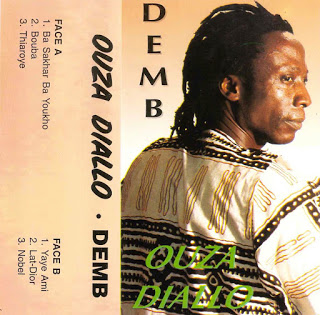
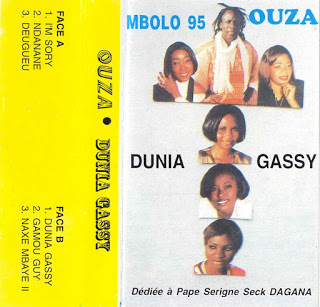
His most famous track, “Thiaroye”, denounces the 1944 massacre by which the French colonial army killed Senegalese tirailleurs at the Thiaroye camp[^1]. This piece appears on several albums — The Best (around 1984)[^5], Demb (1996)[^5] — and testifies to a political memory out of sync with official discourses[^1].
Other titles illustrate this stance as a spokesperson for the voiceless[^1]: “Le Vote”, “Le Politicien”, “J’accuse”, “Alternance”, “La Santé”[^1]. In 2000, “Le Vote” was released on cassette but received no broadcast on the national radio — a silence imposed by its content deemed subversive[^3]. This independence cost Ouza commercial visibility that his contemporaries like Youssou N’Dour would not know[^3]. He did not particularly appreciate either Senghor, nor Abdou Diouf, nor Abdoulaye Wade[^2].
The Gambia: adopted land and political refuge
When Senegal closed its doors to his music, Ouza found a second country in The Gambia[^2][^3]. Since 1972, he played there regularly and forged lasting friendships[^3]. “Everything I have had in my life is thanks to this great country: The Gambia!”, he declared in 2021[^3]. Gambian President Yahya Jammeh even offered him a villa, a proposal he regrets not having accepted[^3].
This land of welcome provided him with a space where his political music circulated freely, while in Senegal he was labeled a “revolutionary” and an “activist”[^2][^3].
Pedagogue and mentor from generation to generation
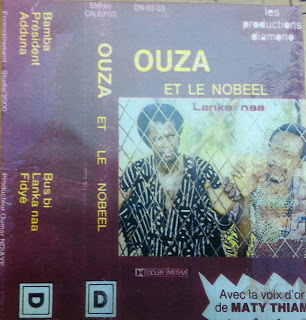
Beyond his solo career, Ouza trained countless female artists. He mentored Maty Thiam Dogo (1982-1993), Soda Mama Fall (1994-1995) and Shula Ndiaye (1996)[^1], several of whom launched solo careers[^3]. In 2000, he handled arrangements and production for Soda Mama Fall’s first album[^5].
His son Cheikh Lô Ouza Diallo — named in homage to the great Cheikh Lô —, composer and pianist[^1][^3], played in several of his father’s formations. His daughter Adiouza, singer and dancer, bears a name that came directly from her father[^2][^3]. Ouza Productions[^1], the structure he founded, trains and promotes young Senegalese artists.
Major Works
| Work | Year | Why It’s Essential |
|---|---|---|
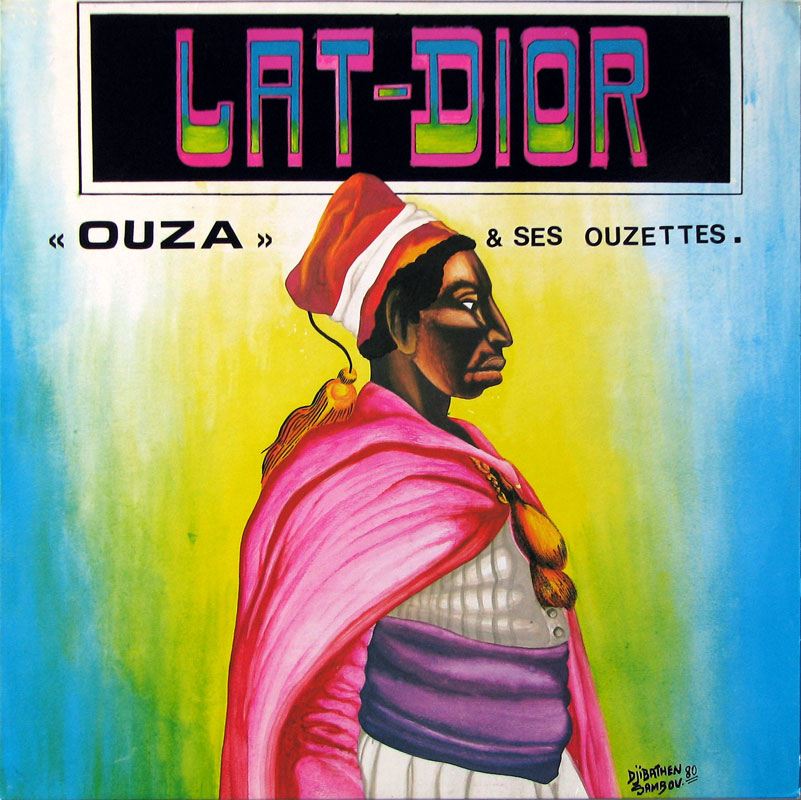
| Lat-Dior (with the Ouzettes) | 1975 | First record; anthem of black pride dedicated to the African resister |
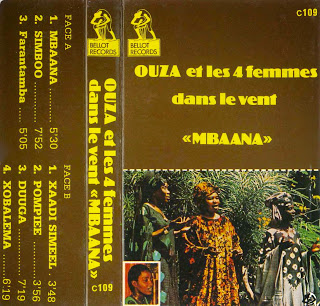
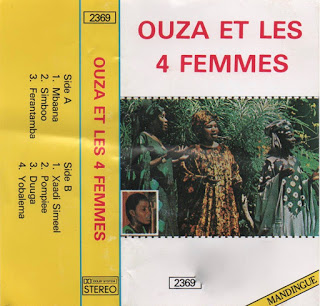
| Mbaana (The Four Women in the Wind) | 1977 | First Senegalese album featuring female chorus dancers; mbalax-Afro-Cuban hybridization |
| “Thiaroye” | 1984 / 1996 | Political memory anthem; featured in two consecutive albums |
| Ouza & ses Ouzettes 1975-1990 | 2002 (CD) | Retrospective compilation in the West; introduced Ouza after thirty years of oblivion |
Legacy and Influence
Ouza is a figure that Senegal long snubbed[^3]. His musical audacity — mixing guéwels (griots) with pop, jazz and funk[^1] — paved the way for more contemporary artists. His role as a mentor to female singers and his fidelity to uncompromising music[^4] make him an unknown pillar of Senegalese musical history. The recent revaluation of his work on CD shows that the country is finally ready to listen to this “voice for the voiceless”[^1].
Sources and References
- « Ouza / Ouza Diallo », Afrisson, article by Nago Seck, updated 08/11/2024. https://www.afrisson.com/ouza-ouza-diallo, accessed 10 November 2026.
- « Parcours – Ousmane Diallo alias Père Ouza : Le panafricain amoureux de la Gambie », GMT Pile à l’heure (Génération Média & Technologies), interview directed by Ndèye Fatou Diongue, 2021. http://gmetech.info/parcours-ousmane-diallo-alias-pere-ouza-le-panafricain-amoureux-de-la-gambie/, accessed 10 November 2026.
- Ouza (Ousmane Diallo), Frank Bessem’s Musiques d’Afrique — Sénégal : Ouza. https://www.musiques-afrique.net/senegal/art-ouza.html, accessed 10 November 2026.
- « Ouza biography », Last.fm (collective user biography). https://www.last.fm/music/Ouza/+wiki, accessed 10 November 2026.
- « Discography of Ouza (Ousmane Diallo) », Endo Lab — Japan (Toshiya Endo), updated November 2004. https://endolab.jp/endo/EAOuza.html, accessed 10 November 2026.